

Organizations today face a critical challenge: transforming talented individuals into cohesive teams that consistently deliver results. The missing ingredient in many workplaces isn't skill or knowledge-it's accountability. When team members take genuine ownership of their responsibilities, entire organizations shift from reactive firefighting to proactive excellence. This fundamental transformation begins with structured, intentional accountability training that reshapes how employees think about their roles and responsibilities.
Understanding the Foundation of Workplace Accountability
Accountability extends far beyond simply completing assigned tasks on time. It represents a comprehensive mindset where individuals recognize their role in organizational success, acknowledge their commitments, and follow through regardless of obstacles. This distinction becomes crucial when organizations attempt to build high-performance cultures.
True accountability encompasses several dimensions:
- Personal ownership of outcomes, not just activities
- Transparent communication about progress and challenges
- Willingness to address problems before they escalate
- Recognition that individual actions impact collective results
- Commitment to continuous improvement and learning
The difference between accountability and responsibility often confuses organizational leaders. Responsibility refers to the tasks assigned to someone, while accountability involves answering for the outcomes of those tasks. Research on accountability frameworks demonstrates that organizations thrive when employees move beyond task completion to genuine outcome ownership.
The Business Case for Structured Training
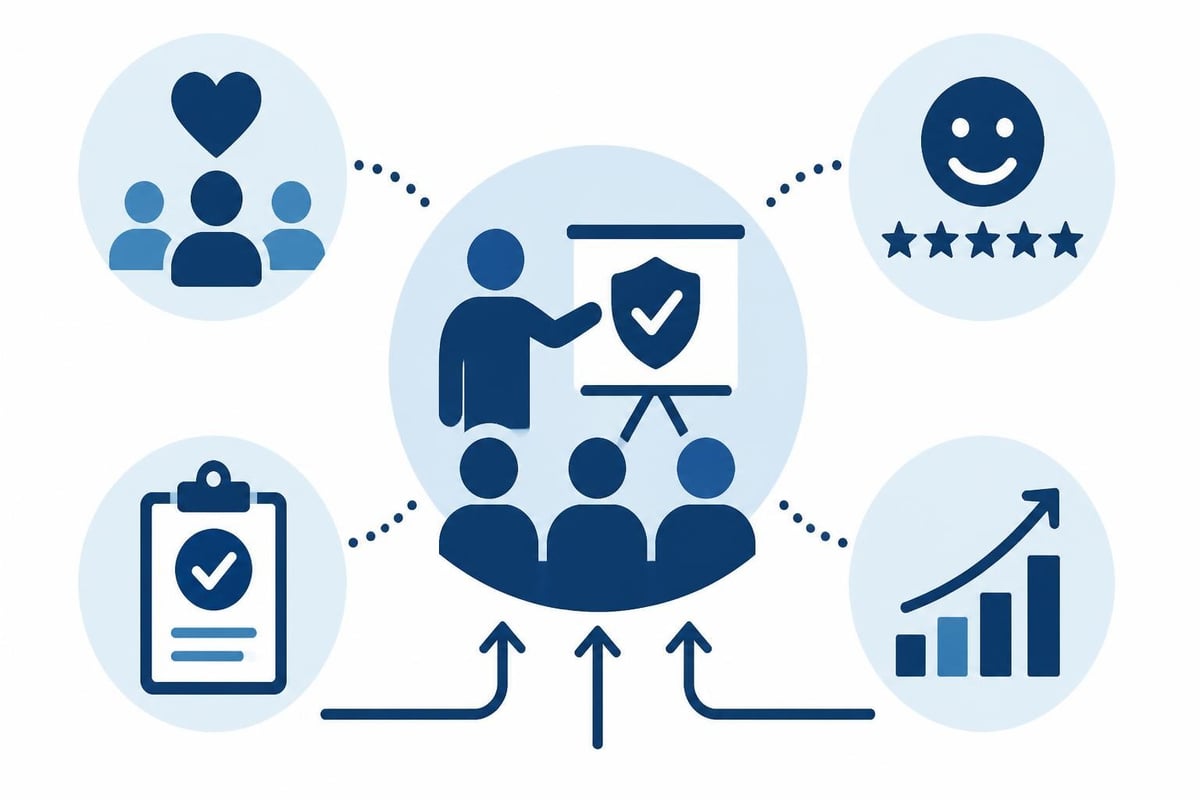
Companies investing in accountability training report measurable improvements across multiple dimensions. Customer satisfaction increases when employees take ownership of service quality. Project timelines become more predictable when team members honour their commitments. Innovation flourishes when people feel empowered to propose solutions rather than deflect blame.
Consider the financial implications: organizations with strong accountability cultures experience 30-40% higher employee engagement scores. These engaged employees drive productivity gains, reduce turnover costs, and create positive customer experiences that directly impact revenue growth.
Designing Effective Accountability Training Programs
Successful accountability training requires more than a single workshop or motivational speech. Organizations must create comprehensive programs that address mindset, skills, and systems simultaneously. This multi-layered approach ensures lasting behavioural change.
Establishing Clear Expectations and Standards
Training programs must begin by helping participants understand what accountability looks like in their specific context. Generic definitions prove insufficient-employees need concrete examples relevant to their daily work. Facilitators should guide participants through exercises that clarify expectations for their roles.
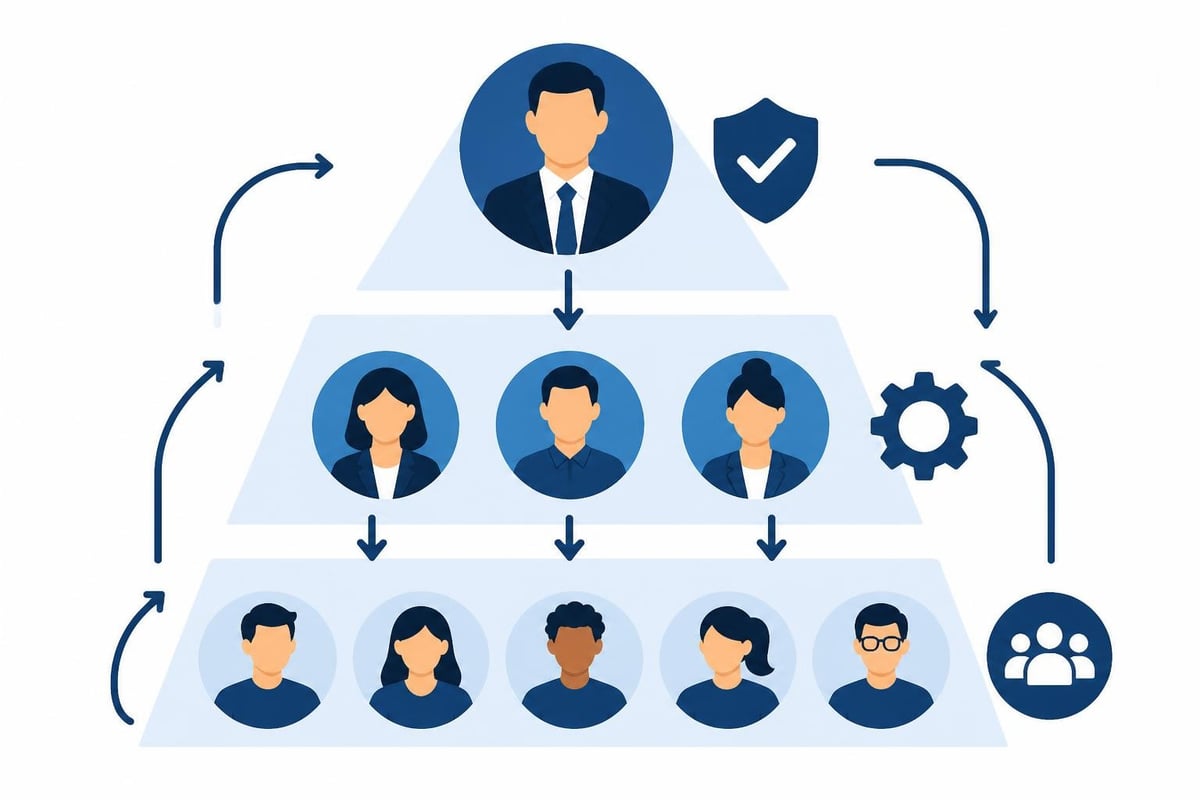
Forbes coaches recommend implementing structured frameworks that define accountability at each organizational level. Leaders require different accountability skills than frontline employees, though both groups benefit from understanding the complete picture.
Key training components include:
- Defining personal and team objectives using measurable criteria
- Identifying interdependencies between roles and departments
- Creating accountability agreements that specify commitments
- Establishing feedback mechanisms for ongoing communication
- Developing problem-solving protocols for addressing obstacles
Building Communication and Feedback Skills
Accountability thrives in environments where honest communication flows freely. Training must equip participants with skills to discuss challenges, request support, and provide constructive feedback to peers. These conversations often feel uncomfortable initially, requiring practice in safe training environments.
Role-playing exercises prove particularly valuable for developing these capabilities. Participants practice difficult conversations-missing deadlines, quality concerns, resource conflicts-under instructor guidance. This rehearsal builds confidence and competence before high-stakes real-world situations arise.
| Communication Skill | Training Method | Practice Opportunity |
|---|---|---|
| Progress reporting | Structured templates | Weekly team updates |
| Requesting help | Peer coaching | Project collaboration |
| Giving feedback | Role-play scenarios | 360-degree reviews |
| Receiving criticism | Growth mindset exercises | Performance discussions |
Implementing Accountability Systems and Processes
Training programs must extend beyond individual development to address organizational systems. Even highly motivated employees struggle to maintain accountability in environments lacking supportive structures. Smart organizations use training sessions to co-create systems with employees rather than imposing them from above.
Creating Visual Management Tools
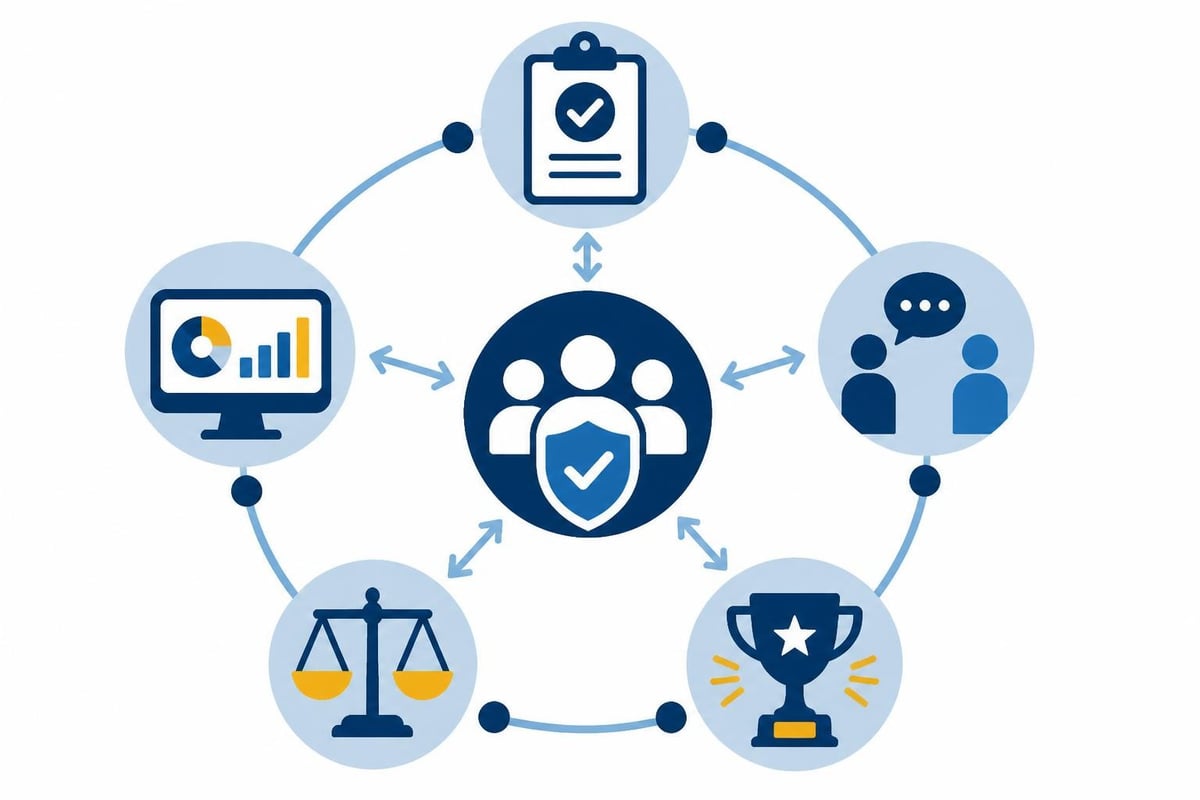
Participants benefit from learning to design and use visual tools that make accountability transparent. Shared dashboards, project boards, and commitment trackers transform abstract promises into visible progress. These tools serve dual purposes: they remind individuals of their commitments while enabling teams to coordinate effectively.
During training, facilitators guide groups through creating customized accountability tools for their specific workflows. This hands-on approach ensures tools align with actual work processes rather than becoming bureaucratic overhead. Participants leave training with templates they can immediately implement.
Establishing Consequence and Recognition Frameworks
Understanding the distinction between accountability and micromanagement proves essential for training success. Participants must recognize that accountability involves agreed-upon consequences for both meeting and missing commitments-not punishment or surveillance.
Training sessions should facilitate discussions about fair, consistent consequences that encourage ownership. These might include:
- Natural consequences (missed commitments delay dependent work)
- Developmental consequences (additional coaching or training)
- Recognition and rewards for consistent accountability
- Transparent communication about performance patterns
Recognition receives equal emphasis in well-designed programs. When organizations celebrate accountability victories, they reinforce desired behaviours and motivate continued commitment. Training teaches leaders to spot and acknowledge accountability in action, creating positive reinforcement cycles.
Addressing Common Accountability Challenges
Every organization encounters predictable obstacles when building accountability cultures. Effective training programs acknowledge these challenges directly and equip participants with strategies to overcome them. Pretending difficulties don't exist undermines credibility and leaves employees unprepared.
Overcoming Blame Culture and Fear
Many workplaces have deeply ingrained blame cultures where employees hide mistakes rather than addressing them. This self-protective behaviour makes sense in environments that punish honesty. Accountability training must help organizations transition from blame to learning.
Facilitators guide participants through exercises examining current cultural norms and their impact on behaviour. These discussions often reveal that everyone recognizes the dysfunction, but no one feels empowered to change it. Training provides permission and tools for initiating that change.
Strategies for shifting from blame to accountability:
- Conducting blameless post-mortems after problems occur
- Rewarding early problem identification and reporting
- Modeling vulnerability by leaders who acknowledge mistakes
- Focusing feedback on solutions rather than fault-finding
- Creating psychological safety through consistent responses
Managing Competing Priorities and Resource Constraints
Real-world accountability becomes complicated when employees juggle multiple commitments with limited resources. Training must prepare participants for these scenarios by developing prioritization and negotiation skills. Simply demanding accountability without addressing capacity issues breeds resentment and burnout.
Participants practice using frameworks for evaluating competing demands and making transparent tradeoff decisions. They learn to communicate capacity limitations proactively, proposing solutions rather than simply declining requests. These skills prove invaluable for maintaining accountability amid organizational complexity.
Leadership's Role in Accountability Training
Leaders set the tone for accountability throughout organizations. Their participation in training programs signals commitment while providing opportunities to align leadership behaviours with desired cultural changes. Organizations achieve best results when leaders complete training alongside their teams.
Modeling Accountability from the Top
Training programs should include specific modules addressing leadership accountability. Executives and managers learn to demonstrate ownership of organizational results, communicate transparently about challenges, and follow through on leadership commitments. This modeling creates permission for employees at all levels.
Research on operational best practices emphasizes that accountability systems fail without leadership engagement. When leaders make excuses, shift blame, or ignore their commitments, training investments prove worthless. Participants quickly recognize hypocrisy and revert to previous behaviours.
Coaching for Continuous Accountability
Post-training reinforcement determines whether new behaviours stick or fade. Leaders require coaching skills to support ongoing accountability development. Training programs should equip managers with frameworks for conducting accountability conversations that motivate rather than demotivate.
These coaching conversations follow predictable structures:
- Reviewing specific commitments and expectations
- Assessing actual results against those commitments
- Exploring obstacles and learning opportunities
- Adjusting plans or recommitting to actions
- Documenting agreements for future reference
Measuring Training Impact and Organizational Change
Organizations investing in accountability training deserve evidence of return on investment. Robust measurement strategies track both immediate learning outcomes and longer-term behavioural changes. This data informs program refinement while demonstrating value to stakeholders.
Immediate Assessment Approaches
Training sessions should incorporate assessments measuring knowledge acquisition and skill development. These might include scenario-based exercises where participants demonstrate accountability concepts, peer evaluations of practice conversations, or written reflections on personal accountability plans.
Facilitators from My Training Network utilize multi-modal assessment strategies ensuring participants genuinely understand material rather than simply completing training requirements. This rigorous approach produces meaningful capability development.
| Assessment Type | Timing | Measures |
|---|---|---|
| Pre-assessment | Before training | Baseline knowledge |
| Skills practice | During training | Application ability |
| Action planning | End of training | Implementation commitment |
| Follow-up survey | 30-60 days post | Behaviour change |
| Performance metrics | Quarterly | Business impact |
Long-Term Behaviour and Culture Indicators
The true test of accountability training emerges months after formal sessions conclude. Organizations should track indicators such as:
- Project completion rates and deadline adherence
- Quality metrics and error reduction
- Employee engagement and satisfaction scores
- Customer feedback and complaint resolution
- Innovation metrics and improvement suggestions
Leadership teams should review these metrics quarterly, identifying patterns and adjusting support systems accordingly. Declining indicators signal need for refresher training or system modifications.
Customizing Training for Different Organizational Contexts
One-size-fits-all accountability training rarely produces optimal results. Organizations vary in size, industry, culture, and maturity. Effective programs adapt content and delivery methods to specific contexts while maintaining core accountability principles.
Industry-Specific Applications
Manufacturing environments emphasize accountability for safety protocols and quality standards. Healthcare organizations focus on patient outcomes and regulatory compliance. Technology companies stress accountability for innovation and rapid iteration. Training content should reflect these industry-specific priorities.
Facilitators incorporate relevant examples, case studies, and scenarios that resonate with participants' daily experiences. Generic business examples fall flat compared to situations participants immediately recognize from their work.
Industry customization considerations:
- Regulatory requirements affecting accountability expectations
- Common challenges specific to the sector
- Industry terminology and communication norms
- Typical organizational structures and reporting relationships
- Performance metrics meaningful in that context
Adapting for Organizational Size and Structure
Small organizations require different accountability approaches than multinational corporations. Startup cultures emphasize agility and rapid decision-making, while established enterprises balance accountability with bureaucratic requirements. Training programs must acknowledge these realities.
Remote and hybrid work environments present unique accountability challenges addressed through specialized training modules. Virtual teams need stronger communication protocols and more explicit commitment tracking than co-located groups. Training should equip distributed teams with digital tools and practices supporting remote accountability.
Sustaining Accountability Beyond Initial Training
The weeks following training represent the critical period when new behaviours either take root or disappear. Organizations must plan deliberate reinforcement strategies preventing regression to old patterns. This sustainability phase often receives insufficient attention despite determining ultimate success.
Creating Accountability Partners and Peer Networks
Training graduates benefit from ongoing peer support as they implement new practices. Establishing accountability partnerships pairs participants who commit to regular check-ins about their progress. These relationships provide encouragement, problem-solving assistance, and gentle pressure to maintain commitments.
Some organizations create accountability cohorts that meet monthly to share successes, troubleshoot challenges, and refine their approaches. These communities of practice extend learning beyond formal training while building organizational capability.
Integrating Accountability into Existing Systems
Sustainability improves when accountability practices integrate into existing workflows rather than adding separate processes. Training should help participants identify natural integration points-team meetings, project reviews, performance discussions-where accountability conversations already occur or could easily fit.
Organizations achieving lasting change update job descriptions, performance criteria, and reward systems to reflect accountability expectations. These structural changes signal that accountability represents genuine priorities rather than flavour-of-the-month initiatives.
Building a culture of genuine accountability transforms organizations from collections of individuals into high-performing teams where everyone takes ownership of collective success. The strategies outlined above provide a roadmap for designing and implementing training that drives meaningful behavioural change and measurable business results. If your organization needs expert facilitation to develop customized accountability training programs, My Training Network connects you with experienced instructors who specialize in creating high-impact learning experiences tailored to Canadian organizations. Our comprehensive course catalogue and flexible delivery options make it easy to bring accountability training to your team, whether in-person across Ontario or virtually anywhere in the world.

