

Modern organisations face unprecedented pressure to deliver projects faster, adapt to changing requirements, and respond to market shifts with agility. Traditional project management approaches, whilst structured and predictable, often struggle to accommodate the rapid pace of today's business environment. This reality has driven countless Canadian organisations to invest in agile project management training as a strategic imperative rather than a nice-to-have skill. The shift represents more than adopting new terminology-it fundamentally transforms how teams collaborate, deliver value, and respond to stakeholder needs throughout the project lifecycle.
Understanding the Foundations of Agile Project Management
Agile project management represents a paradigm shift from traditional waterfall methodologies. Rather than following a linear sequence of planning, execution, and delivery, agile approaches embrace iterative cycles that allow teams to adapt and refine their work continuously. The Software Engineering Institute at Carnegie Mellon University emphasises how this methodology focuses on iterative software delivery and collaborative requirement evolution.
Core principles that distinguish agile methodologies include:
- Customer collaboration over contract negotiation
- Responding to change over following a rigid plan
- Working solutions over comprehensive documentation
- Individuals and interactions over processes and tools
The beauty of agile project management training lies in its applicability across industries. Whilst initially developed for software development, these principles now guide marketing campaigns, product launches, construction projects, and organisational change initiatives. Teams that embrace agile thinking develop a mindset of continuous improvement, where each iteration provides valuable learning opportunities.
Key Frameworks Within Agile Methodology
Several distinct frameworks fall under the agile umbrella, each offering unique advantages for different organisational contexts. Scrum remains the most widely adopted framework, with defined roles (Scrum Master, Product Owner, Development Team), ceremonies (sprint planning, daily stand-ups, retrospectives), and artefacts (product backlog, sprint backlog). The Scrum Alliance provides comprehensive resources for professionals beginning their agile learning journey.
Kanban offers another popular approach, visualising workflow through boards that limit work-in-progress and optimise flow. This framework particularly suits teams dealing with continuous delivery rather than fixed-length sprints. Meanwhile, the DSDM Agile Project Framework provides a structured approach emphasising governance alongside flexibility.
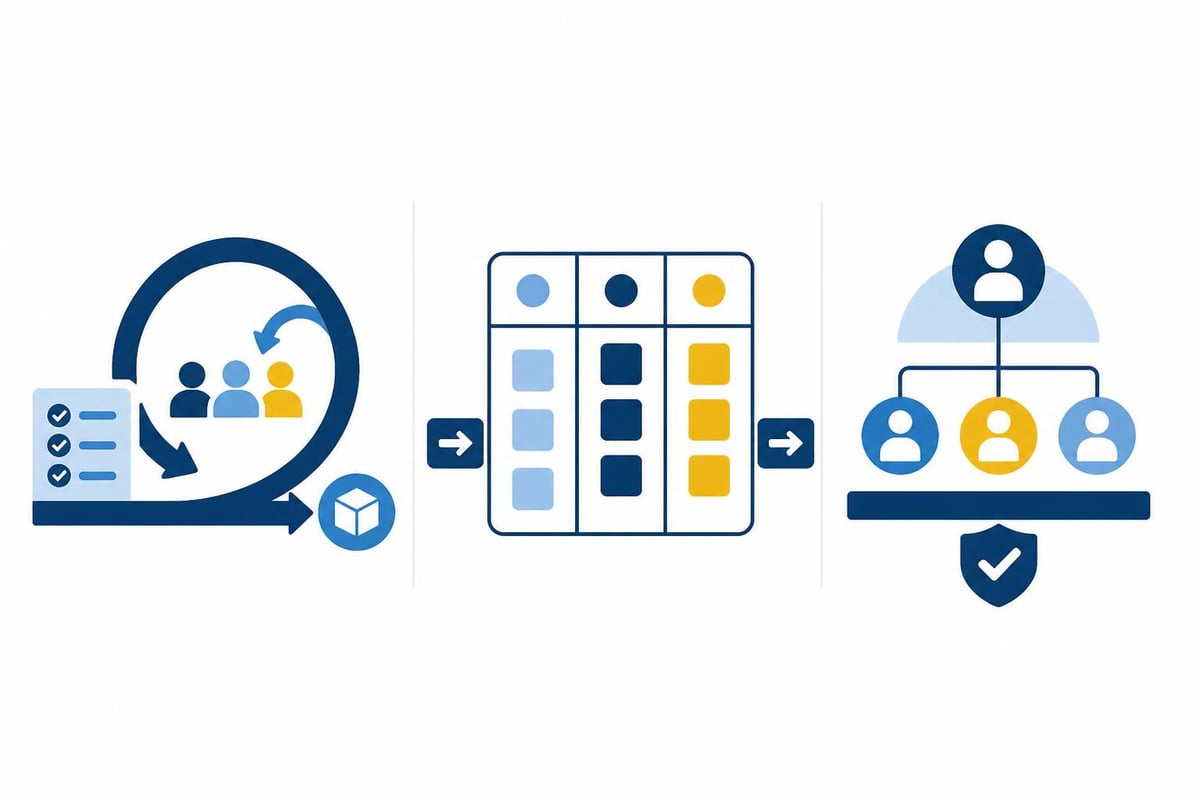
For enterprise-level implementation, the Scaled Agile Framework (SAFe) has gained significant traction. Scaled Agile, Inc. details how organisations can implement agile practices across multiple teams and portfolios, addressing challenges that arise when scaling beyond small, independent groups.
Essential Components of Effective Training Programmes
Quality agile project management training extends beyond theoretical knowledge. Effective programmes balance conceptual understanding with practical application, ensuring participants can immediately implement what they learn. At My Training Network, instructor-led courses provide this crucial hands-on component through simulations, case studies, and interactive exercises.
| Training Component | Purpose | Delivery Method |
|---|---|---|
| Foundation Theory | Understanding agile principles | Lectures, readings, discussions |
| Framework Deep-Dives | Mastering specific methodologies | Workshops, documentation review |
| Practical Simulation | Applying knowledge to scenarios | Role-play, team exercises |
| Tool Proficiency | Learning project management software | Hands-on labs, demonstrations |
| Certification Prep | Validating competency | Practice exams, study groups |
The International Consortium for Agile (ICAgile) emphasises tailored learning paths that recognise different roles within agile teams. A Scrum Master requires different competencies than a Product Owner, and both differ from what development team members need.
Role-Specific Learning Pathways
Agile project management training should acknowledge that team members occupy distinct roles with unique responsibilities. Scrum Masters facilitate team processes, remove impediments, and coach teams towards self-organisation. Their training must emphasise servant leadership, conflict resolution, and facilitation techniques that complement coaching skills for managers.
Product Owners bridge stakeholders and development teams, prioritising backlogs and defining acceptance criteria. Their curriculum should cover stakeholder management, value stream mapping, and strategic thinking alongside agile principles. Development team members, conversely, benefit from training that emphasises collaboration, estimation techniques, and technical practices like test-driven development or continuous integration.
Executive sponsors and senior leaders require yet another perspective. Their agile project management training focuses on creating organisational conditions that support agile adoption, measuring value delivery rather than activity completion, and understanding how agile fits within broader strategic initiatives.
Certification Options and Career Advancement
The agile certification landscape offers numerous pathways for professionals seeking to validate their expertise. Each certification body brings distinct philosophies and emphases, allowing individuals to choose paths aligned with their career goals and organisational context.
Popular agile certifications include:
- Certified ScrumMaster (CSM) – Entry-level credential demonstrating fundamental Scrum knowledge
- Professional Scrum Master (PSM) – Competency-based certification requiring examination without mandatory training
- PMI Agile Certified Practitioner (PMI-ACP) – Broad agile credential covering multiple methodologies
- SAFe Agilist – Enterprise-focused certification for scaled implementations
- ICAgile Certified Professional (ICP) – Foundation credential emphasising agile mindset
Research from University of Michigan’s Kresge Library provides academic perspectives on these methodologies, offering recommended readings that support certification preparation. Academic understanding complements practical training, creating well-rounded practitioners who can both implement and articulate agile principles.
Certification pursuit serves multiple purposes beyond credential collection. The structured learning journey forces professionals to engage deeply with agile concepts, challenging assumptions and expanding perspectives. Many organisations now require specific certifications for project management roles, making them essential career assets. Furthermore, certification preparation creates communities of practice where professionals share experiences and learn collaboratively.
Implementing Agile Practices in Canadian Organisations
Theory transforms into value only through effective implementation. Canadian organisations adopting agile methodologies face unique considerations, from distributed teams spanning multiple time zones to bilingual stakeholder management and regulatory compliance requirements specific to various provinces.
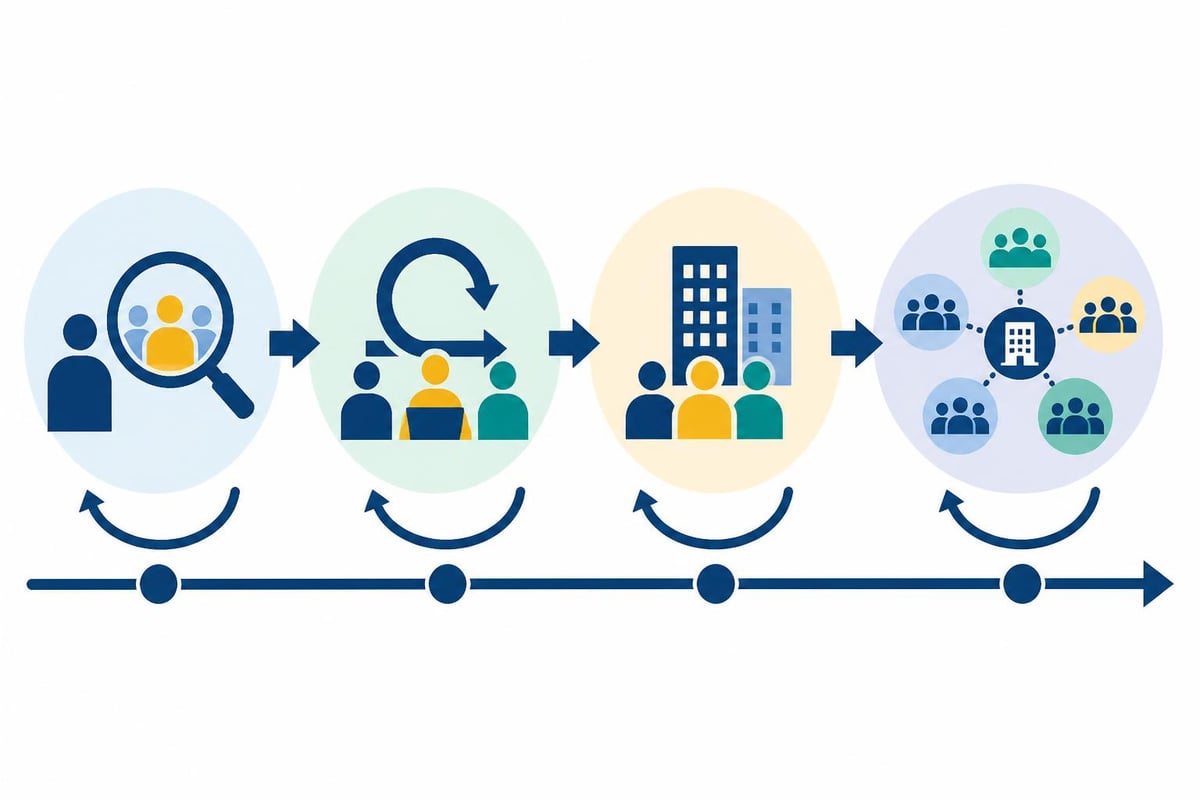
Successful agile adoption typically follows a phased approach rather than organisation-wide transformation overnight. Pilot teams demonstrate value and identify implementation challenges before broader rollout. These early adopters become internal champions, sharing lessons learnt and supporting subsequent teams through their transitions.
Overcoming Common Implementation Challenges
Resistance to change represents perhaps the most significant barrier to successful agile adoption. Team members accustomed to traditional approaches may view agile practices as threatening or unnecessarily disruptive. Comprehensive agile project management training addresses this resistance by helping participants understand the "why" behind practices, not just the "what" and "how."
Common challenges and mitigation strategies:
-
Challenge: Middle management perceiving loss of control
Strategy: Reframe their role as enablers rather than gatekeepers, emphasising value delivery metrics -
Challenge: Difficulty estimating work in story points rather than hours
Strategy: Provide extensive practice with planning poker and historical velocity analysis -
Challenge: Stakeholder frustration with evolving requirements
Strategy: Educate stakeholders on agile benefits and establish clear communication cadences -
Challenge: Tool proliferation creating confusion rather than clarity
Strategy: Standardise on core platforms whilst allowing team-level customisation within boundaries
The transition period requires patience and support. Many organisations find that supplementing formal agile project management training with ongoing coaching produces better results than one-off workshops. Regular retrospectives at team and organisational levels identify emerging challenges before they derail adoption efforts.
Measuring Training Effectiveness and ROI
Organisations investing in agile project management training rightfully expect measurable returns. However, quantifying soft skill development and mindset shifts proves more challenging than tracking technical competencies. Effective measurement combines quantitative metrics with qualitative assessments.
| Metric Category | Example Measures | Collection Method |
|---|---|---|
| Delivery Speed | Cycle time, velocity trends, time-to-market | Project management tools, release tracking |
| Quality Improvements | Defect rates, rework percentages, customer satisfaction | Quality assurance systems, surveys |
| Team Dynamics | Engagement scores, retention rates, collaboration frequency | Pulse surveys, HR analytics |
| Business Outcomes | Revenue impact, cost savings, market share | Financial systems, business intelligence |
Leading indicators appear before lagging indicators like revenue impact. Early signs of successful training include increased team confidence, more effective sprint planning sessions, and improved backlog refinement. These behavioural changes eventually translate into measurable business outcomes.
Connecting Training to Organisational Strategy
Agile project management training delivers maximum value when aligned with broader organisational objectives. Isolated training initiatives, disconnected from strategic priorities, rarely produce lasting change. Forward-thinking organisations connect training directly to specific business challenges they aim to address.
For instance, an organisation struggling with lengthy product development cycles might implement agile project management training as part of a broader initiative to reduce time-to-market. The training curriculum would emphasise practices like minimum viable products, iterative delivery, and continuous feedback loops. Success metrics would directly tie to cycle time reduction targets.
This strategic alignment ensures training receives executive support and adequate resources. It also helps participants understand how their learning contributes to organisational success, increasing motivation and application of new skills. Similar strategic approaches benefit related development areas like leadership skills for supervisors and project planning.
Tailoring Training for Different Industry Contexts
Whilst agile principles remain consistent across contexts, effective agile project management training acknowledges industry-specific considerations. Software development teams face different challenges than marketing departments, construction firms, or healthcare organisations. Customised training addresses these contextual factors whilst maintaining core agile values.
Manufacturing environments implementing agile approaches must reconcile iterative development with physical constraints and longer lead times for materials. Their training emphasises hybrid approaches that combine agile planning with necessary upfront design work. Financial services organisations navigate regulatory requirements that mandate specific documentation and approval processes, requiring training that addresses compliance within agile frameworks.
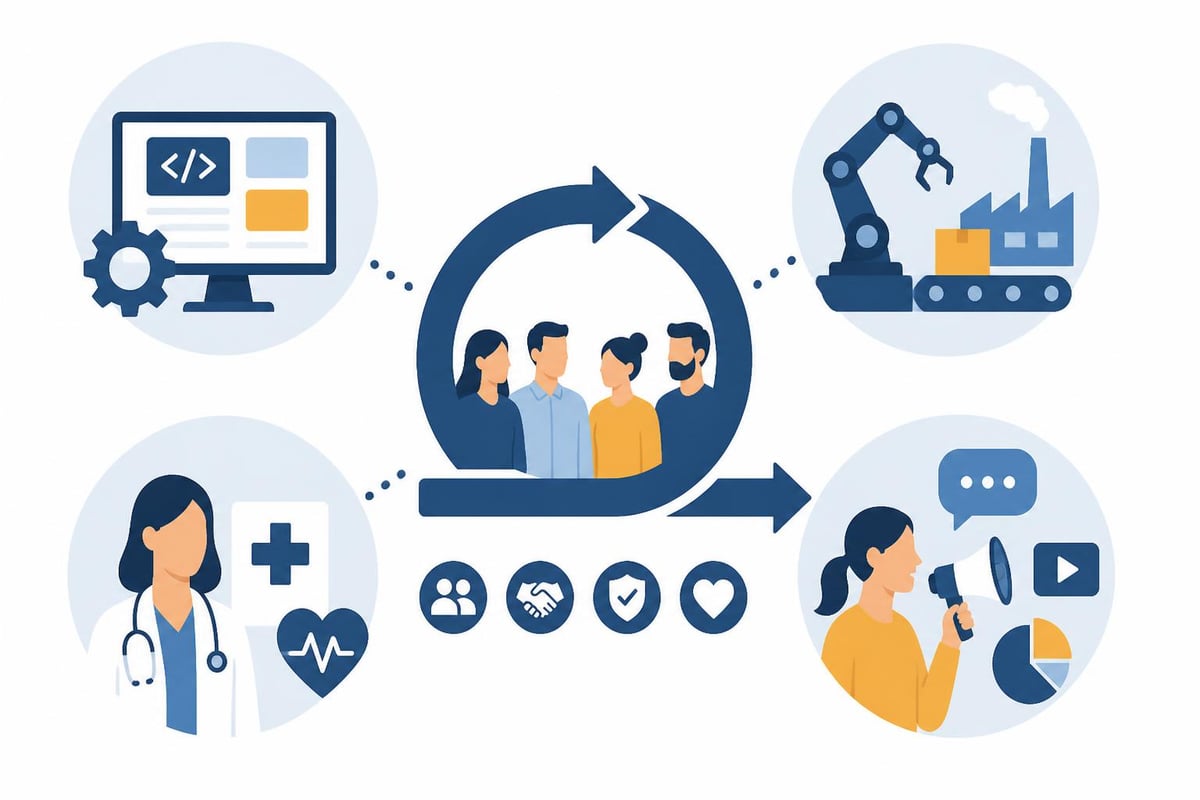
Non-profit organisations bring unique budget constraints and stakeholder complexity to agile adoption. Training for these sectors, like what My Training Network offers, addresses resource optimisation and volunteer team management alongside standard agile practices.
Academic research, including literature-based perspectives on agile IT project management, provides theoretical foundations that support industry-specific adaptations. Understanding both universal principles and contextual applications creates versatile practitioners capable of tailoring approaches appropriately.
Building Sustainable Agile Capabilities
One-time training events rarely create lasting organisational change. Sustainable agile capabilities require ongoing learning, practice, and refinement. Progressive organisations view agile project management training as the beginning of a journey rather than a destination.
Communities of practice provide crucial support structures for continued development. These forums allow practitioners to share challenges, discuss solutions, and learn from collective experience. Regular knowledge-sharing sessions, whether brown-bag lunches or formal presentations, keep agile thinking prominent within organisational culture.
Elements of sustainable agile capability building:
- Initial comprehensive training establishing foundational knowledge
- Embedded coaching supporting real-world application
- Regular skill refreshers addressing advanced topics
- Community forums facilitating peer learning
- Leadership reinforcement modelling agile behaviours
- Tool and process evolution incorporating lessons learnt
Some organisations designate agile champions or centres of excellence that support teams, maintain standards, and drive continuous improvement. These internal resources complement external training providers, creating blended support systems. The combination of expert trainers bringing external perspectives with internal champions understanding organisational nuances proves particularly effective.
Visual content plays an increasingly important role in reinforcing training concepts. As teams work to implement agile practices, clear visual communications help maintain alignment and understanding. Organisations working with services like beCreatives can develop video content that reinforces key concepts, shares success stories, and provides just-in-time learning resources for distributed teams.
Future Trends in Agile Project Management Development
The agile landscape continues evolving as organisations gain experience and new challenges emerge. Remote and hybrid work environments have accelerated adoption of digital collaboration tools whilst highlighting the importance of intentional relationship-building that once occurred naturally in co-located teams. Agile project management training increasingly addresses these virtual collaboration dynamics.
Artificial intelligence and automation are beginning to influence agile practices, from predictive analytics that inform sprint planning to automated testing that enables faster iterations. Training programmes must evolve to help practitioners leverage these technologies whilst maintaining the human-centred focus that makes agile effective.
Analysis of how agility is addressed in project management standards reveals ongoing efforts to integrate agile thinking into traditional project management frameworks. This convergence suggests future training will increasingly emphasise hybrid approaches rather than presenting agile and traditional methods as opposing choices.
Brand identity and cohesive visual systems, such as those created by studios like Kollektif®, become increasingly important as agile teams develop their own tools, frameworks, and communication materials. Professional design ensures these artefacts communicate effectively and reinforce organisational professionalism.
Environmental, social, and governance (ESG) considerations are influencing project management across industries. Future agile project management training will likely incorporate sustainability thinking, helping teams consider environmental impact and social responsibility alongside traditional project success metrics. This holistic perspective aligns with agile's emphasis on delivering value to all stakeholders, not just immediate customers.
Selecting the Right Training Partner
Choosing an agile project management training provider represents a significant decision with long-term implications. Quality varies considerably across providers, from certification mills focused solely on exam preparation to comprehensive development programmes that transform organisational capabilities.
Evaluation criteria for training providers:
- Trainer expertise: Look for practitioners with extensive real-world agile experience, not just certification holders
- Customisation capability: Generic courses rarely address specific organisational challenges effectively
- Delivery flexibility: Options for in-person, virtual, and hybrid delivery accommodate diverse needs
- Ongoing support: Post-training resources and coaching extend learning beyond classroom sessions
- Proven track record: References and case studies demonstrate successful outcomes with similar organisations
The instructor-led approach offered through My Training Network’s services provides interactive learning that virtual self-paced courses cannot replicate. Real-time discussions, immediate clarification of concepts, and peer learning create richer educational experiences. For geographically distributed teams, hybrid workshops combine the benefits of face-to-face interaction with the convenience of virtual participation.
Agile project management training represents a strategic investment that transforms how organisations deliver value, respond to change, and engage their teams. By building capabilities across frameworks, roles, and contexts, organisations position themselves to thrive in dynamic environments where adaptability determines success. My Training Network brings over 150 customisable courses and expert trainers to organisations across Canada, delivering the practical, instructor-led agile project management training that creates lasting capability. Whether you're beginning your agile journey or scaling practices across your enterprise, our tailored approach ensures your team gains the skills and confidence to succeed.

