

Building and maintaining strong client relationships represents the foundation of sustainable business success. Organizations that invest in developing their teams' relationship management capabilities consistently outperform competitors, achieving higher retention rates, increased customer lifetime value, and stronger brand advocacy. Client relationship management training equips professionals with the strategic communication skills, emotional intelligence, and systematic approaches necessary to transform one-time buyers into long-term partners who champion your organization.
The Strategic Value of Client Relationship Management Training
Organizations often underestimate the measurable impact that structured relationship management education delivers. When teams receive proper client relationship management training, they develop consistent approaches to every customer interaction, reducing friction points and building predictable outcomes. This systematic skill development creates competitive advantages that technology alone cannot replicate.
Quantifiable Business Outcomes
Trained teams demonstrate remarkable improvements across key performance indicators. Research shows that organizations with formalized relationship management protocols experience 27% higher customer retention rates compared to those relying on intuition-based approaches. Additionally, customer acquisition costs decrease significantly when existing clients become active referral sources through strengthened relationships.
The financial implications extend beyond retention metrics. Clients who feel genuinely understood and valued typically spend 23% more annually than transactional customers. These relationships also provide valuable market intelligence, as trusted clients share candid feedback that guides product development and service refinement.
Core Competencies Developed Through Training
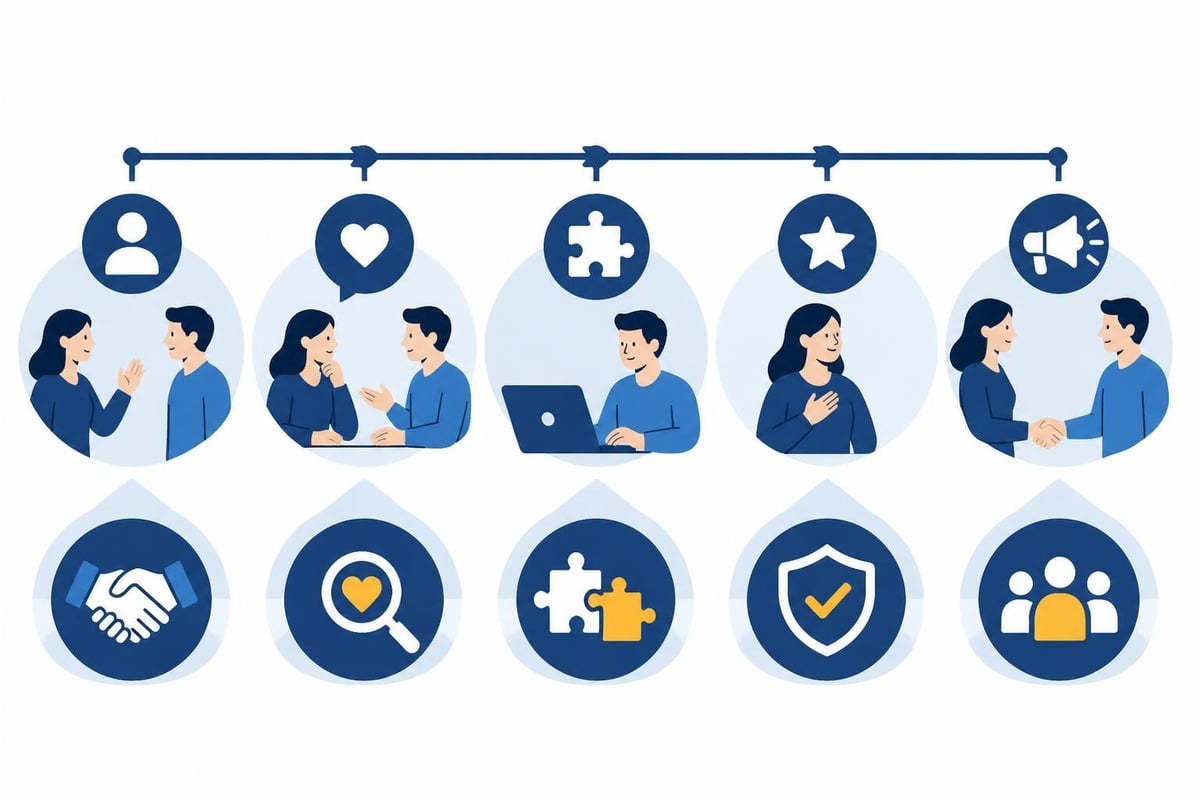
Effective client relationship management training addresses multiple skill dimensions simultaneously. Unlike narrow technical programs, comprehensive relationship training develops interconnected capabilities that professionals apply across diverse scenarios.
Communication Excellence and Active Listening
Professional communicators understand that effective communication skills form the bedrock of client relationships. Training programs emphasize active listening techniques that move beyond hearing words to understanding underlying needs, concerns, and motivations. Participants learn to ask probing questions that reveal hidden opportunities while demonstrating genuine interest in client success.
These programs also address communication adaptability, teaching professionals to adjust their style based on client preferences, cultural contexts, and situational requirements. Whether communicating through email, video conferences, or face-to-face meetings, trained professionals maintain consistency in their relationship-building approach.
Emotional Intelligence and Empathy Development
Understanding and managing emotions-both personal and client-facing-separates exceptional relationship managers from average performers. Client relationship management training develops emotional intelligence through scenario-based exercises that simulate challenging client situations. Participants practice recognizing emotional cues, responding with appropriate empathy, and maintaining composure during tense negotiations.
The empathy component extends to anticipating client needs before they're articulated. Trained professionals develop pattern recognition skills that identify potential concerns early, allowing proactive solution development that strengthens trust and demonstrates commitment to client success.
| Skill Area | Training Focus | Business Impact |
|---|---|---|
| Active Listening | Question frameworks, note-taking systems, feedback loops | 34% improvement in needs identification accuracy |
| Conflict Resolution | De-escalation techniques, win-win negotiation, emotional regulation | 42% reduction in client escalations |
| Relationship Mapping | Stakeholder analysis, influence patterns, decision-making processes | 28% increase in deal closure rates |
| Value Communication | ROI articulation, case study development, outcome tracking | 31% improvement in upsell conversion |
Building Systematic Relationship Management Processes
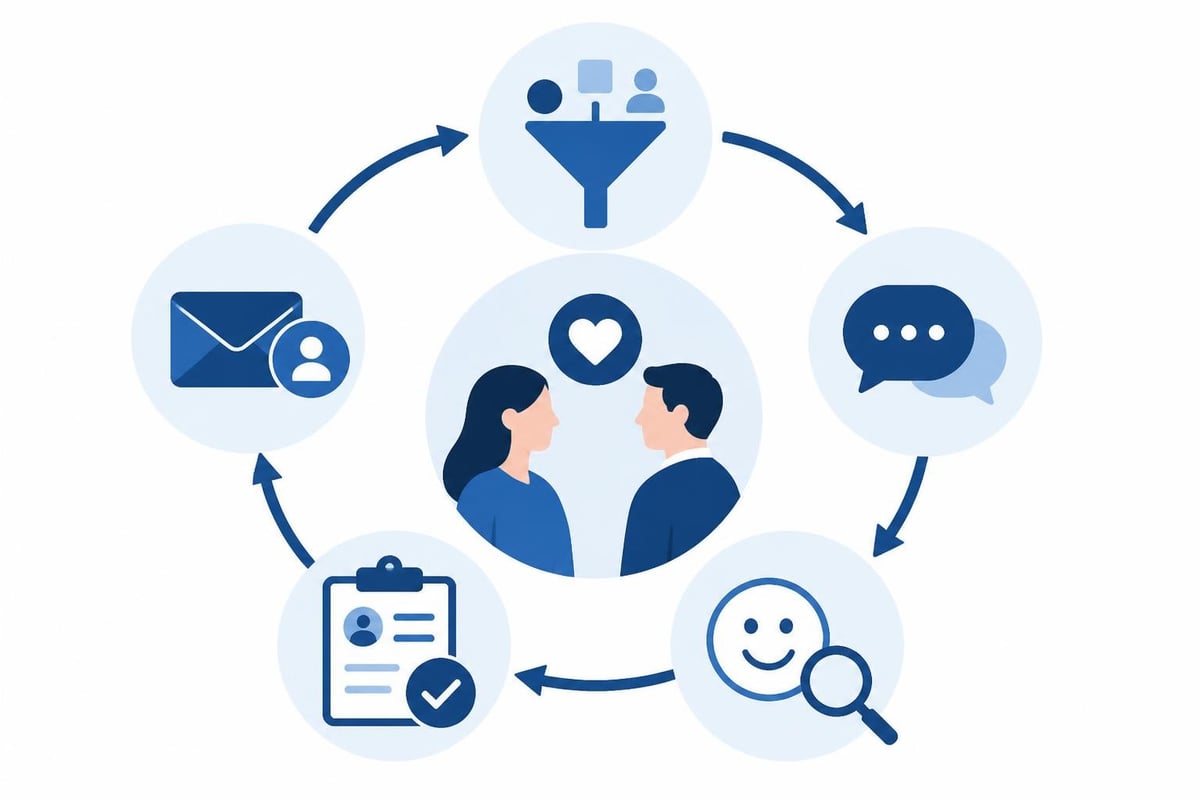
Random acts of client engagement rarely produce consistent results. Client relationship management training teaches professionals to implement structured processes that ensure no relationship opportunity falls through organizational cracks. These systems create predictable touchpoints, standardized quality, and scalable growth.
Customer Journey Mapping and Touchpoint Optimization
Understanding the complete client experience from initial awareness through long-term partnership enables strategic intervention design. Training participants learn to map customer journeys, identifying critical moments that disproportionately influence relationship quality. These moments-often called "moments of truth"-require specific protocols that trained teams execute consistently.
Organizations implementing structured journey maps report significant improvements in customer satisfaction scores. When teams understand which touchpoints matter most, they allocate resources strategically rather than spreading efforts uniformly across all interactions.
Data-Driven Relationship Intelligence
Modern client relationship management training incorporates technology literacy, teaching professionals to leverage CRM platforms, analytics dashboards, and communication tools effectively. However, training emphasizes that technology enhances rather than replaces human connection. Participants learn to interpret data patterns that signal relationship health changes, enabling early intervention when accounts show disengagement warning signs.
For organizations seeking to amplify their client acquisition efforts, partnering with specialists in lead generation and qualification can complement internal relationship management capabilities, ensuring teams focus their trained skills on the highest-potential opportunities.
Addressing Common Relationship Management Challenges
Even experienced professionals encounter situations that test their relationship management abilities. Client relationship management training prepares teams for these predictable challenges through simulation exercises and proven response frameworks.
Managing Difficult Conversations and Expectations
Setting realistic expectations while maintaining client enthusiasm requires delicate balance. Training programs provide scripts, frameworks, and practice opportunities for conversations involving:
- Scope limitations and boundary setting
- Pricing discussions and value justification
- Timeline negotiations and deadline management
- Performance issues and accountability discussions
- Competitive pressure and loyalty reinforcement
Professionals who complete structured training report 47% greater confidence when initiating difficult conversations, leading to earlier problem resolution and stronger long-term relationships.
Recovering from Service Failures
No organization delivers perfect service consistently. The difference between relationship-ending failures and relationship-strengthening recovery moments lies in trained response capabilities. Client relationship management training teaches systematic recovery protocols that acknowledge mistakes, communicate corrective actions, and rebuild trust through demonstrable commitment changes.
Research published in customer relationship management studies emphasizes that clients who experience well-managed service recovery often become more loyal than clients who never encountered problems, provided the organization's response demonstrates genuine care and effective resolution.
Customizing Training for Industry-Specific Contexts
Generic relationship management principles require adaptation for industry-specific applications. Organizations in regulated sectors, technical industries, or service-intensive fields need client relationship management training that addresses their unique challenges and compliance requirements.
Professional Services and Consulting Applications
Consulting relationships demand particular attention to confidentiality, boundary management, and objective advisory positioning. Training for professional service providers emphasizes maintaining trusted advisor status while delivering difficult truths that clients need to hear. These programs often incorporate leadership development elements that position consultants as strategic partners rather than tactical vendors.
Technology and IT Services Relationship Management
Technology providers face unique challenges explaining complex solutions to non-technical decision-makers while managing technical stakeholders simultaneously. Training addresses translation skills that communicate value in business language rather than technical jargon. For organizations requiring robust technical infrastructure to support their client relationships, partnering with experts in managed IT services and cyber security ensures the technological foundation matches the relationship management ambitions.
Additionally, technology sector training emphasizes managing expectations around implementation timelines, change management support, and ongoing optimization-areas where miscommunication frequently damages relationships.
Retail and Consumer Services Contexts
High-volume client environments require different relationship management approaches than low-volume, high-value scenarios. Training for retail and consumer service teams emphasizes efficiency without sacrificing personalization, memorability in brief interactions, and systematic follow-up processes that maintain connection despite infrequent contact.
Programs designed for municipal and public sector teams, such as customer service skills for municipal employees, address the unique dynamics of serving constituents rather than traditional customers, where relationship success measures include public trust, transparency, and equitable service delivery.
Developing Long-Term Relationship Management Capabilities
Single training events rarely produce lasting behaviour change. Effective client relationship management training incorporates reinforcement mechanisms, ongoing skill development, and organizational culture alignment that sustains improved performance over time.
Progressive Skill Building and Advanced Modules
Foundation Stage:
- Relationship management principles and mindsets
- Basic communication and listening skills
- CRM system introduction and data hygiene
- Client segmentation and prioritization frameworks
Intermediate Stage:
- Advanced negotiation and conflict resolution
- Strategic account planning methodologies
- Cross-functional collaboration for client success
- Relationship health monitoring and intervention
Advanced Stage:
- Executive relationship management and C-suite engagement
- Complex stakeholder navigation in enterprise accounts
- Strategic business partnership development
- Relationship-based business model innovation
Organizations implementing progressive development paths report 63% higher skill retention compared to one-time training events, as professionals apply foundational concepts before advancing to complex techniques.
Measuring Training Effectiveness and ROI
Successful organizations establish clear metrics before implementing client relationship management training. These measurements connect training investments to business outcomes, ensuring accountability and enabling continuous program refinement.
| Measurement Category | Key Metrics | Collection Method |
|---|---|---|
| Skill Acquisition | Pre/post-assessment scores, certification completion rates | Testing platforms, trainer evaluations |
| Behavioural Change | CRM utilization rates, client touchpoint frequency, response times | System analytics, activity tracking |
| Relationship Quality | Net Promoter Score, customer satisfaction ratings, relationship depth scores | Client surveys, account reviews |
| Business Outcomes | Retention rates, upsell revenue, referral generation, customer lifetime value | Financial systems, CRM analytics |
Organizations that rigorously measure training impact adjust curriculum based on evidence, creating continuous improvement cycles that maximize investment returns.
Integrating Relationship Management with Broader Skill Development
Client relationship management training delivers amplified results when integrated with complementary professional development. Organizations benefit from viewing relationship capabilities as one component within comprehensive talent development strategies.
Leadership and Management Alignment
Relationship management principles apply internally as well as externally. Leaders who complete client relationship management training naturally apply these techniques to team development, creating organizational cultures that value connection, communication, and collaborative problem-solving. Many organizations combine relationship training with leadership skills training programs to develop consistent approaches across all stakeholder interactions.
Time Management and Personal Effectiveness
Strong relationships require consistent attention, yet professionals face competing priorities and limited time. Integrating time management training with relationship development education helps professionals create sustainable systems for maintaining multiple client relationships without burnout or superficial engagement.
Project Management and Delivery Excellence
Relationship strength ultimately depends on delivery quality. Organizations combining client relationship management training with project planning training ensure professionals can promise realistic outcomes and consistently deliver against commitments-the foundation of trust-based relationships.
Virtual Relationship Building in Distributed Work Environments
The 2026 business landscape demands relationship management skills adapted for virtual and hybrid environments. Client relationship management training now addresses digital-first relationship building, acknowledging that many professionals never meet clients face-to-face.
Digital Communication Mastery
Virtual relationships require heightened attention to communication clarity, as body language and environmental cues diminish. Training addresses video conference etiquette, asynchronous communication best practices, and techniques for building rapport through screens. Professionals learn to leverage digital tools that enhance rather than hinder connection-virtual whiteboarding for collaborative problem-solving, screen sharing for transparency, and recording for accountability.
Maintaining Relationship Warmth Across Distance
Physical distance challenges relationship depth, yet trained professionals overcome these barriers through intentional strategies. Programs teach creative touchpoint design-personalized video messages, thoughtful digital gestures, and virtual events that create shared experiences. These techniques maintain relationship warmth despite geographic separation.
Research examining electronic customer relationship management performance demonstrates that organizations with systematic digital relationship protocols achieve comparable loyalty metrics to traditional in-person models, provided teams receive appropriate training and support.
Creating Organizational Cultures That Prioritize Relationships
Individual skill development produces limited results within organizations that systemically undervalue client relationships. Client relationship management training succeeds when accompanied by cultural transformation that elevates relationship quality as a core strategic priority.
Leadership Commitment and Role Modeling
Executives must visibly demonstrate relationship management principles in their own client interactions, internal stakeholder engagement, and decision-making processes. When leadership prioritizes relationship metrics alongside revenue targets, teams understand these capabilities represent genuine organizational values rather than optional soft skills.
Recognition and Reward System Alignment
Organizations reinforce trained behaviours through compensation structures, promotion criteria, and recognition programs that celebrate relationship excellence. Teams that see relationship builders advanced and rewarded naturally invest greater effort in capability development.
Cross-Functional Collaboration for Client Success
Exceptional client relationships require contributions from multiple departments-sales, delivery, support, finance, and operations. Client relationship management training increasingly emphasizes internal collaboration skills that align cross-functional teams around shared client success objectives. Organizations implementing account team structures report 38% improvement in client satisfaction compared to siloed functional approaches.
Selecting the Right Training Partner and Delivery Model
Organizations face numerous choices when implementing client relationship management training. The selection of training partners, delivery formats, and customization levels significantly influences program effectiveness and participant engagement.
Instructor-Led Versus Self-Paced Learning
While digital learning platforms offer convenience and scalability, relationship management skills benefit particularly from instructor-led training environments. Live facilitation enables real-time skill practice, personalized coaching, and peer learning that accelerates capability development. Experienced trainers adapt content based on participant challenges, ensuring relevance and immediate applicability.
Hybrid approaches combining foundational e-learning with intensive in-person or virtual practice sessions often deliver optimal results, balancing efficiency with effectiveness.
Customization and Industry Relevance
Generic training programs miss opportunities to address organization-specific challenges, terminology, and competitive contexts. Organizations should seek training partners offering substantial customization that incorporates actual client scenarios, industry regulations, and company-specific processes. This relevance dramatically improves skill transfer from classroom to workplace.
For organizations across Canada seeking comprehensive training solutions, working with providers offering extensive course catalogues enables coordinated professional development that addresses multiple capability gaps through integrated programming.
Client relationship management training represents a high-return investment that transforms how organizations engage customers, build loyalty, and drive sustainable growth through strengthened partnerships. By developing systematic relationship capabilities across teams, businesses create competitive advantages that technology and pricing strategies alone cannot replicate. My Training Network delivers customized, instructor-led client relationship management training that equips Canadian organizations with practical frameworks, proven techniques, and ongoing support to build relationship excellence throughout their teams. Connect with our expert trainers to design a program that addresses your specific industry challenges and organizational objectives.

