

The world of work is changing rapidly, and the need for ongoing skill development has never been greater. As we approach 2026, organisations are investing more in company training programs to empower their teams and stay ahead in a competitive landscape.
Company training programs not only support individual career growth, but they also boost productivity and help businesses adapt to new challenges. Structured learning initiatives open doors to advancement, encourage innovation, and improve morale across the workforce.
This comprehensive guide provides actionable strategies for understanding, implementing, and maximising the value of company training programs in 2026. Discover the different types of training, step-by-step implementation, ways to measure success, solutions to common challenges, and the trends shaping the future of workplace learning.
Understanding Company Training Programs
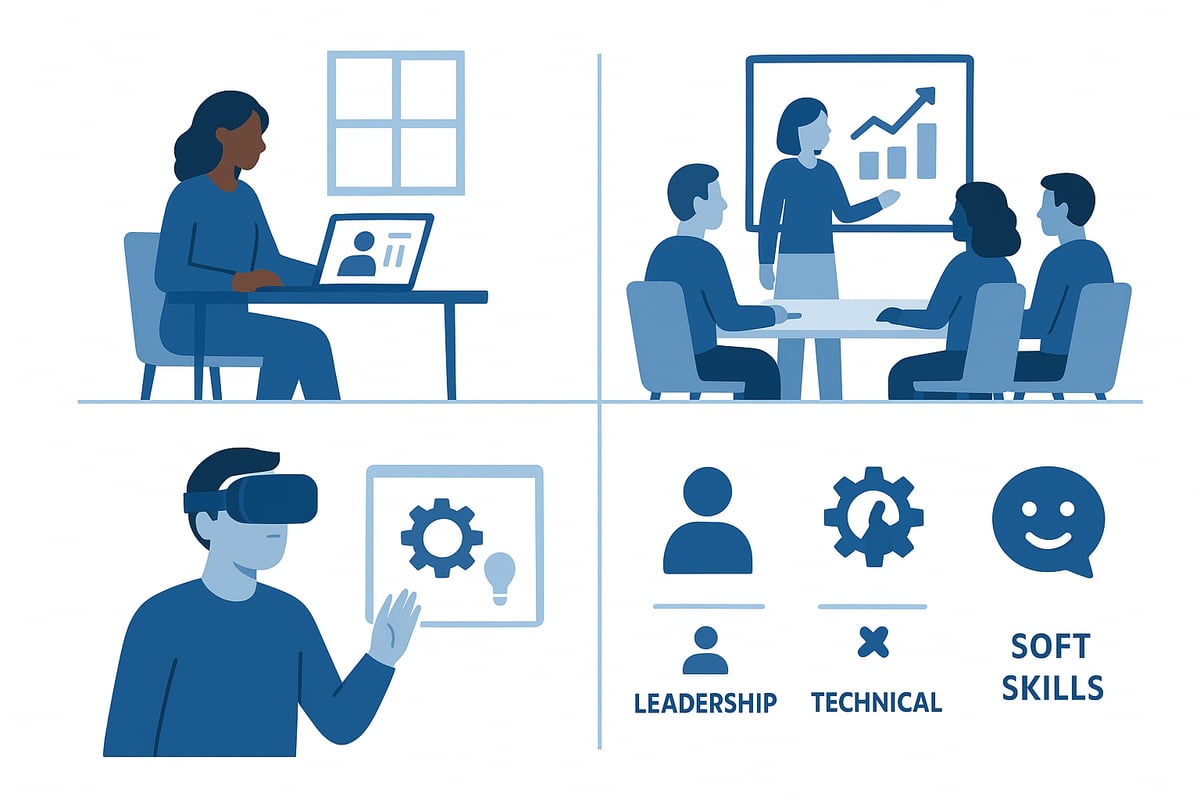
Company training programs are structured learning initiatives developed by organisations to enhance workforce skills and knowledge. These programmes go beyond simple orientation, encompassing onboarding for new hires, upskilling for current employees, reskilling for shifting roles, and compliance training to meet regulatory standards. Customisation is crucial, as industries and job functions require tailored content to address unique challenges. Examples include leadership development for managers, technical skills for IT teams, and soft skills training to improve communication. Effective company training programs are designed to adapt to evolving business needs and employee aspirations.
Defining Company Training Programs
Company training programs are formal learning experiences organised by employers to develop their workforce. These initiatives may include onboarding, which familiarises new hires with company policies and culture, as well as upskilling and reskilling to address evolving job requirements. Compliance training ensures employees meet legal and industry standards. Customising training to suit the specific needs of different departments or roles increases effectiveness. For instance, leadership development enhances management capabilities, technical training supports IT professionals, and soft skills sessions foster better teamwork. Tailored company training programs are essential for meeting both individual growth and organisational goals.
Key Benefits for Organisations and Employees
Implementing company training programs offers significant advantages for both employers and staff. Organisations benefit from increased productivity, as employees become more competent and efficient in their roles. Higher retention rates often follow, since ongoing development boosts job satisfaction and loyalty. Employee engagement rises when staff feel valued and supported, leading to improved morale. Innovation and adaptability also flourish in environments where learning is prioritised. According to the Association for Talent Development, companies with comprehensive training programmes achieve 24 percent higher profit margins compared to those without. These outcomes demonstrate the tangible value of investing in company training programs.
Types of Company Training Programs in 2026
In 2026, company training programs are available in diverse formats to suit different learning preferences and business needs. Options include in-person sessions, fully virtual courses, and hybrid approaches that blend the best of both worlds. Employees can choose between self-paced modules and instructor-led classes, depending on their schedules and learning styles. Modern methods like microlearning, gamification, and blended learning are increasingly popular, making training more engaging and effective. Technologies such as AI and virtual reality are now used to create immersive experiences. For a deeper look at these formats, explore online corporate training courses.
Common Challenges and Misconceptions
Despite their benefits, company training programs face several challenges. Budget constraints and time limitations can hinder implementation, especially for smaller organisations. Employees may resist new programmes, often due to concerns about increased workload or unfamiliar content. A common misconception is that training is a one-time event, but ongoing development is vital for sustained success. Programmes that are not continuous often fail to deliver lasting results, leading to wasted resources and unmet objectives. Recognising and addressing these obstacles is key to maximising the impact of company training programs.
Step-by-Step: Designing an Effective Training Program
Designing effective company training programs requires a methodical approach. Each stage, from initial assessment to ongoing improvement, ensures alignment with organisational goals and maximises learning outcomes. Let us explore the essential steps for building impactful company training programs in 2026.
Assessing Organisational Needs and Goals
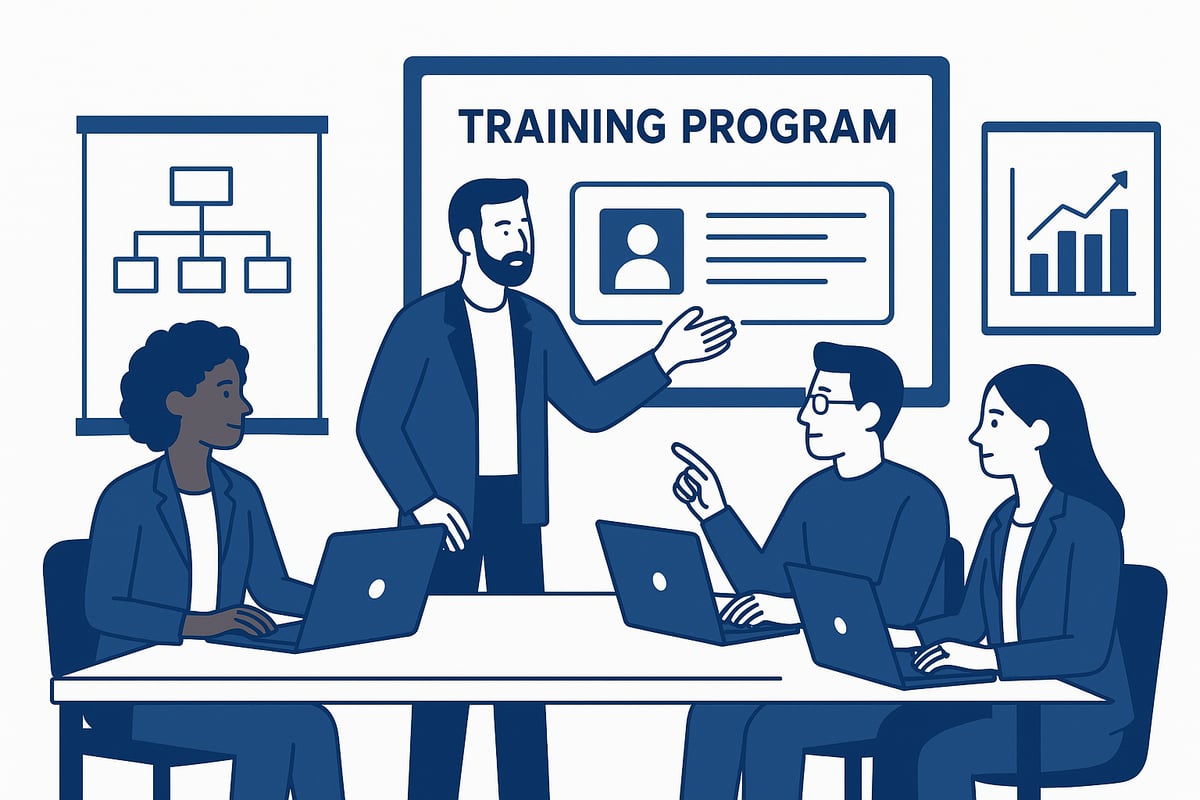
Every successful company training program begins with a thorough needs assessment. Start by conducting a skills gap analysis to identify current strengths and areas for development within your workforce. Engage stakeholders across departments to understand strategic objectives and align training outcomes with business priorities.
Collect data from employee surveys, performance reviews, and market trends. This ensures company training programs directly address real skill shortages and future-proof your organisation. Involve managers and team leaders in the process to gain buy-in and build a clear roadmap for training initiatives.
Developing a Customised Training Plan
Once needs are identified, create a tailored plan that fits your organisation’s unique context. Choose content that is relevant and engaging, and select delivery methods that suit your workforce. Options include self-paced modules, blended learning, and instructor-led training solutions for more interactive experiences.
Set measurable learning objectives to track progress. Ensure the training is accessible to all staff members, regardless of learning style or ability. By designing company training programs that are flexible and inclusive, you create a foundation for lasting improvement.
Choosing the Right Training Providers
Selecting the appropriate training providers can make a significant difference to the success of company training programs. Decide whether to use internal trainers who understand your company culture or external experts with specialised knowledge.
| Provider Type | Pros | Cons |
|---|---|---|
| Internal | Aligned with company goals | May lack fresh perspectives |
| External | Specialised expertise | Higher cost, less integration |
Review credentials and previous results. Consider success stories from companies that have benefited from external partnerships. The right provider ensures your company training programs deliver maximum value and up-to-date content.
Implementing Training Programmes
Effective implementation is key to achieving desired results from company training programs. Allocate resources, schedule sessions that minimise workflow disruption, and communicate the benefits clearly to all staff.
Onboard trainers and facilitators, ensuring they are well-prepared and aligned with organisational goals. Provide support throughout the process to foster a positive learning environment. Clear communication and thoughtful scheduling help boost participation rates and engagement.
Monitoring and Iterative Improvement
Continuous improvement is essential for keeping company training programs effective. Gather feedback during and after training sessions using surveys, interviews, and real-time analytics.
Use the data collected to make informed adjustments to content and delivery. Some organisations leverage advanced analytics to refine their training modules, ensuring relevance and impact. Iterative improvement guarantees your company training programs evolve alongside business needs and industry trends.
Measuring Success: KPIs and ROI of Training Programmes
Understanding the impact of company training programs is crucial for both HR leaders and business decision-makers. Measuring success goes beyond completion certificates, focusing on tangible outcomes that drive organisational growth. By tracking the right metrics and leveraging technology, companies can demonstrate the true value of their training investments.

Setting Key Performance Indicators (KPIs)
The foundation of measuring company training programs lies in setting clear Key Performance Indicators (KPIs). These indicators provide a structured way to evaluate progress and outcomes.
Common KPIs include:
- Course completion rates
- Knowledge retention scores
- Behavioural changes observed post-training
Qualitative metrics, such as employee feedback and engagement levels, also play a vital role. According to the LinkedIn Learning Report, 68% of HR leaders now track training effectiveness through KPIs. By aligning KPIs with business objectives, organisations ensure their company training programs directly support strategic goals.
Calculating Return on Investment (ROI)
Calculating the Return on Investment (ROI) for company training programs is essential to justify resource allocation. ROI analysis quantifies the benefits gained relative to the costs incurred.
Methods for measuring ROI include:
- Cost-benefit analysis comparing productivity before and after training
- Evaluating reductions in staff turnover and absenteeism
- Assessing improvements in sales, customer satisfaction, or project delivery
For example, companies have reported up to 218% ROI from leadership training initiatives, as cited by the Association for Talent Development. Accurate ROI calculations help businesses optimise budgets and prioritise high-impact company training programs.
Leveraging Technology for Measurement
Modern technology transforms how organisations track the success of company training programs. Learning Management Systems (LMS) provide real-time analytics on learner progress, engagement, and assessment outcomes.
AI-driven assessment tools can deliver personalised feedback and predictive insights, highlighting areas for further development. Real-time dashboards enable HR teams to monitor trends and adjust programs accordingly. For deeper insights into the role of AI in personalising learning and measurement, explore AI-driven learning platforms.
Embracing digital solutions ensures company training programs are agile, data-informed, and responsive to evolving business needs.
Case Studies: Success Stories
Real-world examples highlight the measurable impact of company training programs. One technology firm, after implementing a blended learning approach, saw a 30% increase in employee productivity and a significant drop in turnover.
Another retail organisation used data-driven feedback to refine their onboarding modules, resulting in faster ramp-up times for new hires. These case studies underscore the importance of continuous evaluation and adaptation.
By learning from proven best practices, organisations can maximise the value and effectiveness of their company training programs.
Overcoming Common Training Program Challenges
Organisations implementing company training programs often encounter obstacles that can hinder progress and reduce impact. Addressing these common challenges with clear strategies ensures that training initiatives contribute lasting value for employees and the business.
Engaging Employees and Overcoming Resistance
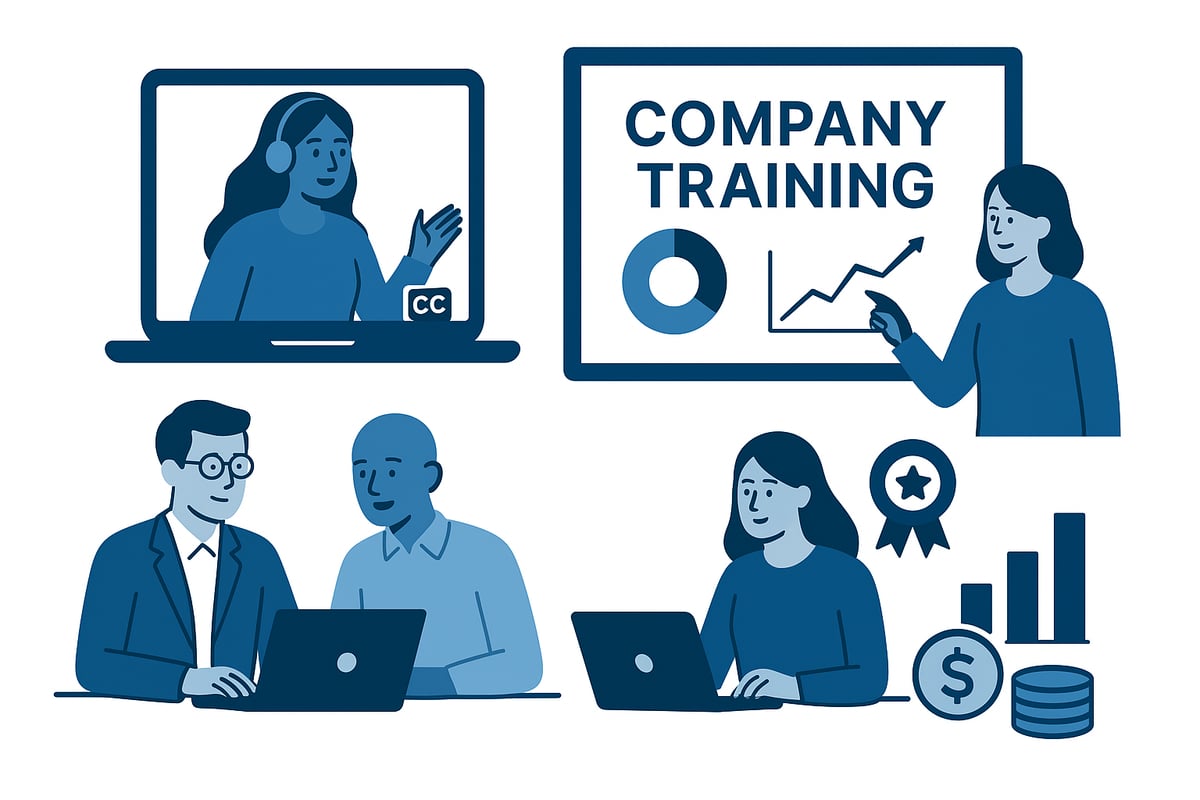
Securing engagement across all staff levels is vital for successful company training programs. Resistance may arise from perceived time constraints or scepticism about the benefits. To counter this, organisations can employ strategies such as clear communication about the personal and professional value of training, providing recognition for achievements, and offering tangible incentives.
Gamification has proven effective in increasing participation rates. Introducing leaderboards, badges, or rewards can make learning more interactive and enjoyable. For further insight into proven engagement tactics, explore employee development strategies that align with your company training programs.
Budgeting and Resource Management
Limited budgets and competing priorities often restrict the scope of company training programs. Organisations can address these constraints by leveraging cost-effective solutions like online modules, utilising internal expertise, or accessing free industry resources.
Government grants and public funding schemes can provide additional financial support, especially for small and medium-sized enterprises. For example, SMEs that tap into workforce development funds can maintain robust training initiatives without stretching budgets. Prudent resource management ensures that company training programs remain sustainable and impactful over time.
Ensuring Inclusivity and Accessibility
Delivering inclusive company training programs means accounting for diverse learning needs and abilities. Content should be adaptable for different learning styles, such as visual, auditory, or kinesthetic preferences. Providing accommodations, including closed captioning for video materials and multilingual resources, ensures that all employees can participate fully.
Accessibility also extends to digital platforms, requiring compatibility with assistive technologies. By prioritising inclusivity, organisations not only meet legal obligations but also foster an environment where every team member benefits from company training programs.
Addressing Remote and Hybrid Workforce Needs
The rise of remote and hybrid workforces presents new challenges for delivering consistent company training programs. Solutions include using cloud-based Learning Management Systems, offering flexible scheduling, and ensuring content is accessible from any location.
Maintaining quality across dispersed teams requires ongoing support and regular feedback. Virtual training now accounts for 59% of delivery methods, reflecting a growing reliance on digital solutions. Innovative approaches, such as Virtual Reality in corporate training, offer immersive learning experiences that bridge distance and foster engagement for remote staff.
The Future of Company Training: Trends for 2026 and Beyond
The future of company training programs is rapidly taking shape, influenced by technological innovation and shifting workforce needs. As organisations look ahead to 2026, several trends are set to redefine how employees learn, adapt, and thrive. By embracing these developments, businesses can ensure their company training programs remain not just relevant, but transformative.
AI and Personalised Learning Paths
AI is at the forefront of modern company training programs, enabling a tailored learning experience for every employee. Adaptive learning platforms use algorithms to analyse performance and adjust content in real time, ensuring that employees receive training suited to their unique strengths and areas for improvement.
Predictive analytics can identify future skill gaps, helping organisations stay ahead of industry changes. AI-driven training platforms have been shown to increase engagement by delivering content that is both relevant and timely. For a broader perspective on what lies ahead, explore these future trends in corporate training, which highlight the pivotal role of AI in shaping tomorrow's workforce.
Virtual Reality (VR) and Immersive Training
Virtual reality is revolutionising company training programs by offering employees hands-on, experiential learning environments. VR scenarios are especially effective in safety, technical, and leadership training, where real-world practice can be simulated without risk.
A recent study found a 40% improvement in knowledge retention when VR is used as a training tool, compared to traditional methods. This immersive approach allows learners to build confidence and master complex tasks, making VR a valuable addition to any forward-thinking company training program.
Microlearning and On-Demand Content
Microlearning is transforming company training programs by delivering short, focused modules that fit into the busiest of schedules. These bite-sized lessons can be accessed anytime, anywhere, often via mobile devices and dedicated apps.
Organisations adopting microlearning have reported a 60% reduction in overall training time, while maintaining high levels of knowledge retention. For more data on the impact of microlearning, review these microlearning effectiveness statistics, which underscore its role in modern workforce development.
Emphasis on Soft Skills and Leadership Development
As technical skills evolve, soft skills are becoming equally essential within company training programs. Employers now prioritise communication, collaboration, and emotional intelligence, recognising their impact on team performance and adaptability.
Leadership development is also a strategic focus. Building robust leadership pipelines ensures a steady flow of talent ready to guide organisations through change. In fact, 77% of employers now view soft skills as just as important as technical expertise, making their integration into training curricula a key trend for 2026 and beyond.

