

Customer complaints are inevitable in any organization, but how your team responds to them can make the difference between losing a client and building lifelong loyalty. Effective complaint handling training equips employees with the skills, frameworks, and confidence needed to turn challenging interactions into opportunities for improvement and relationship-building. In 2026, organizations across Canada are recognizing that investing in professional development for complaint resolution delivers measurable returns in customer retention, brand reputation, and employee satisfaction. This comprehensive guide explores why complaint handling training has become essential for modern businesses and how to implement programs that create lasting change.
The Strategic Importance of Professional Complaint Resolution
Organizations that view complaints as valuable feedback rather than inconveniences gain significant competitive advantages. Research demonstrates that customers who have complaints resolved effectively often become more loyal than those who never experienced problems in the first place. This phenomenon occurs because successful resolution builds trust and demonstrates organizational commitment to customer satisfaction.
Professional complaint handling training addresses the reality that most employees receive little to no formal instruction in managing difficult conversations. Many teams rely on instinct or ad-hoc approaches that create inconsistent customer experiences and missed opportunities for service recovery. Structured training programs establish standardized processes while allowing for personalized responses that address individual customer needs.
Building Organizational Resilience Through Skill Development
The impact of complaint handling extends beyond individual transactions to shape overall organizational culture. When employees feel prepared to manage challenging situations, they experience less stress and greater job satisfaction. This confidence translates into better customer interactions and reduced turnover in customer-facing roles.
Key benefits of systematic complaint handling training include:
- Enhanced customer retention rates through effective service recovery
- Improved employee confidence and reduced workplace stress
- Consistent brand messaging across all complaint resolution interactions
- Identification of systemic issues through pattern recognition
- Reduced escalation to management and legal challenges
Organizations that invest in courses focused on communication skills create foundations for effective complaint resolution while building broader organizational capabilities.
Essential Skills Taught in Complaint Handling Programs
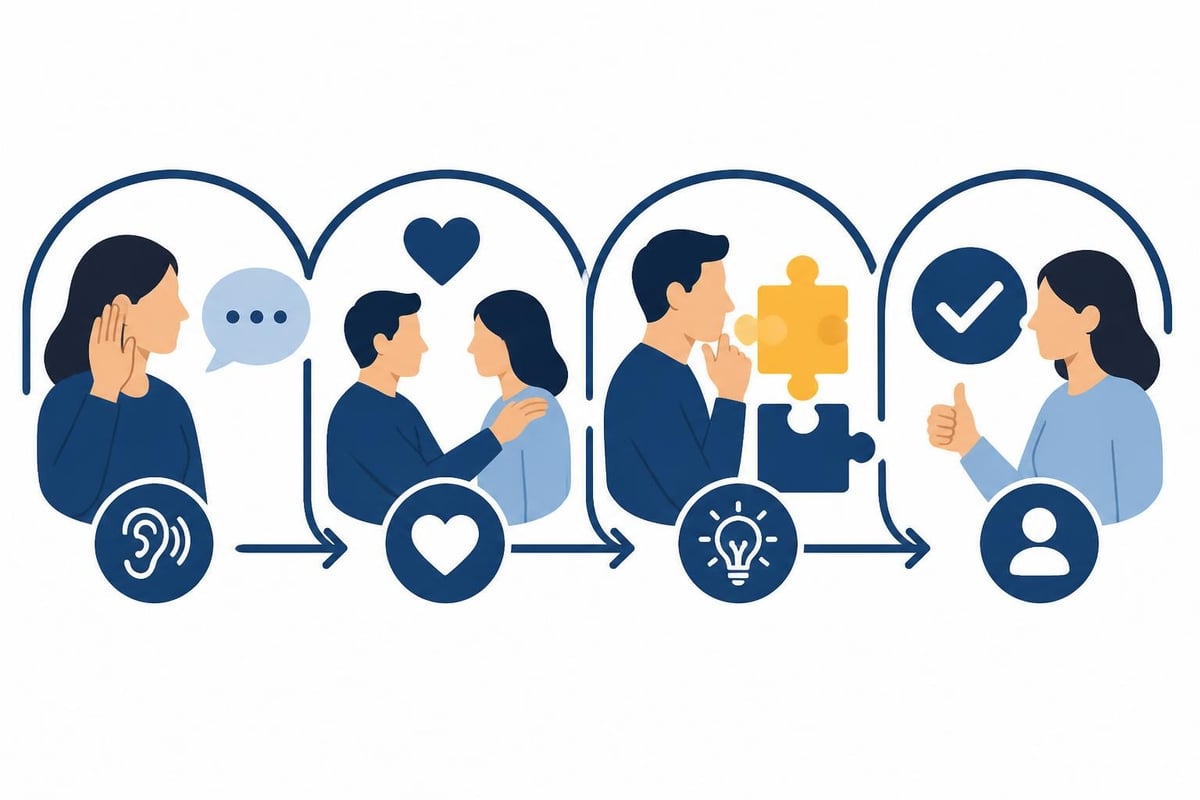
Effective complaint handling training covers multiple skill areas that work together to create positive resolution outcomes. These competencies extend beyond simple problem-solving to encompass emotional intelligence, communication excellence, and strategic thinking.
Active Listening and Emotional Intelligence
The foundation of any successful complaint resolution lies in truly understanding the customer's perspective. Active listening involves more than hearing words-it requires attention to tone, emotion, and underlying needs. Training programs teach employees to recognize verbal and non-verbal cues that provide insight into customer frustration levels and priorities.
Emotional intelligence training helps team members manage their own reactions while remaining present for upset customers. This dual awareness prevents defensive responses and creates space for genuine problem-solving. According to research on complaint handling behaviors, customers value different qualities during resolution encounters, making emotional awareness crucial for personalized responses.
De-escalation Techniques and Conflict Resolution
Modern complaint handling training incorporates proven de-escalation strategies that prevent situations from intensifying. These techniques include:
- Acknowledging the customer's feelings without necessarily agreeing with their position
- Using calm, professional language that avoids trigger words
- Offering choices to restore the customer's sense of control
- Setting realistic expectations for resolution timelines
- Maintaining boundaries while demonstrating respect and empathy
Organizations implementing leadership training programs often find that complaint handling skills benefit managers who need to address both customer and internal team conflicts.
Designing Effective Training Programs for Your Organization
Creating impactful complaint handling training requires careful consideration of your organization's specific needs, customer base, and operational context. Generic programs rarely deliver optimal results because they fail to address industry-specific challenges and organizational culture factors.
Needs Assessment and Customization
Before implementing training, conduct a thorough assessment of current complaint handling practices. Review customer feedback, analyze complaint data, and survey employees about their confidence levels and challenges. This information reveals gaps between current and desired performance while identifying areas requiring the most attention.
| Assessment Area | Key Questions | Data Sources |
|---|---|---|
| Current Performance | How effectively are complaints resolved? | Customer satisfaction scores, resolution times |
| Employee Confidence | Do team members feel prepared? | Employee surveys, manager observations |
| Process Consistency | Are approaches standardized? | Quality monitoring, complaint logs |
| Training Gaps | What skills need development? | Performance reviews, escalation rates |
Organizations seeking comprehensive development options can explore My Training Network’s services to find customizable solutions that address specific needs.
Delivery Methods and Learning Reinforcement
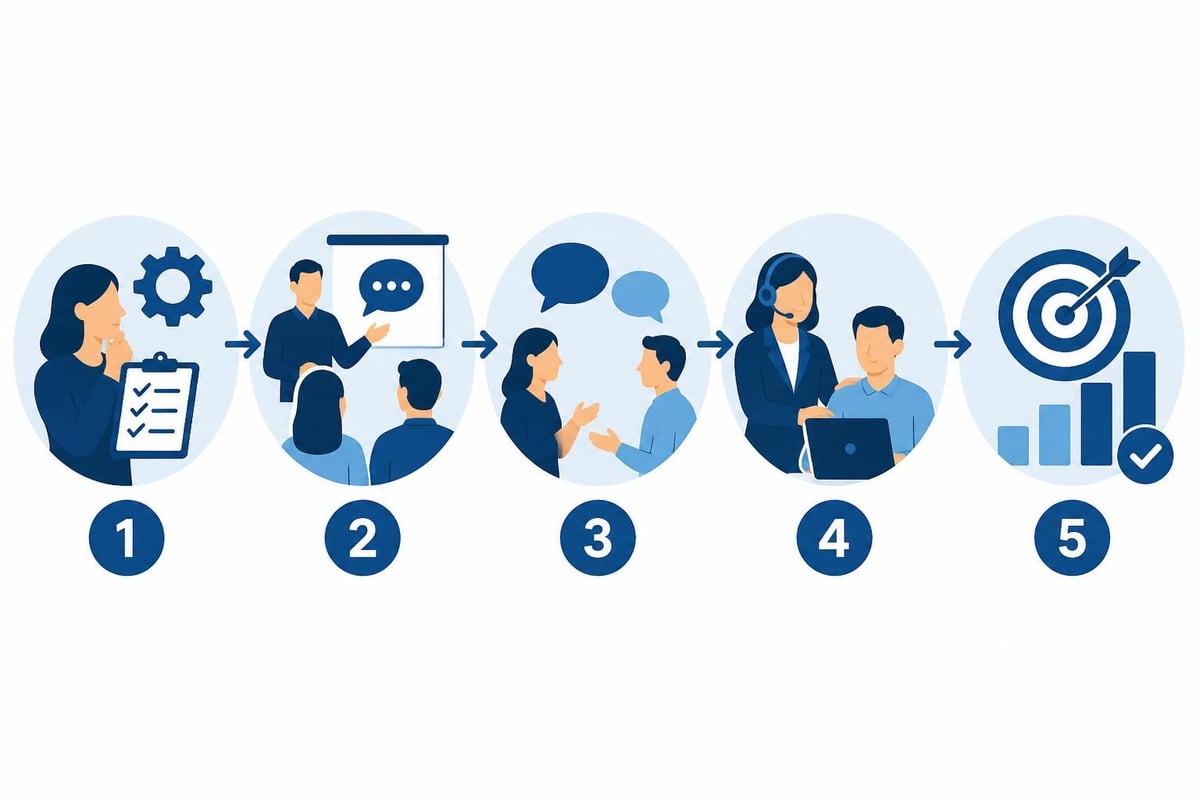
Complaint handling training proves most effective when delivered through multiple methods that accommodate different learning styles. Instructor-led sessions provide opportunities for role-playing and immediate feedback, while digital resources offer just-in-time support during actual customer interactions.
Effective training delivery combines:
- Interactive workshops with realistic scenario practice
- Video demonstrations of effective and ineffective techniques
- Written reference materials for quick consultation
- Ongoing coaching and feedback from supervisors
- Peer learning sessions where team members share experiences
The most successful programs incorporate spaced repetition, presenting concepts multiple times through different formats to ensure retention and skill development.
Creating Accountability Through Measurement and Feedback
Complaint handling training delivers measurable value only when organizations establish clear metrics and accountability systems. Without ongoing measurement, skills deteriorate and inconsistent practices return.
Key Performance Indicators for Complaint Resolution
Tracking the right metrics helps organizations understand training impact and identify areas requiring additional support. Effective measurement systems balance quantitative data with qualitative insights about customer and employee experiences.
Primary metrics to monitor include:
- First-contact resolution rates
- Average resolution time per complaint category
- Customer satisfaction scores post-resolution
- Complaint recurrence rates
- Employee confidence ratings
- Escalation frequency to management
Organizations can learn from best practices documented by complaint handling experts to establish comprehensive measurement frameworks.
Continuous Improvement Through Regular Review
The most effective organizations treat complaint handling training as an ongoing process rather than a one-time event. Regular review sessions allow teams to discuss challenging cases, share successful approaches, and refine techniques based on real-world experience.
Monthly or quarterly refresher sessions help maintain skill levels while introducing new concepts and addressing emerging challenges. These sessions also provide opportunities to recognize employees who demonstrate exceptional complaint resolution skills, reinforcing desired behaviors throughout the organization.
Addressing Common Training Implementation Challenges
Organizations frequently encounter obstacles when implementing complaint handling training programs. Anticipating these challenges and developing mitigation strategies increases the likelihood of successful outcomes.
Overcoming Resistance to New Approaches
Some employees resist complaint handling training because they view it as criticism of current practices or unnecessary bureaucracy. Effective program leaders address this resistance by clearly communicating the benefits for employees themselves, not just customers or the organization.
Emphasize how improved skills reduce workplace stress, create more positive daily interactions, and enhance professional development opportunities. When employees understand personal benefits, they become more engaged in the learning process.
Balancing Standardization with Personalization
Organizations sometimes struggle to find the right balance between consistent processes and personalized customer responses. Effective training acknowledges this tension by teaching decision-making frameworks rather than rigid scripts.
- Establish non-negotiable elements (professional tone, acknowledgment of concerns, documentation)
- Define escalation triggers that require management involvement
- Create guidelines for common scenarios while encouraging adaptation
- Empower employees to use judgment within defined parameters
- Review edge cases regularly to refine guidelines
Programs that develop personal effectiveness skills complement complaint handling training by building employee confidence in professional decision-making.
Integrating Technology With Human Skills
Modern complaint handling increasingly involves technology platforms that track, categorize, and route customer concerns. Effective training programs teach employees to leverage these tools while maintaining the human connection that drives successful resolution.
CRM Systems and Complaint Management Software
Customer relationship management systems and specialized complaint management platforms provide valuable data and workflow support. Training should cover not just how to use these systems but when to rely on documented information versus asking customers to repeat themselves.
Technology training elements include:
- Accessing complete customer interaction history
- Documenting complaints consistently for pattern analysis
- Using templates as starting points, not final responses
- Setting appropriate follow-up reminders
- Escalating within system workflows
The public sector complaint handling guide offers insights on integrating policy, training, and systems for comprehensive approaches.
Emerging Tools and AI-Assisted Resolution
Organizations in 2026 increasingly explore artificial intelligence tools that analyze complaint patterns and suggest resolution approaches. Training programs must prepare employees to work alongside these technologies, understanding both their capabilities and limitations.
While AI can identify trends and recommend responses, human judgment remains essential for navigating complex emotional dynamics and making exceptions when appropriate. Effective training helps employees view technology as a support tool rather than a replacement for professional expertise.
Sector-Specific Considerations for Training Programs
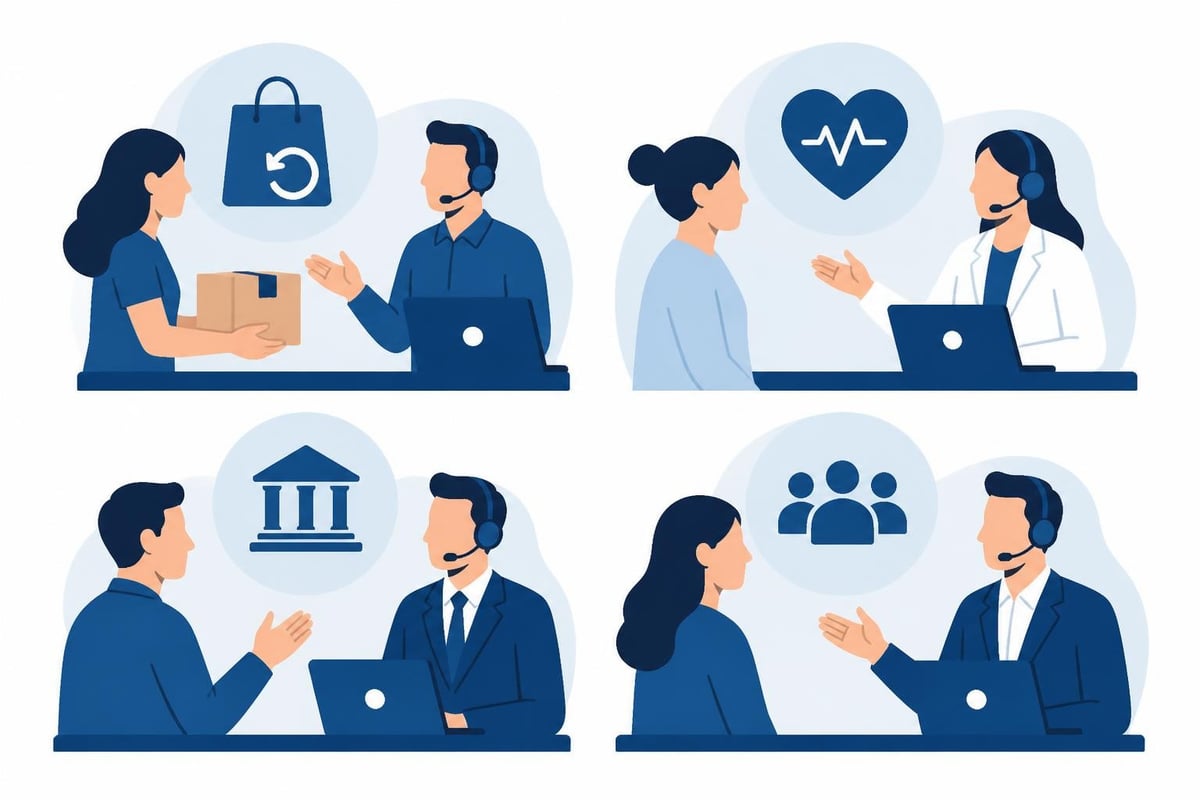
Different industries face unique complaint handling challenges requiring specialized training approaches. Understanding these variations ensures programs address real-world scenarios employees actually encounter.
Retail and E-commerce Complaint Resolution
Retail environments often involve complaints about product quality, pricing discrepancies, and service speed. Training for retail teams emphasizes quick assessment, immediate resolution authority within defined limits, and seamless coordination between online and in-person channels.
| Industry | Common Complaints | Training Focus Areas |
|---|---|---|
| Retail | Product defects, pricing issues | Immediate resolution, return policies |
| Healthcare | Wait times, billing, communication | Privacy compliance, empathy, clinical boundaries |
| Financial Services | Account errors, fees, service delays | Regulatory requirements, security protocols |
| Hospitality | Service quality, amenities, reservations | Recovery techniques, compensation guidelines |
Professional Services and B2B Contexts
Business-to-business complaint handling requires different approaches than consumer-focused resolution. Research on satisfaction with complaint handling in B2B contexts reveals that professional clients value different resolution factors than individual consumers.
B2B complaint handling training emphasizes relationship preservation, financial impact assessment, and collaborative problem-solving that may involve multiple stakeholders. These situations often require more complex negotiations and creative solutions that fall outside standard operating procedures.
Building Leadership Support for Training Initiatives
Successful complaint handling training requires active support from organizational leadership. Without executive commitment, programs struggle to receive necessary resources and employees may not prioritize skill development.
Demonstrating ROI to Decision-Makers
Leaders naturally focus on return on investment when evaluating training proposals. Effective advocates for complaint handling training present data connecting skill development to business outcomes leadership cares about.
Compelling ROI evidence includes:
- Customer lifetime value comparisons between satisfied and dissatisfied complaint resolution
- Cost analysis of customer acquisition versus retention
- Employee turnover rates in customer service roles
- Legal and regulatory risk reduction
- Brand reputation metrics and social media sentiment
Organizations offering instructor-led training programs can provide case studies and benchmarking data that demonstrate training impact across similar organizations.
Creating Executive Champions
Identifying executive sponsors who actively promote complaint handling training increases program success rates. These champions communicate the strategic importance of complaint resolution skills and model desired behaviors in their own customer and stakeholder interactions.
Executive involvement might include participating in training sessions, sharing complaint resolution success stories in company communications, and incorporating complaint handling metrics into departmental performance reviews.
Developing Internal Trainers and Subject Matter Experts
While external training providers offer valuable expertise, developing internal complaint handling trainers creates sustainable capability and ongoing reinforcement. Organizations with internal subject matter experts can provide continuous coaching and adapt programs as needs evolve.
Trainer Selection and Development
Ideal internal trainers combine strong complaint handling skills with teaching ability and credibility among peers. Look for employees who consistently demonstrate effective resolution techniques, communicate clearly, and show patience when helping colleagues develop new skills.
Provide selected trainers with train-the-trainer programs that cover instructional design, facilitation techniques, and feedback delivery. These programs ensure internal trainers can deliver engaging, effective sessions that match the quality of external providers.
Knowledge Management Systems
Creating accessible repositories of complaint handling resources supports ongoing learning beyond formal training sessions. These systems might include video demonstrations, decision trees for common scenarios, and searchable databases of successfully resolved complex complaints.
Regular updates to these resources ensure they reflect current best practices and evolving customer expectations. Assign responsibility for content maintenance to ensure materials remain relevant and accurate.
Compliance and Regulatory Considerations
Many industries face regulatory requirements related to complaint handling and documentation. Training programs must address these compliance obligations while maintaining focus on customer satisfaction and relationship preservation.
Industry-Specific Regulations
Financial services, healthcare, and regulated utilities operate under specific complaint handling mandates that dictate response timeframes, documentation requirements, and reporting obligations. Training programs in these sectors must thoroughly cover regulatory compliance alongside customer service excellence.
Failure to meet regulatory requirements can result in significant penalties, making compliance training a risk management priority. However, the most effective programs frame compliance as a floor rather than a ceiling, encouraging employees to exceed minimum requirements when serving customers.
Documentation and Record-Keeping
Proper complaint documentation serves multiple purposes: legal protection, trend analysis, and process improvement. Training should cover what information to capture, how to record it accurately without excessive time investment, and when documentation requires review by legal or compliance teams.
Emphasize that good documentation supports customers by ensuring continuity when multiple team members handle ongoing issues. This perspective helps employees view record-keeping as customer service rather than bureaucratic obligation.
Future Trends in Complaint Handling Training
The complaint handling landscape continues evolving as customer expectations shift and new communication channels emerge. Forward-thinking organizations prepare teams for these changes through training programs that emphasize adaptability and continuous learning.
Omnichannel Complaint Management
Customers in 2026 expect seamless complaint resolution regardless of contact channel. They may initiate complaints via social media, continue conversations through email, and complete resolution over the phone. Training programs must prepare employees to maintain context and consistency across these transitions.
Effective omnichannel training covers platform-specific considerations (character limits on social media, formality levels for different channels) while emphasizing consistent resolution principles across all customer touchpoints.
Proactive Complaint Prevention
Leading organizations increasingly focus on identifying and resolving issues before customers need to complain. Training programs teach employees to recognize early warning signs of dissatisfaction and take preemptive action.
This proactive approach requires strong observational skills, empowerment to act on potential issues, and systems that flag customers experiencing problems. Organizations investing in customer support courses build capabilities that extend beyond reactive complaint handling to proactive service excellence.
Effective complaint handling training transforms customer service from a cost centre into a strategic advantage that builds loyalty, protects brand reputation, and creates opportunities for organizational improvement. By developing employee skills in active listening, de-escalation, problem-solving, and follow-through, organizations turn inevitable complaints into relationship-strengthening interactions. My Training Network delivers customizable, instructor-led complaint handling training programs designed for Canadian organizations seeking measurable improvements in customer satisfaction and employee confidence. With expert trainers and over 150 course options, we help teams across Canada develop the skills that turn challenging customer interactions into opportunities for excellence.

