

Every workplace experiences tension. Disagreements emerge from diverse perspectives, competing priorities, and communication breakdowns. The difference between organizations that thrive and those that struggle often comes down to how effectively they address these inevitable conflicts. Professional conflict resolution training equips teams with practical skills to navigate disagreements constructively, transforming potential disruptions into opportunities for growth and innovation.
Understanding the Business Case for Conflict Resolution Training
Workplace conflict costs Canadian organizations significantly more than many leaders realize. Research indicates that managers spend approximately 15-20% of their time addressing employee disputes, time that could otherwise drive strategic initiatives and business development. When conflicts escalate without proper intervention, the ripple effects include decreased productivity, increased absenteeism, higher turnover rates, and diminished team morale.
Investing in structured training programmes delivers measurable returns:
- Reduced time spent managing interpersonal disputes
- Improved employee retention and satisfaction
- Enhanced collaboration across departments
- Stronger client relationships through better communication
- Decreased risk of formal grievances and legal complications
Organizations that prioritize conflict resolution training create cultures where employees feel empowered to address disagreements directly and professionally. This proactive approach prevents small misunderstandings from escalating into significant organizational challenges. The Center for Creative Leadership emphasizes how leaders who master conflict resolution skills foster environments where creativity and innovation flourish, as team members feel safe expressing diverse viewpoints.

Core Components of Effective Training Programmes
Comprehensive conflict resolution training encompasses multiple skill areas that work together to create competent communicators and problem-solvers. The most effective programmes, such as those offered through instructor-led training formats, combine theoretical frameworks with practical application.
Communication Skills Development
At the foundation of conflict resolution lies effective communication. Participants learn to articulate their concerns clearly whilst simultaneously developing active listening capabilities. This dual focus ensures individuals can both express themselves and genuinely understand opposing perspectives.
Training modules typically address:
- Active listening techniques that demonstrate genuine engagement
- Non-verbal communication awareness and interpretation
- Questioning strategies that clarify rather than inflame
- Emotional intelligence application in tense situations
- Assertive communication without aggression or passivity
These communication skills form the bedrock upon which all other conflict resolution techniques build. Without clear, respectful dialogue, even the most sophisticated mediation strategies prove ineffective.
Emotional Regulation and Self-Awareness
Conflicts trigger emotional responses that can cloud judgment and escalate tensions. Professional training teaches participants to recognize their emotional triggers and develop strategies for maintaining composure under pressure. This self-awareness allows individuals to respond thoughtfully rather than react impulsively.
| Emotional Response | Untrained Reaction | Trained Response |
|---|---|---|
| Feeling attacked | Defensive counterattack | Pause and seek clarification |
| Frustration | Raised voice, interruptions | Deep breathing, structured expression |
| Dismissiveness | Ignoring concerns | Acknowledging validity, exploring solutions |
| Anxiety | Avoidance or aggression | Naming emotions, requesting support |
Practical Conflict Resolution Frameworks
Theory alone cannot prepare teams for real-world disputes. Effective conflict resolution training incorporates proven frameworks that participants can apply immediately within their workplace contexts. These structured approaches provide clear pathways through disagreement toward resolution.
Interest-Based Negotiation
This approach, sometimes called principled negotiation, focuses on underlying interests rather than stated positions. Training participants learn to distinguish between what someone demands and what they actually need. By uncovering core interests, parties often discover creative solutions that satisfy everyone involved.
The process involves systematic exploration:
- Separating people from problems
- Focusing on interests rather than positions
- Generating multiple options before deciding
- Insisting on objective criteria for evaluation
- Building relationships alongside solving problems
Organizations implementing this framework report higher satisfaction rates with conflict outcomes and improved long-term working relationships.
The Thomas-Kilmann Conflict Mode Instrument
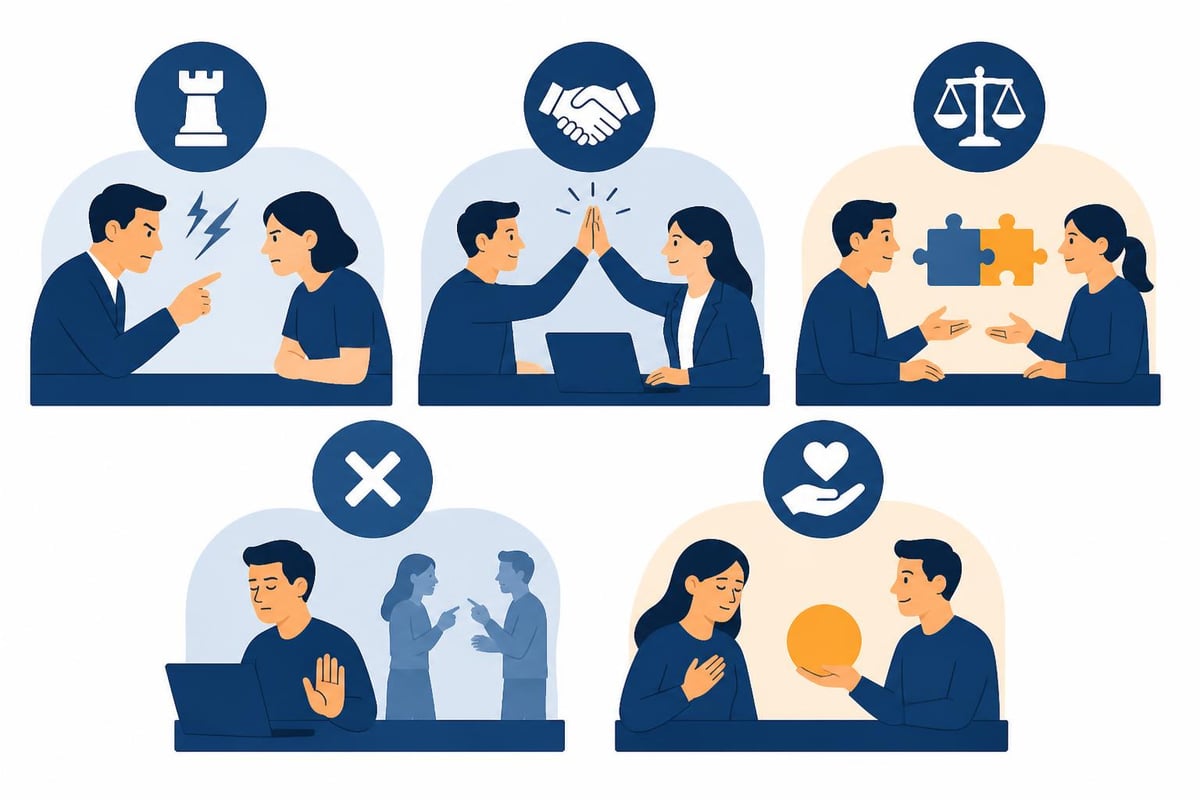
This assessment tool, frequently incorporated into leadership training programmes, helps individuals understand their natural conflict-handling styles. The model identifies five approaches: competing, collaborating, compromising, avoiding, and accommodating. Each style proves appropriate in specific situations.
Understanding when to apply each approach:
- Competing: Quick decisions on important issues with clear authority
- Collaborating: Complex problems requiring buy-in from all parties
- Compromising: Time-sensitive situations with equally powerful parties
- Avoiding: Trivial issues or when cooling-off periods benefit resolution
- Accommodating: Maintaining relationships when the issue matters more to others
Training helps participants develop flexibility, expanding their repertoire beyond habitual responses to choose strategically based on context.
Implementation Strategies for Canadian Organizations
Rolling out conflict resolution training requires thoughtful planning to maximize impact and ensure lasting behaviour change. Organizations across Canada have discovered that implementation approach significantly influences programme effectiveness.
Customization for Organizational Context
Generic training materials often fail to resonate because they don't reflect specific workplace realities. The most successful programmes incorporate real scenarios from the organization's history, industry-specific challenges, and cultural considerations unique to the team.
Company training programs should address:
- Common conflict triggers within your specific industry
- Hierarchical structures and power dynamics
- Cultural diversity considerations relevant to your workforce
- Previous conflict patterns and organizational blind spots
- Integration with existing HR policies and procedures
This customization ensures participants recognize the direct applicability of techniques to their daily work experiences.
Layered Learning Approach
Single training sessions rarely create sustainable change. Organizations achieving the best results implement layered learning that reinforces concepts over time through multiple touchpoints.
| Learning Layer | Format | Timing | Purpose |
|---|---|---|---|
| Foundation | Full-day workshop | Initial rollout | Introduce frameworks and practice |
| Reinforcement | Monthly lunch sessions | 3-6 months post-training | Share experiences and troubleshoot |
| Advanced Skills | Half-day sessions | 6-12 months later | Deepen expertise in specific areas |
| Coaching | One-on-one support | Ongoing as needed | Apply skills to current challenges |
| Refresher | Quarterly team meetings | Annually | Maintain awareness and commitment |
This scaffolded approach recognizes that behavioural change requires repeated exposure and practice. The Wikipedia overview of conflict resolution notes that sustainable conflict resolution capabilities develop through consistent application rather than one-time learning events.
Measuring Training Effectiveness
Accountability matters. Organizations investing in conflict resolution training deserve evidence that their investment produces tangible results. Effective measurement combines quantitative metrics with qualitative feedback to paint a comprehensive picture of programme impact.
Quantitative Indicators
Hard data provides objective evidence of training effectiveness. Consider tracking these metrics before and after implementation:
- HR grievance rates: Formal complaints filed through official channels
- Turnover statistics: Voluntary departures, particularly conflict-related exits
- Productivity measures: Project completion rates and deadline adherence
- Manager time allocation: Hours spent on conflict-related issues
- Absenteeism patterns: Sick days and unexplained absences
These numbers tell a compelling story when positive trends emerge following training initiatives.
Qualitative Assessment
Numbers alone cannot capture the full impact of improved conflict resolution capabilities. Qualitative methods reveal cultural shifts and individual growth that metrics might miss.
Valuable qualitative approaches include:
- Post-training surveys assessing confidence and skill application
- Focus groups exploring behavioural changes and workplace atmosphere
- Manager observations of team dynamics and communication patterns
- Case studies documenting specific conflicts resolved using training techniques
- Exit interviews revealing whether conflict management influenced retention
The Center for Understanding in Conflict emphasizes that effective measurement should assess not just knowledge acquisition but actual behaviour change in authentic workplace situations.
Specialized Applications Across Industries
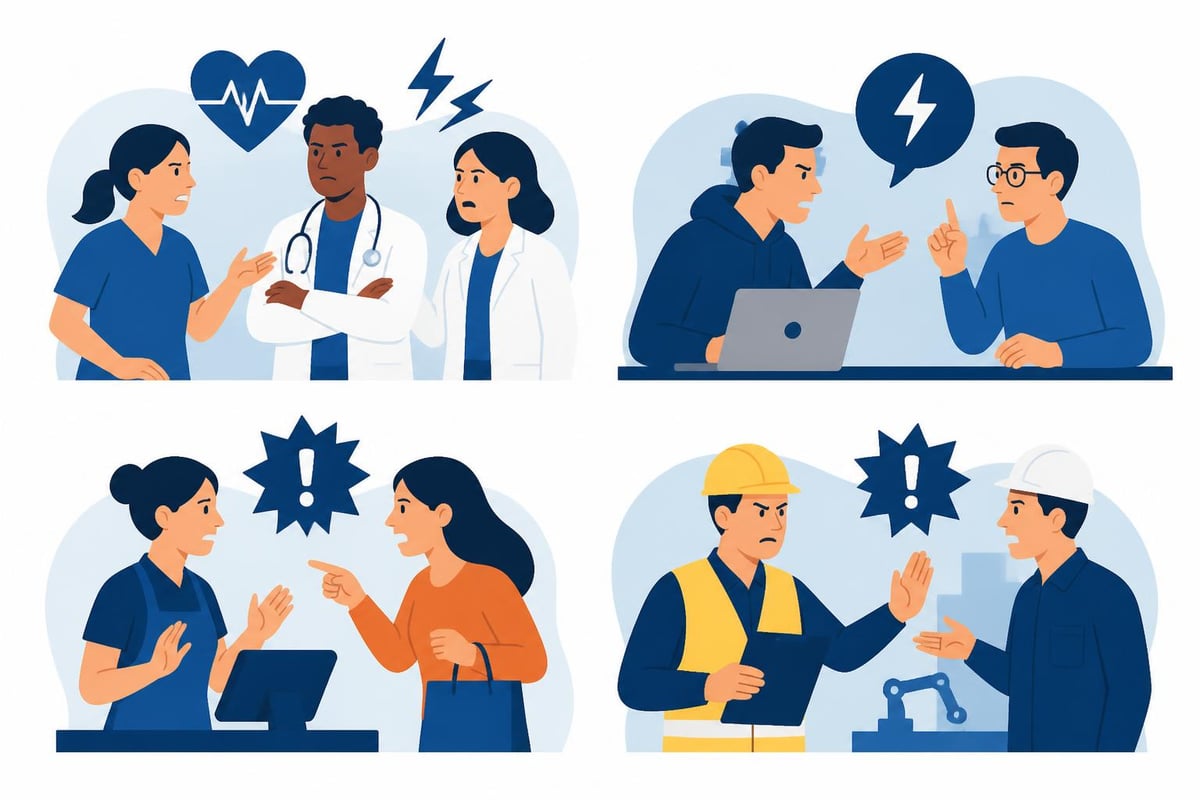
Whilst core conflict resolution principles remain consistent, different sectors face unique challenges requiring tailored approaches. Understanding these variations ensures training addresses the specific pressures participants encounter.
Healthcare Environments
Healthcare settings combine high stress, life-or-death stakes, and diverse professional hierarchies. Conflicts between physicians and nursing staff, interdepartmental tensions, and patient family disputes require specialized skills.
Training for healthcare teams emphasizes rapid de-escalation techniques, maintaining professionalism under extreme pressure, and navigating power differentials between professional roles. Professional development assistance helps healthcare organizations customize programmes to address these sector-specific challenges.
Technology and Creative Industries
Fast-paced technology companies often struggle with conflicts arising from competing visions, agile methodology pressures, and cross-functional dependencies. Creative disagreements can fuel innovation or derail projects entirely.
These organizations benefit from frameworks that channel creative tension productively whilst preventing personal conflicts from undermining collaboration. Training often incorporates techniques for separating ego from ideas and establishing objective criteria for evaluating competing approaches.
Advanced Skills for Leaders and Managers
Whilst all employees benefit from conflict resolution training, leaders require additional competencies to fulfill their roles as mediators, culture-setters, and decision-makers. Advanced programmes developed for management teams build upon foundational skills with leadership-specific applications.
Mediation and Facilitation Techniques
Managers frequently mediate conflicts between team members. This role demands neutrality, process management skills, and the ability to guide parties toward resolution without imposing solutions. Research from innovative training approaches demonstrates that simulated practice scenarios significantly improve mediation capabilities.
Leaders learn to:
- Establish ground rules ensuring productive dialogue
- Maintain impartiality despite personal relationships or opinions
- Reframe positions into underlying interests
- Generate creative options through brainstorming techniques
- Build sustainable agreements with accountability mechanisms
These facilitation skills prove valuable not only in conflict situations but also in routine meeting facilitation and collaborative decision-making processes.
Creating Conflict-Competent Cultures
The most sophisticated leadership training addresses systemic approaches to conflict management. Rather than simply responding to disputes as they arise, leaders learn to shape organizational cultures where healthy conflict resolution becomes normative.
Cultural elements that support effective conflict management:
- Psychological safety: Team members feel secure raising concerns
- Clear communication norms: Expectations for respectful dialogue are explicit
- Early intervention encouragement: Small issues are addressed before escalating
- Diverse perspective valuation: Disagreement is framed as opportunity, not threat
- Leadership modeling: Executives demonstrate constructive conflict engagement
Organizations with conflict-competent cultures experience fewer escalated disputes and resolve issues more quickly when they do arise. These environments attract and retain talent who value collaborative problem-solving.
Integration with Broader Professional Development
Conflict resolution training delivers maximum value when integrated with complementary professional development initiatives. Skills learned in conflict management reinforce and enhance capabilities developed through other training programmes.
Synergies with Communication Training
Professional writing skills training and verbal communication development naturally complement conflict resolution capabilities. Clear, precise communication prevents many conflicts from emerging whilst facilitating resolution when disagreements occur.
The overlap creates powerful skill combinations:
| Communication Skill | Conflict Prevention Application | Conflict Resolution Application |
|---|---|---|
| Active listening | Understanding expectations clearly | Demonstrating respect for opposing views |
| Precise language | Avoiding misinterpretation | Articulating interests without ambiguity |
| Emotional tone management | Maintaining professional atmosphere | De-escalating tense conversations |
| Structured messaging | Setting clear boundaries and expectations | Proposing solutions systematically |
Connection to Customer Service Excellence
The same skills that resolve internal conflicts prove invaluable when addressing external stakeholder disputes. Customer service training programmes increasingly incorporate conflict resolution techniques as essential competencies.
Customer-facing staff apply conflict resolution principles when managing complaints, negotiating solutions, and maintaining relationships despite service failures. Organizations offering comprehensive customer support courses report that employees with conflict resolution training handle difficult interactions more confidently and effectively.
Virtual and Hybrid Training Considerations
The shift toward remote and hybrid work arrangements creates both challenges and opportunities for conflict resolution training. Virtual environments introduce unique conflict dynamics whilst simultaneously offering flexible delivery options that increase accessibility.
Remote Work Conflict Patterns
Distance amplifies certain conflict triggers whilst reducing others. Text-based communication removes vocal tone and body language, increasing misinterpretation risk. Time zone differences create scheduling frustrations. Isolation can intensify emotional responses to perceived slights.
Training for distributed teams addresses these specific challenges:
- Over-communicating to compensate for reduced informal interaction
- Assuming positive intent when messages seem abrupt or unclear
- Scheduling synchronous conversations for sensitive topics
- Establishing team communication protocols and response expectations
- Recognizing isolation's impact on emotional regulation
The CRU Institute’s approach to peer mediation demonstrates that effective conflict resolution education adapts successfully to various delivery formats, including virtual platforms.
Effective Virtual Delivery Methods
Well-designed online conflict resolution training matches in-person programme effectiveness when incorporating interactive elements. Passive video lectures prove insufficient for developing practical skills that require hands-on practice.
Effective virtual training incorporates:
- Breakout room scenarios: Small groups practice techniques with realistic situations
- Role-play exercises: Participants take turns as disputants and mediators
- Case study analysis: Teams collaboratively solve complex conflict scenarios
- Polling and reflection: Regular engagement checks maintain focus and participation
- Follow-up micro-learning: Short reinforcement modules delivered over weeks
Organizations seeking customizable training solutions find that virtual delivery expands access whilst maintaining instructional quality through thoughtful design.
Building Sustainable Conflict Resolution Capabilities
Training creates initial awareness and skill development, but sustainable capability requires ongoing support and reinforcement. Organizations committed to long-term conflict resolution competence implement systems that maintain momentum beyond initial training events.
Establishing Internal Resources
Developing internal conflict resolution champions creates ongoing support networks. These individuals receive advanced training and serve as resources for colleagues navigating disputes. Organizations might designate trained mediators across departments or establish peer support systems.
Internal champions provide:
- Confidential sounding boards for employees considering conflict approaches
- Informal mediation services before issues require HR involvement
- Ongoing training reinforcement through lunch-and-learn sessions
- Feedback to leadership regarding systemic conflict patterns
- Mentoring for newly trained employees applying skills
Continuous Learning Communities
Conflict resolution skills deepen through reflection and shared learning. Establishing communities of practice where trained employees discuss challenges and successes maintains engagement and builds collective expertise.
These communities might gather monthly to analyze anonymized case studies, share techniques that proved effective, troubleshoot difficult situations, and explore advanced concepts. The collaborative learning environment reinforces training concepts whilst adapting approaches to organizational evolution.
Overcoming Common Implementation Barriers
Organizations frequently encounter obstacles when implementing conflict resolution training. Anticipating these challenges and developing mitigation strategies increases programme success rates.
Scepticism and Resistance
Some employees view conflict resolution training as unnecessary soft skills development or worry that participation signals weakness. Addressing this resistance requires clear communication about programme purpose and benefits.
Strategies for building buy-in:
- Share data demonstrating conflict costs and training ROI
- Secure visible executive sponsorship and participation
- Frame training as professional development rather than remediation
- Highlight career advancement benefits of conflict management skills
- Celebrate early wins and success stories publicly
Leaders who personally attend training and openly apply techniques model the value they place on these capabilities.
Time and Resource Constraints
Training competes with operational demands for limited time and budget. Organizations struggle to justify extended time away from productive work, particularly during busy periods.
Solutions include modular delivery that spreads learning across shorter sessions, virtual options that eliminate travel time, and just-in-time training aligned with specific organizational needs. The Society for Nonprofits resources offer guidance for organizations with limited budgets seeking cost-effective conflict resolution development.
Developing conflict resolution capabilities transforms workplace culture from reactive crisis management to proactive problem-solving, creating environments where teams collaborate effectively despite inevitable disagreements. Whether your organization needs foundational training for all staff or advanced mediation skills for leadership teams, expert guidance makes the difference between superficial awareness and genuine capability. My Training Network delivers customizable conflict resolution training across Canada and virtually worldwide, with experienced instructors who help your teams turn workplace tensions into opportunities for growth and innovation.

