

Imagine a business world in 2026 where corporate education rapidly adapts to new technologies and workforce needs. Companies that stay ahead in learning are not only attracting top talent, but also developing the skills needed to outperform competitors.
Recent shifts show the importance of strategic, innovative approaches to corporate education. Business leaders, HR professionals, and L&D strategists must understand and embrace change to keep their organisations resilient.
This article explores seven transformative trends shaping the future of corporate education. Discover how these trends can help your organisation retain talent, foster growth, and maintain a competitive edge.
Stay informed and ready to act on the latest insights driving business success.
The Changing Landscape of Corporate Education
The world of corporate education is undergoing rapid and fundamental change. Traditional methods are giving way to dynamic, data-driven approaches that prioritise business impact and learner engagement. This shift is not just about technology, but about aligning learning with organisational strategy and preparing workforces for the future.
The Shift from Traditional Training to Strategic Learning
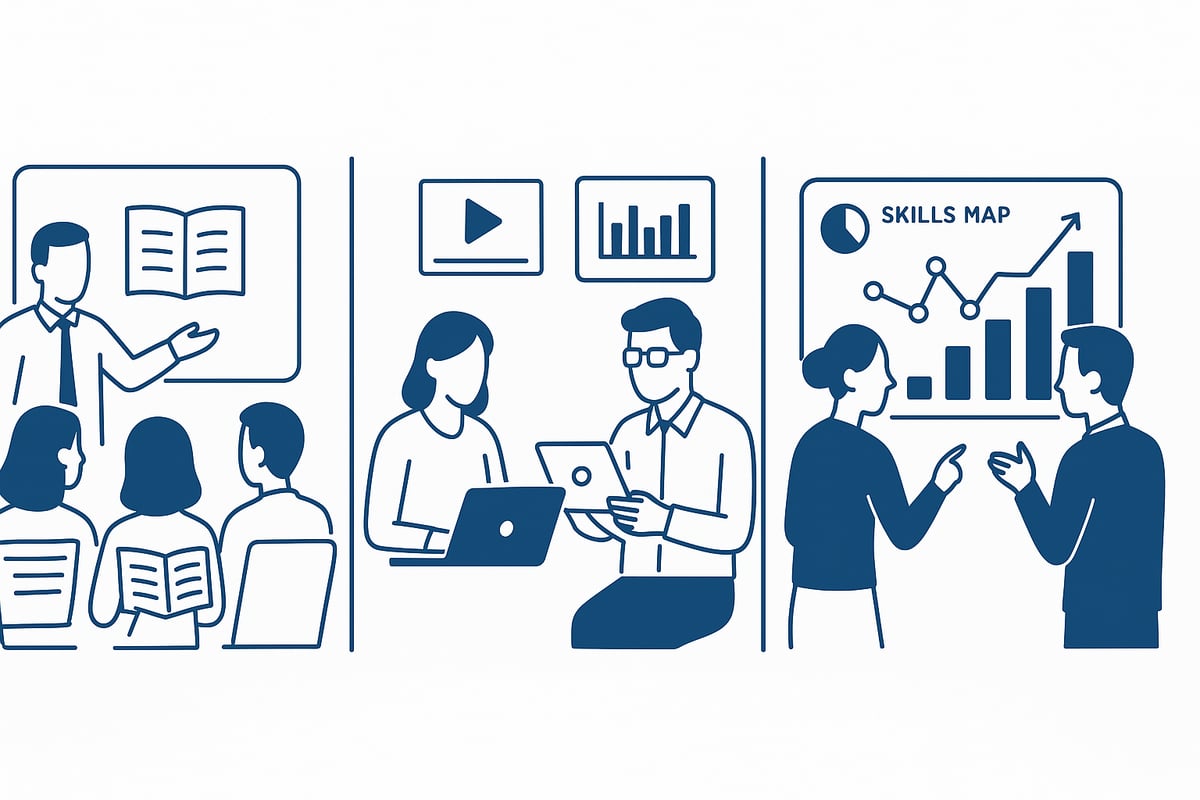
Once, corporate education focused heavily on compliance and mandatory courses. Today, it is evolving into a strategic partner for business growth. Learning and development teams are now tasked with driving innovation, closing skills gaps, and contributing to overall performance.
According to Voxy, only 41 percent of HR professionals feel prepared to leverage data for their initiatives. Leading organisations are transforming their L&D functions into engines of competitive advantage, using targeted learning to boost productivity and innovation. The expectation for measurable return on investment from corporate education is stronger than ever, pushing companies to rethink their approach.
| Traditional Training | Strategic Learning |
|---|---|
| Compliance-focused | Business-aligned |
| One-size-fits-all | Personalised |
| Low ROI visibility | Measurable outcomes |
The Role of Technology in Modern Learning
Digital transformation has revolutionised the delivery of corporate education. E-learning, mobile-first modules, and blended learning approaches are now standard. AI-powered tools, virtual classrooms, and interactive platforms are enabling more engaging and personalised experiences.
Modern learners demand flexibility and on-demand access. However, organisations face challenges with digital accessibility and maintaining engagement in remote or hybrid settings. Forward-thinking companies are embracing technology to create impactful, scalable learning for diverse teams, keeping them ahead in a competitive landscape.
Aligning Corporate Education with Business Objectives
Alignment between corporate education and business goals is essential for long-term success. Yet, less than half of organisations report that their education strategies support business objectives, according to Voxy. Leadership collaboration is crucial for shaping effective L&D strategies and ensuring programmes address real skills gaps.
Successful companies map skills needs, design targeted development plans, and measure outcomes using clear metrics. This approach demonstrates value to stakeholders and drives productivity and growth. For example, market research predicts that the corporate training market will double by 2035, highlighting the growing importance of continuous and aligned learning. On the other hand, misaligned or generic training can lead to wasted investment and missed opportunities, making strategic alignment a top priority for every organisation.
7 Corporate Education Trends Transforming Businesses in 2026
As 2026 approaches, corporate education is experiencing unprecedented transformation. Businesses are under pressure to innovate their learning strategies to remain competitive. The following seven trends are driving this shift, offering organisations actionable insights to future-proof their workforce and maximise business impact.

1. Hyper-Personalised Learning Pathways
Personalisation is redefining corporate education in 2026. Organisations are moving away from generic training, focusing instead on learning experiences tailored to individual roles, goals, and skill gaps. AI and advanced analytics now play a central role, recommending content, tracking progress, and adapting learning journeys in real time.
Employees expect flexible, self-paced, and customisable training modules. This demand is driven by diverse roles and rapidly changing skill requirements. According to industry reports, companies that have adopted personalisation in corporate education have seen engagement rates rise by over 30 percent and completion rates surge by 27 percent.
Adaptive platforms use skills mapping to identify what each employee needs to learn next. For example, a global retailer uses AI to deliver bespoke learning paths for sales, logistics, and management teams, ensuring that each group receives highly relevant content. This approach not only boosts knowledge retention but also increases employee satisfaction and retention rates.
Scaling personalisation across large, diverse workforces remains a challenge. Organisations must balance automation with human oversight to maintain relevance and inclusivity. Despite these hurdles, hyper-personalised learning is quickly becoming a competitive differentiator.
For a deeper dive into how AI is driving these changes, see AI-driven personalization in L&D, which explores the latest tools and strategies in corporate education.
2. Skills-First Development and Taxonomy
The corporate education landscape is shifting towards a skills-first mindset. Employers are prioritising skills over degrees when hiring, training, and promoting talent. LinkedIn’s CEO has stated that “skills today are more important than degrees,” reflecting this fundamental change.
Maintaining a dynamic skills taxonomy is critical for organisational agility. Companies are mapping, categorising, and continuously updating essential skills for each role. This enables quick adaptation to market and technology changes. For example, a technology firm might regularly review its skills framework to ensure teams are ready for new product launches or regulatory shifts.
A skills-first approach enhances career development and succession planning. Data shows that organisations using skills mapping see improved internal mobility and faster upskilling, which directly supports business objectives. Integration with performance management systems ensures that learning is both targeted and measurable.
Corporate education programmes now include regular skills assessments, personalised development plans, and transparent pathways for advancement. This approach not only prepares employees for future roles but also creates a more engaged and agile workforce.
The challenge lies in keeping taxonomies current and ensuring alignment with strategic goals. However, the benefits for productivity, talent retention, and business growth are clear.
3. Data-Driven Learning & ROI Measurement
Data is at the heart of modern corporate education. Organisations are leveraging analytics to guide every aspect of learning and development, from content selection to programme optimisation. Metrics such as engagement, knowledge retention, practical application, and business impact are now standard.
According to Voxy, 92 percent of large companies invest in data-driven initiatives. Dashboards and real-time feedback systems allow L&D teams to monitor participation and outcomes instantly. People analytics help target upskilling where it is needed most, ensuring resources are allocated efficiently.
Automated reporting streamlines communication with stakeholders, enabling transparent evaluation of corporate education investments. This is essential for securing ongoing support and justifying budgets. Companies are also using data to refine learning strategies and improve ROI.
Measuring soft skills and long-term outcomes remains a challenge. Organisations are experimenting with new assessment tools, surveys, and performance metrics to capture the full impact of training. Transparent reporting not only builds trust but also demonstrates the value of corporate education to both leadership and employees.
The future will see even greater integration of analytics, making data-driven decision-making the norm across all learning initiatives.
4. Microlearning and Learning in the Flow of Work
Microlearning is gaining traction in corporate education, offering short, focused modules that deliver just-in-time knowledge. This approach is ideal for busy professionals who need to upskill rapidly without disrupting their workflow.
The concept of learning in the flow of work, popularised by Josh Bersin, integrates training into daily routines. Employees can access bite-sized content, practical scenarios, and role-specific resources exactly when they need them. This increases knowledge retention and makes learning more accessible.
Organisations are embracing microlearning platforms and embedding training into workflow tools like CRM or project management systems. Scenario-based and mobile-friendly content ensures that learning is both relevant and engaging.
Data indicates that microlearning can boost productivity and training ROI by up to 20 percent. Employees appreciate the flexibility to learn on their own terms, which supports higher completion rates and better outcomes.
The challenge is designing content that is concise yet comprehensive. Companies must also ensure resources are available on demand and compatible with various devices. As microlearning continues to evolve, it will remain a cornerstone of effective corporate education.
5. Emphasis on Soft Skills and Leadership Development
The digital age has amplified the need for soft skills in corporate education. Communication, adaptability, and emotional intelligence are now essential for high-performance teams. Deloitte predicts that by 2030, two-thirds of jobs will require strong soft skills.
Corporate education programmes are integrating soft skills into technical and leadership training. This blend prepares employees for complex challenges and supports collaborative work environments. For example, leadership development initiatives often include modules on empathy, conflict resolution, and decision-making.
Toxic management is a key risk, with Voxy noting the profound business impact of poor leadership. Investing in leadership training has been shown to improve employee engagement and retention. Organisations are using a mix of workshops, coaching, and peer learning to develop these capabilities.
Assessing and developing soft skills at scale is challenging. Innovative assessment tools and ongoing feedback mechanisms are helping bridge this gap. The focus on leadership excellence and emotional intelligence is transforming corporate education into a driver of organisational success.
6. Diversity, Equity, and Digital Accessibility in Learning
In 2026, inclusive design is a core principle in corporate education. Companies are making significant investments in accessible content and platforms, ensuring that training is effective for all employees, regardless of background or ability.
Legal and ethical requirements around digital accessibility are shaping platform selection and content creation. Organisations are adopting multi-format resources, such as captioned videos, screen-reader compatible documents, and multilingual content, to cater to diverse learning needs.
Corporate education strategies now embed DEI values at every stage, from needs analysis to content delivery. This not only expands the talent pool but also improves engagement and performance. Data shows that accessible training increases participation rates and supports compliance with industry regulations.
Leading companies are setting benchmarks by implementing robust accessibility standards and regularly reviewing their offerings. The business benefits include broader reach, higher satisfaction, and reduced risk.
Challenges include keeping up with evolving standards and ensuring all stakeholders understand the importance of accessibility. However, the trend towards inclusive corporate education is set to accelerate in the coming years.
7. Lifelong Learning Culture and Continuous Upskilling
Lifelong learning is now a defining feature of corporate education. Organisations recognise that continuous upskilling is essential to keep pace with technological change and market demands. Gallup reports that increased engagement through learning can boost profitability by up to 21 percent.
A strong learning culture encourages employees to take ownership of their development. Companies are providing resources for self-directed learning, mentoring, coaching, and peer-to-peer knowledge sharing. These initiatives foster agility and resilience.
Corporate education is being embedded into organisational values and daily practice. Managers are expected to model learning behaviours, while HR teams create structures that reward ongoing development.
Motivating employees for continuous learning remains a challenge. Strategies include recognition programmes, personalised learning paths, and transparent communication about growth opportunities. The goal is to make learning a natural part of work life.
As technology and business needs evolve, a culture of lifelong learning ensures that organisations remain adaptable and ready for the future.
Diversifying Corporate Education Formats for Engagement
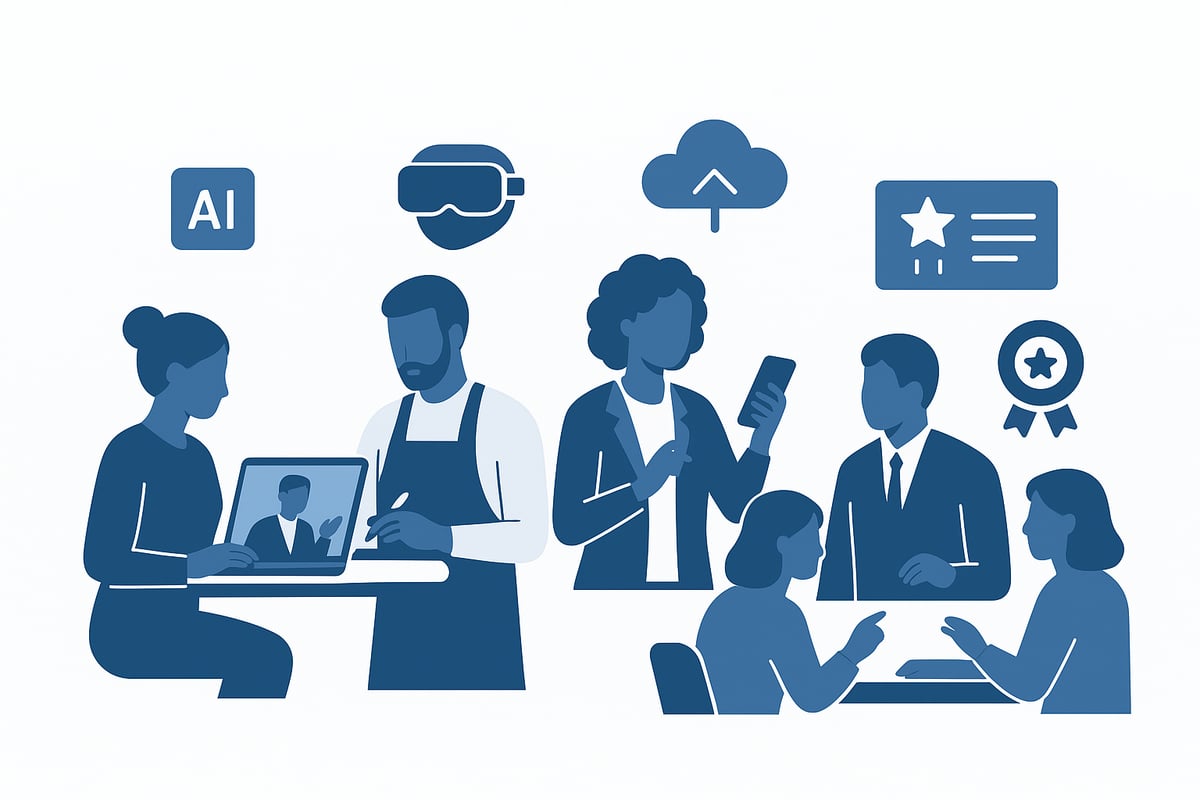
The evolution of corporate education has seen a shift from uniform approaches to a rich variety of formats designed to boost engagement and learning outcomes. Today’s organisations recognise that a single method rarely suits every learner, so diversifying delivery is essential. By blending digital, in-person, and experiential methods, companies can create more adaptable and effective learning environments.
Blended, Virtual, and Experiential Learning Approaches
Blended learning combines the best of digital and face-to-face experiences, making corporate education more flexible and impactful. For example, a programme might use online modules for foundational knowledge, then bring learners together for live workshops or simulations to apply those skills.
This layered approach addresses the ongoing challenge of capturing learners’ attention. By mixing microlearning, live sessions, and experiential activities, organisations can cater to different preferences and boost retention. Companies that invest in blended formats often report higher engagement and improved knowledge transfer.
A practical illustration is the Empowering Frontline Employees Training, which exemplifies how modern corporate education uses targeted, scenario-based learning for real-world impact. As businesses continue to diversify formats, they create more inclusive and stimulating learning environments.
Gamification and Social Learning
Gamification has become a powerful tool in corporate education, transforming traditional training into engaging experiences. Elements like leaderboards, digital badges, and team challenges motivate employees to participate and complete courses. These features tap into natural competitive instincts while making learning enjoyable.
Social and collaborative learning platforms are also on the rise. They allow employees to share insights, solve problems together, and build professional networks within the organisation. Peer learning and group discussions foster a sense of community and accountability.
Statistics show that incorporating gamified content can significantly improve course completion rates. By integrating gamification and social learning, organisations create dynamic environments where employees are more likely to engage deeply with corporate education initiatives.
Leveraging Technology for Scalable Learning
Technology is at the heart of modern corporate education, enabling organisations to reach more employees with consistent, high-quality content. AI, virtual reality, and cloud-based platforms allow for the rapid creation and delivery of personalised learning experiences.
Centralised content libraries and automated tools make it easier to update training materials and track progress. Mobile apps support on-the-go learning, ensuring that knowledge is accessible whenever and wherever needed. However, adopting new technologies requires careful planning and change management to ensure a smooth transition.
Companies leading in this space are integrating AI-driven platforms, such as those highlighted in Integrating AI into Leadership, to create adaptive, data-informed learning journeys. As emerging technologies continue to evolve, organisations that embrace innovation in corporate education will be better equipped to scale learning and respond to changing business needs. Following best practices for selecting and implementing new tools ensures that technology truly enhances learning outcomes.
Best Practices for Aligning Education with Business Impact
Staying ahead in corporate education requires more than just investing in new tools or content. It involves aligning every learning initiative with your organisation’s strategic goals. By embedding best practices, companies can ensure that learning delivers measurable impact, supports growth, and empowers talent.
Leadership Collaboration and Strategic Planning
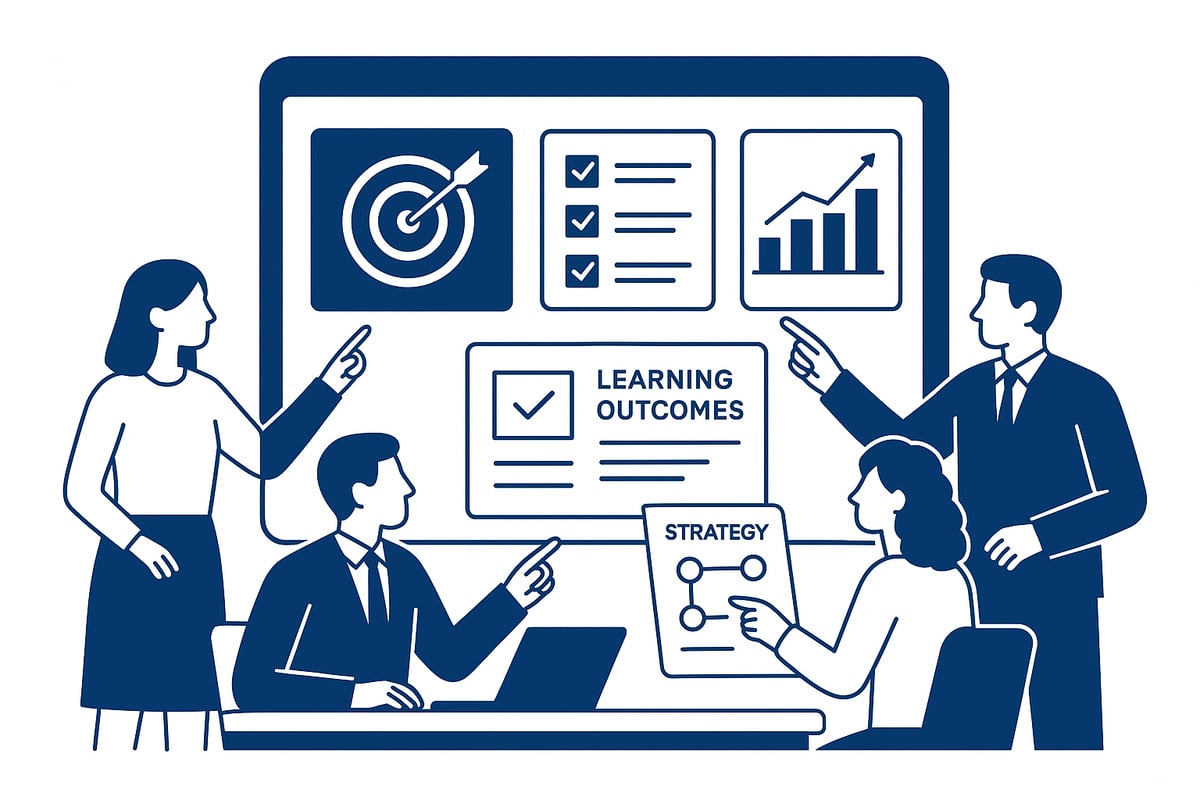
Successful corporate education begins with strong collaboration between L&D teams and business leaders. Engaging leadership early ensures learning is strategic and relevant. Start by asking, “What do you expect talent to do differently after this training?” This question grounds initiatives in clear business outcomes.
Regular strategy sessions help identify future skills and competencies needed for success. Leaders share insights on market shifts, while L&D professionals map these needs to targeted programmes. For example, leadership-driven L&D initiatives often focus on high-potential talent, future-proofing the workforce.
A practical way to build alignment is by partnering with leadership to co-create learning journeys. Programmes like Developing Leadership Excellence offer structured frameworks that link learning to business results. Frequent reviews and updates keep strategies agile, ensuring corporate education remains a lever for innovation.
Communication, Promotion, and Stakeholder Engagement
Clear, consistent communication is essential for maximising the impact of corporate education. Employees must understand the purpose and value of each initiative. Without this clarity, even the best-designed programmes can fail to gain traction.
Internal marketing is key. Use engaging emails, manager endorsements, and visual campaigns to promote new learning opportunities. Share real success stories and highlight how training supports personal and organisational growth. When employees see direct benefits, participation rises.
Engaging stakeholders goes beyond initial promotion. Collect regular feedback through surveys or focus groups. Involve managers as programme champions and encourage two-way dialogue. When stakeholders are active partners, corporate education becomes a shared priority, not just an HR project.
Measuring Success and Scaling What Works
Evaluating the effectiveness of corporate education is crucial for demonstrating value and securing ongoing investment. Use a mix of feedback, surveys, and performance metrics to track outcomes. The table below summarises key evaluation methods:
| Metric Type | Example Tool | Outcome Measured |
|---|---|---|
| Engagement | Participation rates | Learner involvement |
| Knowledge Retention | Post-training quizzes | Skills improvement |
| Business Impact | Performance reviews | Productivity, growth |
High-impact programmes should be scaled across departments or regions. Prioritise accessibility and inclusivity to ensure every employee can participate. According to Emerging L&D trends for 2025, organisations that continuously improve based on data and learner feedback see stronger ROI from their corporate education investments.
Adapt best practices to your unique context. Use lessons learned to refine and expand what works, embedding a culture of learning that delivers lasting business impact.

