

Professional course trainers serve as the cornerstone of effective organizational development, bridging the gap between theoretical knowledge and practical workplace application. As businesses invest heavily in employee development, the quality of instruction directly influences learning outcomes, retention rates, and ultimately, return on training investment. The modern landscape demands trainers who can navigate diverse learning styles, integrate technology seamlessly, and create engaging experiences that drive measurable performance improvements. Whether delivering soft skills workshops, technical certifications, or leadership development programmes, skilled trainers transform standard content into transformative learning journeys that resonate with adult learners and produce lasting behavioural change.
Essential Competencies for Effective Training Delivery
Course trainers must possess a unique blend of subject matter expertise and pedagogical skill to create meaningful learning experiences. Technical knowledge alone falls short without the ability to communicate concepts clearly and adapt content to varied audience needs.
Subject Matter Mastery and Credibility
The foundation of trainer effectiveness begins with deep understanding of course content. Participants quickly identify trainers who lack genuine expertise, eroding trust and engagement. Successful trainers continuously update their knowledge, staying current with industry trends, research findings, and emerging best practices. This commitment to ongoing learning ensures content remains relevant and valuable.
Beyond basic knowledge, exceptional trainers demonstrate:
- Real-world application experience that provides authentic examples
- Understanding of how concepts interconnect across disciplines
- Ability to answer complex questions without deflecting
- Awareness of common misconceptions and learning barriers
Credibility extends beyond credentials. Course trainers earn respect through demonstrated competence, authentic storytelling, and willingness to acknowledge knowledge limitations whilst committing to follow-up research.
Instructional Design and Learning Architecture
Effective training delivery starts long before participants enter the classroom. Instructional design principles shape how course trainers structure content, sequence activities, and design assessments that reinforce learning objectives.
Understanding adult learning principles fundamentally changes training approach. Adults bring extensive life experience, prefer problem-centred learning, and require understanding of content relevance. Course trainers who recognize these characteristics create programmes that honour participant knowledge whilst introducing new frameworks and skills.
| Design Element | Traditional Approach | Adult-Centred Approach |
|---|---|---|
| Content Flow | Linear, theory-first | Modular, problem-based |
| Participation | Passive listening | Active application |
| Assessment | End-of-course test | Ongoing practice |
| Relevance | Generic examples | Context-specific scenarios |
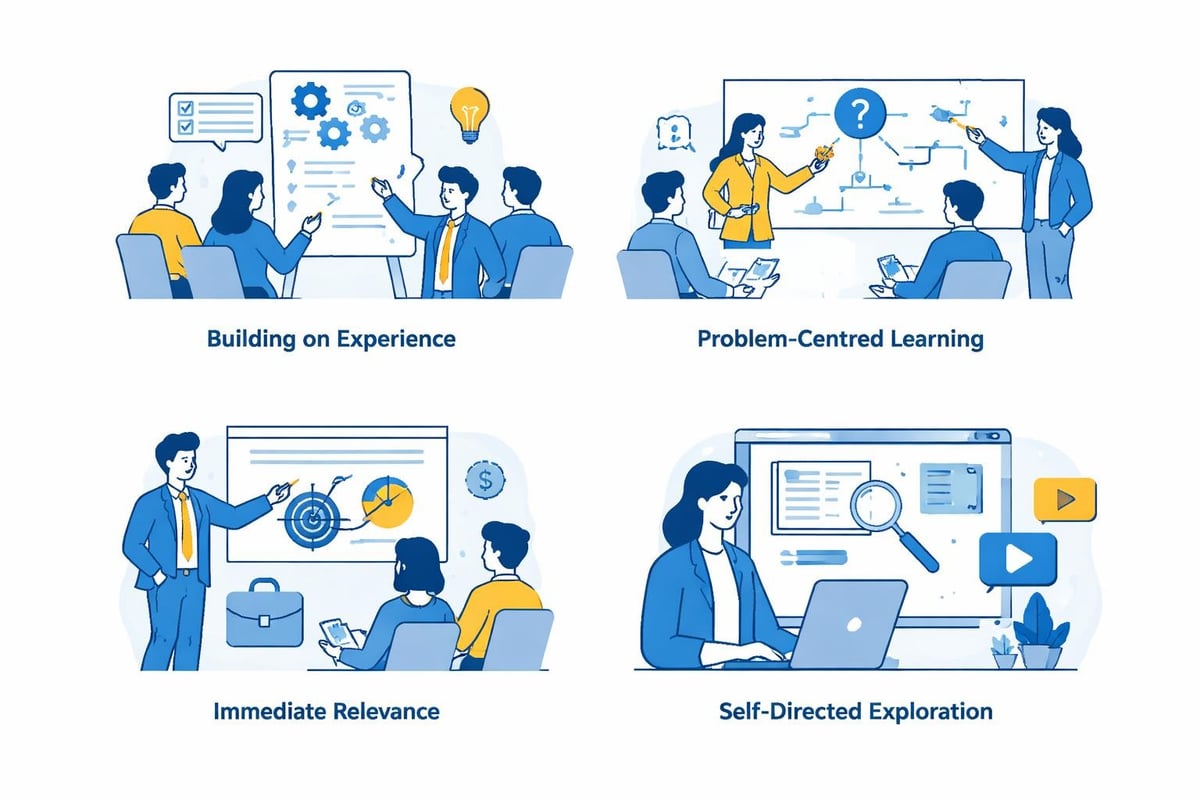
The best trainers recognize that developing effective learning objectives requires clarity about desired outcomes, appropriate challenge levels, and measurable success criteria. These objectives guide every design decision, from activity selection to time allocation.
Technology Integration and Digital Facilitation Skills
The rapid evolution of training delivery platforms has fundamentally transformed expectations for course trainers. Virtual and hybrid learning environments require distinct skill sets beyond traditional classroom management.
Mastering Virtual Training Platforms
Digital facilitation demands technical proficiency alongside engagement strategies that overcome screen fatigue and attention challenges. Course trainers must navigate breakout rooms, polls, chat functions, and screen sharing whilst maintaining instructional flow and participant connection.
Successful virtual trainers create interactive experiences through:
- Pre-session preparation that tests technology and establishes backup plans
- Multi-modal engagement combining visual, auditory, and kinesthetic activities
- Frequent interaction points preventing passive observation
- Strategic use of tools enhancing rather than distracting from learning
- Technical troubleshooting resolving issues quickly without derailing sessions
The shift to digital delivery has revealed that effective course trainers continuously develop their essential skills and practical tools, adapting to new platforms whilst maintaining focus on learning outcomes rather than technical novelty.
Leveraging Learning Management Systems
Modern course trainers extend their influence beyond live sessions through strategic use of learning management systems. These platforms enable pre-work distribution, resource sharing, assessment administration, and post-training reinforcement.
Integration between synchronous instruction and asynchronous learning creates blended experiences that accommodate diverse schedules and learning preferences. Course trainers who master this approach design comprehensive learning journeys rather than isolated events, improving knowledge retention and application rates.
Communication Excellence and Facilitation Techniques
The ability to communicate complex information clearly distinguishes competent trainers from exceptional ones. Effective course trainers adapt their communication style to audience needs, cultural contexts, and learning objectives.
Clarity and Accessibility in Instruction
Professional communication requires more than avoiding jargon. Course trainers must break down sophisticated concepts into digestible components, use relevant analogies, and provide multiple explanations for challenging topics.
Skilled trainers enhance clarity through:
- Structured frameworks that organize information logically
- Visual aids reinforcing verbal explanations
- Concrete examples illustrating abstract principles
- Regular comprehension checks identifying confusion early
- Varied pacing allowing processing time
Many organizations invest in specialized programmes like business writing skills to ensure their internal trainers communicate effectively in written materials, handouts, and follow-up communications.
Managing Group Dynamics and Participation
Facilitation skills separate course trainers from lecturers. Rather than simply delivering content, facilitators create environments where participants construct understanding through discussion, practice, and peer learning.
Effective group management requires reading room energy, balancing dominant and quiet voices, and redirecting unproductive conversations without diminishing participant contributions. Active listening becomes critical as trainers must genuinely hear participant questions, concerns, and insights to respond appropriately.

| Challenge | Ineffective Response | Skilled Trainer Approach |
|---|---|---|
| Dominant participant | Direct confrontation | Strategic redirection to others |
| Off-topic discussion | Abrupt shutdown | Acknowledge then refocus |
| Silence after question | Answer own question | Comfortable wait time |
| Disagreement between participants | Avoid conflict | Facilitate respectful dialogue |
Assessment Design and Learning Evaluation
Course trainers bear responsibility for measuring whether learning objectives have been achieved. Robust assessment strategies provide data on participant progress whilst reinforcing key concepts through retrieval practice.
Formative and Summative Assessment Methods
Effective evaluation occurs throughout training, not merely at conclusion. Formative assessments-quick checks during instruction-allow course trainers to adjust pace, clarify confusion, and ensure understanding before advancing.
Summative assessments measure overall competency achievement. However, traditional testing often fails to predict workplace application. Forward-thinking trainers incorporate:
- Scenario-based assessments requiring application of multiple concepts
- Peer evaluation developing critical thinking and collaboration skills
- Self-assessment promoting metacognition and continued development
- Action planning bridging learning to on-the-job implementation
Research on best practices for training programs emphasizes that evaluation should measure not only knowledge acquisition but behavioural change and performance improvement.
Feedback Delivery and Growth Mindset
How course trainers deliver feedback significantly impacts learner development. Effective feedback focuses on specific behaviours, provides actionable guidance, and maintains psychological safety.
Growth-oriented trainers frame mistakes as learning opportunities rather than failures. This approach, particularly valuable in programmes like building communication confidence, encourages risk-taking and authentic practice essential for skill development.
Professional Development and Continuous Improvement
Exceptional course trainers commit to lifelong learning, recognizing that training methodologies, technologies, and workplace needs constantly evolve.
Pursuing Certifications and Advanced Training
While experience builds competence, formal credentials validate expertise and expose trainers to proven methodologies. Certifications in adult education, specific delivery platforms, or subject matter specializations enhance credibility and skill.
Train-the-trainer qualifications and best practices provide structured development pathways, covering essential competencies from needs analysis through evaluation design.
Organizations seeking to develop internal trainers often explore comprehensive course catalogues offering specialized instructor development alongside subject-specific content.
Learning from Participant Feedback and Performance Data
The most valuable professional development occurs through systematic reflection on training effectiveness. Course trainers who regularly analyze evaluation data, participant feedback, and learning outcomes identify patterns revealing strengths and improvement opportunities.
This data-driven approach transforms training from art to science. Rather than relying solely on intuition, evidence-based trainers test hypotheses about engagement strategies, content sequencing, and activity effectiveness.
Reflective practitioners regularly examine:
- Participant evaluation scores and qualitative comments
- Assessment results revealing common knowledge gaps
- Engagement levels during specific activities or modules
- Post-training application rates and performance changes
- Time allocation effectiveness across content areas
Adapting to Diverse Learner Needs and Contexts
Modern course trainers serve increasingly diverse participant populations, requiring cultural competence and adaptability to varied learning preferences, backgrounds, and accessibility needs.
Cultural Sensitivity and Inclusive Practice
Global and multicultural training contexts demand awareness of how cultural norms influence learning expectations, communication styles, and participation patterns. Course trainers must navigate these differences respectfully whilst maintaining learning objectives.
Inclusive training extends beyond cultural considerations to accessibility. Providing materials in multiple formats, using clear language, and designing activities accommodating physical or cognitive differences ensures all participants can engage fully. Programs addressing indigenous cultural awareness at work exemplify how specialized content develops cultural competence.

Customizing Content for Industry and Organizational Context
Generic training rarely achieves desired impact. Skilled course trainers adapt examples, case studies, and applications to reflect participant industry, organizational culture, and specific challenges.
This customization requires pre-training research and consultation with stakeholders. Understanding organizational goals, current performance gaps, and workplace realities enables trainers to position content as immediately relevant rather than theoretical.
Emerging Trends Shaping the Training Profession
The training landscape continues evolving rapidly, with technological advancement, changing workforce expectations, and new research on learning science influencing how course trainers design and deliver development experiences.
Artificial Intelligence and Training Enhancement
Generative AI tools are transforming content development, personalization, and assessment capabilities. The GAIDE framework for course content development illustrates how AI can enhance educational material quality whilst maintaining trainer expertise as central.
Progressive course trainers explore AI applications for:
- Scenario generation creating diverse practice situations
- Personalized learning paths adapting to individual progress
- Automated feedback on written assignments or presentations
- Content translation supporting multilingual delivery
Organizations now offer specialized training like responsible AI use in the workplace to help trainers navigate these technologies ethically and effectively.
Microlearning and Performance Support
Traditional multi-day workshops are increasingly supplemented or replaced by shorter, focused learning interventions. Course trainers must adapt content for microlearning formats whilst maintaining coherence and depth.
This shift toward just-in-time learning requires trainers to think systematically about how discrete modules connect, what can be learned asynchronously, and when live interaction adds unique value.
Building Trainer Networks and Communities of Practice
No course trainer operates in isolation. Professional communities provide essential support, knowledge sharing, and collaborative problem-solving that elevate individual and collective practice.
Knowledge Sharing and Collaborative Development
Trainer networks create opportunities to share successful activities, troubleshoot challenges, and co-create resources. This collaboration reduces duplication whilst spreading innovation across the profession.
Organizations like My Training Network exemplify how connecting specialized trainers across disciplines creates comprehensive service offerings whilst supporting individual professional growth through peer learning.
Mentorship and Skill Transfer
Experienced course trainers have responsibility to develop the next generation. Formal mentorship programmes pair novice trainers with seasoned professionals, accelerating skill development through observation, co-facilitation, and constructive feedback.
This knowledge transfer proves particularly valuable for nuanced skills like reading room energy, recovering from technical failures, or handling challenging participant behaviours-competencies difficult to teach through formal instruction alone.
Exceptional course trainers combine subject expertise, instructional design skill, technological proficiency, and genuine commitment to learner success. These professionals transform organizational capabilities by creating engaging, effective learning experiences that drive measurable performance improvement. Whether your organization needs to develop internal training capacity or access specialized expertise for specific development initiatives, My Training Network connects you with experienced trainers across Canada and beyond, offering over 150 customizable courses designed to meet your unique organizational needs.

