

As we approach 2026, the education and training sector is evolving at an unprecedented pace. New technologies, shifting workforce needs, and global trends are reshaping how individuals and organisations pursue learning.
The demand for flexible, high-quality courses has never been greater. Both professionals and businesses recognise that choosing the right courses company can unlock new opportunities, drive growth, and future-proof careers.
This expert handbook is your essential guide to navigating the courses company landscape in 2026. Discover key trends, evaluation criteria, top offerings, the impact of technology, and practical strategies to maximise learning outcomes.
The 2026 Courses Company Landscape: Trends & Transformations
The education and training sector is undergoing profound change as 2026 approaches. The courses company market is shaped by evolving delivery methods, new technology, and changing learner expectations. Let's explore the most significant trends transforming how individuals and organisations approach upskilling.

The Rise of Hybrid and Virtual Learning Models
Hybrid and virtual formats have become the new gold standard for the courses company sector. Organisations now blend in-person and online training to maximise flexibility and reach. Both synchronous and asynchronous learning methods are on the rise, allowing learners to access content in real time or at their own pace.
According to Statista (2025), 70% of organisations now offer hybrid training options, reflecting a shift in delivery models. This approach empowers companies to equip teams with essential skills regardless of location or schedule. The courses company model is evolving to ensure seamless integration of various learning formats, making training accessible and effective for all.
Focus on Customisation and Personalisation
Personalised and adaptive learning continues to define the courses company landscape. Learners and businesses increasingly demand tailored learning paths that address specific goals and skill gaps. Microlearning and modular courses support targeted development, breaking topics into bite-sized, manageable units.
Companies using personalised learning platforms have seen a 35% increase in course completion rates. If you are seeking customisable options for your team, explore tailored training services for solutions designed around unique organisational needs. The courses company sector is investing heavily in adaptive content, ensuring each learner's journey is both relevant and impactful.
Expansion of Accredited and Industry-Recognised Programmes
Accreditation and industry recognition are now central in the courses company offering. More providers are partnering with professional bodies to deliver certified programmes that carry real value in the job market. Industry-recognised certificates are highly sought after, especially by those looking to advance or switch careers.
A recent LinkedIn Learning Report (2025) found that 60% of hiring managers prefer candidates with such credentials. This trend highlights the growing importance of selecting a courses company that collaborates with reputable institutions and offers qualifications that employers trust.
Emphasis on Soft Skills and Leadership Development
While technical skills remain vital, there is a clear shift towards holistic development within the courses company sector. Training in leadership, communication, and emotional intelligence is in high demand, reflecting the need for adaptable, well-rounded professionals.
Investment in soft skills training grew by 28% between 2023 and 2025. Organisations recognise that strong interpersonal abilities drive innovation and collaboration. The courses company market is responding by expanding offerings that nurture both technical expertise and essential human skills.
Integration of AI and Data Analytics
Artificial intelligence and advanced analytics are reshaping the courses company experience. AI-driven recommendations help learners select the best courses, while smart tracking tools monitor progress and outcomes. These technologies enable providers to deliver content that adapts in real time to individual needs.
Data-backed insights allow both learners and organisations to measure success and refine strategies. According to industry research, 80% of top courses company providers now use AI to personalise learning journeys, ensuring training is efficient and effective.
Globalisation and Accessibility
The global reach of the courses company sector has never been greater. Providers now offer multilingual content and accommodate diverse time zones to serve international audiences. Accessibility and inclusivity are priorities, with features like closed captioning, screen reader support, and adaptive learning interfaces becoming standard.
This focus ensures no learner is left behind, regardless of background or ability. As a result, the courses company market is positioned to meet the needs of a rapidly changing, interconnected world.
How to Choose the Right Courses Company: A Step-by-Step Guide
Selecting the right courses company is a strategic decision that can shape the future of both individuals and organisations. An informed, step-by-step approach helps ensure your investment leads to measurable growth and lasting impact. The following framework guides you through the essential stages of evaluation, enabling you to make choices with confidence.
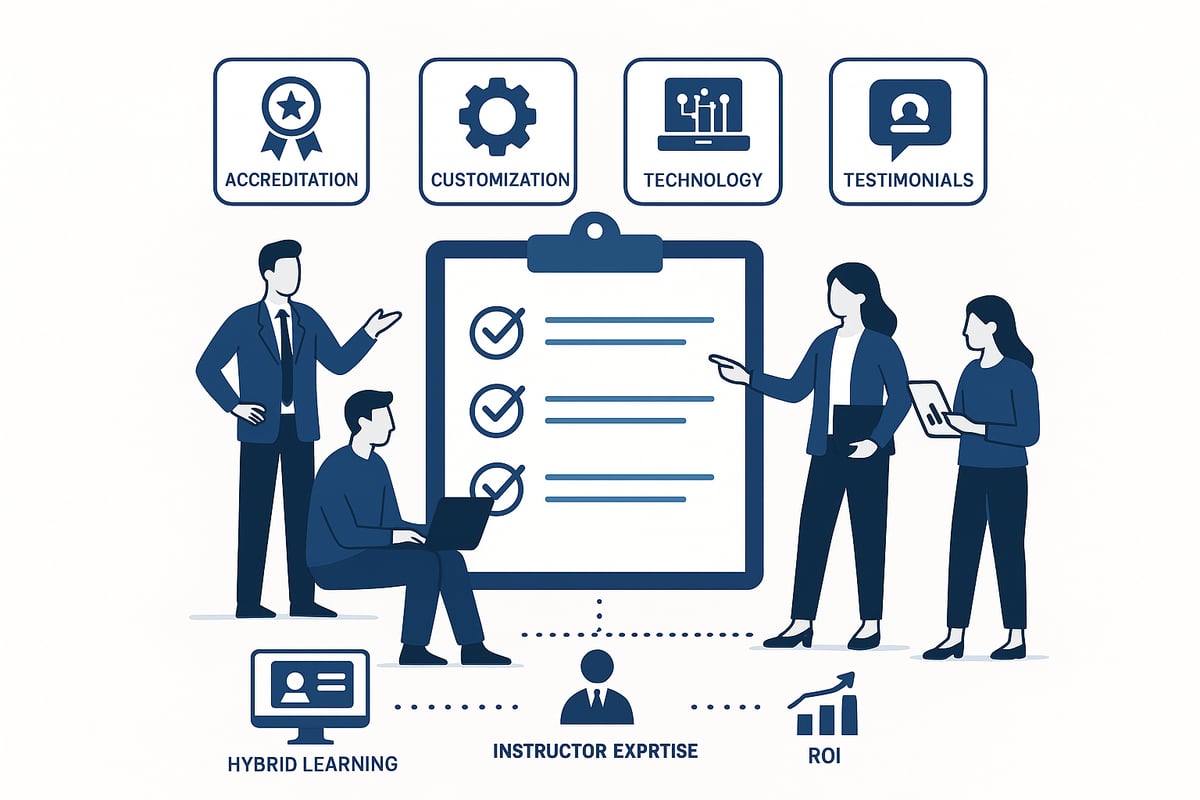
Step 1: Define Learning Objectives and Organisational Needs
The first step in choosing a courses company is clarifying your learning objectives. For individuals, this means identifying specific skills or qualifications needed for career progression. Organisations should align training initiatives with strategic goals, such as closing skill gaps or preparing for emerging industry trends.
Begin by conducting a thorough needs analysis. Consider future workforce requirements, regulatory demands, and desired outcomes. For company-wide programmes, explore corporate education solutions to ensure alignment with broader business priorities.
A courses company that understands your aims will tailor offerings to drive measurable results, setting the foundation for effective learning.
Step 2: Evaluate Course Offerings and Curriculum Quality
With objectives established, assess each courses company for the breadth and depth of its curriculum. Look for up-to-date, industry-relevant content that reflects current standards and future demands. Review syllabi for comprehensiveness and opportunities for hands-on application.
Check if the company offers both foundational and advanced courses. Modular and microlearning formats can provide targeted development, supporting ongoing skill acquisition. The best courses company will have a curriculum that adapts to evolving industry needs.
Step 3: Assess Instructor Expertise and Delivery Methods
Instructor quality is crucial when reviewing a courses company. Investigate the credentials, experience, and teaching styles of trainers. Seek companies employing subject matter experts with a track record in both education and industry.
Compare delivery methods to match your preferred learning environment. Options may include live virtual classes, on-site workshops, or self-paced modules. A top courses company will provide flexible formats, ensuring engagement and accessibility for all participants.
Step 4: Review Accreditation, Certification, and Partnerships
Accreditation and industry partnerships distinguish a reputable courses company. Confirm that the provider holds recognised credentials and affiliations with professional bodies. This ensures that qualifications are respected by employers and align with global standards.
Look for courses leading to industry-recognised certificates. Accredited programmes often result in higher job placement rates, enhancing the value of your training. A trusted courses company will display accreditation details transparently.
Step 5: Analyse Technology Platforms and User Experience
A courses company’s technology platform directly affects the learning journey. Prioritise ease of use, intuitive navigation, and robust learner support. Check for mobile compatibility, enabling access across devices, and offline options for remote learners.
Evaluate the learning management system (LMS) for features such as progress tracking, interactive resources, and real-time analytics. A leading courses company invests in technology that streamlines enrolment and supports both learners and administrators.
Step 6: Consider Pricing, ROI, and Flexibility
Financial considerations are central to choosing a courses company. Review pricing models, including subscriptions, pay-per-course, and enterprise packages. Transparent, scalable options allow you to match investment with growth potential.
Assess the return on investment by comparing costs with anticipated benefits, such as skill improvement or career advancement. Flexible payment options and cancellation policies also contribute to a positive experience with your chosen courses company.
Step 7: Check Reviews, Testimonials, and Case Studies
Before making a final decision, research the reputation of each courses company. Read independent reviews, client testimonials, and published case studies to gauge satisfaction and outcomes. Third-party platforms offer unbiased insights into user experiences.
Companies with a high volume of positive feedback often deliver superior service and results. Analysing this evidence helps you select a courses company that consistently meets or exceeds expectations.
Summary Table: Key Criteria for Choosing a Courses Company
| Step | What to Check | Why It Matters |
|---|---|---|
| Objectives | Needs analysis, alignment | Drives relevant outcomes |
| Offerings | Curriculum quality, formats | Ensures skill development |
| Instructors | Credentials, expertise | Guarantees effective teaching |
| Accreditation | Recognised certificates, partners | Adds credibility and value |
| Technology | LMS features, accessibility | Enhances learning experience |
| Pricing | Transparent models, ROI | Supports scalability |
| Reviews | Testimonials, case studies | Validates provider reputation |
This structured approach empowers you to confidently select a courses company that aligns with your goals and maximises the impact of your learning investment.
Key Features and Innovations in Leading Courses Companies
The leading courses company landscape in 2026 is marked by a wave of innovation. Organisations and learners now expect more than just standard content delivery. The latest advancements offer tailored, engaging, and accessible experiences that set top providers apart.

Adaptive Learning Technologies
Adaptive learning is transforming how a courses company addresses individual needs. AI-driven platforms analyse learner behaviour to recommend content, adjust difficulty, and offer real-time feedback. This ensures every user follows a path suited to their pace and goals.
Features include:
- Personalised content suggestions
- Dynamic skill assessments
- Automated progress tracking
According to AI-driven learning personalization, this technology increases engagement and completion rates, making adaptive learning a cornerstone for any forward-thinking courses company.
Interactive and Immersive Learning Experiences
Modern courses company platforms harness the power of interactivity. By leveraging virtual reality (VR), augmented reality (AR), and gamification, they bring abstract concepts to life. Learners participate in simulations, scenario-based challenges, and interactive quizzes.
Benefits include:
- Enhanced engagement through hands-on practice
- Safe environments for skill application
- Reduced learner drop-off
These immersive experiences bridge the gap between theory and practice, making learning memorable and effective.
Comprehensive Reporting and Analytics
A leading courses company provides detailed analytics dashboards. These tools allow both individuals and organisations to track learning progress, skill acquisition, and return on investment.
Key features:
- Visual progress tracking
- Customisable reports for managers
- Data-driven insights for strategic planning
With these analytics, HR teams and learners can measure outcomes, identify gaps, and refine future training strategies.
Multi-Device and Mobile Learning
Accessibility is essential for every courses company in 2026. Learners expect seamless access across desktops, tablets, and smartphones, whether in the office or remote locations.
Core aspects:
- Responsive course design for all devices
- Offline access for flexibility
- Consistent user experience
This multi-device approach ensures training fits modern lifestyles and varying work environments.
Integration with HR and Talent Management Systems
Integration is a defining feature of a leading courses company. Automated enrolment, skills mapping, and syncing with HR platforms streamline administration and reporting.
Advantages:
- Time-saving automation
- Centralised learner records
- Real-time skill gap analysis
This integration supports workforce planning and talent development, making learning a strategic business asset.
Commitment to Diversity, Equity, and Inclusion (DEI)
A top courses company prioritises inclusivity. Accessible course design, multilingual content, and adjustable features ensure all learners can participate fully.
DEI initiatives include:
- Universal design standards
- Subtitles, transcripts, and assistive tech support
- Courses focused on cultural competence and equity
Organisations investing in DEI see higher satisfaction and engagement, reflecting the evolving values of the workforce.
Maximising Value: Strategies for Organisations and Learners
Unlocking the full potential of a courses company requires a strategic approach for both individuals and organisations. By focusing on measurable outcomes, fostering a growth mindset, and leveraging technology, you can transform training investments into lasting results.

Setting Measurable Learning Goals and KPIs
Defining clear objectives is the foundation for success with any courses company. Start by outlining what you want to achieve, whether it is boosting technical skills, enhancing leadership capabilities, or closing specific knowledge gaps.
Set key performance indicators (KPIs) such as completion rates, assessment scores, or post-training performance improvements. Use these metrics to track progress and demonstrate return on investment. Regular reviews ensure your courses company initiatives stay aligned with evolving business or personal goals.
Encouraging Continuous Learning Cultures
Sustainable impact comes from embedding learning into everyday routines. Organisations can foster a culture of growth by providing incentives, recognising achievements, and linking learning to career progression.
Individuals benefit from setting aside regular time for skill development and sharing knowledge with peers. For structured support, many turn to professional development assistance offered by their chosen courses company, which helps maintain motivation and momentum.
Leveraging Data for Personalised Development Plans
A modern courses company provides powerful analytics to personalise learning journeys. By analysing completion data, assessment results, and feedback, you can identify strengths and target areas for improvement.
Use dashboards to visualise progress, set tailored goals, and adjust training plans as needed. Data-driven insights support more effective skill acquisition and ensure that each learner gets the most out of their courses company experience.
Fostering Collaboration and Peer Learning
Learning is not a solo endeavour. The best results often come from collaborative projects, discussion forums, or mentorship programmes within a courses company platform.
- Group assignments develop teamwork and problem-solving
- Peer feedback encourages reflection and growth
- Mentorship connects less experienced learners with industry experts
These approaches increase engagement and knowledge retention, making the courses company investment more valuable for everyone involved.
Ensuring Accessibility and Support
For a courses company to deliver maximum value, accessibility and support must be priorities. This means offering mobile-friendly platforms, flexible learning schedules, and resources for diverse needs.
Dedicated technical support, clear guidance, and inclusive content remove barriers to participation. By addressing accessibility proactively, organisations and individuals ensure that every learner benefits fully from their courses company partnership.
The Future of Courses Companies: Predictions and Opportunities for 2026
The landscape for every courses company is set for profound transformation by 2026. As technology advances and market needs shift, both organisations and individuals must adapt to stay competitive. This section explores key predictions, emerging trends, and actionable opportunities that will define the future of professional learning.
The Evolution of Skills Demand and Workforce Trends
By 2026, the skills employers seek will continue to evolve rapidly. Digital transformation, artificial intelligence, and sustainability are reshaping the workforce. According to the World Economic Forum, 85% of jobs in 2030 will require new skills.
A courses company must anticipate these changes to remain relevant. Upskilling in data analysis, automation, and green technologies is no longer optional. Organisations are prioritising adaptable skill sets over rigid qualifications.
Key areas of growth include:
- AI and machine learning
- Cybersecurity and data privacy
- Sustainable business practices
- Digital project management
For those partnering with a courses company, aligning course offerings with these trends is vital for long-term success.
Lifelong Learning and the Gig Economy
The rise of the gig economy has fuelled demand for ongoing education. Professionals are no longer confined to traditional career paths. Instead, they seek flexible, modular learning that supports career pivots and freelance opportunities.
A modern courses company must cater to this trend by offering accessible, on-demand learning options. Microlearning, short courses, and self-paced modules are now essential.
Organisations benefit by encouraging continual growth. This approach helps attract and retain versatile talent ready to adapt to shifting market dynamics.
The Role of Microcredentials and Stackable Learning
Microcredentials are becoming a cornerstone of professional development. By 2026, 60% of employers are expected to adopt these short, focused qualifications. Stackable learning allows individuals to build towards advanced certifications at their own pace.
A forward-thinking courses company will invest in modular courses that enable learners to accumulate credentials over time. This approach increases accessibility and aligns with the needs of a dynamic workforce.
For more on the impact of microlearning and its growing adoption, see Microlearning adoption statistics.
Common microcredentials include:
- Digital marketing badges
- Data analytics certificates
- Leadership microcourses
These bite-sized qualifications are highly valued by employers seeking evidence of up-to-date skills.
Increasing Role of AI in Content Creation and Delivery
Artificial intelligence is set to revolutionise how every courses company designs and delivers learning. AI-powered platforms personalise content, recommend tailored learning paths, and assess progress in real time.
The integration of AI not only streamlines content creation but also enhances learner engagement. Automation enables quicker updates to course material, ensuring it remains current and relevant.
For insights on how AI is transforming corporate training, explore AI in corporate training statistics.
Key benefits of AI in learning:
- Real-time feedback and analytics
- Adaptive assessments
- Personalised learning journeys
Adopting these technologies is essential for any forward-looking courses company.
Global Partnerships and Cross-Border Training
Globalisation is driving courses companies to expand their reach. By 2026, cross-border partnerships will allow learners to access content created by international experts, regardless of location.
Joint programmes between universities, corporations, and a courses company will become more common. These collaborations open doors to emerging markets and foster knowledge exchange on a global scale.
Benefits of global partnerships:
- Access to diverse expertise
- Multilingual course offerings
- Timezone-friendly scheduling
A successful courses company will prioritise inclusivity and global accessibility.
Sustainability and Social Responsibility in Training
Sustainability is now a major focus for both learners and organisations. A courses company that integrates eco-conscious content and green skills into its curriculum will stand out in the market.
Learners are actively seeking programmes that address climate change, ethical leadership, and corporate responsibility. By 2026, 40% of professionals are expected to prioritise sustainability-focused training.
Key sustainability topics:
- Green business strategies
- Responsible supply chain management
- Environmental impact assessment
Embedding these themes into courses helps future-proof both individuals and organisations.
Preparing for the Unknown: Agility and Innovation
The future is unpredictable, yet agility and innovation will be vital for success. A resilient courses company must embrace emerging technologies and flexible learning models to stay ahead.
Building agility involves:
- Regularly updating course content
- Experimenting with new delivery formats
- Encouraging creative problem-solving
Innovation ensures that both learners and organisations are equipped to face unforeseen challenges. By fostering a culture of experimentation, a courses company can thrive in an ever-changing environment.

