

Customer service is rapidly evolving, and by 2026, companies will face even higher expectations from customers who demand seamless, personalised support. In this competitive landscape, delivering exceptional service is more than a nice-to-have—it is a decisive advantage for any business. This article will help you navigate the top 7 customer service training courses available in 2026. You will discover each course’s features, pricing, unique benefits, and the types of professionals they are best suited for. Ready to elevate your skills? Explore the best options to stay ahead and delight every customer.
Why Invest in Customer Service Training in 2026?
The landscape of customer service is evolving rapidly in 2026. With every interaction, your brand’s reputation is on the line. Customers expect more than just answers—they want meaningful connections, quick resolutions, and a personalised experience. In this climate, standing out means investing in your team and their skills.
The Business Impact of Customer Service
Outstanding customer service is a key driver of brand loyalty and positive word of mouth. Recent industry research shows that 86% of consumers say good service turns one-time buyers into lifelong customers. In fact, companies with well-trained staff see customer retention rates up to 50% higher than those without structured training. These gains are not just anecdotal, as they are reflected in the latest Customer Service Industry Statistics.
- Higher satisfaction scores
- Increased repeat purchases
- More positive online reviews
Customer service training courses empower teams to create these results. By improving communication and problem-solving, your staff become ambassadors for your brand.
Addressing Modern Service Challenges
Today’s customer service landscape is complex. Teams face rising volumes of enquiries, challenging complaints, and the need to serve customers across multiple channels. Many businesses struggle with inconsistent service or staff lacking confidence when handling difficult situations.
Customer service training courses directly address these issues. Interactive modules, real-world scenarios, and expert guidance help staff master complaint resolution and break down communication barriers. Training also builds essential digital skills, enabling teams to deliver consistent service whether online, on the phone, or in person.
Meeting Customer Expectations in 2026
Customer expectations are higher than ever. In 2026, the demand for omnichannel support and tailored solutions is the norm. Customers want seamless transitions between chat, email, and social media, with a personal touch every time.
Customer service training courses reflect these trends by focusing on adaptability and personalisation. Staff learn to anticipate needs, use customer data ethically, and respond quickly across platforms. This adaptability gives your business a competitive edge and keeps customers coming back.
Real-World Benefits and ROI
Investing in customer service training courses is not just about ticking a box. Companies that prioritise training report measurable improvements in team morale, employee engagement, and customer outcomes.
Consider these benefits:
- Reduced staff turnover
- Shorter resolution times
- Higher customer lifetime value
Many leading brands attribute their success to continuous professional development. The return on investment is clear: every pound spent on training contributes to greater loyalty and revenue growth.
The Future of Customer Service Skills
Industry leaders agree that the future belongs to organisations who invest in people. As technology advances, human skills—empathy, active listening, and adaptability—become even more vital. Customer service training courses keep your team ahead of the curve, ready to meet tomorrow’s challenges with confidence.
When you invest in your staff, you invest in your brand’s future. The right training is the foundation for lasting customer relationships and business success.
What to Look for in a Customer Service Training Course
Selecting the right customer service training courses can make a significant difference to your organisation’s reputation and team performance. With so many options available, understanding what sets a course apart is vital to ensure your investment pays off.
What Makes a Course Stand Out?
When evaluating customer service training courses, look for accreditation from recognised bodies such as CPD or City & Guilds. Accreditation assures you that the course content meets industry standards and enhances career prospects.
Up-to-date content is equally important. Courses should reflect the latest trends in digital communication, complaint resolution, and omnichannel support. Flexibility in delivery—whether online, in-person, or blended—ensures the training fits around busy schedules and diverse learning needs.
Learning Methods: Self-Paced or Instructor-Led?
Interactive modules, real-world scenarios, and practical exercises are essential for effective learning. Customer service training courses that include simulations and role-play help staff apply new skills confidently.
Assessment methods matter too. Courses that offer quizzes, assignments, and feedback give learners a clear sense of progress. Self-paced options suit independent learners, while instructor-led sessions provide structure and immediate support. Consider your team’s preferred style and workload when choosing between these formats.
Flexibility and Accessibility
The best customer service training courses prioritise accessibility. Look for platforms compatible with multiple devices, allowing staff to learn on mobiles, tablets, or desktops. Multi-language support and accessible design features, such as subtitles or screen-reader compatibility, ensure inclusivity for all team members.
Customisation is another key factor. Courses tailored to your industry can address specific scenarios, regulations, or customer expectations. Leading providers often offer modular content that can be adapted to suit your business context.
Recognition, Assessment, and Real-World Value
Formal recognition, such as a CPD certificate or City & Guilds qualification, adds credibility and motivates staff. Robust assessment methods confirm skills have been mastered and highlight areas for further development.
For a broad overview of available customer service training courses, explore Customer Service Training Courses to compare features, formats, and accreditation. Reviewing course structures from reputable providers can help you shortlist options that align with your business goals.
A well-chosen course not only boosts customer satisfaction but also fosters long-term staff engagement and loyalty.
7 Best Customer Service Training Courses To Try In 2026
Staying ahead in a customer-driven market requires investing in the right customer service training courses. In 2026, the options are more diverse than ever, offering flexible formats and industry-recognised credentials. Below, we explore the seven best customer service training courses, breaking down what makes each unique and how they address the evolving needs of modern service professionals.
City & Guilds Customer Service (4430) Qualification
The City & Guilds Customer Service (4430) Qualification is a benchmark in customer service training courses across the UK. Offered at levels 1 to 4, it is suitable for both entry-level staff and seasoned professionals. Pricing varies by centre and level, making it accessible for organisations of any size.
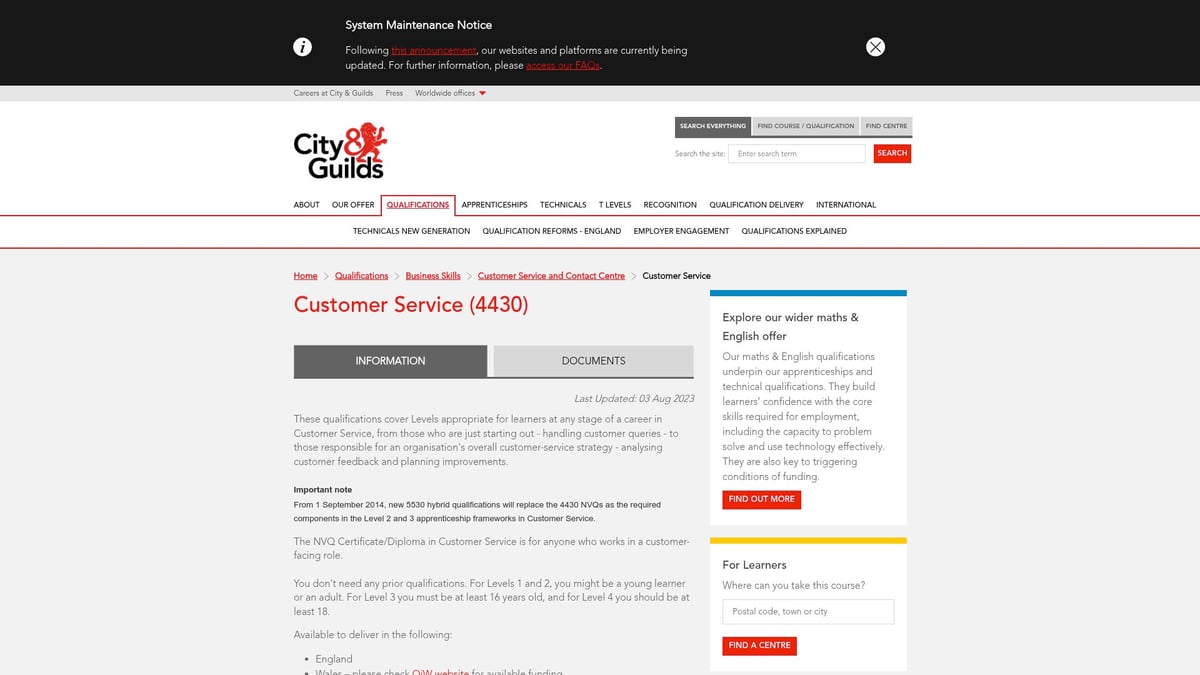
Key features include workplace-based assessments, practical modules, and a focus on both operational and strategic skills. This course supports apprenticeships, ensuring relevance for developing talent pipelines.
Benefits:
- Nationally recognised certification
- Structured progression from foundational to advanced topics
- Emphasis on real-world application
Target Audience:
- New entrants to customer service
- Team leaders and managers seeking formal recognition
Pros:
- Comprehensive coverage of essential skills
- Flexibility in delivery and assessment
- High regard among employers
Cons:
- In-person assessment required
- Less suited for those seeking rapid, entirely online customer service training courses
This course is ideal for organisations wanting a trusted, accredited path to elevate their service standards.
High Speed Training: Online Customer Service Training Course
High Speed Training offers one of the most accessible customer service training courses, with a fully online, CPD-accredited format. At £25 plus VAT, it is budget-friendly and offers bulk discounts for teams.
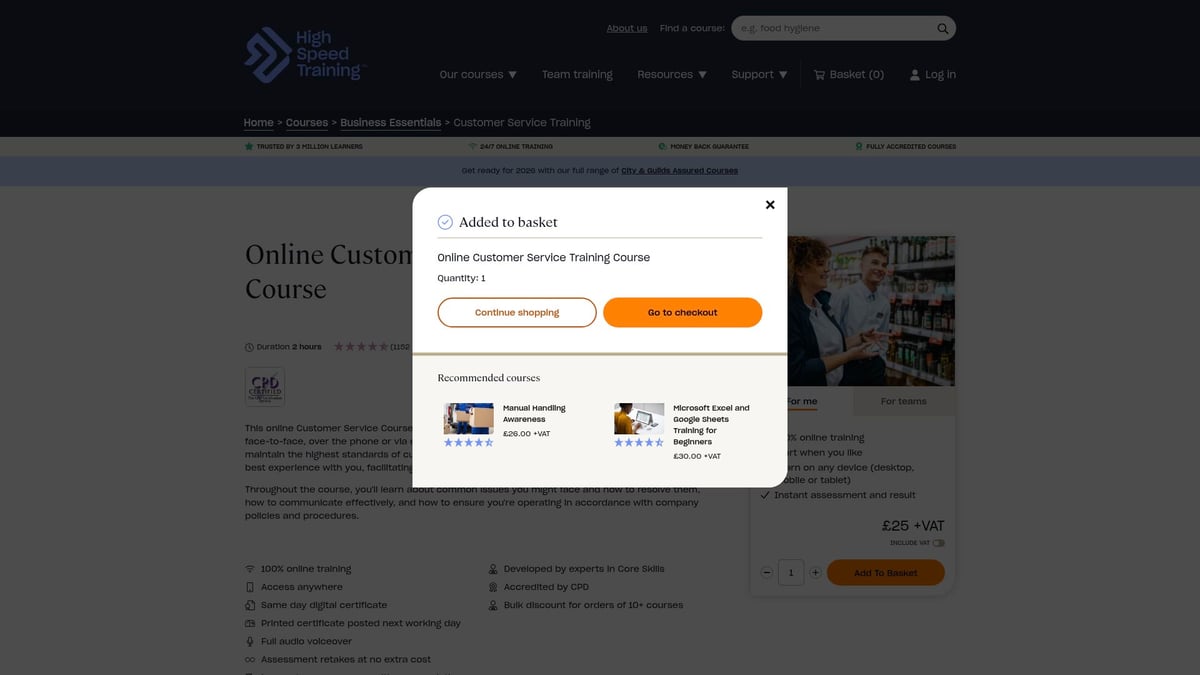
The course covers communication, complaint handling, and company policy, with modules designed for self-paced study. Learners receive instant certification upon completion, and can retake assessments at no extra cost.
Benefits:
- 100% online and mobile-friendly
- Immediate access to certification
- Retakes included, supporting mastery
Target Audience:
- Individuals needing flexible learning
- Teams seeking scalable customer service training solutions
Pros:
- Affordable pricing, especially for large groups
- Highly rated by users (4.7/5 from over 1,100 reviews)
- Covers core customer service competencies
Cons:
- Content may be too general for niche sectors
- Some users report the course is longer than expected
High Speed Training stands out among customer service training courses for its flexibility and value, making it a strong choice for busy professionals and organisations.
FutureLearn: Customer Service Skills Course
FutureLearn’s Customer Service Skills Course is a flexible, interactive option among customer service training courses. It is free to access, with an optional certificate available for around £39. The course features interactive modules, real-world scenarios, and peer discussions, fostering a collaborative learning environment.
Key Features:
- Online learning with flexible start dates
- Peer-to-peer engagement for shared insights
- Practical, scenario-based activities
Benefits:
- Learn at your own pace
- Accessible globally
- Community support enhances understanding
Target Audience:
- Beginners new to customer service
- Professionals seeking to refresh their skills
Pros:
- Free to access core content
- Engaging platform with active community
- Covers a wide range of customer service topics
Cons:
- Certificate requires payment
- Less depth for advanced learners
For those seeking a peer-supported, flexible introduction to customer service training courses, FutureLearn provides a compelling solution.
Udemy: Customer Service Mastery – Delight Every Customer
Udemy’s Customer Service Mastery is a dynamic addition to customer service training courses, offering video-based lessons and lifetime access for a one-off fee (typically £18–£40). The course covers mindset, communication, and complaint handling, and is accessible globally.
Features:
- Practical exercises and real-life case studies
- Self-paced format with mobile compatibility
- Immediate access to materials upon purchase
Benefits:
- Affordable, especially during frequent sales
- Lifetime access supports ongoing learning
- Suitable for all skill levels
Target Audience:
- Individuals seeking flexible, affordable education
- Small businesses looking for scalable training
Pros:
- No recurring costs
- High user ratings and positive feedback
- Covers both basics and advanced strategies
Cons:
- No formal accreditation
- Quality may vary depending on instructor
Udemy’s customer service training courses are ideal for self-motivated learners who value flexibility and cost-effectiveness.
The Institute of Customer Service: Professional Qualifications
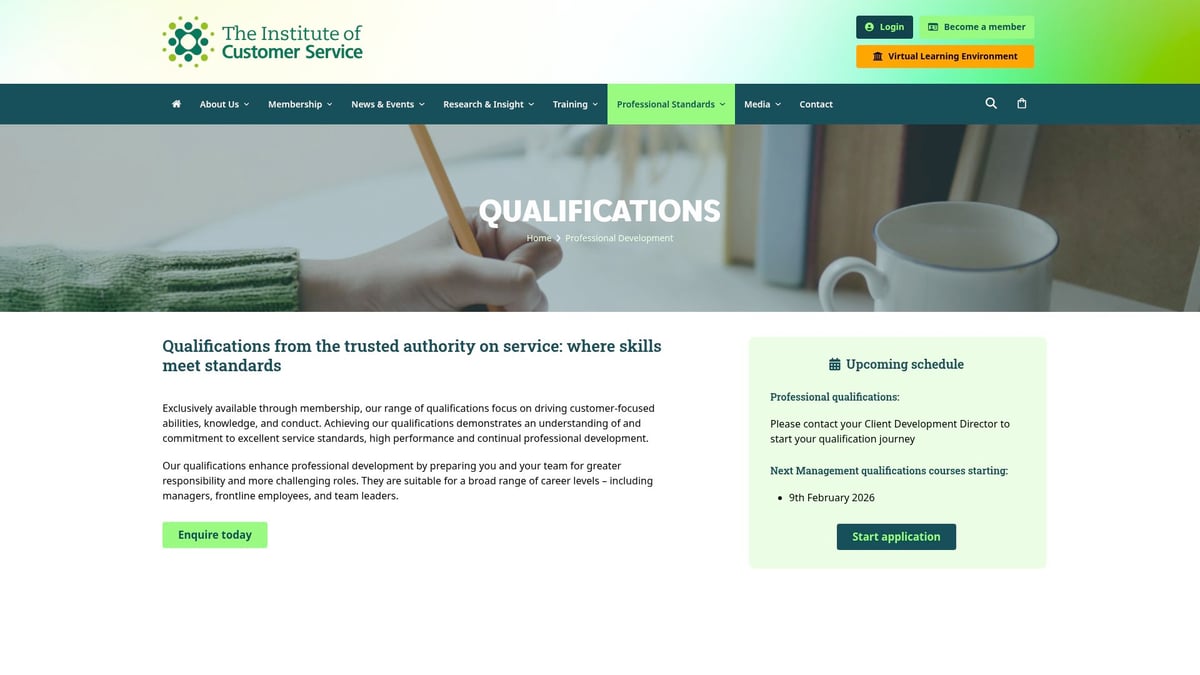
The Institute of Customer Service offers industry-recognised customer service training courses through its suite of professional qualifications. Pricing depends on qualification level and membership status, with blended learning options available.
Core Features:
- Accredited qualifications aligned with professional standards
- Blended learning combining online modules and workshops
- Access to a network of industry professionals
Benefits:
- Enhances career prospects and credibility
- Offers structured pathways for advancement
- Recognised by leading employers
Target Audience:
- Customer service professionals aiming for formal recognition
- Teams seeking tailored development plans
Pros:
- Comprehensive support and resources
- Flexible progression routes
- Networking opportunities
Cons:
- Higher costs compared to some alternatives
- Membership may be required for certain benefits
These customer service training courses are best suited for those committed to long-term career development and professional recognition.
Coursera: Customer Service Fundamentals by University of California, Davis
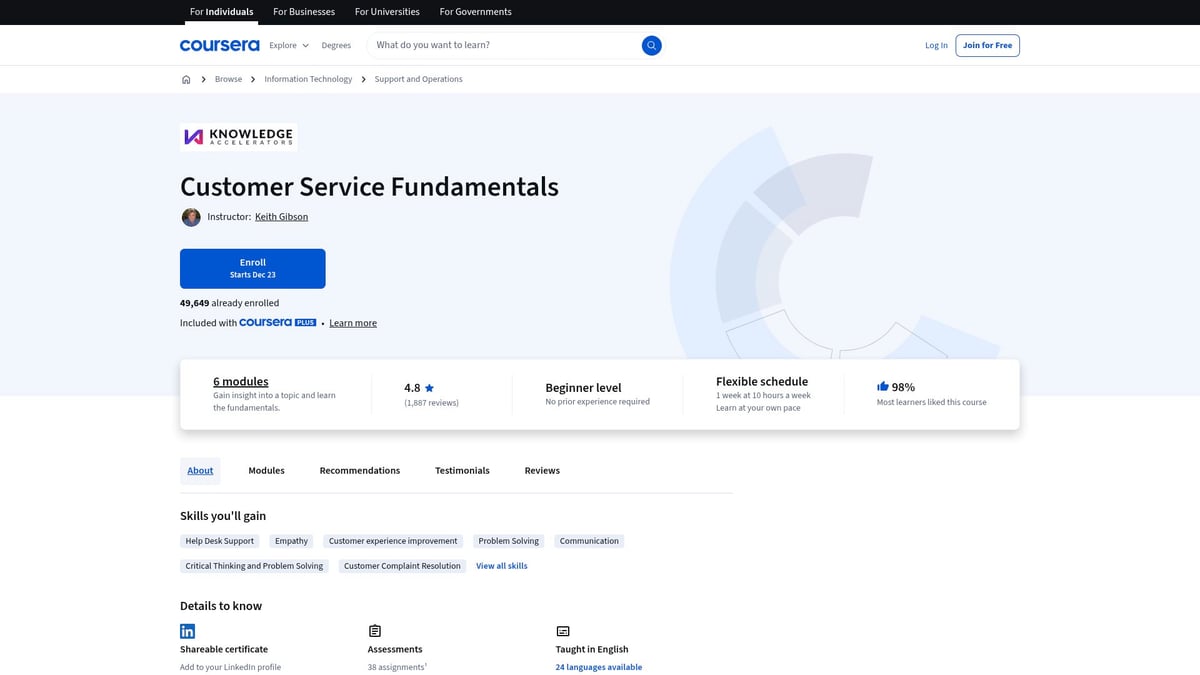
Coursera’s Customer Service Fundamentals, created by the University of California, Davis, is a university-level option in customer service training courses. Learners can audit the course for free or obtain a certificate for about £35.
Key Features:
- Video lectures by experienced faculty
- Quizzes and peer discussion forums
- Coverage of foundational to advanced topics
Benefits:
- Academic credibility and structured curriculum
- Flexible deadlines to fit busy schedules
- Progression from basics to complex scenarios
Target Audience:
- Individuals seeking a university-endorsed qualification
- Teams wanting structured, academic content
Pros:
- Free to audit the course
- Recognised certification available
- Flexible, with clear learning paths
Cons:
- Certificate requires payment
- Less interactive than some other customer service training courses
Coursera is ideal for those who value academic quality and flexibility in their professional development.
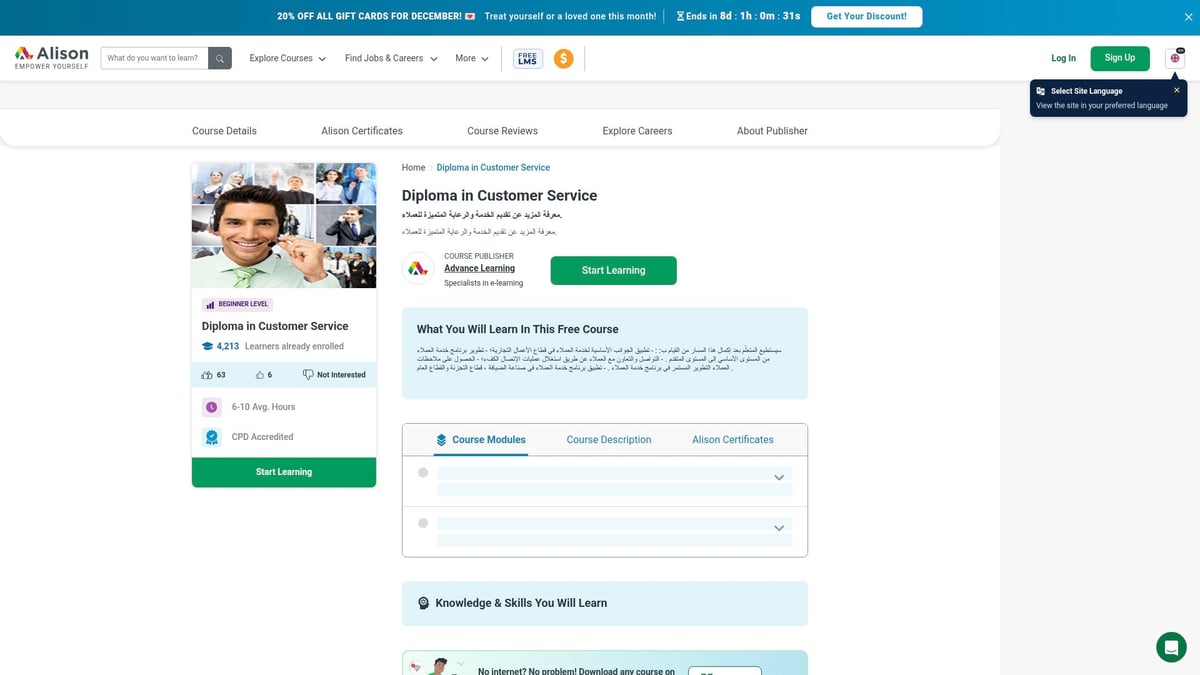
Alison: Diploma in Customer Service
Alison’s Diploma in Customer Service rounds out our list of leading customer service training courses, offering a free, comprehensive curriculum. Optional certificates are available from £20–£40, making it one of the most accessible choices globally.
Features:
- In-depth modules on communication, problem-solving, and retention
- Self-paced learning format
- Accessible worldwide
Benefits:
- No upfront cost for learning
- Covers a broad range of customer service scenarios
- Recognised diploma enhances employability
Target Audience:
- Individuals and small businesses on a budget
- Learners seeking flexible, self-paced study
Pros:
- Free to study all course content
- Flexible and mobile-friendly
- Diploma provides added credibility
Cons:
- Certificate recognition varies by employer
- Limited instructor interaction for personalised feedback
Alison’s customer service training courses are perfect for cost-conscious learners aiming to build a solid foundation in customer service.
How to Choose the Right Course for Your Team or Career
Selecting the right customer service training courses can transform your team’s performance and your career prospects. With so many options available, it is essential to make informed decisions that match your objectives, learning styles, and business needs.
Assessing Your Training Needs
Start by identifying the skills gaps within your team or your personal development goals. Consider feedback from customer surveys, recent performance metrics, and evolving customer expectations for 2026. Are you aiming to master digital interactions, complaint handling, or advanced personalisation? The right customer service training courses should address specific pain points and future-proof your service strategy. Involve team members in the decision-making process to ensure buy-in and relevance.
Comparing Course Types and Formats
Evaluate whether online or in-person delivery best suits your learning environment. Online customer service training courses offer flexibility, while face-to-face sessions encourage real-time interaction. Accreditation is another key factor. Courses such as Excellence in Customer Service Delivery provide recognised qualifications, boosting credibility and career advancement. Consider self-paced versus instructor-led formats, and check if the course content is regularly updated to reflect current best practices.
Scalability and Team Management Features
For organisations, scalability is crucial. Look for customer service training courses that support both individual and bulk enrolments, offer management dashboards, and track progress at a glance. The ability to customise content for different roles or departments ensures training remains relevant for everyone. Team management features, such as automated reminders and group assessments, streamline administration and help maintain momentum throughout the learning journey.
Aligning Training with Business Objectives
Choose courses that align closely with your key business goals and customer service KPIs. Whether your focus is improving satisfaction scores, increasing retention, or enhancing digital support, ensure the curriculum supports these aims. Courses like Building Customer Service Success are designed to drive long-term value and measurable outcomes. Regularly review training impact using performance data, and schedule refresher sessions to keep skills sharp.
Common Mistakes and a Handy Checklist
Avoid choosing customer service training courses based solely on price or popularity. Instead, use this quick checklist:
- Is the course accredited and up to date?
- Does it offer flexible delivery options?
- Are outcomes measurable and aligned with your KPIs?
- Can it be customised for your industry or business size?
A thoughtful approach ensures your investment delivers lasting results.
Frequently Asked Questions About Customer Service Training Courses
Curious about the essentials of customer service training courses in 2026? Here are the most common questions, answered with up-to-date insights to help you make informed decisions for your team or personal development.
What qualifications do you need for customer service roles in 2026?
Most customer service roles in 2026 require a blend of soft skills and formal training. While entry-level positions may only ask for GCSEs or equivalent, employers increasingly value recognised customer service training courses, such as those accredited by City & Guilds or CPD. Advanced roles may demand formal qualifications or industry-specific certificates.
How long do most customer service training courses take to complete?
Course durations vary widely. Short online modules can be completed in a few hours, while accredited programmes may last several weeks or months. Flexible options allow learners to progress at their own pace, making customer service training courses accessible to both busy professionals and full-time staff. The duration often reflects course depth and assessment requirements.
Are online customer service training courses as effective as in-person training?
Online customer service training courses have become highly effective, offering interactive modules, real-world scenarios, and instant feedback. Many learners value the flexibility and accessibility of online learning. However, some organisations still prefer in-person sessions for team building and hands-on practice. Blended approaches are gaining popularity, as highlighted in the 2025 Training Industry Report.
What is the value of CPD or City & Guilds accreditation?
Accreditation from bodies like CPD or City & Guilds signals that customer service training courses meet industry standards. These credentials enhance employability, support career progression, and are recognised by employers across sectors. For organisations, accredited training ensures consistency and compliance with best practices.
Can these courses be customised for specific industries or teams?
Many customer service training courses now offer customisation options. Providers can tailor content to sector challenges, company policies, or team objectives. This ensures relevance and maximises impact, especially for regulated industries or customer-facing teams with unique requirements. Customisation is a trend expected to grow, as discussed in the Future of Customer Service Training: Trends & Strategies.
How do you measure the success of customer service training?
Success is measured through assessment scores, customer satisfaction surveys, retention rates, and performance KPIs. Many customer service training courses include built-in analytics dashboards. Regular feedback from both learners and customers also helps organisations refine and improve future training programmes.
What are typical costs and are there free options available?
Costs for customer service training courses range from free online modules to several hundred pounds for accredited qualifications. Free options, such as open-access courses, provide a foundation, while paid courses often deliver deeper content and certification. Bulk discounts and subscription models can make advanced training more affordable for teams.
How do bulk discounts and team management features work for large organisations?
Providers of customer service training courses often offer bulk pricing and management dashboards. These tools allow HR or managers to enrol teams, monitor progress, and generate reports. Such features make it easier to scale training across departments, ensuring consistent standards company-wide.
Article written using RankPill.

