

In today's competitive marketplace, exceptional customer service isn't just a differentiator-it's a fundamental business requirement. Organizations that invest in developing their customer-facing teams through structured training programmes see measurable improvements in customer satisfaction, retention, and ultimately, revenue. Customer services courses provide the essential foundation for building teams that don't just meet customer expectations but consistently exceed them, creating memorable experiences that drive loyalty and positive word-of-mouth referrals.
The Strategic Importance of Customer Service Training
Customer service has evolved from a reactive support function to a strategic competitive advantage. Companies across industries recognize that every customer interaction shapes brand perception and influences purchasing decisions. When frontline staff lack proper training, even the best products or services can falter due to poor delivery, miscommunication, or unresolved complaints.
Professional customer services courses address this challenge by equipping teams with practical skills they can apply immediately. These programmes go beyond basic politeness to develop comprehensive competencies including active listening, emotional intelligence, conflict resolution, and solution-oriented thinking. The training approach at My Training Network emphasizes real-world application through interactive exercises and scenario-based learning.
Organizations investing in customer service training report significant returns. Research consistently demonstrates that well-trained service teams reduce customer churn, increase average transaction values, and generate higher net promoter scores. Moreover, trained employees feel more confident and engaged in their roles, leading to reduced turnover and improved workplace morale.
Core Components of Effective Customer Services Courses
Comprehensive customer services courses cover multiple skill areas that together create service excellence. Understanding these components helps organizations select programmes that address their specific needs and challenges.
Communication Mastery
Effective communication forms the bedrock of exceptional service. Training programmes dedicate substantial time to developing both verbal and written communication skills across various channels. Participants learn to adapt their communication style to different personality types, cultural backgrounds, and situational contexts.
- Verbal communication techniques for phone support and face-to-face interactions
- Written communication standards for email, chat, and social media responses
- Non-verbal communication awareness including tone, pace, and body language
- Cross-cultural communication competency for diverse customer bases
The business writing skills offered through professional training providers complement customer service training by ensuring written communications maintain clarity and professionalism across all touchpoints.

Problem-Solving and Critical Thinking
Customer service professionals encounter unique challenges daily. Training programmes develop systematic problem-solving frameworks that enable quick, effective resolution whilst maintaining customer satisfaction. This includes teaching staff to identify root causes rather than merely addressing symptoms.
| Problem-Solving Stage | Skills Developed | Customer Impact |
|---|---|---|
| Issue Identification | Active listening, question formulation | Accurate understanding of concern |
| Analysis | Critical thinking, pattern recognition | Faster resolution times |
| Solution Development | Creative thinking, resourcefulness | Customized, effective solutions |
| Implementation | Decision-making, accountability | Confident, timely action |
| Follow-up | Attention to detail, relationship building | Enhanced satisfaction and loyalty |
Emotional Intelligence and Empathy
Customer services courses increasingly emphasize emotional intelligence as a critical competency. Understanding and managing emotions-both one's own and customers'-enables service professionals to navigate tense situations effectively and build genuine connections.
Training in this area covers recognizing emotional cues, responding with appropriate empathy, maintaining composure under pressure, and turning negative experiences into positive outcomes. The principles taught in emotionally intelligent workplace communication courses directly apply to customer-facing roles.
Empathy training teaches staff to view situations from the customer's perspective, acknowledge frustrations sincerely, and demonstrate genuine care for resolving issues. This human-centred approach transforms transactional interactions into relationship-building opportunities.
Specialized Training for Different Service Contexts
Customer services courses aren't one-size-fits-all. Different industries, channels, and customer segments require specialized knowledge and approaches. Quality training providers offer customizable programmes tailored to specific organizational contexts.
Call Centre Excellence
Call centre representatives face unique pressures including high call volumes, strict performance metrics, and challenging customer interactions conducted entirely via telephone. Specialized training for this environment addresses telephone etiquette, managing call flow efficiently, de-escalation techniques, and maintaining energy throughout shifts. HSI’s customer service training programmes cover essential call centre skills including telephone etiquette and handling customer feedback effectively.
Digital Customer Service
As customer interactions increasingly occur through digital channels, training must address the specific demands of email, live chat, and social media support. Digital customer services courses teach concise written communication, managing multiple simultaneous conversations, appropriate response times, and maintaining brand voice across platforms whilst addressing individual customer needs.
Technical Support and Product Expertise
Some customer service roles require deep technical knowledge alongside interpersonal skills. Training programmes for technical support teams balance product knowledge development with communication techniques that translate complex information into customer-friendly language. This ensures customers receive accurate information delivered in an accessible, non-intimidating manner.
Building Service Culture Through Training
Individual skill development represents just one dimension of effective customer services courses. The most impactful programmes also cultivate organizational culture shifts that prioritize customer-centricity at every level.
Service Standards and Consistency
Training establishes clear service standards that create consistency across teams and touchpoints. Participants learn specific protocols for greeting customers, handling requests, managing complaints, and closing interactions. This standardization ensures customers receive reliably excellent service regardless of which team member they encounter.
Key service standards typically include:
- Response time expectations for different channels
- Greeting and closing protocols
- Escalation procedures for complex issues
- Documentation requirements
- Follow-up commitments
Customer-Driven Mindset Development
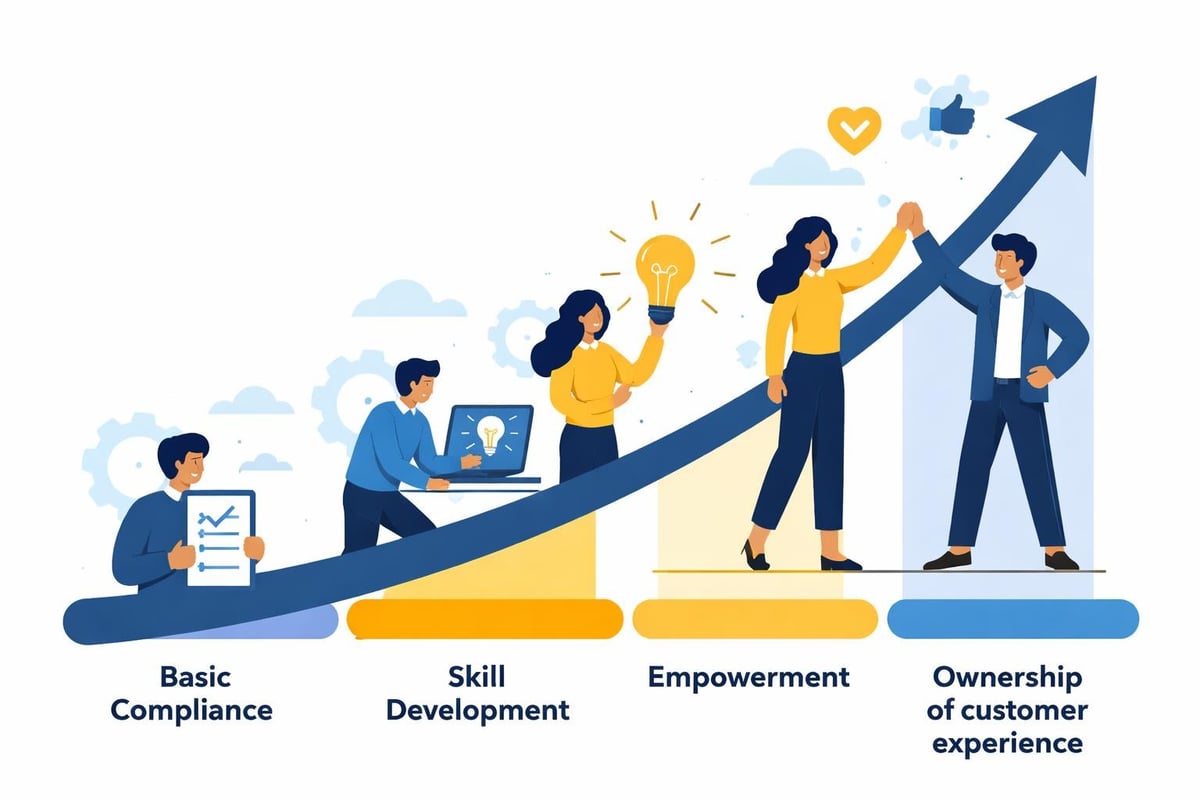
Beyond tactical skills, customer services courses work to fundamentally shift how employees view their roles. Training reframes customer service from a task-oriented function to a relationship-building mission. The Graduate School USA’s Customer Service Excellence course emphasizes becoming customer-driven, focusing on service quality enhancement particularly in public sector contexts.
This mindset transformation involves understanding how each interaction contributes to broader business objectives, recognizing the lifetime value of satisfied customers, and taking personal ownership of the customer experience.
Advanced Topics in Customer Services Courses
As teams master foundational skills, advanced customer services courses address sophisticated challenges that separate good service from exceptional experiences.
Handling Difficult Customers and Conflict Resolution
Even the most skilled service professionals encounter challenging interactions. Advanced training provides frameworks for de-escalating conflict, managing unreasonable demands, setting appropriate boundaries, and protecting both customer relationships and organizational interests. Cape Fear Community College’s Customer Service Training Series outlines comprehensive topics including handling challenging customers and managing difficult situations.
Participants learn to recognize different types of difficult behaviour, understand underlying causes, maintain composure when personally attacked, and guide interactions toward constructive resolution. Role-playing exercises allow safe practice of these high-pressure scenarios.
Anticipating Customer Needs
Proactive service distinguishes exceptional organizations from merely adequate ones. Training in needs anticipation teaches staff to recognize patterns, ask insightful questions, offer relevant suggestions before customers request them, and create seamless experiences that delight through thoughtfulness.
This advanced skill requires deep product knowledge, understanding of customer journeys, and the confidence to make recommendations that genuinely serve customer interests rather than merely pursuing sales targets.
Service Recovery and Turning Complaints Into Opportunities
When service failures occur, how organizations respond determines whether customers remain loyal or defect to competitors. Customer services courses teach systematic service recovery processes that acknowledge mistakes promptly, take responsibility without defensive excuses, offer appropriate compensation, and implement improvements preventing recurrence.
Training emphasizes viewing complaints as valuable feedback and opportunities to demonstrate commitment to customer satisfaction. Well-handled recovery situations often create stronger customer relationships than if the problem had never occurred.
Delivery Formats for Customer Services Courses
Modern customer services courses utilize various delivery formats, each offering distinct advantages depending on organizational needs, team locations, and learning preferences.
Instructor-Led Training
Traditional classroom training remains highly effective for customer service development. Live instruction enables immediate clarification of concepts, dynamic group discussions, realistic role-playing, and relationship building among team members. Pryor Learning’s customer service training offers live virtual seminars alongside in-person options, providing flexibility whilst maintaining interactive engagement.
Instructor-led sessions create shared experiences that strengthen team cohesion and establish common service standards. The real-time feedback from expert facilitators accelerates skill development and corrects misunderstandings immediately.
Virtual and Online Learning
Digital delivery expands access to customer services courses whilst accommodating distributed teams and budget constraints. Online programmes range from self-paced modules to live virtual workshops. Lorman Education Services provides online customer service training designed to enhance skills without disrupting daily responsibilities, covering diverse topics from privacy policies to exceptional service delivery.
Quality online training incorporates interactive elements, multimedia content, knowledge checks, and opportunities for practice. The flexibility allows participants to progress at their own pace whilst balancing work responsibilities.
Blended Learning Approaches
Increasingly, organizations adopt blended models combining online foundational learning with live practice sessions. Participants complete theoretical content independently, then attend interactive workshops focusing on application, role-play, and skill refinement. This approach maximizes learning efficiency whilst preserving the benefits of human interaction and coaching.
Measuring Training Effectiveness and ROI
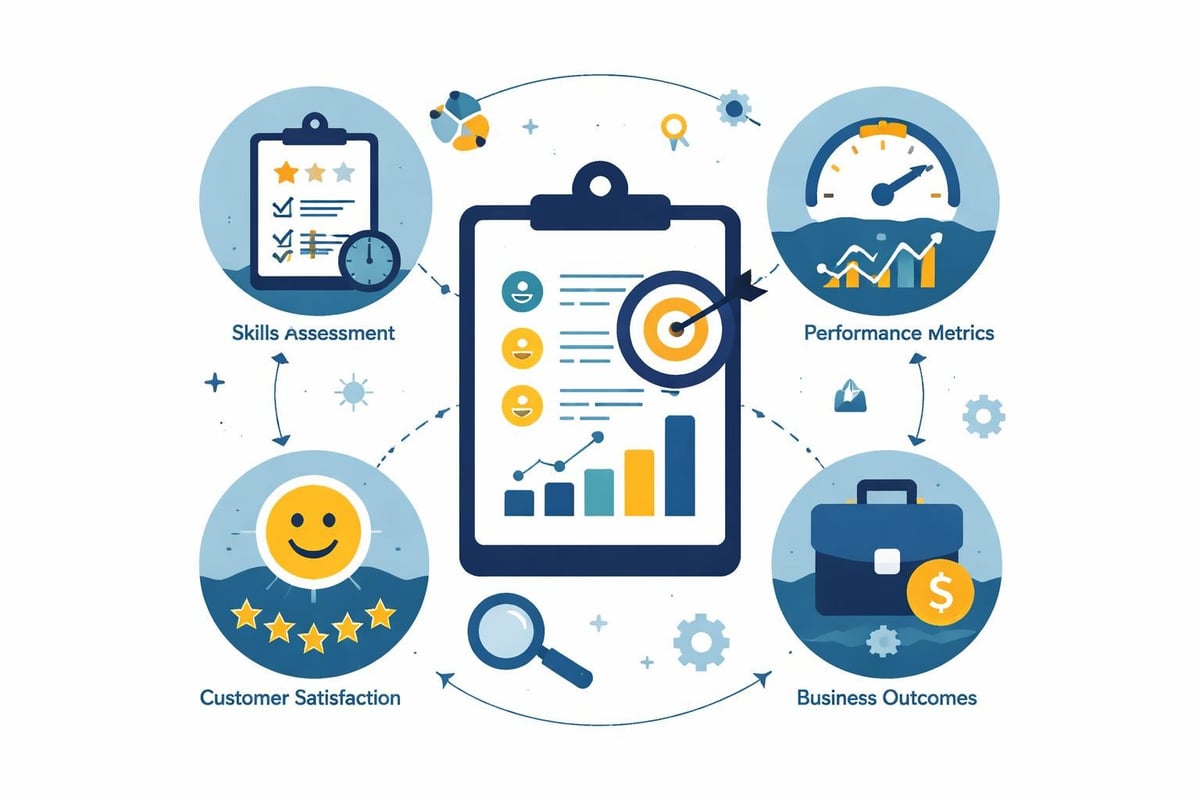
Investing in customer services courses requires demonstrating tangible business value. Sophisticated organizations implement comprehensive measurement frameworks tracking both leading indicators of skill development and lagging indicators of business impact.
Skill Assessment and Competency Verification
Immediate learning outcomes can be measured through:
- Pre and post-training knowledge assessments
- Role-play evaluations against scoring rubrics
- Certification tests verifying competency
- Supervisor observations of skill application
- Peer feedback on collaboration and communication
These metrics confirm participants have acquired intended knowledge and capabilities, providing confidence the training achieved its instructional objectives.
Business Impact Metrics
The ultimate value of customer services courses appears in operational and financial results. Organizations track metrics including customer satisfaction scores, net promoter scores, first-contact resolution rates, average handling time, customer retention percentages, and revenue per customer. Global Knowledge’s Quality Customer Service Training focuses on improving attitudes toward customer service and developing skills for positive interactions that build long-term relationships.
Comparing these metrics before and after training interventions quantifies return on investment. Many organizations find that improvements in retention alone justify training costs, with service efficiency gains and increased sales representing additional benefits.
Selecting the Right Customer Services Courses
With numerous training providers and programme options available, organizations must evaluate offerings systematically to ensure alignment with needs and quality standards.
Assessing Current Skills and Identifying Gaps
Effective training begins with honest assessment of existing capabilities. Surveys, performance data analysis, customer feedback review, and manager assessments reveal specific skill gaps requiring attention. This diagnostic phase ensures training addresses actual needs rather than generic topics.
Understanding whether teams struggle primarily with communication, technical knowledge, conflict management, or other specific areas allows selection of targeted customer services courses delivering maximum impact.
Evaluating Training Providers
Not all training providers deliver equal quality or value. Organizations should consider the provider's industry experience, instructor credentials, curriculum customization capabilities, delivery format options, post-training support, and measurement tools. Reviewing course offerings and training approach helps assess alignment with organizational requirements.
Client testimonials, case studies, and sample materials provide insight into programme quality and effectiveness. The best providers demonstrate deep understanding of customer service challenges and offer practical, immediately applicable content rather than purely theoretical concepts.
Customization and Industry Relevance
Generic customer services courses provide foundational value, but customized programmes addressing industry-specific challenges and incorporating organizational scenarios deliver superior results. Training that references familiar products, common customer situations, and actual company policies creates immediate relevance and accelerates application.
Quality providers invest time understanding organizational context before delivering training, ensuring examples, exercises, and recommendations align perfectly with the unique environment participants navigate daily.
Integrating Training Into Broader Development Strategies
Customer services courses achieve maximum impact when integrated into comprehensive employee development strategies rather than treated as isolated events.
Onboarding and Continuous Development
New hire onboarding should include fundamental customer service training establishing expectations and building core capabilities from day one. However, learning cannot stop there. Ongoing development through refresher courses, advanced topic workshops, and leadership management courses for team leads ensures continuous improvement and prevents skill degradation.
Regular training touchpoints maintain focus on service excellence, introduce emerging best practices, and reinforce organizational commitment to customer-centricity. Many organizations implement quarterly or annual training cycles keeping skills sharp and knowledge current.
Creating Learning Organizations
The most customer-centric organizations cultivate cultures of continuous learning where employees actively seek improvement opportunities and share knowledge with colleagues. Customer services courses contribute to this culture by modeling growth mindsets, encouraging experimentation, and celebrating learning from both successes and failures.
Knowledge-sharing platforms, peer coaching programmes, and communities of practice extend training impact beyond formal sessions, creating environments where customer service excellence becomes embedded in daily operations.
Career Pathing and Recognition
Linking customer service skill development to career advancement motivates participation and sustained application. Organizations that recognize and reward service excellence through promotions, special assignments, or compensation increases demonstrate genuine commitment to customer-centricity.
Clear competency frameworks showing progression from basic to advanced service skills provide roadmaps for development whilst creating objective standards for advancement decisions. This transparency encourages employees to invest in their growth through available customer services courses.
Future Trends in Customer Service Training
The customer service landscape continues evolving, and training programmes adapt accordingly to prepare teams for emerging challenges and opportunities.
Technology Integration and AI
Artificial intelligence and automation increasingly handle routine customer inquiries, shifting human agents toward complex problem-solving and relationship management. Future customer services courses emphasize skills machines cannot replicate: emotional intelligence, creative problem-solving, judgement in ambiguous situations, and building authentic human connections. Understanding responsible AI use in the workplace becomes essential as technology and human service converge.
Training also addresses working alongside AI tools effectively, interpreting system recommendations, and knowing when to override automated responses in favour of human judgement.
Omnichannel Service Excellence
Customers expect seamless experiences across all touchpoints, requiring service professionals to manage interactions that begin on one channel and continue on another. Training programmes increasingly emphasize omnichannel thinking, teaching staff to access complete interaction histories, maintain context across channels, and provide consistent service regardless of how customers choose to engage.
Personalization at Scale
While automation increases, customers simultaneously expect more personalized service. Training addresses balancing efficiency with individualization, using customer data ethically to inform interactions, and creating moments of genuine human connection within structured processes. This requires emotional intelligence and judgement beyond what scripts or protocols can provide.
Investing in customer services courses represents one of the highest-return training initiatives organizations can undertake, directly impacting customer satisfaction, retention, and revenue whilst improving employee engagement and capability. Whether your team needs foundational skills development, advanced training in specific service contexts, or comprehensive culture transformation, My Training Network delivers customizable, instructor-led programmes designed for maximum impact. Our expert trainers bring real-world experience and proven methodologies that translate immediately into improved customer experiences and measurable business results.

