

The landscape of customer support is evolving rapidly as businesses accelerate their digital transformation. In a world where 73% of customers say experience shapes their loyalty, upskilling has never been more crucial.
This article reveals the top seven customer support courses professionals should consider to stay ahead in 2026. You will discover each course’s unique advantages, pricing details, and the types of professionals who will benefit most.
Ready to future-proof your career? Explore the best training options to enhance your skills and unlock new opportunities in customer support.
Why Customer Support Skills Matter in 2026
Customer support is changing rapidly as digital transformation reshapes how people interact with businesses. Customers today expect fast, seamless, and highly personalised service across every channel. By 2026, these expectations will only increase, making customer support courses a critical investment for professionals and organisations alike.
The Changing Face of Customer Support
As digital channels multiply and competition intensifies, companies must deliver exceptional customer experiences to stand out. According to Salesforce, 73% of customers now say that their experience with a brand is just as important as the products or services themselves. This shift means that customer support courses are not only about technical training, but also about cultivating empathy, patience, and adaptability.
Brands like Zappos and Apple have built their reputations on remarkable support. Their commitment to training staff in both hard and soft skills has driven customer loyalty and set industry benchmarks. For professionals, investing in customer support courses is an essential step to keep pace with these evolving standards.
The Role of AI and Automation
Artificial intelligence and automation are transforming support roles, handling routine queries and providing instant solutions. However, human-centric skills remain irreplaceable. While AI improves efficiency, customers still value empathy and nuanced understanding in complex situations.
Industry reports highlight that AI is expected to augment, not replace, the workforce. If you want to explore how these trends are shaping the industry, Forrester’s AI in customer service predictions offers a comprehensive look at what’s ahead. Customer support courses increasingly incorporate AI literacy, helping professionals work alongside new technologies while focusing on relationship-building.
Essential Skills for 2026 Success
To excel in customer support roles by 2026, professionals need a blend of technical and interpersonal abilities. Top customer support courses teach vital skills such as:
- Empathy and active listening
- Clear and persuasive communication
- Creative problem-solving
- Technical literacy across multiple platforms
These competencies ensure that support teams can resolve issues quickly, reduce frustration, and create positive brand experiences. Learning these through structured customer support courses gives staff the confidence and tools to exceed expectations.
The Business and Career Impact of Upskilling
Investing in customer support courses pays dividends for both individuals and organisations. Well-trained teams reduce customer churn, increase retention, and boost Net Promoter Scores (NPS). For professionals, gaining new certifications and skills opens doors to leadership roles and higher earning potential.
Organisations that prioritise upskilling see direct benefits in efficiency, customer satisfaction, and reputation. In a competitive job market, customer support courses can differentiate you, making you a valuable asset to any employer.
Future Trends Shaping Customer Support
Looking ahead, trends such as omnichannel support, hyper-personalisation, and proactive service will define the next era of customer experience. Customer support courses are evolving to address these needs, offering training in advanced analytics, customer journey mapping, and integrated communication tools.
As the industry moves forward, those who continuously learn and adapt will lead the way. Staying current through customer support courses ensures you are prepared for the challenges and opportunities of 2026 and beyond.
7 Essential Customer Support Courses to Boost Your Skills in 2026
Choosing the right customer support courses is pivotal for anyone aiming to thrive in a rapidly evolving industry. The right training not only builds expertise but also future-proofs your career in a digital marketplace where customer expectations are higher than ever.
Below, we review seven of the most effective customer support courses for 2026. Each offers unique benefits, accessible pricing, and targeted learning paths to suit a range of professionals.
Zendesk Customer Service Training
For those seeking customer support courses that combine platform expertise with practical skills, Zendesk Customer Service Training stands out. It offers both free and premium options, with a recognised certification available for paid plans.
The course is structured around interactive modules, hands-on labs, and real-world support scenarios. You will master the Zendesk platform, learning to streamline workflows and resolve customer issues efficiently.
Key benefits:
- Industry-recognised certification
- Platform-specific knowledge
- Flexible, self-paced learning
Target audience:
Support agents, team leads, and managers who already use or plan to use Zendesk in their operations.
Use cases:
Ideal for onboarding new hires or upskilling current staff in customer support courses that focus on the Zendesk ecosystem.
Pros:
- Up-to-date content reflecting current best practices
- Hands-on experience with platform tools
Cons:
- Focused specifically on Zendesk, so may not suit those using other platforms
Unique point:
Direct integration with a leading support platform, making it perfect for teams committed to Zendesk as their main tool.
Coursera: Customer Service Fundamentals
Coursera’s Customer Service Fundamentals is a highly accessible entry point for anyone interested in customer support courses. You can audit the content for free or pay a fee for a certificate that carries weight with employers.
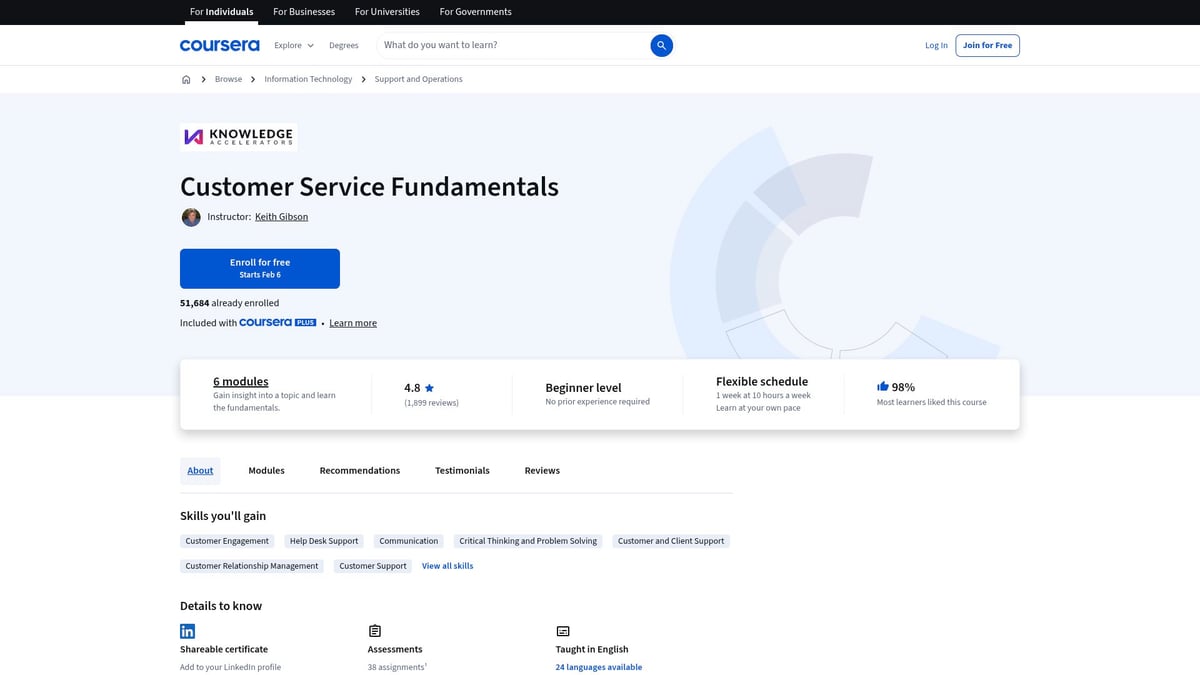
The curriculum covers foundational modules, video lectures, quizzes, and peer discussions. Collaboration with the University of California, Davis, ensures academic rigor and industry relevance.
Key benefits:
- Broad, comprehensive curriculum
- Flexible, self-paced learning
- Recognised certification for career advancement
Target audience:
Entry-level professionals, recent graduates, and career changers.
Use cases:
Building a strong foundation in customer support, preparing for your first support role, or refreshing core skills.
Pros:
- Accessible for all learners
- University-backed credibility
Cons:
- May lack depth for advanced learners
Unique point:
The partnership with a leading university provides assurance of quality and recognition in the job market.
HubSpot Academy: Inbound Service Fundamentals
If you are looking for customer support courses that integrate the inbound philosophy, HubSpot Academy’s Inbound Service Fundamentals is an excellent choice. The training is completely free and focuses on customer-centric strategies.
You will learn about the inbound methodology, customer journey mapping, and how to use service tools to personalise support. The course provides actionable frameworks that can be implemented immediately.
Key benefits:
- Focus on customer-centric, inbound strategies
- Practical frameworks for real-world use
- No cost, making it highly accessible
Target audience:
Support professionals, marketers, and small business owners wanting to align support with broader business goals.
Use cases:
Enhancing the customer experience and bridging the gap between support and marketing.
Pros:
- Practical, actionable tips
- Integrates well with existing HubSpot tools
Cons:
- Content is HubSpot-focused, which may not fit every organisation
Unique point:
Brings the inbound philosophy into customer support, encouraging teams to view every interaction as part of a larger customer journey.
Udemy: Customer Service Mastery – Delight Every Customer
Udemy’s Customer Service Mastery is one of the most popular customer support courses for professionals seeking practical, immediately usable techniques. Priced between £14.99 and £49.99 (with frequent discounts), it offers great value.
Expect over 30 engaging video lessons, downloadable resources, and lifetime access. The course is led by an experienced instructor who focuses on real-world examples and actionable scripts for handling different customer scenarios.
Key benefits:
- Engaging, relatable instruction
- Practical scripts and scenarios
- Lifetime access to updates
Target audience:
Customer-facing staff, support leaders, and anyone looking to boost soft skills.
Use cases:
Improving communication, handling difficult customers, and building long-term relationships.
Pros:
- Affordable and highly rated by students
- Immediate, practical application
Cons:
- Course quality can vary depending on the instructor
Unique point:
Emphasises hands-on, practical techniques that can be applied from day one.
Skillshare: Customer Service Essentials
Skillshare’s Customer Service Essentials is designed for those who prefer creative and modern customer support courses. With a subscription-based model (and a free trial available), it is ideal for freelancers and small business teams.
The course features short, focused video classes and community projects. This encourages peer feedback and collaborative learning, making it a unique option among customer support courses.
Key benefits:
- Bite-sized modules for quick learning
- Creative, modern approaches to support
- Active peer feedback and community projects
Target audience:
Freelancers, small business owners, and creative professionals.
Use cases:
Quick upskilling, team workshops, and introducing fresh ideas to your support approach.
Pros:
- Flexible learning schedules
- Vibrant, creative community
Cons:
- Less formal certification compared to other platforms
Unique point:
Encourages innovation and creativity in customer support, helping teams stand out with modern practices.
FutureLearn: Customer Service Training
FutureLearn’s Customer Service Training is ideal for professionals looking for internationally recognised customer support courses. You can access basic content for free or pay for a certificate and extended access.
The curriculum is structured in weekly modules, featuring quizzes and expert instruction. It is designed to provide both foundational and advanced skills, making it suitable for global teams.
Key benefits:
- International perspective on customer support
- Structured, easy-to-follow curriculum
- Option for formal certification
Target audience:
Support professionals in global organisations and those seeking formal training.
Use cases:
Building a strong skill set for international customer support roles and preparing for leadership positions.
Pros:
- University partnerships add credibility
- Accessible worldwide
Cons:
- Limited features in the free version
Unique point:
Certification is recognised internationally, making it a strong addition to any CV.
LinkedIn Learning: Customer Service Foundations
LinkedIn Learning’s Customer Service Foundations is a versatile option among customer support courses. It requires a subscription (with a free trial available) and is suitable for professionals at all levels.
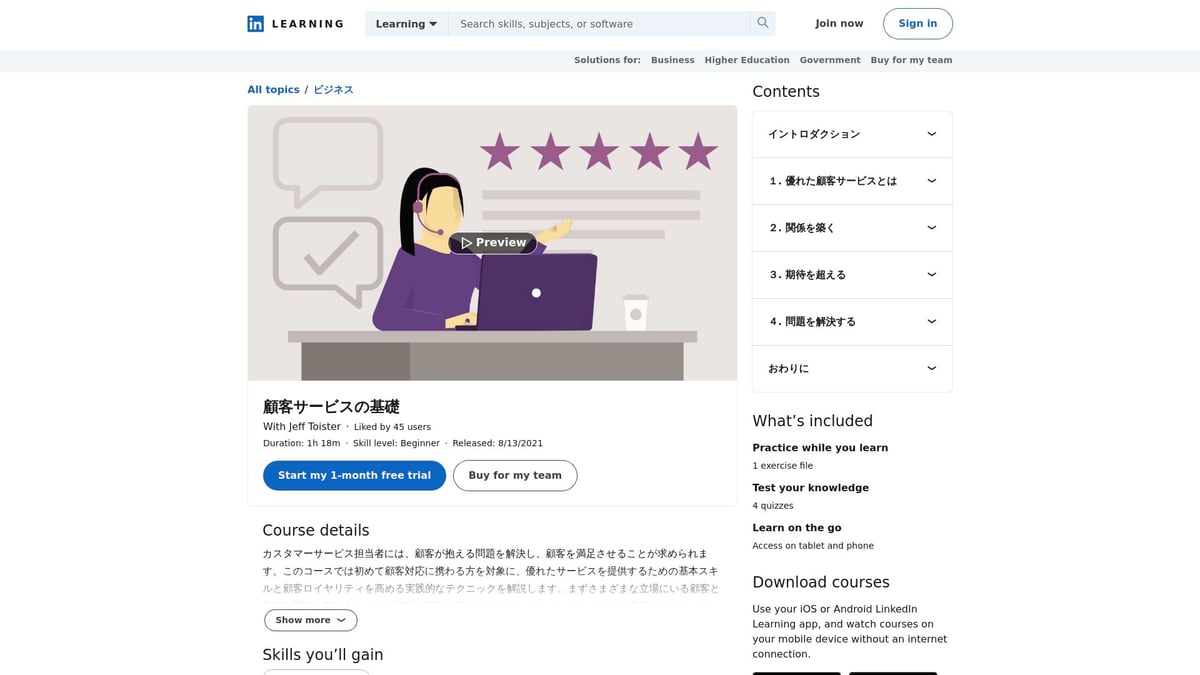
You will find video lectures, downloadable resources, and guided learning paths. The course integrates seamlessly with your LinkedIn profile, boosting your professional visibility.
Key benefits:
- Personalised course recommendations
- Integration with professional branding tools
- Widely recognised by employers
Target audience:
Support professionals, team leaders, and anyone seeking career development.
Use cases:
Ongoing professional growth, team training, and building a standout personal brand.
Pros:
- Well-structured learning paths
- Enhances LinkedIn profile visibility
Cons:
- Subscription required for full access
Unique point:
Direct link to professional networking and visibility, making it easier to showcase your skills to potential employers.
To further enhance your learning journey, consider exploring Excellence in Customer Service Delivery for best practices and proven strategies that complement these customer support courses.
How to Choose the Right Customer Support Course for Your Goals
Selecting the most suitable customer support courses can be daunting, given the wealth of options available in 2026. A targeted approach will ensure your investment matches your ambitions, learning style, and career trajectory. Here is a step-by-step guide to making the right choice.
Step 1: Assess Your Skills and Goals
Begin by evaluating your current strengths and areas for growth. Are you just starting out, or do you have experience in customer support? Define your career objectives. Whether you seek foundational knowledge, advanced techniques, or leadership training, knowing your goals will help you shortlist the right customer support courses.
Step 2: Compare Course Content and Format
Next, review the curriculum and delivery method. Look for customer support courses that align with your preferred learning style, such as self-paced modules, live instruction, or blended learning. Consider if the courses offer industry-relevant content or cater to specific sectors. For example, Customer Service Skills for Municipal Employees is tailored for public sector staff, while others may focus on private industry or global best practices.
Step 3: Evaluate Practicality and Peer Engagement
Practical, hands-on exercises and real-world scenarios increase retention and application. Choose customer support courses that include role-play, case studies, or interactive simulations. Peer discussion groups and feedback opportunities foster deeper understanding and connected learning.
Step 4: Weigh Cost, Time, and ROI
Balance your budget, available time, and the value offered by each course. Some customer support courses are free or low-cost, while others require a higher investment for premium features or certification. Consider options that provide long-term benefits, such as Building Customer Service Success, which focuses on sustainable excellence. Remember, 82% of professionals report that relevant certification helped them advance their careers.
Step 5: Consider Employer and Team Support
If you are part of a team, check if your employer offers support for training or group learning. Many organisations encourage upskilling through customer support courses to boost team performance and morale.
Step 6: Verify Credibility Through Reviews
Read reviews, testimonials, and check completion rates to gauge the credibility of customer support courses. High ratings and positive feedback are strong indicators of course quality and learner satisfaction.
Example: Decision Matrix for Customer Support Courses
| Criteria | Course A | Course B | Course C |
|---|---|---|---|
| Content Relevance | ✔ | ✔ | ✔ |
| Certification | ✔ | ✔ | |
| Peer Interaction | ✔ | ✔ | |
| Cost | £ | ££ | Free |
A simple decision matrix can help you weigh key features side by side, making it easier to select the best course for your unique needs.
Maximising the Impact of Your Customer Support Training
To truly benefit from customer support courses, you need a strategic approach that goes beyond passive learning. Begin by setting clear, actionable objectives for what you want to achieve, whether it is mastering new platforms or improving soft skills.
Practical Tips to Maximise Your Training:
- Apply new knowledge in real-world scenarios as soon as possible.
- Seek feedback from managers and peers to refine your skills.
- Join course communities or alumni networks for support and shared insights.
- Track your progress with milestones and celebrate each achievement.
- Consider enhancing your communication skills through targeted options like Writing for Customer Service Success.
A practical way to embed learning is by organising a knowledge-sharing session with your team after completing customer support courses. This not only reinforces your understanding but also spreads best practices across your organisation.
Continuous improvement is crucial. Customer needs and technology evolve rapidly, so staying connected to industry trends and regularly updating your skills ensures you remain effective. By consistently engaging with customer support courses, you will build long-term value for your career and your organisation.

