

Organizations across Canada are recognizing that building truly inclusive workplaces requires more than good intentions. It demands structured learning, ongoing commitment, and expert guidance. Diversity and inclusion training has evolved from a compliance checkbox into a strategic imperative that drives innovation, employee engagement, and competitive advantage. As businesses navigate an increasingly diverse marketplace and workforce, investing in comprehensive training programs has become essential for long-term success.
The Business Case for Diversity and Inclusion Training
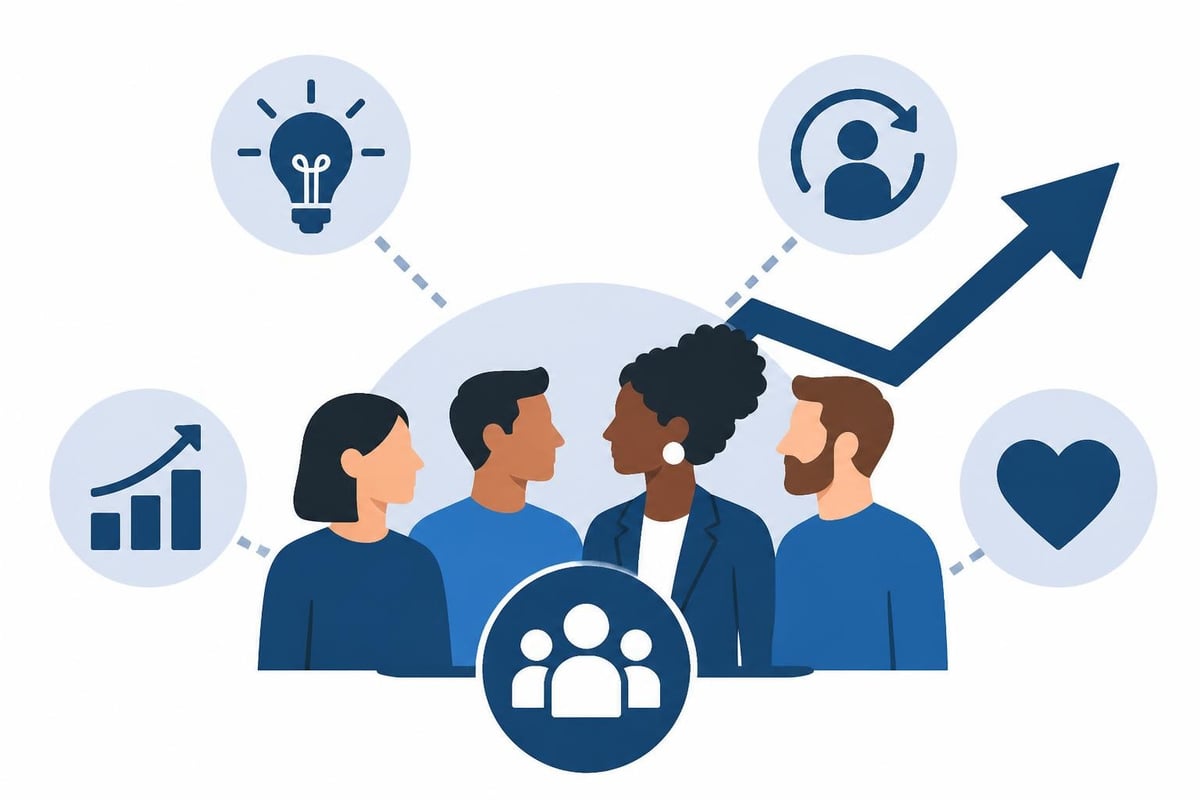
Canadian organizations that prioritize inclusive practices consistently outperform their competitors. Research demonstrates that diverse teams make better decisions, generate more innovative solutions, and connect more effectively with varied customer bases.
Key business benefits include:
- Enhanced problem-solving capabilities through diverse perspectives
- Improved employee retention and reduced turnover costs
- Stronger employer brand attracting top talent
- Better market insights from teams reflecting customer diversity
- Reduced legal risks related to discrimination and harassment
A meta-analysis of diversity training research spanning over four decades reveals that well-designed programs significantly improve participant attitudes, knowledge, and behaviours. However, effectiveness depends heavily on implementation quality and organizational commitment beyond the training room.
The financial implications extend beyond direct cost savings. Companies with inclusive cultures report higher revenue growth, greater profitability, and increased market share. When employees feel valued and respected regardless of their background, engagement levels rise dramatically.
Core Components of Effective Programs
Diversity and inclusion training encompasses multiple learning objectives that work together to create lasting organizational change. Programs must address both individual awareness and systemic barriers.
Understanding Unconscious Bias
Every person carries unconscious biases shaped by experiences, culture, and socialization. Effective training helps participants recognize these automatic mental shortcuts and their workplace impact.
Training sessions explore:
- Recognition – Identifying personal biases through reflection and assessment
- Understanding – Learning how biases affect decision-making and interactions
- Mitigation – Developing strategies to minimize bias in recruitment, promotion, and collaboration
- Accountability – Creating systems that reduce opportunities for biased decisions
Organizations implementing leadership training alongside diversity initiatives see stronger results. Leaders who understand their own biases model inclusive behaviours that cascade throughout their teams.
Building Cultural Competence
Cultural competence enables employees to work effectively across differences. This skill set extends beyond nationality to include generational perspectives, communication styles, and work preferences.
| Competency Area | Skills Developed | Workplace Application |
|---|---|---|
| Self-awareness | Understanding personal cultural lens | Recognizing assumptions in interactions |
| Knowledge | Learning about diverse cultures and identities | Avoiding stereotypes and generalizations |
| Skills | Adapting communication and collaboration | Building rapport across differences |
| Encounters | Engaging authentically with diverse colleagues | Creating inclusive team dynamics |
Programs should incorporate real workplace scenarios relevant to participants' daily experiences. Generic examples fail to resonate, while industry-specific situations drive meaningful learning.
Addressing Microaggressions and Inclusive Language
Microaggressions are subtle, often unintentional actions that communicate hostile or derogatory messages. Training helps employees recognize these behaviours and understand their cumulative impact on marginalized colleagues.
Common categories include:
- Microassaults (deliberate discriminatory actions)
- Microinsults (communications conveying rudeness or insensitivity)
- Microinvalidations (dismissing experiences or feelings)
Language evolves continuously, and what seemed acceptable previously may now cause harm. Effective diversity and inclusion training updates participants on current best practices while creating psychologically safe environments for questions and growth.
Implementation Strategies That Drive Results
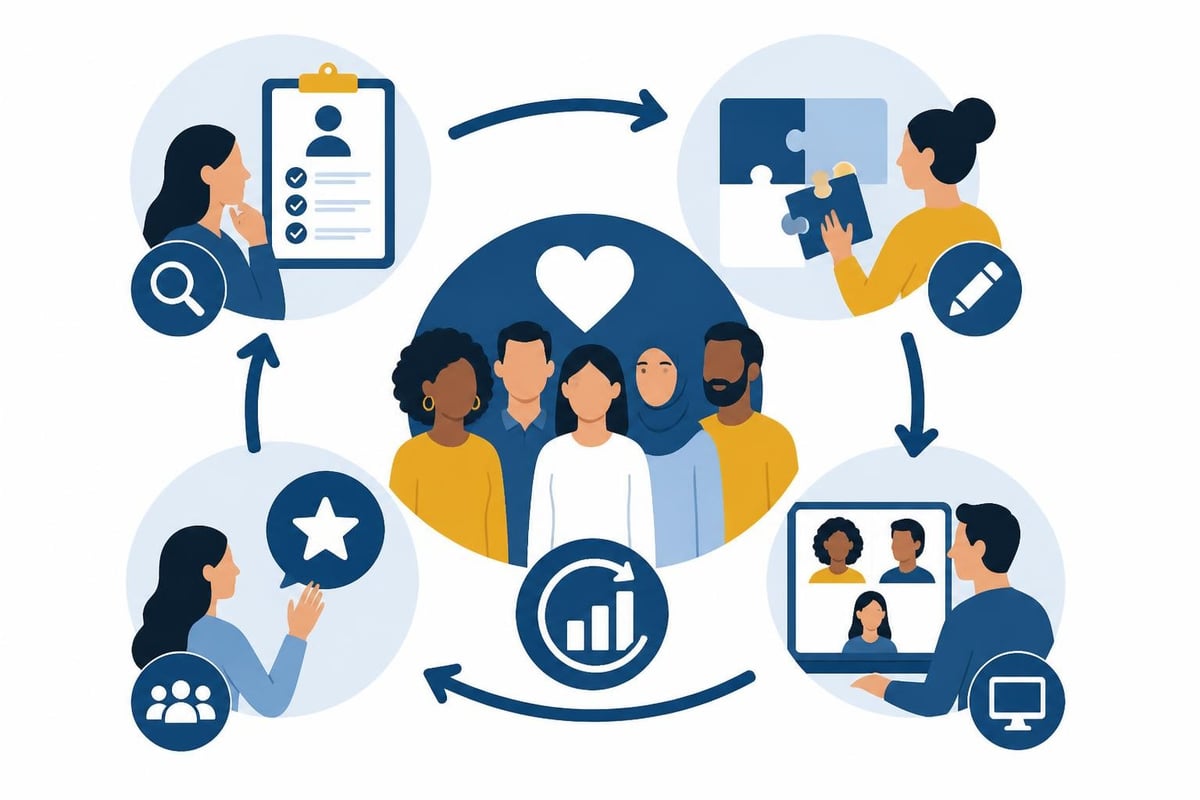
Simply scheduling training sessions rarely produces meaningful change. Organizations must integrate learning into broader diversity, equity, and inclusion strategies.
Pre-Training Preparation
Successful programs begin before participants enter the training room. Leadership commitment signals that diversity and inclusion training represents strategic priority rather than performative gesture.
Preparation steps include:
- Conducting organizational assessments to identify specific needs
- Securing visible executive sponsorship and participation
- Communicating training objectives and expected outcomes
- Establishing baseline metrics for measuring progress
- Creating psychologically safe learning environments
When expert trainers understand organizational context, they customize content to address actual challenges rather than delivering generic workshops. This relevance dramatically increases participant engagement and application.
Delivery Format Considerations
Different learning objectives require varied delivery approaches. Instructor-led sessions excel at facilitating discussion and addressing real-time questions, while online modules provide flexibility for foundational content.
| Format | Best For | Considerations |
|---|---|---|
| In-person workshops | Complex discussions, skill practice | Higher engagement, scheduling challenges |
| Virtual sessions | Geographically distributed teams | Technology requirements, screen fatigue |
| Hybrid models | Combining flexibility with interaction | Requires strong facilitation skills |
| Microlearning modules | Ongoing reinforcement | Must connect to broader program |
| Peer learning circles | Sustained dialogue | Needs structure and facilitation |
Many organizations find that instructor-led training creates stronger initial impact, followed by ongoing digital reinforcement. This blended approach accommodates different learning styles while maintaining momentum beyond initial sessions.
Post-Training Reinforcement
Training impact diminishes rapidly without reinforcement. Organizations seeing lasting results implement multiple touchpoints that embed learning into daily operations.
Reinforcement strategies include:
- Manager follow-up conversations reviewing key concepts and application opportunities
- Inclusive leadership behaviours modeled consistently by executives
- Policy reviews ensuring systems support inclusive practices
- Accountability mechanisms connecting diversity goals to performance expectations
- Ongoing learning opportunities advancing skills beyond foundational training
Research on diversity awareness in technical fields demonstrates that sustained attention to inclusion principles yields better outcomes than one-time interventions. The same principle applies across industries and organizational types.
Measuring Training Effectiveness
Accountability requires measurement. Organizations must track whether diversity and inclusion training produces desired outcomes or simply consumes resources without impact.
Multi-Level Evaluation Framework
Comprehensive evaluation assesses learning at multiple levels, from immediate reactions to long-term organizational change.
Level 1: Participant Reactions
Post-session surveys capture immediate responses, identifying content resonance and delivery effectiveness. While valuable, positive reactions alone don't guarantee behavioural change.
Level 2: Knowledge Acquisition
Assessments measure whether participants gained intended knowledge about bias, inclusive practices, and cultural competence. Pre- and post-tests reveal learning gains.
Level 3: Behaviour Change
The critical measure examines whether participants apply learning in workplace interactions. Methods include 360-degree feedback, observation, and self-reported behaviour changes tracked over time.
Level 4: Organizational Results
Ultimate success appears in organizational metrics: improved retention rates for underrepresented groups, increased promotion equity, higher engagement scores, and reduced discrimination complaints.
Studies examining equity and inclusion in research communities highlight the importance of systemic metrics alongside individual learning outcomes. Training effectiveness depends partly on organizational systems supporting or undermining inclusive behaviours.
Key Performance Indicators
Organizations should establish baseline measurements before training and track changes quarterly or annually.
- Demographic representation across organizational levels
- Pay equity analysis by gender, race, and other factors
- Retention and promotion rates disaggregated by identity groups
- Employee engagement scores with inclusion-specific questions
- Participation rates in employee resource groups
- Reported incidents of discrimination or harassment
These metrics reveal whether diversity and inclusion training contributes to meaningful cultural transformation or merely satisfies compliance requirements.
Addressing Common Implementation Challenges
Even well-designed programs encounter obstacles. Anticipating challenges enables proactive solutions that maintain program integrity and participant engagement.
Resistance and Defensiveness
Some participants enter training with skepticism or resistance, viewing sessions as accusatory rather than developmental. This defensiveness blocks learning and creates negative experiences for other participants.
Mitigation approaches:
- Frame training as skill-building rather than accusation
- Acknowledge discomfort as normal part of growth
- Create ground rules emphasizing respect and curiosity
- Use facilitation techniques that de-escalate tension
- Share research on unconscious bias affecting everyone
- Connect inclusion to values participants already hold
Skilled facilitators navigate resistance while maintaining psychological safety for participants from marginalized backgrounds who may feel vulnerable during discussions.
Superficial Engagement
Organizations sometimes implement diversity and inclusion training to appear responsive without genuine commitment to change. Participants recognize performative gestures, breeding cynicism that undermines future initiatives.
Authentic engagement requires:
- Leadership participation in training, not just endorsement
- Resource allocation for sustained diversity initiatives
- Accountability systems linking inclusion to performance
- Policy changes addressing systemic barriers
- Transparent communication about progress and setbacks
When training connects to broader organizational transformation, participants engage more deeply because they believe their learning matters.
Customization Versus Scalability
Generic training modules scale easily but lack relevance to specific organizational contexts. Highly customized programs resonate more strongly but require significant development resources.
The solution involves strategic customization. Core content addressing universal concepts like unconscious bias scales across organizations, while case studies, examples, and application exercises reflect specific industry contexts and organizational challenges.
Working with training providers offering customizable courses enables organizations to balance efficiency with relevance, particularly when serving diverse employee populations across multiple locations.
Advanced Topics in Diversity and Inclusion Training
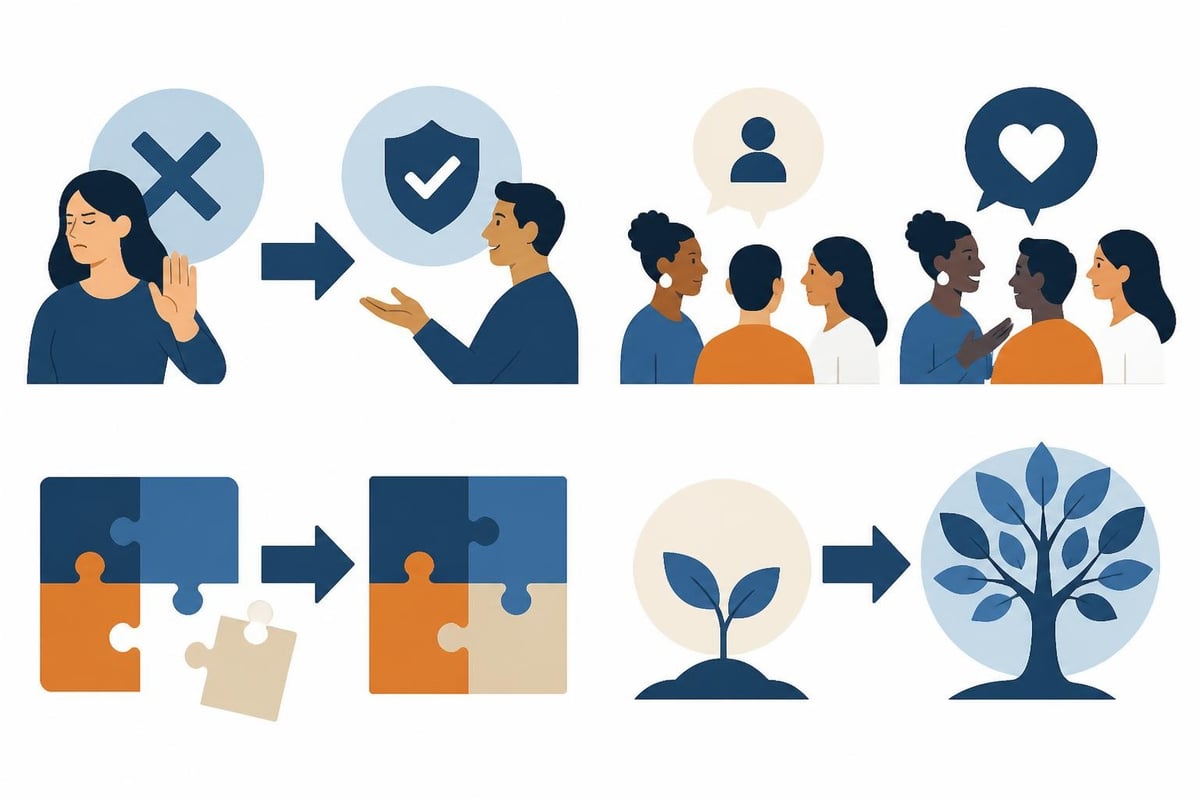
As organizations mature in their diversity journey, training evolves beyond foundational awareness to address complex intersectional dynamics and systemic change.
Intersectionality and Multiple Identities
People hold multiple identities simultaneously, experiencing unique combinations of privilege and marginalization. A woman of colour in leadership faces different dynamics than white women or men of colour in similar positions.
Advanced diversity and inclusion training explores:
- How intersecting identities create distinct workplace experiences
- Why single-axis diversity initiatives miss important nuances
- Strategies for recognizing and addressing intersectional dynamics
- Building coalitions across different marginalized groups
This complexity requires sophisticated facilitation and participant readiness to engage with ambiguity.
Inclusive Systems Design
Individual awareness matters, but systemic barriers often limit impact. Advanced training helps leaders redesign organizational systems to embed inclusion structurally.
| System Area | Inclusion Strategies | Training Focus |
|---|---|---|
| Recruitment | Blind resume review, diverse interview panels | Recognizing bias in candidate evaluation |
| Performance Management | Objective criteria, calibration processes | Fair assessment and feedback delivery |
| Promotion Decisions | Transparent criteria, diverse decision-makers | Identifying hidden barriers to advancement |
| Compensation | Regular equity audits, standardized negotiations | Understanding pay gap contributors |
| Team Formation | Intentional diversity, inclusive leadership | Creating equitable collaboration environments |
Leaders developing these capabilities often benefit from specialized leadership development programs that integrate inclusion principles with strategic decision-making skills.
Technology and Algorithmic Bias
As organizations adopt AI-driven tools for recruitment, performance evaluation, and workforce planning, new bias sources emerge. Research on inclusive AI recruitment systems reveals that algorithms can perpetuate historical discrimination unless carefully designed and monitored.
Training must address:
- Understanding how AI systems learn from biased historical data
- Questioning algorithmic recommendations rather than accepting them uncritically
- Demanding transparency in automated decision-making tools
- Monitoring disparate impact from technology deployment
This technical dimension requires collaboration between HR professionals, technology teams, and diversity practitioners.
Industry-Specific Applications
While diversity and inclusion training addresses universal principles, application varies significantly across sectors and organizational types.
Professional Services and Corporate Environments
Organizations in finance, consulting, and corporate sectors often face challenges related to advancement equity, particularly for women and racialized professionals in senior leadership.
Training priorities include:
- Addressing bias in client assignments and high-visibility projects
- Creating inclusive meeting dynamics where all voices are heard
- Recognizing and valuing diverse leadership styles
- Building sponsorship relationships across difference
Government and Public Sector
Public sector organizations serve diverse populations and must model inclusive practices. Training emphasizes service equity alongside internal culture. Agencies also navigate political dimensions that private organizations may avoid.
Many public sector employees benefit from courses addressing workplace change as diversity initiatives shift organizational norms and practices.
Non-Profit Organizations
Non-profit sector organizations often embrace diversity in mission statements while struggling with internal equity. Resource constraints, volunteer dynamics, and mission-driven cultures create unique training considerations.
Non-profit training programs should address power dynamics between service providers and communities served, ensuring organizations practice the equity they advocate externally.
Technical and Scientific Fields
STEM fields face persistent diversity challenges, particularly regarding gender and racial representation. Research examining diversity in scientific leadership highlights the importance of targeted training for those guiding organizational culture in technical environments.
Training must address:
- Stereotype threat affecting underrepresented groups in technical roles
- Creating inclusive collaboration in highly specialized teams
- Mentorship and sponsorship for diverse technical talent
- Challenging assumptions about "culture fit" in hiring
Building Sustainable Diversity Initiatives
Diversity and inclusion training represents one component of comprehensive organizational change. Sustainability requires integrating learning into strategic planning, resource allocation, and accountability systems.
Governance and Accountability Structures
Organizations achieving lasting progress establish formal structures ensuring diversity initiatives receive ongoing attention and resources.
Effective structures include:
- Diversity councils with cross-functional representation and executive sponsorship
- Inclusion metrics incorporated into balanced scorecards and strategic dashboards
- Leadership accountability with diversity goals in performance evaluations
- Regular reporting to boards or governing bodies on diversity progress
- Resource allocation dedicated to sustained diversity initiatives
These mechanisms prevent diversity and inclusion training from becoming isolated events disconnected from organizational priorities.
Continuous Learning Culture
Organizations committed to inclusion foster continuous learning beyond formal training sessions. This includes creating space for difficult conversations, acknowledging mistakes, and iterating on approaches based on employee feedback.
Supporting structures include:
- Employee resource groups providing community and education
- Mentoring and sponsorship programs connecting diverse employees with advocates
- Inclusive leadership development embedded throughout management training
- Regular pulse surveys gathering employee perspectives on inclusion
- Transparent communication about diversity challenges and progress
When communication skills training incorporates inclusion principles, everyday workplace interactions reinforce rather than undermine formal diversity education.
External Partnerships and Resources
Organizations rarely possess all expertise needed for comprehensive diversity initiatives. Strategic partnerships extend internal capabilities while bringing fresh perspectives.
Partnerships might include:
- Training providers offering specialized expertise and facilitation skills
- Diversity consultants conducting assessments and guiding strategy development
- Community organizations connecting employers with diverse talent pipelines
- Industry associations sharing best practices and benchmarking data
- Video production companies like Viva Media creating engaging diversity content that reinforces training messages through compelling storytelling
External perspectives help organizations identify blind spots and avoid insular thinking that limits diversity progress.
Leadership Coaching for Inclusive Leaders
Beyond group training, individual leadership coaching accelerates inclusion skill development. Leaders facing complex dynamics benefit from confidential coaching relationships that build capacity for navigating sensitive situations.
Organizations can access specialized support through programs like Noomii Corporate Leadership Program, which matches leaders with experienced coaches who address specific inclusion challenges, from addressing toxic patterns to strengthening equitable decision-making processes.
Coaching complements diversity and inclusion training by providing personalized application support that group sessions cannot offer. Leaders practice skills, receive feedback, and develop confidence in inclusive leadership behaviours.
Future Directions in Diversity and Inclusion Training
As workplaces evolve, training approaches must adapt to emerging challenges and opportunities. Forward-thinking organizations are exploring innovative methods that deepen impact while meeting changing workforce expectations.
Virtual Reality and Immersive Learning
Technology enables new training modalities that create powerful learning experiences. Virtual reality simulations allow participants to experience workplace situations from different identity perspectives, building empathy and understanding more effectively than traditional discussion alone.
These technologies show particular promise for:
- Perspective-taking exercises that build empathy across difference
- Safe practice environments for difficult conversations
- Scenario-based learning addressing complex intersectional dynamics
- Accessibility accommodations for diverse learning needs
Integration with Broader Workplace Skills
Rather than treating diversity as separate topic, leading organizations integrate inclusion principles throughout all training initiatives. Communication skills, project management training, and customer service programs all incorporate inclusive practice components.
This integration reinforces that inclusion represents fundamental professional competency rather than specialized knowledge required only during diversity-focused sessions.
Measurement Innovation
Organizations are developing more sophisticated approaches to measuring inclusion beyond demographic representation. New metrics capture belonging, psychological safety, and equitable opportunity access through validated survey instruments and behavioural indicators.
Advanced measurement enables:
- Earlier identification of inclusion challenges before they escalate
- More precise targeting of interventions to specific team or department needs
- Stronger connections between diversity initiatives and business outcomes
- Evidence-based refinement of training content and delivery approaches
As measurement improves, organizations can demonstrate return on investment more convincingly, securing continued resources for diversity and inclusion training programs.
Diversity and inclusion training has evolved into a strategic capability that drives organizational performance while creating workplaces where all employees can thrive. Success requires moving beyond compliance-focused approaches toward comprehensive initiatives integrating training with systemic change, leadership accountability, and continuous learning. Whether your organization is beginning its diversity journey or advancing mature initiatives, My Training Network offers customizable diversity and inclusion training delivered by expert instructors across Canada and globally, supporting your commitment to building truly inclusive workplaces.

