

Project management has evolved into a critical competency for organisations navigating increasingly complex business environments. Whether you're leading a cross-functional team, implementing new technology, or coordinating multiple stakeholders, understanding the fundamentals of project management training provides the foundation for consistent delivery and strategic success. For Canadian organisations, investing in structured project management education ensures teams can adapt to changing market demands whilst maintaining operational excellence.
Understanding Project Management Foundations
The fundamentals of project management training encompass more than simply learning frameworks and methodologies. At its core, effective project management requires a blend of technical knowledge, interpersonal skills, and strategic thinking. Today's project managers must navigate ambiguity, manage diverse teams, and deliver measurable results within defined constraints.
Key Knowledge Areas
Project management training typically addresses nine interconnected knowledge areas that form the backbone of successful project delivery:
- Scope Management: Defining and controlling what is and isn't included in the project
- Schedule Management: Planning, developing, and controlling project timelines
- Cost Management: Estimating, budgeting, and controlling project expenses
- Quality Management: Ensuring deliverables meet stakeholder requirements
- Resource Management: Acquiring and managing team members and materials
- Communications Management: Planning and distributing project information
- Risk Management: Identifying, analysing, and responding to project threats
- Procurement Management: Acquiring goods and services from external sources
- Stakeholder Management: Identifying and engaging all parties affected by the project
Understanding these areas provides project managers with a comprehensive toolkit for addressing challenges across different industries and project types. The project management fundamentals course from Coursera offers structured learning around these essential concepts.

Essential Skills Developed Through Training
Beyond theoretical knowledge, the fundamentals of project management training develop practical competencies that distinguish effective project leaders from administrators simply following checklists.
Technical Competencies
Project managers need proficiency in specific tools and techniques that enable efficient project delivery. These include creating work breakdown structures, developing critical path networks, calculating earned value metrics, and interpreting project dashboards. Modern training programmes incorporate hands-on exercises with industry-standard software platforms to build confidence in these technical areas.
| Skill Category | Key Competencies | Business Impact |
|---|---|---|
| Planning | Scope definition, scheduling, budgeting | Reduces overruns and delays |
| Analysis | Risk assessment, stakeholder mapping | Improves decision-making |
| Control | Change management, quality assurance | Maintains project alignment |
| Communication | Status reporting, presentation skills | Enhances team coordination |
Leadership and Soft Skills
Technical expertise alone doesn't guarantee project success. Research on behavioral biases in project management demonstrates how cognitive and political factors significantly influence outcomes. Effective training addresses these human elements through modules on conflict resolution, negotiation, team motivation, and emotional intelligence.
Many organisations find that complementary programmes such as coaching skills for managers training and leadership development training enhance project managers' ability to lead diverse teams effectively.
The ability to communicate clearly across different audiences represents another critical skill. Project managers regularly interact with technical teams, executives, clients, and external vendors, each requiring tailored communication approaches. Programmes focused on listening skills training complement project management fundamentals by improving information gathering and stakeholder engagement.
Core Methodologies and Frameworks
The fundamentals of project management training introduce participants to established methodologies that provide structure and best practices for different project contexts.
Traditional Waterfall Approach
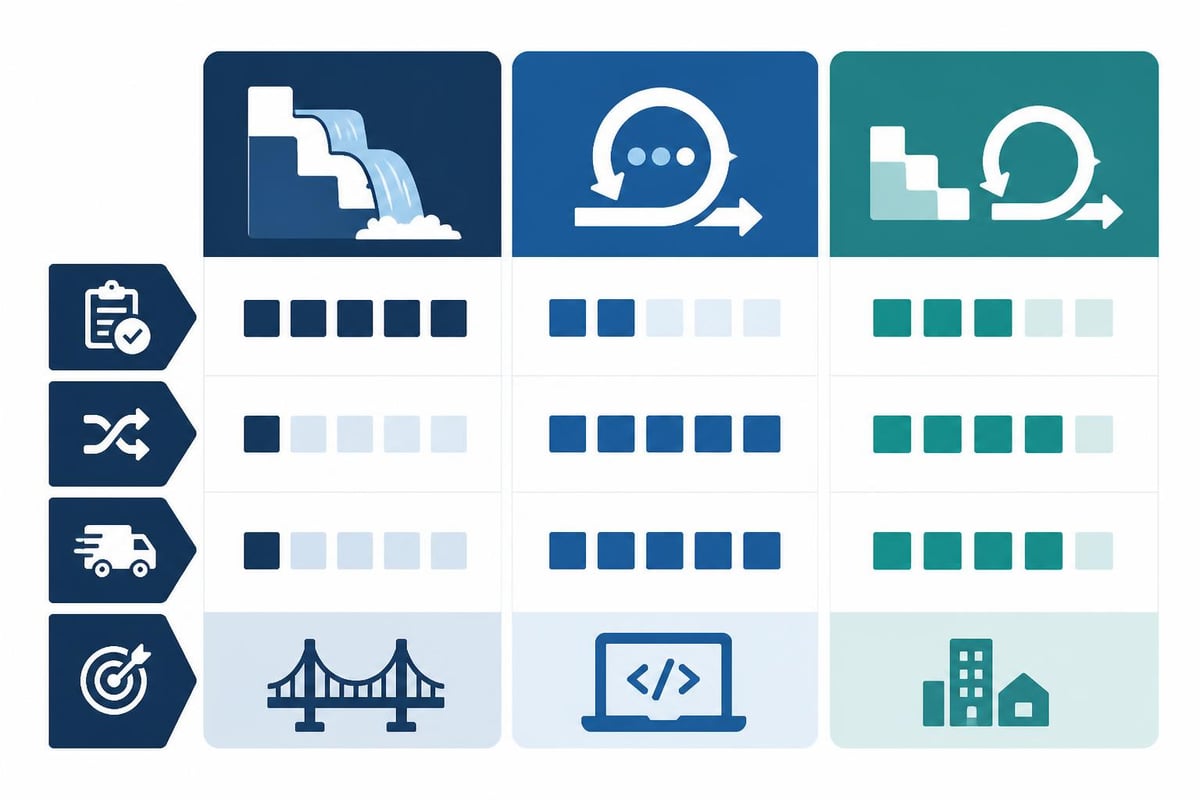
Waterfall methodology follows a sequential process where each phase must be completed before the next begins. This approach works well for projects with clearly defined requirements and minimal expected changes. Industries such as construction, manufacturing, and infrastructure development frequently employ waterfall methods due to their emphasis on detailed upfront planning and documentation.
Agile and Iterative Methods
Agile methodologies prioritise flexibility, collaboration, and rapid iteration. Rather than attempting to define all requirements at the outset, agile teams work in short cycles called sprints, delivering functional increments and gathering feedback continuously. This approach has gained widespread adoption in software development, product design, and marketing campaigns.
The fundamentals of project management training typically cover both traditional and agile approaches, enabling practitioners to select appropriate methodologies based on project characteristics, organisational culture, and stakeholder expectations.
Hybrid Approaches
Increasingly, organisations recognise that rigid adherence to a single methodology may not serve all projects equally well. Hybrid approaches combine elements from different frameworks, allowing teams to leverage waterfall's planning rigour whilst maintaining agile's adaptability. Training in these blended methods prepares project managers to customise their approach based on specific circumstances.
Building a Structured Project Plan
One of the most valuable outcomes from the fundamentals of project management training is the ability to develop comprehensive project plans that guide teams from concept to completion.
Defining Clear Objectives
Every successful project begins with well-articulated objectives that answer fundamental questions: What are we trying to achieve? Why does it matter? How will we measure success? Training emphasises the importance of SMART criteria (Specific, Measurable, Achievable, Relevant, Time-bound) in objective setting.
Participants learn to translate broad business goals into concrete project deliverables, ensuring alignment between executive vision and team execution. This clarity prevents scope creep and provides a reference point for evaluating trade-offs throughout the project lifecycle.
Creating Detailed Work Breakdown Structures
A work breakdown structure (WBS) decomposes project deliverables into manageable components, making complex initiatives less overwhelming. Training teaches systematic approaches to creating WBS hierarchies, typically starting with major deliverables and progressively breaking them into smaller work packages until each element can be estimated, assigned, and tracked.
The project planning training offered by specialised providers builds on these fundamentals by introducing advanced techniques for complex, multi-stakeholder environments.
Developing Realistic Schedules
Schedule development represents both an art and a science. Training covers estimation techniques such as analogous estimating, parametric modelling, and three-point estimation that account for uncertainty. Participants learn to identify task dependencies, calculate critical paths, and allocate resources effectively.
Key scheduling considerations include:
- Task duration estimation with appropriate buffers
- Resource availability and capacity constraints
- Dependencies and logical sequencing
- Milestone identification for tracking progress
- Schedule compression techniques when needed
Understanding these elements enables project managers to create schedules that balance ambition with realism, setting teams up for achievable success.
Risk Management Fundamentals
The fundamentals of project management training emphasise proactive risk management as essential to project success. Rather than reacting to problems as they arise, skilled project managers systematically identify, assess, and plan responses to potential threats and opportunities.
Risk Identification Techniques
Training introduces various methods for uncovering project risks, including brainstorming sessions, expert interviews, SWOT analysis, and checklist reviews. Participants learn to consider risks across multiple categories: technical, organisational, external, and project management risks.
Experienced trainers emphasise that risk identification is not a one-time activity but an ongoing process throughout the project lifecycle. As circumstances change and new information emerges, the risk landscape evolves accordingly.
Qualitative and Quantitative Assessment
Once identified, risks must be assessed to prioritise management attention. Qualitative assessment evaluates likelihood and impact using scales (high, medium, low) to create a risk matrix. Quantitative assessment applies numerical analysis, calculating expected monetary values or running Monte Carlo simulations for complex scenarios.
| Risk Category | Assessment Method | Response Strategy |
|---|---|---|
| High probability, high impact | Detailed quantitative analysis | Proactive mitigation or avoidance |
| High probability, low impact | Qualitative assessment | Accept with monitoring |
| Low probability, high impact | Scenario planning | Contingency planning |
| Low probability, low impact | Minimal analysis | Accept without action |
Response Planning
For significant risks, project managers develop specific response strategies. Threats can be avoided, transferred, mitigated, or accepted, whilst opportunities might be exploited, enhanced, shared, or accepted. The University of Virginia’s project management course provides excellent frameworks for developing these response plans systematically.
Stakeholder Engagement and Communication
Effective stakeholder management distinguishes successful projects from those that deliver technically sound solutions but fail to meet organisational needs. The fundamentals of project management training dedicate substantial attention to identifying, analysing, and engaging stakeholders throughout the project journey.
Stakeholder Analysis
Training teaches systematic approaches to mapping stakeholders based on their power, interest, influence, and impact. This analysis helps project managers determine appropriate engagement strategies for different groups, from close partnership with high-power, high-interest stakeholders to periodic updates for those with lower involvement.
Understanding stakeholder perspectives and motivations enables project managers to anticipate concerns, address resistance, and build coalitions of support. The research on knowledge management for project management education highlights how stakeholder engagement affects project learning and knowledge transfer.
Communication Planning
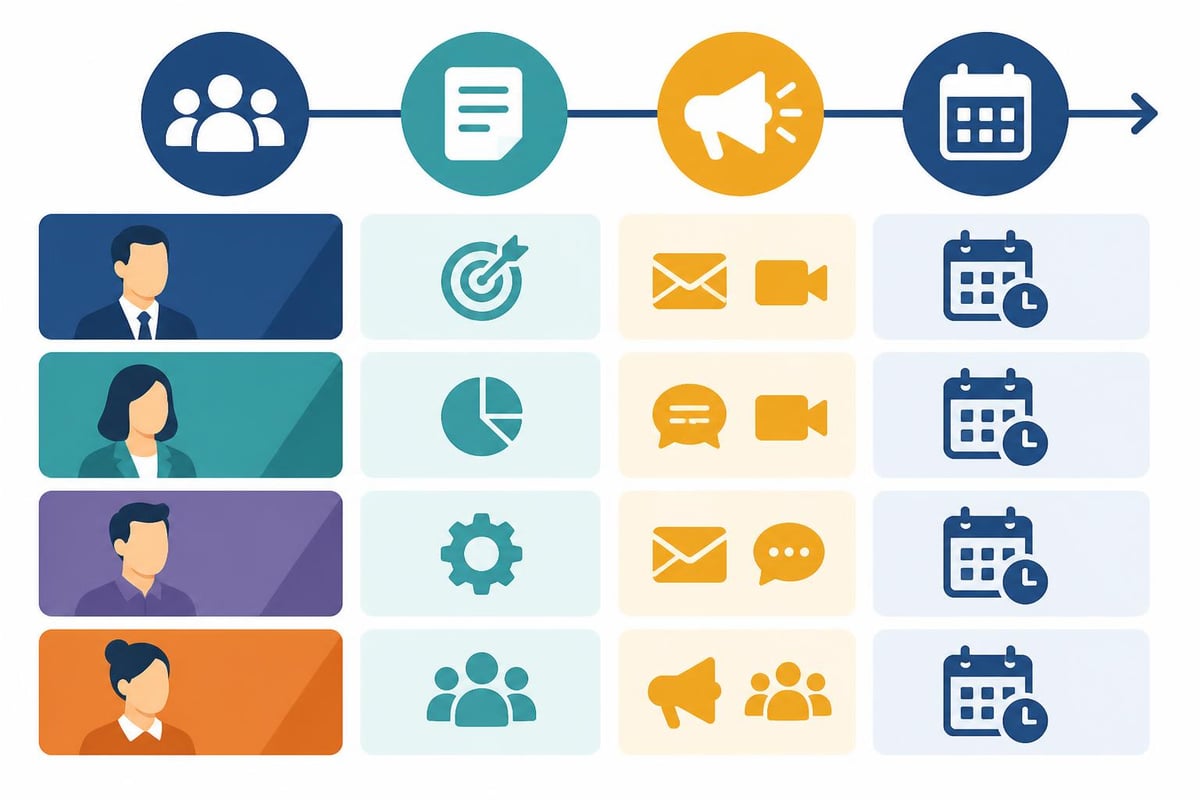
Communication planning ensures the right information reaches the right people at the right time through appropriate channels. Training covers developing communication matrices that specify what will be communicated, to whom, when, by whom, and through which medium.
Effective project communication includes:
- Regular status reports highlighting progress, issues, and upcoming milestones
- Stakeholder meetings tailored to audience needs and interests
- Change notifications explaining modifications and their implications
- Risk updates keeping relevant parties informed of emerging threats
- Lessons learned documentation capturing insights for future projects
For teams managing geographically dispersed stakeholders, understanding virtual communication best practices becomes increasingly important. Organisations can enhance these capabilities through specialised managing remote teams training.
Quality Management and Continuous Improvement
Quality management ensures project deliverables meet defined standards and stakeholder expectations. The fundamentals of project management training introduce quality planning, assurance, and control as integral components of the project management process.
Defining Quality Standards
Quality begins with clear specifications. Training emphasises establishing measurable quality criteria during project planning, ensuring all team members understand what constitutes acceptable deliverables. These standards might include technical specifications, performance metrics, regulatory compliance requirements, or customer satisfaction thresholds.
Quality Assurance and Control
Quality assurance focuses on process adherence, ensuring the project follows established procedures and best practices. Quality control examines specific deliverables, verifying they meet requirements through inspections, testing, and reviews.
Project managers learn to implement quality gates at critical junctures, preventing defective work from progressing to subsequent phases. This approach reduces rework costs and maintains project momentum.
Lessons Learned and Organisational Learning
Forward-thinking organisations treat each project as a learning opportunity. Training teaches systematic approaches to capturing lessons learned, documenting what worked well and what could be improved. These insights inform future projects, gradually building organisational project management maturity.
Regular retrospectives throughout the project lifecycle, not just at closure, enable teams to make real-time adjustments whilst experiences remain fresh. This continuous improvement mindset aligns project management with broader organisational excellence initiatives.
Professional Development Pathways
The fundamentals of project management training serves as an entry point to comprehensive professional development pathways. Understanding these progression options helps individuals and organisations plan long-term capability building.
Certification Programmes
Professional certifications validate project management knowledge and competency. Entry-level certifications such as the Certified Associate in Project Management (CAPM) assess understanding of fundamental concepts, whilst advanced credentials like the Project Management Professional (PMP) require significant experience and demonstrated expertise. The UMBC project management fundamentals course specifically prepares participants for CAPM certification.
Specialised Training
After mastering fundamentals, project managers often pursue specialised training in specific methodologies, industries, or advanced topics. Agile certifications, programme management credentials, and portfolio management qualifications represent common next steps for career advancement.
Many organisations find value in developing internal expertise across multiple specialisations, enabling flexibility in project staffing and approach. The comprehensive course catalogue offered by established training providers supports this diversified development strategy.
Ongoing Skill Development
Project management exists within a dynamic business environment where new tools, techniques, and challenges continually emerge. Successful professionals commit to ongoing learning through workshops, conferences, online courses, and peer networking.
Complementary skills such as time management training, emotional intelligence training, and public speaking training enhance project management effectiveness by addressing the human dimensions of project delivery.
Implementing Training in Organisational Context
Maximising the value from fundamentals of project management training requires thoughtful implementation that considers organisational culture, existing capabilities, and strategic priorities.
Needs Assessment
Before committing to training programmes, organisations benefit from assessing their current project management maturity and identifying specific gaps. This analysis examines project success rates, common failure patterns, existing processes and tools, and team skill levels.
Understanding these baseline conditions enables targeted training that addresses actual needs rather than following generic curricula. Customisation ensures participants immediately apply learning to real organisational challenges.
Blended Learning Approaches
Modern training delivery combines multiple modalities to accommodate different learning styles and logistical constraints. Instructor-led workshops provide interactive learning and networking opportunities, whilst online modules offer flexibility and self-paced progression. Hands-on simulations and case studies bridge theory and practice, building confidence in applying concepts.
The Google project management foundations course on Coursera exemplifies effective online learning design, whilst organisations like My Training Network specialise in instructor-led training that brings expert facilitators directly to teams.
Post-Training Support
Training impact extends beyond the classroom when organisations provide ongoing support mechanisms. These might include mentoring programmes pairing experienced project managers with recent training graduates, communities of practice enabling peer learning, or access to templates, tools, and reference materials.
Regular check-ins and refresher sessions reinforce learning and address questions that arise during real-world application. This sustained engagement transforms training from an event into a capability-building process.
Measuring Training Effectiveness
Organisations investing in the fundamentals of project management training naturally want to assess return on investment and programme effectiveness. Comprehensive evaluation considers multiple dimensions of impact.
Kirkpatrick's Four Levels
The Kirkpatrick model provides a structured framework for training evaluation:
- Reaction: Did participants find the training engaging and relevant?
- Learning: Did participants acquire intended knowledge and skills?
- Behaviour: Do participants apply learning in their work?
- Results: Does changed behaviour improve organisational outcomes?
Measurement approaches vary by level, from post-training surveys assessing reaction to longitudinal analysis tracking project success rates before and after training interventions.
Project Performance Metrics
Ultimately, training effectiveness manifests in improved project outcomes. Organisations can track metrics such as on-time delivery rates, budget variance, stakeholder satisfaction scores, and defect rates. Comparing these indicators before and after training implementation provides concrete evidence of impact.
Key performance indicators include:
- Percentage of projects completed within original schedule
- Average budget variance across project portfolio
- Stakeholder satisfaction ratings for project deliverables
- Resource utilisation efficiency
- Risk realisation rates compared to identification rates
Continuous Improvement of Training
Training programmes themselves benefit from continuous improvement. Gathering participant feedback, monitoring application challenges, and staying current with evolving best practices ensures training remains relevant and effective.
Organisations partnering with established providers gain access to continuously updated content reflecting current industry standards. My Training Network's expert trainers bring current, real-world experience to their instruction, ensuring participants learn approaches that work in practice, not just in theory.
Adapting Training for Different Organisational Levels
The fundamentals of project management training delivers value across organisational hierarchies, though specific focus areas may vary by role and responsibility.
Individual Contributors and Team Members
For team members who contribute to projects but don't lead them, training emphasises understanding the project management framework, communicating effectively with project managers, managing assigned tasks, and identifying and reporting issues promptly. This foundational knowledge makes them more effective contributors and prepares them for future project leadership roles.
Project Managers and Team Leads
Project managers require comprehensive training covering all knowledge areas, methodologies, tools, and techniques. They need to develop both technical competencies and leadership capabilities, applying structured processes whilst adapting to unique project circumstances. The fundamentals of project management training provides this essential foundation.
Senior Leaders and Executives
Executives benefit from understanding project management principles to make informed decisions about project selection, resource allocation, and portfolio management. Their training often focuses on governance structures, strategic alignment, and creating organisational environments where projects can succeed. Programmes tailored for senior leaders, such as leadership skills for supervisors training, complement project management fundamentals with broader strategic perspectives.
Mastering the fundamentals of project management training equips individuals and teams with proven frameworks, practical skills, and strategic insights essential for consistent project success. These capabilities drive organisational performance by improving delivery predictability, resource efficiency, and stakeholder satisfaction. My Training Network specialises in delivering comprehensive project management training tailored to Canadian organisations, combining expert instruction with practical application exercises that prepare participants to lead projects confidently. With customisable programmes delivered across Canada and virtually worldwide, our network of seasoned trainers helps teams build the project management capabilities needed to execute strategic initiatives successfully. Contact My Training Network today to develop your organisation's project management expertise.

