

The future of work is arriving faster than ever, demanding new skills and adaptability from every team. Continuous learning has become a necessity, not just a bonus, for organisational growth and employee satisfaction.
Is your organisation ready to meet these demands? In service training is the key to unlocking performance, engagement, and long-term success. This guide will walk you through the most effective approaches for 2026, from defining in service training to exploring the latest trends, challenges, and proven strategies.
Discover how to foster a culture of improvement, retain top talent, and ensure your workforce remains competitive. Start implementing these best practices now to future-proof your organisation.
Understanding In Service Training: Definitions, Types, and Importance
Staying competitive in today’s workplace means regularly updating skills and knowledge. This is where in service training becomes essential for organisations and professionals alike. Let’s explore what in service training truly means, the various formats it takes, and why it is a cornerstone of modern workforce development.
Defining In Service Training
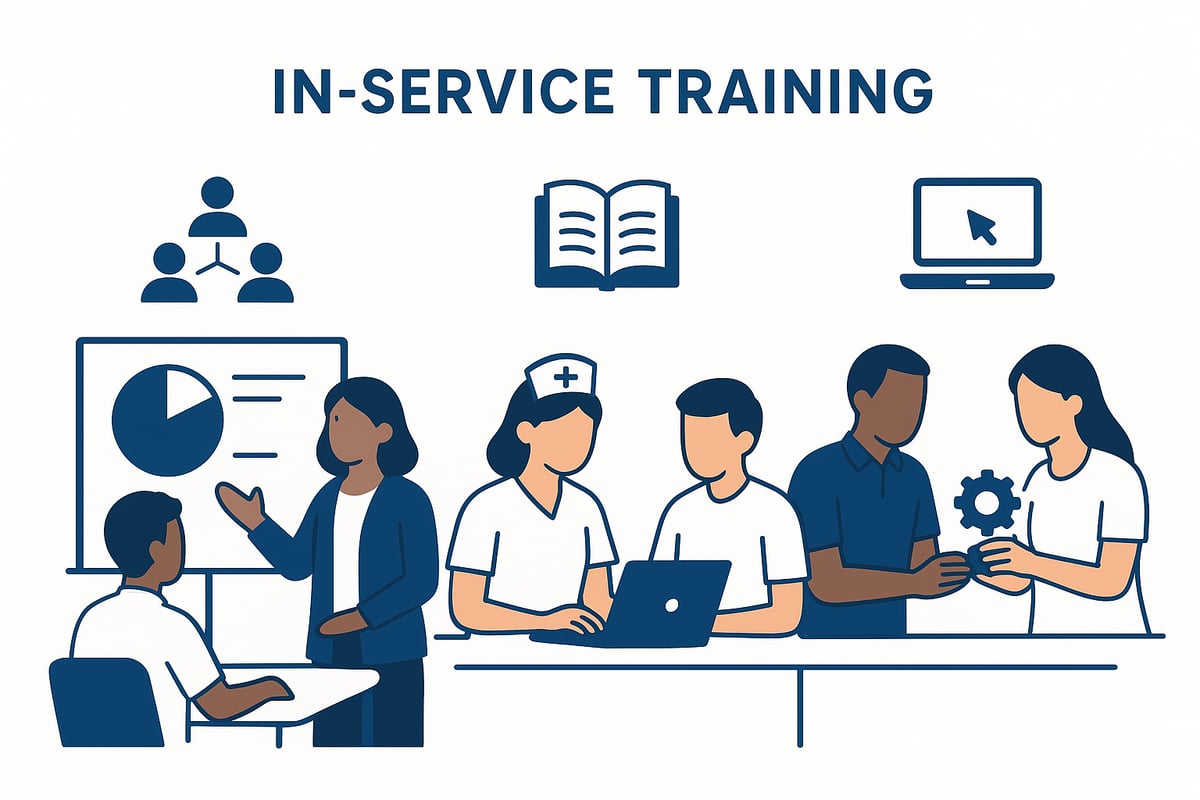
In service training refers to structured learning provided to employees during their employment, aiming to refresh, upgrade, or expand existing skills. According to Collins Dictionary and ScienceDirect, this approach distinguishes itself from pre-service training, which occurs before an individual enters the workforce.
The core objective of in service training is to ensure staff remain current with industry standards and organisational needs. For example, teachers often participate in ongoing CPD (Continuing Professional Development) sessions to adapt to curricular changes. Healthcare professionals receive regular updates to stay compliant with the latest protocols. Technology companies frequently onboard staff with new software or digital tools to maintain productivity.
By focusing on existing employees, in service training fosters a culture of lifelong learning and adaptability. It addresses the evolving demands of each sector, making it a vital process for any organisation that values continuous improvement.
Types of In Service Training
In service training can be delivered through various formats, each suited to different organisational goals and employee needs. Training may be formal, such as scheduled workshops or accredited courses, or informal, like peer-to-peer sessions and on-the-job coaching.
There are also mandatory forms, often related to compliance or health and safety, and voluntary options that support career development and specialisation. Delivery methods include:
- On-the-job training: Learning occurs during regular work activities.
- Off-the-job training: Employees participate in sessions away from their usual roles.
- Blended learning: Combines in-person and digital instruction.
- Virtual models: Fully online, using webinars or e-learning platforms.
This diversity allows in service training to be tailored to different industries, job roles, and learning preferences. Organisations can choose or combine methods to maximise relevance and accessibility for their teams.
The Importance in Modern Workplaces
The impact of effective in service training extends across efficiency, job satisfaction, and employee retention. By consistently updating staff skills, organisations can respond swiftly to regulatory changes, drive innovation, and support large-scale transformations.
Research shows high participation rates in in service training globally, although effectiveness can vary by context and delivery. For example, teacher training reforms in Vietnam and Namibia have demonstrated that ongoing development can lead to better classroom outcomes and professional growth. In healthcare, regular in service training reduces operator error and improves safety.
Moreover, as highlighted in the Professional development assistance guide, supporting ongoing learning is key to building a resilient workforce. Meeting industry standards, fostering engagement, and empowering employees to take charge of their growth all stem from a well-designed in service training programme.
Key Trends and Challenges in In Service Training for 2026
The landscape of in service training is rapidly evolving as organisations respond to the shifting demands of modern work. By 2026, new approaches and technologies are transforming how employees learn, upskill, and adapt. Understanding these trends and the persistent challenges they bring is essential for any organisation aiming to build a future-ready workforce.

Emerging Trends
In 2026, in service training is shaped by the integration of advanced digital tools and smarter learning platforms. Organisations are increasingly adopting e-learning systems, allowing employees to access content anytime, anywhere. Artificial intelligence is at the forefront, offering personalised learning experiences and adaptive pathways that match individual needs and roles. According to AI and Machine Learning Transforming L&D Delivery, AI-driven analytics are optimising content delivery and tracking learner progress with precision.
Microlearning is another key trend, delivering bite-sized modules that fit seamlessly into busy schedules. Just-in-time training ensures employees receive relevant information exactly when needed, boosting knowledge retention and immediate application. Gamification strategies, such as points, badges, and leaderboards, are being used to increase engagement and motivation.
Hybrid models are gaining traction, combining the benefits of in-person workshops with virtual sessions. This flexible approach accommodates diverse learning preferences and supports both remote and onsite teams. As technology continues to advance, in service training is becoming more interactive, engaging, and tailored to the evolving needs of the workforce.
Ongoing Challenges
Despite these innovations, several challenges remain central to in service training. Time constraints are a major barrier, as employees and managers struggle to balance learning with core job responsibilities. Competing work priorities often reduce participation rates and limit the impact of training interventions.
Another persistent issue is the lack of follow-up and ongoing mentorship after initial sessions. Without structured support, it can be difficult for employees to apply new skills or sustain behavioural changes. Ensuring the relevance of training to real-world job tasks is also crucial; generic content risks disengagement and low transfer of learning.
Resistance to change is common, particularly when new technologies or methods are introduced. Some staff may feel overwhelmed by digital tools or sceptical about their effectiveness. Budget limitations and uneven resource allocation can further restrict access to high-quality in service training, especially in smaller organisations or across global locations.
Data and Insights
Research shows that the effectiveness of in service training is highly dependent on context and delivery. Programmes that blend practical experience with classroom-based learning yield the strongest results, particularly in sectors like healthcare and education. For example, in-service training for clinical staff has been linked to reduced operator error and improved safety outcomes.
Participation rates in in service training remain high globally, but the quality and impact of programmes vary widely. The table below summarises key findings:
| Aspect | High-Performing Programmes | Common Gaps |
|---|---|---|
| Engagement | Interactive, tailored | Passive delivery |
| Follow-up | Ongoing mentorship | Limited support |
| Relevance | Job-specific content | Generic modules |
Significant disparities exist between regions and industries, with some areas lacking access to updated resources or skilled trainers. Continuous evaluation and adaptation are essential to ensure in service training addresses these gaps, supports organisational goals, and meets the demands of a changing workforce.
Step-by-Step Guide: Implementing Effective In Service Training Programmes
Implementing in service training that truly delivers results requires a strategic, step-by-step approach. Each stage builds upon the last, ensuring learning is relevant, measurable, and aligned with organisational goals.
Step 1: Assess Organisational Needs and Objectives
The foundation of effective in service training is a clear understanding of your organisation’s needs. Begin by conducting a thorough skills gap analysis. Identify which competencies are essential for current roles and which will be needed as your industry evolves.
Engage stakeholders from various departments. Their insights help pinpoint areas where in service training could boost performance or address compliance requirements. Use surveys, performance data, and industry benchmarks as evidence for your decisions.
A collaborative approach ensures the training programme is not only aligned with strategic goals but also has buy-in from all levels. When you prioritise needs based on real data, your in service training is more likely to deliver measurable results.
Step 2: Design a Learner-Centred Curriculum
A successful in service training curriculum puts the learner at its heart. Tailor content to suit different learning styles and roles within your organisation. For example, technical teams may benefit from hands-on simulations, while customer service staff might prefer scenario-based discussions.
Incorporate real-life case studies and scenarios that mirror day-to-day challenges. This approach fosters engagement and helps learners see the direct impact of their training. Always ensure your curriculum meets regulatory and industry standards to avoid compliance gaps.
Consider working with experts to create custom training modules. For more on how customisation benefits your programme, explore this tailored training services overview. By designing with flexibility and relevance in mind, in service training becomes a powerful tool for development.
Step 3: Select Delivery Methods and Tools
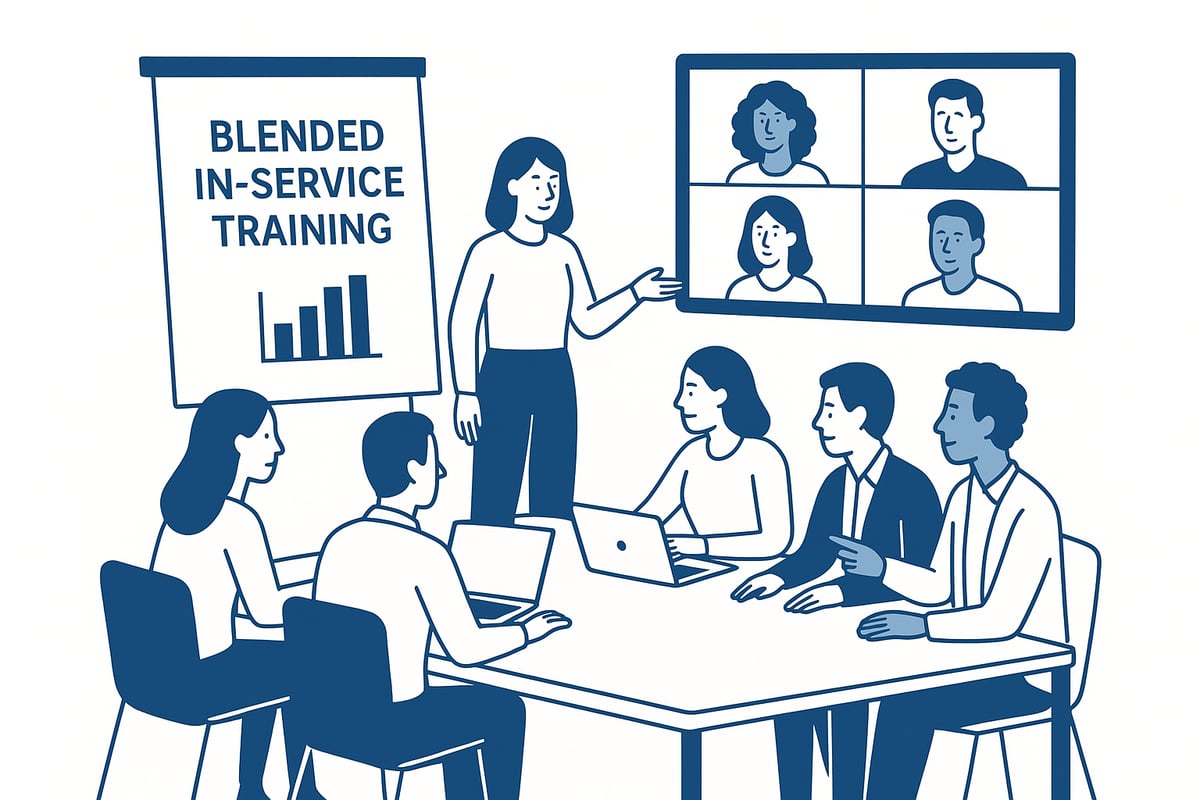
Choosing the right delivery method is crucial for in service training effectiveness. Evaluate options such as face-to-face instruction, virtual classrooms, blended learning, and microlearning formats. Each has unique strengths, depending on your objectives and workforce needs.
Leverage technology to improve accessibility. Learning management systems (LMS), mobile apps, and video conferencing tools provide flexible learning experiences for remote and hybrid teams. Blended models combine the benefits of in-person interaction with digital convenience.
When selecting tools, prioritise those that support real-time feedback and easy access to resources. This ensures that in service training is not only accessible, but also engaging and measurable.
Step 4: Train the Trainers and Build Support Systems
The success of in service training depends heavily on the quality of trainers. Invest in professional development for facilitators, ensuring they are skilled in both subject matter and adult learning techniques.
Support systems are equally important. Establish mentorship programmes and peer learning networks to sustain knowledge transfer beyond formal sessions. Encourage trainers to participate in ongoing development, keeping their methods fresh and effective.
Regularly review trainer performance and provide constructive feedback. This creates a culture where in service training is dynamic and continuously improving.
Step 5: Execute and Monitor Training Delivery
Execution is where your planning meets reality. Schedule training sessions at times that minimise disruption to business operations. Use interactive methods such as workshops, simulations, and role-play to keep learners engaged.
Collect real-time feedback during and after sessions. Quick surveys or live polls can highlight areas for immediate improvement. Monitoring participation and engagement helps you identify what works and where adjustments are needed.
Documenting the process ensures you have a record for future reference. This enables you to refine your approach for subsequent in service training cycles.
Step 6: Evaluate Impact and Continuously Improve
Evaluation is essential to ensure your in service training delivers tangible results. Measure outcomes using pre- and post-training assessments. Track knowledge retention, behavioural changes, and improvements in job performance.
Use a mix of quantitative data, such as test scores, and qualitative feedback from participants. Analyse this information to identify strengths and areas for growth.
Continuous improvement means regularly updating your training content and methods. Stay informed about industry trends and best practices. By making evaluation a routine part of your in service training programme, you ensure its relevance and effectiveness over time.
Best Practices for Maximising Engagement and Knowledge Transfer
Maximising engagement and knowledge transfer within in service training is essential for long-term organisational growth. The following best practices help ensure that learning is relevant, memorable, and embedded into daily work life.
Foster a Culture of Continuous Learning
Developing a culture that values learning is the foundation of effective in service training. Leadership plays a pivotal role by visibly supporting training initiatives and allocating resources. Recognition programmes and incentives can motivate staff to participate and share knowledge.
Encourage self-directed learning and peer-led sessions to create ownership and build momentum. For organisations aiming to transform workplace culture, exploring Workplace culture and people development resources can provide effective frameworks and inspiration.
Customise Content for Relevance
Tailoring in service training content ensures it meets the specific needs of different roles and industries. Use up-to-date, research-based material to keep sessions engaging and credible. Incorporate participant feedback and adjust content regularly to maintain relevance.
- Adapt training for various job functions
- Integrate sector-specific regulations and trends
- Use real-world scenarios
Continuous content refinement helps bridge the gap between theoretical learning and practical job requirements.
Blend Theory with Practical Application
Effective in service training balances knowledge with hands-on experience. Combining classroom instruction with practical exercises allows staff to apply concepts immediately, which improves retention and confidence.
Utilise collaborative activities such as workshops, role-plays, and simulations. Encourage teams to solve real workplace challenges together. This approach transforms abstract principles into actionable skills, supporting both individual and organisational performance.
Provide Ongoing Support and Mentorship
Sustaining the impact of in service training requires structured follow-up. Establish mentorship programmes and peer support groups to reinforce learning and address challenges as they arise.
Offer resources for continuous learning, such as access to online modules or discussion forums. Address common barriers like limited mentor engagement and time constraints by scheduling regular check-ins and providing clear guidance for mentors and mentees.
Monitor and Recognise Progress
Tracking progress is crucial for maintaining momentum in in service training. Set clear milestones and celebrate achievements to acknowledge individual and team efforts.
- Use participation tracking tools
- Share success stories internally
- Provide certificates or public recognition
Regularly review outcomes and adjust programmes to ensure continued alignment with organisational goals.
Measuring Success: Metrics, Tools, and Continuous Improvement
Consistently measuring the effectiveness of in service training is crucial for organisations that aim to achieve real, lasting impact. By focusing on clear metrics, robust assessment tools, and a cycle of continuous improvement, you can ensure training initiatives drive meaningful change and support strategic goals.
Key Performance Indicators (KPIs)
Identifying and tracking the right KPIs is the foundation of successful in service training programmes. These indicators help organisations move beyond completion rates and focus on real outcomes.
Common KPIs for in service training:
| KPI | Purpose |
|---|---|
| Knowledge retention | Tracks how much information is retained |
| Behavioural change | Measures new skills or habits in the workplace |
| On-the-job application | Assesses transfer of learning to daily tasks |
| Productivity and quality improvements | Evaluates operational impact |
| Employee satisfaction and retention | Monitors morale and staff turnover |
Using these KPIs, leaders can see where in service training is making a difference and where adjustments are needed.
Tools for Assessment
Effective evaluation relies on the right mix of tools. When assessing in service training, combine quantitative and qualitative methods for a comprehensive picture.
- Surveys and quizzes to gauge knowledge before and after sessions.
- Self-assessment tools for personal reflection.
- Manager evaluations to spot changes in performance.
- 360-degree feedback for broader perspectives.
- Learning management system analytics to monitor participation and progress.
Integrating these tools enables organisations to capture both immediate and long-term effects of in service training, ensuring robust data for decision-making.
Continuous Improvement Strategies
Continuous improvement keeps in service training relevant and impactful. Begin with regular review cycles for content and delivery, using the data gathered from KPIs and assessment tools.
- Update programmes to reflect new technologies or industry standards.
- Benchmark against competitors to identify gaps and opportunities.
- Encourage feedback from participants and trainers.
- Implement changes based on evidence, not assumptions.
According to L&D Trends 2026: Challenges and Trends to Watch Out For, leveraging data-driven insights and staying agile with evolving best practices ensures that in service training remains aligned with wider business objectives.
By embedding a culture of continuous improvement, organisations can maximise the return on investment from in service training and support ongoing growth.
Real-World Case Studies: Successes and Lessons Learned
Examining real-world case studies highlights how in service training can drive meaningful change. By exploring examples from education, healthcare, and technology, we can uncover both successes and common challenges. These insights guide organisations in refining their own approaches for 2026.
Education Sector: Teacher In Service Training
In the education sector, in service training has proven pivotal for curricular reform and improved teaching quality. For example, large-scale teacher development programmes in Vietnam and Namibia focused on active learning strategies and inclusive education. These initiatives empowered teachers to adapt to new curricula, but challenges emerged when training content did not fully align with daily classroom realities.
A key lesson is the importance of tailoring in service training to local contexts. When schools provided ongoing support and practical resources, teachers were more likely to apply new methods effectively. Programmes that included instructor-led training solutions also saw higher engagement and better knowledge transfer.
Healthcare: Clinical Engineering and Dementia Care
Healthcare organisations rely on in service training to minimise operator error and enhance patient safety. In clinical engineering, regular updates on equipment handling and safety protocols significantly reduced user mistakes and maintenance costs. Dementia care teams benefited from blended learning, combining workshops with on-the-job practice.
The most effective in service training in healthcare paired classroom instruction with real-world simulations. This approach fostered confidence and competence among staff. However, gaps remained when follow-up mentoring was insufficient or training lacked relevance to specific job roles.
Technology and Smart Cities
As cities embrace digital transformation, in service training for public officials is essential. Partnerships with technology firms have enabled targeted upskilling in data analytics, cybersecurity, and smart infrastructure. These programmes often use hybrid and eLearning formats, making training accessible to busy professionals.
Adopting trends such as microlearning and personalisation, as explored in Top 7 eLearning Trends For 2026, has increased engagement and skill retention. The impact is clear: well-trained city staff can implement innovative projects more efficiently and adapt quickly to technological change.
Lessons Learned
Across all sectors, several lessons stand out for effective in service training. Context matters—programmes must reflect the actual needs and environments of participants. Ongoing follow-up, mentorship, and adaptability are critical to sustaining improvements. Aligning training with daily job requirements ensures knowledge is applied, not just learned.
Finally, data-driven evaluation and feedback loops help organisations refine their in service training strategies. By learning from real-world successes and setbacks, leaders can future-proof their workforce for the challenges of 2026.

