

The demand for skilled instructional designers has grown exponentially as organizations recognize the value of structured, evidence-based training programmes. Whether you're a corporate trainer looking to enhance your methodology, an HR professional building internal capabilities, or a training manager seeking to elevate team performance, instructional design courses provide the foundational knowledge and practical skills needed to create impactful learning experiences. These specialized programmes bridge the gap between educational theory and real-world application, equipping professionals with frameworks, tools, and techniques that transform how organizations approach employee development and knowledge transfer.
Understanding the Fundamentals of Instructional Design Education
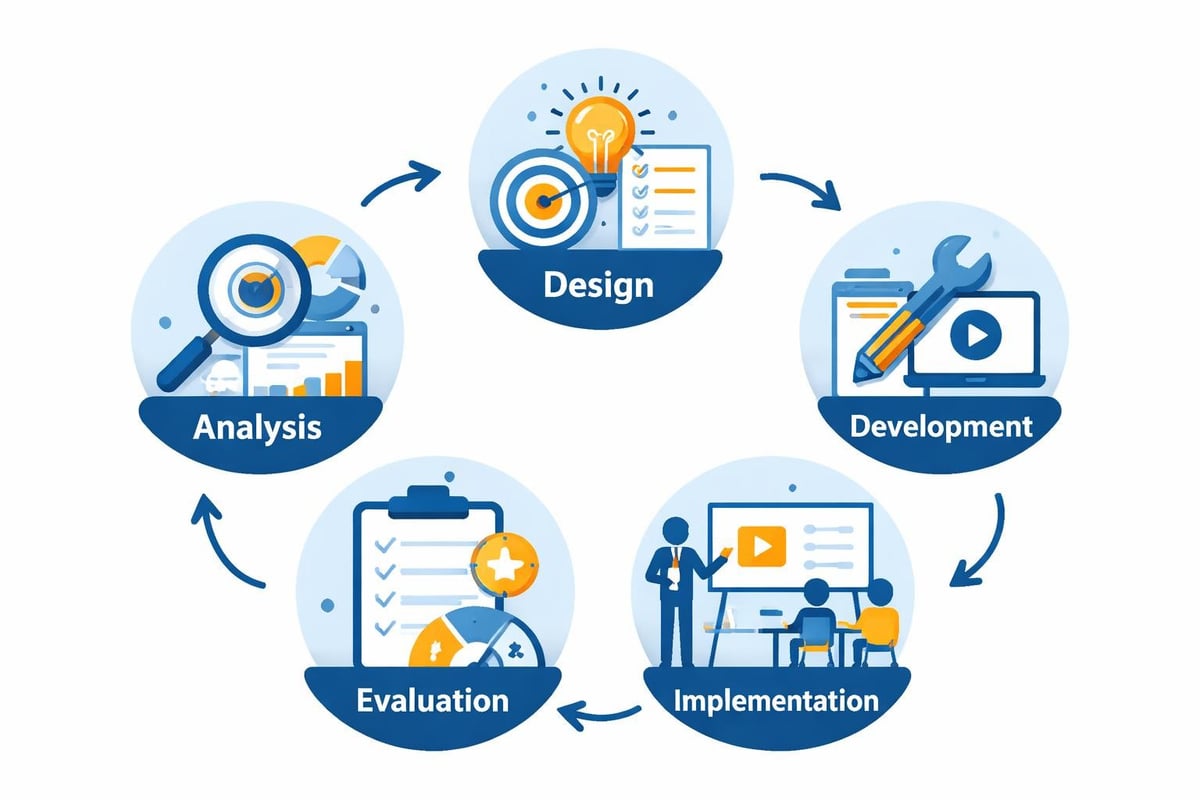
Instructional design courses typically begin with core principles that have shaped the field for decades. These foundational concepts, including principles derived from educational research, establish a framework for creating learning experiences that genuinely change behaviour and build competencies. Most programmes introduce learners to systematic approaches such as ADDIE (Analysis, Design, Development, Implementation, Evaluation), SAM (Successive Approximation Model), and various agile methodologies adapted for training contexts.
Core Competencies Developed Through Formal Training
Professional development in instructional design encompasses several interconnected skill areas:
- Needs analysis and learner assessment: Understanding how to identify performance gaps and determine root causes
- Learning objective formulation: Crafting measurable, achievable outcomes aligned with business goals
- Content structuring and sequencing: Organizing information for optimal retention and application
- Assessment design: Creating evaluation tools that measure genuine competency development
- Multimedia integration: Leveraging various media formats to enhance engagement and comprehension
The theoretical foundation matters because it informs every practical decision designers make. When you understand cognitive load theory, for example, you structure content differently. When you grasp adult learning principles, you incorporate more self-directed elements and real-world application opportunities.
Selecting the Right Programme for Your Professional Goals
The marketplace offers numerous pathways for acquiring instructional design expertise, from university certificates to specialized bootcamps and self-paced online programmes. Each format presents distinct advantages depending on your current role, available time, and career objectives.
Academic Versus Applied Learning Pathways
| Programme Type | Duration | Best For | Key Advantage |
|---|---|---|---|
| University Certificate | 6-12 months | Career changers | Academic rigour and credentials |
| Professional Bootcamp | 8-16 weeks | Quick upskilling | Intensive, project-based learning |
| Online Self-Paced | Flexible | Working professionals | Learning alongside current role |
| Corporate Training | 3-5 days | Team development | Immediate organizational application |
University-based instructional design courses often provide deeper theoretical grounding and research-based approaches. These programmes typically explore the work of influential theorists and their contributions to the field, including elaborate instructional sequencing methods that inform how complex topics should be introduced and expanded over time.
Conversely, applied programmes focus on immediate skill development with hands-on projects. You might design a complete training module, develop assessment instruments, or create multimedia learning objects as part of your coursework. This practical orientation proves particularly valuable for professionals seeking to implement new methodologies within their current organizations.
Modern Approaches: Technology Integration and AI-Assisted Design
Contemporary instructional design courses increasingly address technological capabilities that enhance both the design process and learning outcomes. The integration of learning management systems, authoring tools, and emerging artificial intelligence applications has transformed what's possible in corporate training environments.
Leveraging Artificial Intelligence in Design Workflows
Recent developments in AI have introduced new possibilities for instructional designers. The ARCHED framework for human-centered AI integration represents an emerging approach that maintains educator expertise whilst leveraging computational capabilities for tasks like content generation, personalization, and adaptive assessment.
Progressive instructional design courses now incorporate modules on:
- AI-assisted content development: Using generative tools whilst maintaining pedagogical integrity
- Automated personalization: Creating adaptive learning paths based on learner performance data
- Intelligent assessment: Implementing systems that provide immediate, contextualized feedback
- Analytics interpretation: Making data-driven decisions about programme effectiveness
However, technology serves the instructional strategy rather than dictating it. The most effective programmes emphasize that tools amplify good design principles but cannot replace fundamental understanding of how people learn. This balanced perspective ensures designers make informed decisions about when and how to incorporate technological solutions.
Specialized Focus Areas Within Instructional Design
As the discipline has matured, specialized branches have emerged that address specific training contexts or learner populations. Advanced instructional design courses often allow participants to concentrate on particular applications aligned with their industry or organizational needs.
Industry-Specific Design Considerations
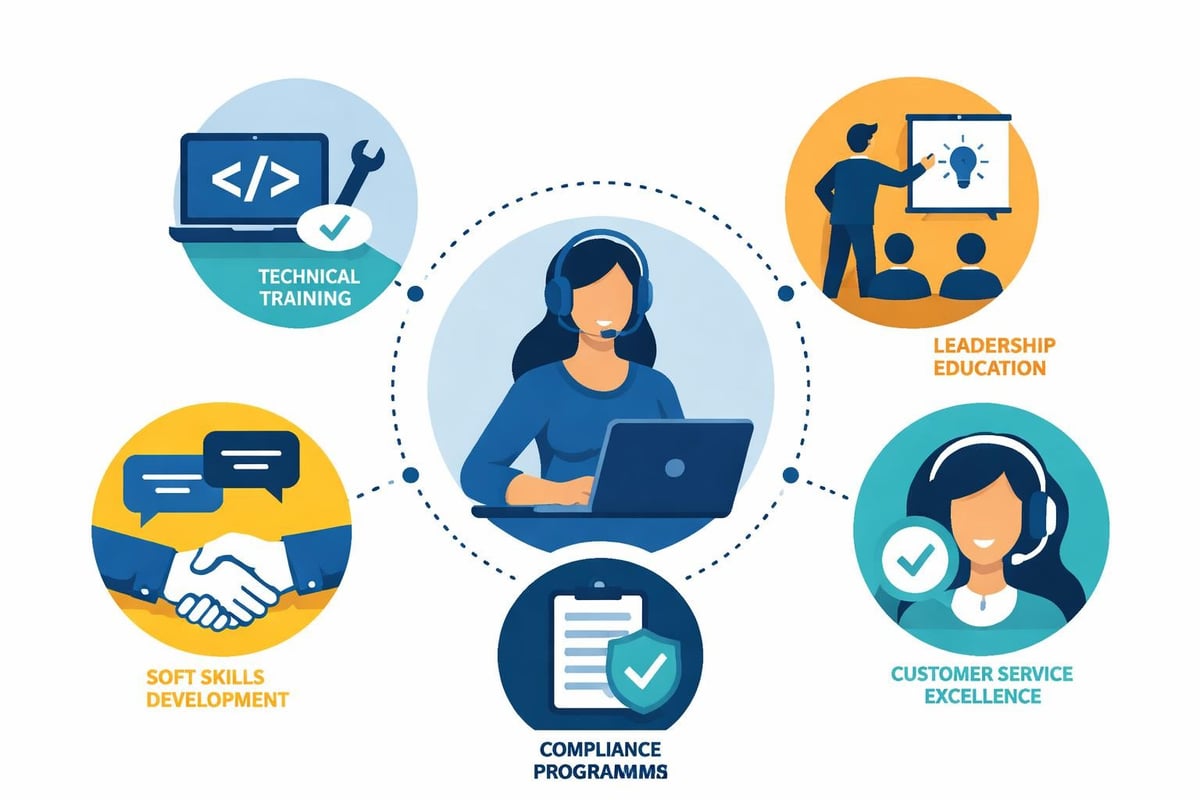
Technical training for software applications requires different approaches than leadership development programmes. Similarly, compliance training faces unique constraints compared to creative skill-building workshops. Specialized courses address these nuances through focused curricula:
- Technical and procedural training: Simulation design, hands-on practice integration, competency-based progression
- Soft skills development: Scenario-based learning, role-play design, emotional intelligence cultivation
- Leadership programmes: Action learning projects, peer coaching frameworks, reflective practice integration
- Compliance and regulatory: Audit-ready documentation, knowledge verification, behaviour change measurement
Organizations delivering leadership and management training benefit significantly when their instructional designers understand how adult professionals learn complex interpersonal skills versus technical procedures. The design choices differ substantially across these contexts.
Building Practical Skills Through Project-Based Learning
The most valuable instructional design courses emphasize application over theory alone. Project-based curricula require participants to create actual training materials, complete needs analyses for real scenarios, and develop comprehensive design documents that could be immediately implemented within organizations.
Portfolio Development and Professional Credibility
Throughout quality programmes, learners build portfolios demonstrating their capabilities across various competencies. These might include:
| Portfolio Component | Demonstrates | Professional Application |
|---|---|---|
| Needs analysis report | Problem identification skills | Diagnosing performance gaps |
| Learning objective matrix | Outcome-focused thinking | Aligning training with business goals |
| Storyboard or prototype | Design visualization | Communicating concepts to stakeholders |
| Assessment instrument | Evaluation expertise | Measuring learning effectiveness |
| Complete training module | End-to-end capability | Independent project execution |
This portfolio becomes essential when seeking advancement within your organization or transitioning to instructional design roles. It provides tangible evidence of your capabilities beyond credentials alone. Many professionals find that completing projects during their coursework creates immediate value within their current positions, allowing them to test new approaches with real learners.
Instructional Models and Theoretical Frameworks
Understanding the evolution of instructional design as a discipline provides context for the various models and frameworks you'll encounter throughout professional development. Each approach offers distinct perspectives on how to structure learning experiences effectively.
Comparing Established Design Models
Traditional models like ADDIE provide systematic, linear approaches suitable for large-scale projects with defined timelines. Agile methodologies such as SAM emphasize iterative development with frequent stakeholder input, proving valuable when requirements may evolve or when rapid prototyping enables better decision-making.
Instructional design courses that explore multiple frameworks enable professionals to select appropriate approaches based on project constraints, organizational culture, and learner characteristics. This methodological flexibility distinguishes adaptable designers from those who apply single solutions regardless of context.
Recent frameworks also integrate research from learning sciences more deliberately. The RIGID framework demonstrates how systematic incorporation of evidence-based practices throughout the design workflow enhances outcomes. These emerging approaches reflect the field's ongoing evolution as new research illuminates how people acquire and apply knowledge.
Developing Assessment and Evaluation Expertise
Creating meaningful assessments represents one of the most challenging aspects of instructional design. Effective courses dedicate substantial attention to evaluation methodologies that measure genuine competency rather than simple knowledge recall.
Formative and Summative Assessment Design
Comprehensive assessment strategies incorporate multiple evaluation points throughout the learning journey:
- Diagnostic assessments: Establish baseline understanding before instruction begins
- Formative checkpoints: Provide ongoing feedback that guides learner progress
- Performance tasks: Require application of skills in realistic contexts
- Summative evaluations: Measure achievement of stated learning objectives
- Transfer assessments: Verify on-the-job application weeks or months after training
The distinction between knowing information and demonstrating competency fundamentally shapes assessment design. Quality instructional design courses emphasize creating evaluation instruments that reflect workplace performance requirements rather than academic testing conventions.
Evidence-Based Practice and Research Integration
Professional instructional designers increasingly draw upon empirical research to inform their design decisions. Courses that incorporate evidence-based methodologies help participants understand not just what works, but why particular approaches prove effective across various learning contexts.
Translating Research Into Practical Application
The work of researchers like Ruth Colvin Clark exemplifies the translation of academic findings into actionable guidance for practitioners. Her research on multimedia learning, worked examples, and scenario-based training provides specific, tested principles that designers can implement immediately.
Instructional design courses that emphasize research literacy enable professionals to:
- Critically evaluate new methodologies and tools claiming effectiveness
- Stay current with evolving understanding of learning processes
- Make evidence-informed decisions when stakeholder preferences conflict with best practices
- Contribute to organizational knowledge about what approaches work in specific contexts
This research foundation proves particularly valuable when justifying design decisions to executives or subject matter experts who may prefer familiar approaches over evidence-based alternatives.

Stakeholder Management and Collaboration Skills
Technical design competencies alone don't ensure project success. Effective instructional designers must navigate organizational dynamics, manage subject matter expert relationships, and communicate design rationale to non-specialists. Advanced courses address these interpersonal dimensions of the role.
Working Effectively With Subject Matter Experts
Subject matter experts possess deep content knowledge but may lack understanding of how to structure that knowledge for others. Skilled designers extract essential information whilst maintaining productive working relationships:
- Structured interviews: Using targeted questions that uncover tacit knowledge experts take for granted
- Content validation: Ensuring accuracy whilst applying pedagogical principles to organization and sequencing
- Expectation management: Helping SMEs understand the design process and timeline realities
- Feedback integration: Incorporating expert input without compromising instructional integrity
Organizations offering diverse training services rely on instructional designers who can collaborate effectively with trainers, consultants, and internal experts across numerous subject areas. This collaborative capability often distinguishes successful designers from those with strong technical skills but limited interpersonal effectiveness.
Accessibility and Inclusive Design Principles
Contemporary instructional design courses increasingly emphasize creating learning experiences accessible to all participants regardless of physical abilities, learning preferences, or prior knowledge. Universal design for learning (UDL) principles guide the creation of flexible materials that accommodate diverse learner needs.
Implementing Universal Design Approaches
Inclusive design isn't about creating separate "accessible versions" but rather building inherent flexibility into original materials:
- Providing content in multiple formats (text, audio, video, interactive)
- Ensuring navigation works with assistive technologies
- Using sufficient colour contrast and readable typography
- Offering adjustable pacing and multiple pathways through content
- Creating assessments that measure competency through various demonstration methods
These considerations prove particularly important for organizations delivering training to geographically dispersed teams or diverse workforces where participants bring varied experiences, abilities, and learning preferences.
Measuring Training Effectiveness and ROI
Demonstrating the business impact of training programmes requires designers to think beyond completion rates and satisfaction scores. Advanced instructional design courses address evaluation methodologies that connect learning initiatives to organizational outcomes.
Kirkpatrick's Four Levels Applied Systematically
Most professionals recognize Kirkpatrick's evaluation framework, but effective implementation requires deliberate planning from a project's inception:
| Level | Measures | Design Implications |
|---|---|---|
| Reaction | Learner satisfaction | Engaging delivery, relevant content |
| Learning | Knowledge/skill acquisition | Valid assessments aligned with objectives |
| Behaviour | On-the-job application | Transfer support, manager involvement |
| Results | Business impact | Measurable objectives tied to performance |
Instructional design courses that explore evaluation comprehensively enable professionals to build assessment into their projects from the beginning rather than treating it as an afterthought. This systematic approach produces data demonstrating training value to organizational leadership.
Building Your Instructional Design Career Path
For professionals considering instructional design courses as career development, understanding potential trajectory helps inform which programmes and specializations align with long-term goals. The field offers diverse opportunities across corporate, educational, consulting, and independent contractor contexts.
Certification and Professional Recognition
Various professional organizations offer credentials that validate instructional design expertise. Whilst not always required, certifications can enhance credibility, particularly for those transitioning from other fields or seeking advancement within organizations that value formal recognition.
Resources like those found through instructional design professional networks provide ongoing learning opportunities beyond formal coursework. These communities offer case studies, tool reviews, and peer networking that support continuous professional development.
The integration of instructional design capabilities within training organizations creates opportunities for professionals who understand both content delivery and systematic programme development. Companies offering comprehensive course catalogues benefit from internal expertise that ensures their offerings reflect current best practices in adult learning and corporate training.
Developing expertise in instructional design transforms how training professionals approach their work, replacing intuition with systematic, evidence-based methodologies that consistently produce effective learning experiences. Whether you're enhancing existing training capabilities or building entirely new skills, the investment in structured learning pays dividends through improved programme outcomes and expanded professional opportunities. My Training Network supports organizations across Canada and globally with expert-led training delivered by professionals who understand these principles deeply, offering customizable solutions that address your specific development needs with over 150 courses designed for maximum business impact.

