

Professional development has never been more critical as organisations navigate complex challenges, remote workforces, and rapidly evolving market conditions. Leadership and management courses provide the structured learning environment professionals need to develop essential competencies that drive organisational success. Whether you're an emerging team leader or a seasoned executive, investing in targeted training creates measurable impact on both individual performance and overall business outcomes.
The Strategic Value of Leadership and Management Training
Modern organisations recognise that strong leadership directly correlates with employee engagement, retention, and productivity. Leadership and management courses equip professionals with frameworks for decision-making, communication, and strategic thinking that translate immediately into workplace improvements.
Building Essential Competencies
Effective training programmes address multiple competency areas simultaneously. Participants develop hard skills like project management and financial planning alongside soft skills including emotional intelligence and conflict resolution.
The most comprehensive leadership and management courses cover these critical areas:
- Strategic planning and execution
- Performance management and coaching
- Change management methodologies
- Team building and motivation
- Communication across diverse audiences
- Ethical decision-making frameworks
These competencies create a foundation for sustainable leadership success. Professionals who complete structured programmes demonstrate higher confidence levels and improved ability to handle complex organisational challenges.

Measurable Business Impact
Research consistently demonstrates that organisations investing in leadership development outperform competitors. Training initiatives reduce turnover costs, accelerate succession planning, and create stronger organisational cultures.
| Business Metric | Impact of Leadership Training |
|---|---|
| Employee Engagement | 23-35% increase |
| Retention Rates | 15-28% improvement |
| Team Productivity | 18-26% growth |
| Innovation Output | 21-32% enhancement |
When companies prioritise instructor-led training, they benefit from expert guidance and interactive learning experiences that accelerate skill development beyond what self-paced alternatives provide.
Types of Leadership and Management Courses
The training landscape offers diverse programme formats designed to meet different learning objectives and organisational needs. Understanding these options helps professionals and HR decision-makers select the most appropriate solutions.
Foundational Management Programmes
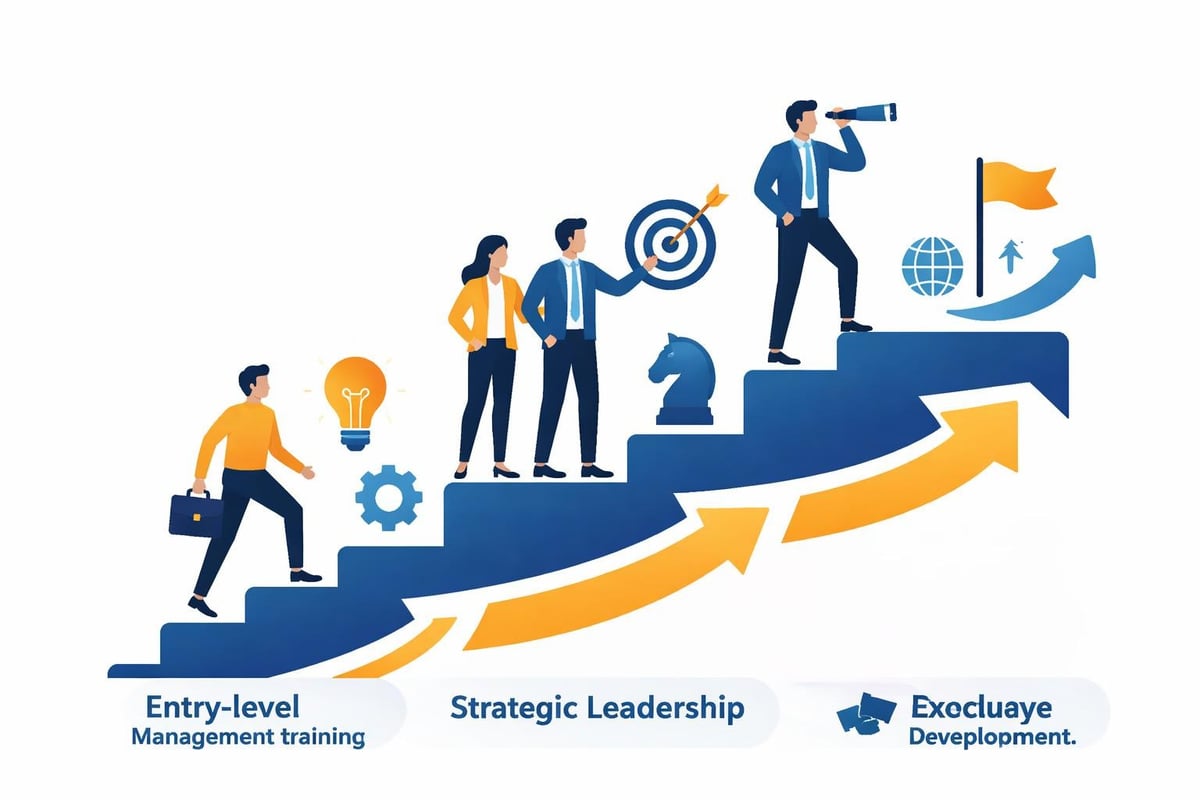
Entry-level courses focus on the transition from individual contributor to people manager. These programmes typically run between one to three days and address fundamental supervisory responsibilities.
Core topics include:
- Delegating tasks effectively
- Providing constructive feedback
- Managing time and priorities
- Understanding legal responsibilities
- Building team cohesion
New managers benefit tremendously from structured guidance during this critical career transition. Foundational programmes prevent common pitfalls and establish best practices early.
Strategic Leadership Development
Mid-career and senior professionals require different content focusing on organisational influence and strategic thinking. These advanced leadership and management courses examine complex challenges including digital transformation, cultural change, and global team management.
Participants explore case studies, engage in scenario planning, and develop personalised leadership philosophies. The best leadership and management courses incorporate real-world applications that directly address contemporary business challenges.
Specialised Training Tracks
Many organisations benefit from targeted programmes addressing specific leadership dimensions:
- Technical leadership for engineering and IT managers
- Financial management for budget accountability
- Diversity and inclusion leadership
- Crisis management and business continuity
- Innovation and entrepreneurship leadership
Specialised tracks allow organisations to address particular skill gaps or strategic priorities. When combined with comprehensive communications training courses, these programmes create well-rounded leaders capable of navigating diverse challenges.
Choosing Between Online and In-Person Delivery
The debate between virtual and classroom-based learning continues to evolve, particularly following widespread adoption of remote work. Each delivery method offers distinct advantages depending on organisational circumstances and learning objectives.
Benefits of Classroom Training
Traditional face-to-face programmes create unmatched opportunities for networking, relationship building, and immersive learning experiences. Participants engage directly with instructors and peers, facilitating spontaneous discussions and collaborative problem-solving.
In-person advantages:
- Stronger peer connections and networking
- Immediate instructor feedback and clarification
- Reduced workplace distractions
- Enhanced engagement through physical presence
- Team-building through shared experiences
Organisations investing in online courses can replicate many classroom benefits through interactive virtual platforms, breakout sessions, and collaborative tools.
Virtual Learning Effectiveness
Remote delivery has matured significantly, offering flexibility without sacrificing quality. Leadership and management courses delivered virtually accommodate geographically dispersed teams and busy schedules while maintaining rigorous learning standards.
| Feature | In-Person | Virtual |
|---|---|---|
| Schedule Flexibility | Limited | High |
| Geographic Access | Restricted | Unlimited |
| Cost Efficiency | Moderate | High |
| Networking Depth | Excellent | Good |
| Technology Requirements | Minimal | Moderate |
The most effective approach often combines both methods. Blended learning programmes leverage online modules for content delivery and in-person sessions for application, practice, and relationship building.
Accreditation and Quality Indicators
Not all leadership and management courses deliver equal value. Discerning professionals and organisations should evaluate programmes against established quality criteria before committing resources.
Recognised Certifications
Accredited programmes from reputable institutions provide validated credentials that enhance professional credibility. Certifications from recognised bodies demonstrate mastery of standardised competencies.
Leading accreditation organisations include professional associations, academic institutions, and industry-specific bodies. While non-accredited programmes can offer excellent content, accredited courses provide documented proof of achievement valuable for career advancement.
When exploring leadership and management options, verify instructor credentials, curriculum depth, and assessment rigour to ensure meaningful learning outcomes.
Instructor Expertise
Training quality directly correlates with instructor capability. The most effective programmes feature facilitators who combine academic knowledge with substantial practical leadership experience.
Evaluate instructors based on:
- Years of leadership experience
- Industry-specific expertise
- Teaching methodology and engagement
- Published research or thought leadership
- Client testimonials and success stories
My Training Network maintains a network of expert trainers who bring diverse industry backgrounds and proven teaching methodologies to every programme delivery.

Essential Course Content Components
Comprehensive leadership and management courses balance theoretical frameworks with practical application. The most effective programmes structure content to build progressively from foundational concepts to advanced strategic capabilities.
Leadership Theory and Practice
Understanding established leadership models provides context for personal development. Participants explore various approaches from authoritative leadership to servant leadership, identifying styles that align with their values and organisational cultures.
Theoretical foundations include:
- Transformational versus transactional leadership
- Situational leadership models
- Emotional intelligence frameworks
- Power and influence dynamics
- Leadership versus management distinctions
Theory becomes valuable only through application. Effective programmes incorporate simulations, role-playing exercises, and real-world case studies that challenge participants to apply concepts immediately.
Communication and Influence Skills
Leaders spend considerable time communicating vision, expectations, and feedback. Developing advanced communication competencies dramatically improves leadership effectiveness across all contexts.
Critical communication skills:
- Active listening techniques
- Persuasive presentation delivery
- Difficult conversation management
- Cross-cultural communication awareness
- Written communication clarity
These capabilities extend beyond formal presentations to everyday interactions that shape organisational culture. Leaders who communicate authentically and clearly inspire greater trust and commitment from their teams.
Performance Management Systems
Effective leaders drive results through people. Leadership and management courses must address systematic approaches to setting expectations, monitoring progress, and developing team capabilities.
Participants learn to conduct meaningful performance reviews, establish clear metrics, and create development plans that align individual growth with organisational objectives. These practical systems produce immediate workplace improvements.
Selecting the Right Programme for Your Needs
With countless options available, choosing appropriate training requires thoughtful analysis of objectives, constraints, and desired outcomes. A structured selection process ensures optimal return on training investment.
Assessing Current Capabilities
Begin by conducting honest self-assessment or organisational needs analysis. Identify specific skill gaps, competency requirements, and strategic priorities that training should address.
Assessment approaches include:
- 360-degree feedback reviews
- Performance evaluation data
- Employee engagement surveys
- Strategic planning workshops
- Succession planning gap analysis
This diagnostic work clarifies precisely which leadership and management courses will deliver maximum value. Avoid generic programmes that don't address your specific developmental needs.
Aligning Training with Organisational Strategy
The most successful training initiatives directly support broader business objectives. Leadership development should strengthen capabilities required to execute strategic plans and navigate anticipated challenges.
Consider upcoming organisational changes, market dynamics, and competitive pressures when selecting programme content. Training that seems valuable in isolation may not advance strategic priorities effectively.
For organisations seeking comprehensive solutions, exploring the full course catalogue reveals options addressing diverse business requirements across functional areas.
Evaluating Programme Logistics
Practical considerations significantly impact training effectiveness and participation rates. Evaluate these logistical factors:
| Consideration | Questions to Answer |
|---|---|
| Duration | Can participants commit required time? |
| Schedule | Does timing accommodate business cycles? |
| Location | Is venue accessible for all participants? |
| Cost | Does total investment fit budget parameters? |
| Group Size | Will cohort size enable meaningful interaction? |
Balancing ideal learning conditions with organisational constraints requires compromise. Prioritise factors that most significantly impact learning outcomes for your specific context.
Maximising Return on Training Investment
Completing leadership and management courses represents just the beginning of development journeys. Organisations and individuals must implement deliberate strategies to translate learning into sustained behavioural change and performance improvement.
Pre-Course Preparation
Effective learning begins before the first session. Participants who arrive prepared with clear objectives and relevant context absorb content more effectively and apply skills more readily.
Preparation activities include:
- Reviewing current challenges requiring leadership attention
- Gathering feedback from direct reports and peers
- Identifying specific skills to develop
- Completing pre-course assessments or readings
- Establishing support from supervisors
This preparation creates fertile ground for meaningful learning experiences. Participants arrive ready to engage deeply rather than passively receive information.
Active Participation Strategies
Engagement during training directly correlates with retention and application. Participants should view courses as collaborative experiences rather than lectures to endure.
Maximise learning through asking questions, sharing experiences, participating in activities, and connecting concepts to real workplace situations. The most valuable insights often emerge through peer discussion and collective problem-solving.
Quality programmes facilitate this engagement through varied instructional methods, collaborative exercises, and practical application opportunities that maintain energy and focus throughout.
Post-Course Application Planning
The transition from classroom to workplace presents the greatest challenge in leadership development. Without deliberate implementation planning, even excellent training produces minimal lasting impact.
Essential post-course activities:
- Document key learnings and action commitments
- Share insights with teams and supervisors
- Implement new approaches in low-risk situations
- Request feedback on behavioural changes
- Pursue ongoing development resources
Organisations should establish accountability mechanisms including follow-up coaching, peer learning groups, and progress reviews. These support structures dramatically improve training transfer and sustain development momentum.
Emerging Trends in Leadership Development
The leadership training landscape continues evolving in response to changing workforce expectations, technological advancement, and organisational complexity. Understanding current trends helps organisations select programmes that prepare leaders for contemporary challenges.
Emphasis on Authentic Leadership
Modern leadership and management courses increasingly focus on authenticity, vulnerability, and purpose-driven leadership. Participants explore personal values, develop self-awareness, and learn to lead with integrity rather than simply managing through authority.
This shift reflects broader cultural changes emphasising transparency, psychological safety, and human-centred leadership approaches. Leaders who demonstrate authenticity build stronger relationships and create more engaged teams.
Integration of Neuroscience Research
Contemporary programmes incorporate findings from neuroscience, psychology, and behavioural economics. Understanding how the brain processes information, makes decisions, and responds to stress provides leaders with evidence-based approaches to influencing behaviour and managing change.
These insights inform practical techniques for improving focus, managing cognitive load, building habits, and creating environments that support optimal performance.
Focus on Adaptive Leadership
Uncertainty and complexity characterise modern business environments. Leadership development increasingly emphasises adaptive capabilities including resilience, agility, and comfort with ambiguity.
Programmes teach leaders to experiment, learn from failure, and adjust strategies based on emerging information. These capabilities prove essential for navigating digital transformation, market disruption, and unforeseen challenges.
For comprehensive information about available programmes and approaches, reviewing various leadership and management resources provides valuable perspective on industry best practices and emerging methodologies.
Industry-Specific Leadership Requirements
While core leadership principles remain consistent, different sectors face unique challenges requiring specialised knowledge and approaches. Targeted leadership and management courses address industry-specific contexts more effectively than generic programmes.
Healthcare Leadership
Healthcare leaders navigate complex regulatory environments, clinical quality standards, and patient safety requirements alongside traditional management responsibilities. Specialised training addresses clinical governance, interdisciplinary team leadership, and healthcare-specific change management.
Technology Sector Leadership
Technology leaders must balance rapid innovation cycles with team development, manage highly skilled technical professionals, and bridge communication gaps between technical and business stakeholders. Programmes addressing these unique contexts prove more relevant than general management training.
Non-Profit and Public Sector
Leaders in non-profit and government organisations face distinct challenges including mission-driven decision-making, stakeholder management, and resource constraints. Targeted training addresses these realities more effectively than corporate-focused alternatives.
Understanding your sector's specific requirements ensures training investment addresses real challenges your leaders encounter daily. Customised programmes deliver significantly higher value than one-size-fits-all alternatives.
Building Organisational Leadership Capability
Individual development, while valuable, produces limited impact without systemic approaches to building leadership bench strength across organisations. Strategic leadership development requires coordinated initiatives aligned with talent management and succession planning.
Creating Leadership Pipelines
Forward-thinking organisations establish clear pathways from individual contributor through executive leadership. Each transition point requires different competencies addressed through appropriate development interventions.
Pipeline stages typically include:
- First-time supervisor programmes
- Manager of managers development
- Director-level strategic leadership
- Executive presence and influence
- C-suite strategic thinking
This systematic approach ensures consistent leadership quality at every organisational level. Employees understand development expectations and available resources supporting their advancement.
Cohort-Based Development Programmes
Group learning creates powerful networks and shared language supporting cultural transformation. Cohort-based leadership and management courses enable peer learning, cross-functional relationship building, and collective problem-solving.
Participants support each other's development, share best practices, and create informal advisory networks that extend beyond formal training. These relationships prove invaluable for navigating complex organisational challenges.
Integrating Development with Performance Management
Leadership development achieves maximum impact when integrated with performance expectations, succession planning, and compensation decisions. This integration signals organisational commitment and encourages serious participant engagement.
Development plans should connect directly to performance goals, promotion requirements, and career progression. This alignment ensures training supports both individual aspirations and organisational needs.
Investing in leadership and management courses creates sustainable competitive advantage by strengthening the capabilities of professionals at every organisational level. Whether you're developing emerging leaders or enhancing executive capabilities, structured training produces measurable improvements in decision-making, communication, and strategic thinking. My Training Network delivers customised, instructor-led programmes across Canada and globally, connecting your team with expert trainers who transform leadership potential into performance excellence. Explore how our comprehensive solutions can accelerate your organisation's leadership development journey.

