

Imagine if you could transform your team's skills instantly, adapting learning to your business needs as they evolve. In 2026, live training is making this vision a reality by delivering interactive, real-time learning that boosts both engagement and performance.
This guide will show you how to unlock the true value of live training for your organisation. We will define what it is, compare it with other methods, explore its core benefits, examine the latest technology, and share a practical step-by-step approach for success.
What is Live Training? Defining Real-Time Learning
Live training is reshaping how organisations and professionals approach skill development in 2026. At its core, live training refers to real-time, instructor-led learning sessions delivered either virtually or in-person. This approach enables immediate communication, active participation, and tailored feedback, creating an environment where learning adapts as needs arise. For a deeper dive into the fundamentals and benefits of this approach, see this Instructor-led training overview.
Unlike eLearning modules or self-paced recorded courses, live training stands apart through its synchronous nature. While eLearning and recorded formats offer flexibility, they often lack the immediacy and dynamic interaction of live training. Learners in live sessions can ask questions, receive instant answers, and engage in discussions, which is rarely possible in static or asynchronous formats.
Core elements of live training include:
- Interactivity between participants and trainers
- Immediate feedback on questions and exercises
- Collaborative activities such as group problem-solving and discussions
These features foster deeper engagement and help embed knowledge more effectively. Live training is delivered across several formats, including virtual classrooms, interactive webinars, blended learning (which merges live and self-paced elements), and hybrid events where remote and in-person attendees participate together.
For example, global organisations now opt for ITIL and PRINCE2 live online training, using platforms like Zindiak to connect distributed teams. Remote onboarding sessions for new hires have also transitioned to live training, ensuring everyone receives consistent information while interacting with colleagues and trainers in real time.
The adoption of live training is rapidly increasing. Recent data reveals that over 60% of organisations now offer live virtual learning, reflecting a significant shift in corporate learning strategies. This approach is especially prevalent in scenarios requiring up-to-date skill sets, such as soft skills, leadership development, technical certifications, and compliance training.
Live training bridges the gap between digital efficiency and the essential human connection. By combining technological advantages with real, interactive engagement, it delivers an impactful, future-ready learning experience for both organisations and individuals.

Live Training vs. Other Learning Methods: A Comparative Analysis
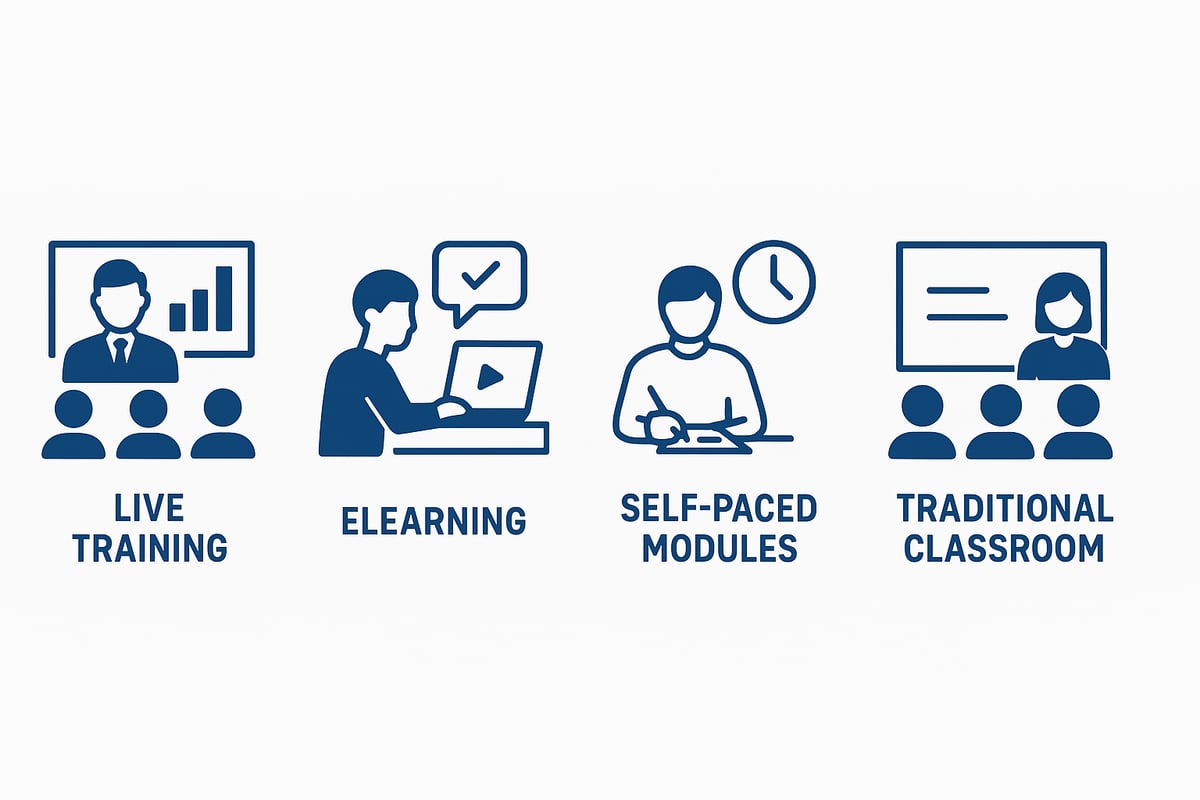
Choosing the right approach to professional development is crucial in today’s rapidly evolving workplace. Live training stands out by offering immediacy and interaction that traditional and digital methods often lack. To help you understand these differences, let’s examine how live training compares to eLearning, self-paced modules, and classroom instruction.
Live Training at a Glance: Comparison Table
Below is a summary table contrasting live training with other leading formats. For a more detailed breakdown, see this Comparative guide to training methods.
| Feature | Live Training | eLearning | Self-Paced Modules | Traditional Classroom |
|---|---|---|---|---|
| Format | Real-time, instructor-led | Online, pre-recorded | Online, flexible | In-person, scheduled |
| Engagement | High (interactive) | Moderate | Low–Moderate | High |
| Flexibility | Medium (scheduled, remote) | High (anytime) | Highest (fully flexible) | Low |
| Adaptability | Immediate, dynamic | Limited | None | Some |
| Knowledge Retention | High (immediate feedback) | Moderate | Low–Moderate | High |
| Scalability | High (global teams) | High | High | Low |
| Challenges | Scheduling, tech | Motivation, tech | Motivation, isolation | Logistics, cost |
Engagement and Interaction
Live training consistently achieves higher engagement compared to other formats. Didask reports that live sessions foster 30 percent more learner participation due to real-time interaction, Q&A opportunities, and collaborative activities. Unlike passive experiences in self-paced modules, live training creates a dynamic learning environment where participants are encouraged to contribute, ask questions, and connect with peers.
Flexibility and Accessibility
One of the main advantages of live training is the ability to learn from any location while maintaining a structured, scheduled approach. This format bridges the gap between the flexibility of online learning and the accountability of classroom sessions. While eLearning and self-paced modules offer complete freedom over timing, live training ensures learners stay on track by committing to set sessions, which often results in higher completion rates.
Adaptability and Knowledge Retention
A defining feature of live training is its adaptability. Trainers can adjust content in real time, addressing specific learner needs as they arise. This immediate responsiveness, paired with direct feedback, significantly improves knowledge retention. Learners are able to apply concepts instantly and clarify doubts on the spot, which is less feasible in pre-recorded or self-paced settings.
Scalability and Challenges
Live training is highly scalable, making it ideal for rolling out content across dispersed teams or entire organisations. Virtual classrooms enable hundreds of participants to join simultaneously, regardless of geography. However, challenges remain. Scheduling across time zones, ensuring reliable technology, and upskilling trainers in facilitation and digital tools are critical considerations. For example, PRINCE2 Agile V2 Foundation live courses require certified trainers and robust platforms to deliver content seamlessly to a diverse audience.
In summary, while each learning method has its place, live training offers a unique blend of engagement, adaptability, and real-time feedback that is difficult to replicate elsewhere. It is especially effective for skills that benefit from immediate application and interaction, ensuring that both organisations and learners are ready to meet the demands of 2026.
Key Benefits of Live Training in 2026
Unlocking the full value of live training in 2026 means embracing a new era of professional development. Real-time learning experiences are reshaping how skills are built, knowledge is shared, and teams evolve. Let’s explore the core benefits that make this approach so impactful.

Real-Time Engagement and Interaction
Live training excels at creating dynamic, interactive learning spaces. Participants can ask questions instantly, join polls, and receive immediate feedback from trainers. This live engagement increases attention and deepens understanding.
A recent comparison of live workshops vs. self-paced eLearning statistics found that live formats foster 30 percent higher learner participation. Features like Q&A sessions and live demonstrations keep learners actively involved, making each session relevant and memorable.
Personalisation and Rapid Upskilling
One standout benefit of live training is its ability to adapt in real time. Trainers can tailor content on the spot, addressing unique challenges or knowledge gaps as they arise. This level of personalisation accelerates skill development, as learners receive guidance specific to their current needs.
Immediate feedback is a key driver for rapid upskilling. If a concept is unclear, trainers can clarify it on the spot, ensuring everyone moves forward with confidence. This adaptability sets live training apart from rigid, pre-recorded formats.
Collaboration and Flexibility
Live training brings colleagues together, encouraging collaboration through group activities, role-plays, and peer feedback. These interactive elements foster a sense of community, boost motivation, and support knowledge sharing among participants.
Flexibility is another major strength. Learners can join live training from any location, whether at home, in the office, or on the move. This accessibility ensures that distributed teams stay connected and develop skills together, regardless of physical distance.
Driving Organisational Agility and Satisfaction
Organisations benefit from live training by staying agile and responsive to change. Real-time sessions support rapid upskilling during project launches, change initiatives, or compliance updates. Teams can quickly align on new strategies and processes.
The impact is clear: 72 percent of organisations report higher learner satisfaction with live formats. By investing in live training, businesses ensure their workforce remains up to date, engaged, and ready to tackle future challenges with confidence.
Technology and Formats Powering Modern Live Training
Technology is now the driving force behind live training, enabling organisations to deliver impactful learning experiences that adapt to modern needs. From flexible platforms to AI-powered tools, the landscape is evolving rapidly, with new formats making real-time learning accessible and measurable.

Digital Platforms and Tools
The foundation of effective live training is a robust digital platform. Solutions like Zoom, Microsoft Teams, and bespoke Learning Management Systems (LMS) such as Didask are at the forefront. These platforms support seamless scheduling, tracking, and reporting, ensuring that every live training session is efficient and data-driven.
Interactive features are essential for engagement. Platforms now offer live chat, polls, quizzes, and breakout rooms, allowing participants to collaborate and receive feedback instantly. Didask, for example, uses AI-powered tools to personalise content in real time, adapting sessions to learner needs and boosting outcomes.
A quick comparison of popular platforms:
| Platform | Key Features | Use Case Example |
|---|---|---|
| Zoom | Breakout rooms, polls, recording | Remote team onboarding |
| MS Teams | Integration with Office, chat | Cross-department workshops |
| Didask LMS | AI personalisation, analytics | ITIL® live training rollout |
Companies using advanced LMS report 40 percent faster training deployment. For a deeper dive into available formats, visit Online courses and virtual classrooms, which explores live virtual sessions and their core features.
Blended & Hybrid Learning Models
Blended and hybrid models are reshaping live training, merging real-time sessions with the flexibility of self-paced modules. Blended learning combines synchronous live training with asynchronous eLearning, allowing learners to engage both in scheduled classes and at their own pace.
Hybrid formats bring together in-person and remote participants within the same live training environment. This approach maximises inclusivity, ensuring everyone can participate regardless of location. For example, ITIL Foundation V5 live training integrates interactive online sessions with eLearning resources, catering to a range of learning preferences.
Benefits of blended and hybrid live training include:
- Increased flexibility for learners and trainers
- Support for diverse learning styles and needs
- Enhanced collaboration through both live and asynchronous activities
By leveraging these formats, organisations can deliver live training that is both scalable and adaptable, preparing teams for the demands of tomorrow’s workplace.
Step-by-Step Guide: Implementing Live Training in Your Organisation
Successfully integrating live training into your organisation requires a structured, thoughtful approach. Each step ensures your investment delivers measurable impact and future-ready skills.
Step 1: Assess Organisational Needs and Goals
Begin by identifying your organisation’s unique skills gaps and training objectives. Consult stakeholders from all departments to uncover current and future needs. Align live training with clear business outcomes, such as regulatory compliance, leadership growth, or technical upskilling.
Conduct a pre-launch assessment for initiatives like new software rollouts. This ensures your live training programme targets the right competencies and supports measurable progress.
Step 2: Select the Right Live Training Platform
Choosing the right platform is crucial for seamless live training delivery. Evaluate options based on scalability, interactivity, analytics, and usability. Prioritise robust security and data privacy features.
Below is a comparison of leading platforms:
| Platform | Scalability | Interactivity | Analytics | Security |
|---|---|---|---|---|
| Zoom | High | Good | Basic | Advanced |
| MS Teams | High | Good | Strong | Advanced |
| Didask LMS | Very High | Excellent | Advanced | Advanced |
Consider how each platform supports features like breakout rooms, live chat, and poll integration to enhance your live training sessions.
Step 3: Design Engaging Live Training Content
Effective live training content keeps learners engaged and motivated. Structure each session for maximum interactivity by including breakout discussions, polls, and Q&A segments. Incorporate real-world case studies and scenarios relevant to your audience.
Use multimedia and collaborative tools to cater to different learning styles. Regularly update content to ensure it remains current and aligned with organisational goals.
Step 4: Prepare Trainers and Participants
Both trainers and participants must be ready for live training. Trainers should develop strong facilitation skills and be comfortable with the chosen technology. Offer upskilling opportunities, such as certification for popular courses.
Onboard participants with technical setup guides and pre-session materials. Address common concerns by directing them to resources like Frequently asked questions about training, ensuring everyone feels confident and supported.
Step 5: Deliver and Monitor Live Sessions
Delivering effective live training requires meticulous planning. Begin sessions with clear objectives and set expectations. Use strategies to drive engagement, such as real-time polls, chat discussions, and instant feedback.
Be prepared to troubleshoot technical issues quickly. Monitor participation and adapt in real time to ensure all learners benefit from the experience.
Step 6: Evaluate, Report, and Iterate
After each live training session, collect feedback through surveys and data analytics. Measure learning outcomes and tie results to business performance indicators. Regularly review findings to identify areas for improvement.
Continuously refine your approach based on feedback and outcomes. This cycle ensures that your live training initiatives evolve and remain effective, supporting organisational growth and adaptability.
Overcoming Challenges in Live Training
Adopting live training brings real opportunities, but it also introduces a unique set of challenges. Organisations must address obstacles related to logistics, technology, engagement, and data security if they want to realise the full potential of live training.
Scheduling Across Time Zones and Distributed Teams
One of the most significant challenges for live training is coordinating sessions across multiple time zones. With teams spread across continents, finding a convenient slot for everyone can be complex.
Companies often use staggered sessions or record live events for later access, providing flexibility without sacrificing real-time interaction. Automated scheduling tools integrated into learning management systems help reduce administrative overhead and prevent calendar clashes.
Maintaining Engagement and Combating Virtual Fatigue
Keeping learners engaged during live training is a top concern. According to Didask, 55% of organisations cite engagement as their primary hurdle in live learning environments.
Interactive elements such as breakout rooms, polls, and Q&A sessions can transform passive audiences into active participants. Leveraging AI-powered personalised learning helps adapt content to individual needs, further reducing dropout rates. Mixing brief microlearning bursts within longer sessions can also help combat fatigue and sustain attention.
Ensuring Technical Readiness and Platform Compatibility
Technical issues can quickly derail live training. Reliable internet connections, compatible devices, and user-friendly platforms are essential.
Before any session, it is vital to test connectivity, provide clear technical instructions, and have IT support on standby. For large organisations, investing in robust, scalable platforms prevents disruptions and ensures every participant can access live training smoothly.
Trainer Adaptability and Data Privacy
Delivering effective live training demands skilled trainers who can adapt on the fly. They must handle diverse learning styles, respond to spontaneous questions, and manage group dynamics.
Additionally, data privacy is a growing concern. Organisations must ensure that all live training platforms comply with data protection regulations, especially when sensitive information is discussed or recorded.
Example: Compliance Training Across Borders
Consider a multinational company rolling out compliance training to teams in Europe and Asia simultaneously. They use multiple live training sessions scheduled at region-friendly times, supported by real-time translation and local trainers. This approach ensures consistent messaging, high engagement, and regulatory compliance across all locations.
Best Practice Recommendations
- Use interactive tools for engagement
- Communicate expectations and technical requirements early
- Offer recordings for those unable to attend live
- Provide ongoing trainer development
- Establish robust IT and data security protocols
By proactively addressing these obstacles, organisations can ensure their live training delivers tangible results, supports continuous skill development, and keeps their workforce future-ready.
Best Practices and Future Trends for Real-Time Learning
As live training becomes a foundation of modern workforce development, adopting best practices and staying ahead of emerging trends is essential. Organisations that embrace innovation in live training are unlocking greater engagement, adaptability, and measurable business value.
Best Practices for Live Training
To maximise outcomes from live training, organisations should focus on a few proven strategies. Start by integrating AI tools for adaptive feedback and content personalisation, ensuring each session meets the unique needs of participants. Gamification elements, such as points, badges, and leaderboards, can boost motivation and make live training sessions more engaging.
Microlearning is another best practice, breaking content into short, focused bursts that fit seamlessly into busy schedules. This approach is evolving into continuous learning chains, where learners build knowledge step by step and apply skills in real time.
Measuring ROI is crucial. Link live training outcomes to business KPIs, such as productivity or compliance rates, and use analytics to refine future sessions. Ongoing trainer development and establishing peer learning communities also ensure consistent quality and foster a culture of shared expertise.
Future Trends in Real-Time Learning
The future of live training will be shaped by rapid advancements in technology and learning science. AI is set to play a transformative role, from automating routine content creation to delivering real-time, adaptive learner support. For example, AI-driven content creation in L&D is enabling trainers to tailor materials instantly, keeping sessions relevant and impactful.
Immersive technologies, such as augmented and virtual reality, will provide hands-on, experiential learning within live training environments. These tools are expected to drive higher engagement and knowledge retention, especially for complex or technical topics.
Blended and hybrid models will continue to gain ground. Organisations that combine live training with asynchronous resources report up to 35% higher completion rates, catering to diverse learning preferences and distributed teams.
| Best Practice/Trend | Description | Impact |
|---|---|---|
| AI Personalisation | Adaptive feedback, content tailoring | Higher engagement, relevance |
| Gamification | Points, badges, leaderboards | Motivation, participation |
| Microlearning | Short, focused sessions, continuous learning chains | Retention, flexibility |
| AR/VR Integration | Immersive, hands-on experiences | Deeper learning, application |
| Blended/Hybrid Delivery | Live plus asynchronous modules | Completion, accessibility |
By following these best practices and preparing for the future, organisations can ensure their live training programmes remain effective, engaging, and ready for tomorrow’s challenges.

