

The transition to remote and hybrid work models has fundamentally transformed how organisations operate, creating an urgent need for leaders who can effectively guide distributed teams. Managing remote teams training has become a critical investment for Canadian organisations seeking to maintain productivity, engagement, and culture across virtual environments. Leaders who excel at traditional in-person management often struggle when their teams scatter across different locations, time zones, and home offices. Equipping managers with the specialised skills required for remote leadership isn't optional anymore-it's essential for organisational success in 2026 and beyond.
The Critical Skills Gap in Remote Team Leadership
Remote team management demands a distinct skill set that differs significantly from traditional supervisory approaches. Many managers promoted based on their technical expertise or in-office leadership capabilities find themselves unprepared for the nuances of virtual team dynamics.
Key competencies that separate effective remote leaders from struggling ones include:
- Asynchronous communication mastery
- Trust-building without physical proximity
- Virtual meeting facilitation expertise
- Digital tool proficiency and selection
- Cultural sensitivity across distributed workforces
- Performance management through outcomes rather than observation
Research indicates that remote teams face unique challenges in producing breakthrough innovations compared to onsite teams, highlighting the importance of intentional leadership development. Without proper managing remote teams training, organisations risk productivity losses, employee disengagement, and talent attrition.

Communication Architecture for Distributed Teams
Effective communication forms the foundation of successful remote team management. Leaders must establish clear protocols that prevent information silos whilst avoiding communication overload.
Developing strong interpersonal communication skills becomes exponentially more important in virtual environments where casual conversations and visual cues diminish. Managers need structured frameworks for determining which communication channels suit different message types.
| Message Type | Optimal Channel | Frequency | Purpose |
|---|---|---|---|
| Strategic updates | Email or recorded video | Weekly | Alignment and transparency |
| Quick questions | Instant messaging | As needed | Rapid problem-solving |
| Complex discussions | Video conferencing | Scheduled | Nuanced collaboration |
| Project tracking | Project management software | Daily updates | Accountability and visibility |
| Team building | Virtual social events | Bi-weekly or monthly | Culture and connection |
The challenge extends beyond channel selection. According to Sage’s remote management guide, intentional communication strategies must replace the organic information flow that occurs naturally in physical offices. Managing remote teams training programmes should emphasise creating communication rhythms that balance accessibility with focus time.
Building Trust and Accountability Across Distance
Trust represents the currency of remote team effectiveness. Without the social bonds formed through hallway conversations and shared lunches, managers must deliberately construct trust through consistent actions and transparent leadership.
Establishing Clear Expectations
Ambiguity destroys remote team performance. Coursera’s enterprise guide on managing remote teams emphasises setting crystal-clear expectations as the cornerstone of virtual leadership success. This includes defining deliverables, deadlines, communication norms, and quality standards with greater precision than typically required for co-located teams.
Effective managing remote teams training teaches leaders to document expectations thoroughly whilst maintaining flexibility for individual working styles. Written agreements prevent misunderstandings and provide reference points when performance issues arise.
Essential elements of remote team agreements:
- Core working hours for collaboration
- Response time expectations for different channels
- Meeting attendance requirements
- Progress update formats and frequency
- Decision-making authority levels
- Technology standards and support resources
Leaders must also recognise that trust flows bidirectionally. Micromanagement behaviours that signal distrust quickly erode team morale and psychological safety.
Outcome-Focused Performance Management
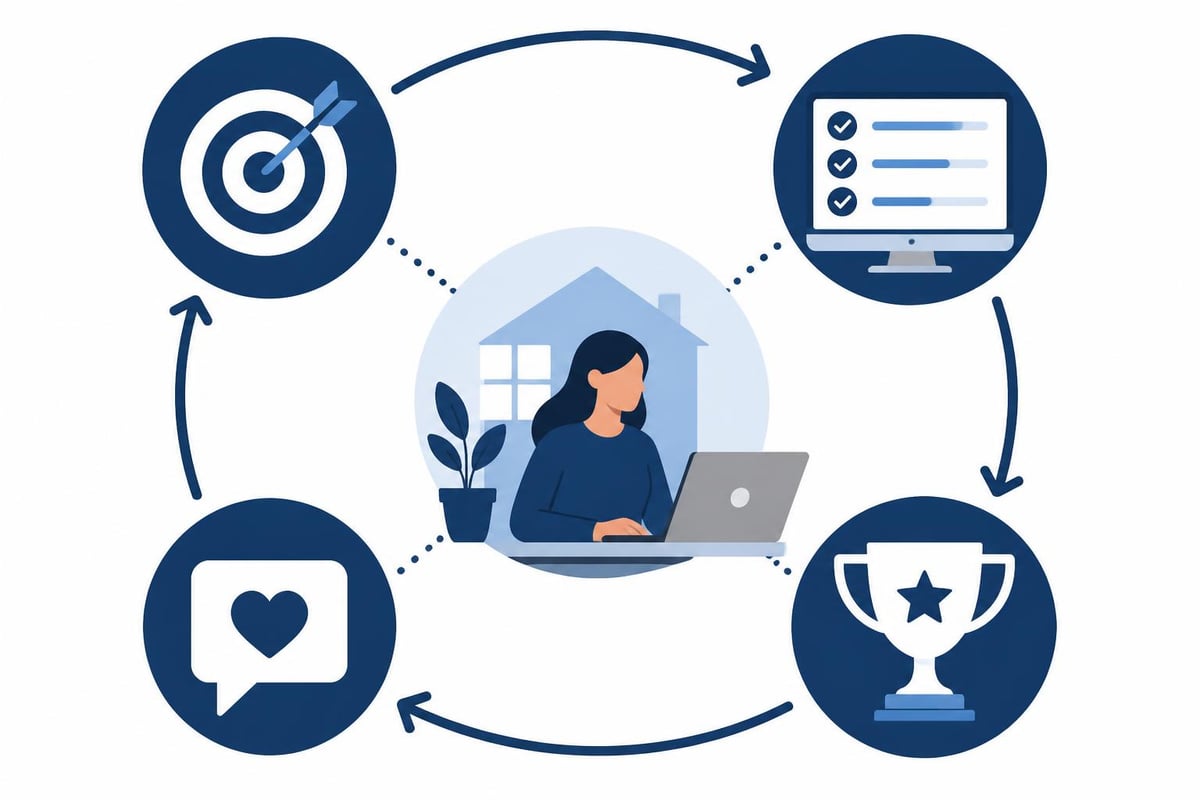
Traditional management approaches often rely on observable effort-seeing someone at their desk, noticing late nights, observing busy activity. Remote environments expose the weakness of this input-focused mindset.
Gallup’s research on managing remote workers demonstrates that clarifying expectations and holding frequent coaching conversations creates stronger engagement than surveillance-based approaches. Managing remote teams training should equip leaders with frameworks for measuring meaningful outcomes rather than monitoring activity.
This shift requires developing new assessment competencies. Managers need skills in:
- Setting SMART goals adapted for remote contexts
- Creating objective key results (OKRs) that reflect value creation
- Conducting effective virtual performance reviews
- Providing constructive feedback through digital channels
- Recognising achievements in ways that resonate remotely
Leadership development training programmes that incorporate remote-specific scenarios help managers practise these essential capabilities before applying them with their actual teams.
Technology Enablement and Digital Fluency
The right technology stack can amplify remote team effectiveness, whilst poor tool choices create friction and frustration. Leaders need competence in evaluating, implementing, and optimising digital collaboration platforms.
Strategic Tool Selection
DigitalOcean’s guide to managing remote teams identifies providing appropriate tools as fundamental to remote team success. However, technology proliferation can overwhelm teams with excessive platforms, notifications, and learning curves.
Managing remote teams training should develop leaders' abilities to assess tools against specific team needs rather than adopting every trending platform. This includes understanding integration capabilities, security requirements, accessibility features, and user experience considerations.
| Tool Category | Business Function | Selection Criteria |
|---|---|---|
| Video conferencing | Synchronous collaboration | Reliability, screen sharing, recording capability |
| Project management | Workflow coordination | Customisation, reporting, integration options |
| Instant messaging | Quick communication | Search functionality, threading, mobile access |
| Document collaboration | Asynchronous creation | Version control, commenting, simultaneous editing |
| Time tracking | Productivity insights | Privacy balance, automation, reporting depth |
Leaders must also champion digital adoption by modelling effective technology use and providing adequate training resources. The most sophisticated tools deliver zero value if team members lack the skills or confidence to leverage them.
Facilitating Effective Virtual Meetings
Virtual meetings represent one of remote work's greatest pain points. Without proper facilitation skills, video conferences devolve into engagement-draining time sinks that could have been emails.
Developing meeting facilitation expertise equips leaders to design and conduct virtual gatherings that genuinely advance team objectives. This includes mastering video conferencing features, managing diverse personalities, maintaining energy levels, and capturing actionable outcomes.
Virtual meeting best practices for remote leaders:
- Distribute agendas 24 hours in advance with clear objectives
- Start with brief personal check-ins to build connection
- Use interactive features like polls, breakout rooms, and whiteboards
- Enforce video-on expectations for engagement
- Assign roles (timekeeper, note-taker, chat monitor)
- End with explicit action items and ownership
- Record sessions for asynchronous viewing
Managing remote teams training that incorporates role-playing exercises allows leaders to practise these techniques in safe environments before applying them to high-stakes business meetings.
Cultivating Culture and Connection in Virtual Spaces
Organisational culture doesn't automatically translate to remote environments. Leaders must intentionally nurture team cohesion, shared values, and psychological safety across digital distances.
Deliberate Relationship Building
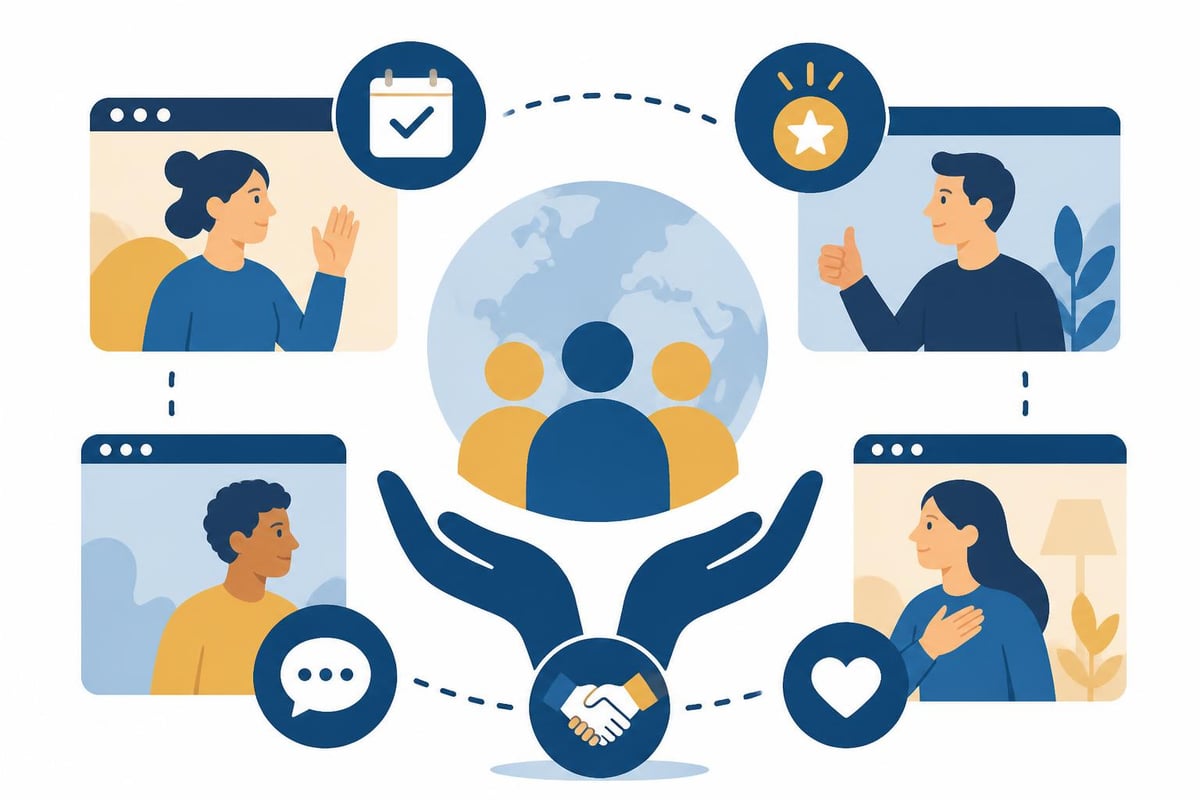
The casual interactions that build workplace relationships-coffee machine conversations, lunch outings, impromptu desk visits-disappear in remote settings. Slack’s remote work management practices emphasise creating structured opportunities for team bonding that might seem unnecessary in traditional offices.
Managing remote teams training should equip leaders with creative strategies for fostering connection:
- Virtual coffee chats with randomised pairings
- Online team building activities aligned with interests
- Dedicated channels for non-work discussions
- Celebrating personal milestones and achievements
- Annual or quarterly in-person gatherings when feasible
These initiatives combat isolation whilst respecting that forced fun often backfires. Effective leaders gauge their team's preferences and adjust approaches accordingly.
Inclusive Leadership Across Locations
Remote teams frequently include members from diverse geographic locations, time zones, and cultural backgrounds. Leaders need heightened emotional intelligence training to navigate these complexities sensitively.
Inclusion challenges in remote environments include:
- Scheduling meetings that disadvantage certain time zones
- Cultural communication style differences
- Varying home office setups and technology access
- Language barriers in multinational teams
- Hidden disabilities requiring accommodation
Managing remote teams training must address these equity considerations explicitly. Leaders learn to rotate meeting times, leverage asynchronous communication for inclusion, and create psychologically safe spaces where team members feel comfortable raising concerns.
Developing Remote-Ready Leaders at Scale
Organisations recognising the permanence of remote work are investing systematically in building remote leadership capabilities across their management ranks.
Comprehensive Training Programme Design
Effective managing remote teams training goes beyond single workshops or self-paced modules. It requires blended learning approaches that combine knowledge acquisition with practical application and peer learning.
Components of comprehensive remote leadership development:
- Foundational concepts through online learning modules
- Live virtual workshops for skill practice and discussion
- Coaching sessions addressing individual challenges
- Peer learning communities for ongoing support
- Access to templates, checklists, and job aids
- Follow-up refreshers reinforcing key principles
Instructor-led training delivered virtually allows organisations to maintain high-impact learning experiences whilst accommodating distributed management teams. Expert facilitators can adapt content to specific organisational contexts, industry requirements, and leadership levels.
Measuring Training Impact
Investment in managing remote teams training demands accountability through measurable outcomes. Organisations should establish clear metrics connecting training participation to business results.
| Metric Category | Specific Indicators | Data Sources |
|---|---|---|
| Team productivity | Project completion rates, output quality | Project management systems |
| Employee engagement | Survey scores, retention rates | HR analytics, exit interviews |
| Communication effectiveness | Meeting efficiency, response times | Calendar data, platform analytics |
| Manager confidence | Self-assessment scores, 360 feedback | Training evaluations, performance reviews |
| Innovation outcomes | New ideas generated, implemented | Innovation tracking systems |
Research shows that coordination challenges in remote software development can be mitigated through improved management practices, demonstrating the tangible value of leadership development investments.
Adapting Leadership Styles for Virtual Contexts
Different team members require varied leadership approaches, and remote work amplifies these individual differences. Managing remote teams training should develop leaders' abilities to flex their styles based on team member needs and situations.
Situational Leadership in Remote Settings
New remote employees need more structure and frequent check-ins than experienced team members who thrive with autonomy. Leaders must diagnose readiness levels and adjust their support accordingly without physical proximity as a guide.
Float’s best practices for managing remote teams emphasise finding the right meeting frequency for different team members rather than applying one-size-fits-all approaches. This requires developing assessment skills and comfortable having explicit conversations about preferences.
Adapting leadership approaches remotely involves:
- Conducting working style assessments during onboarding
- Scheduling regular one-on-one check-ins tailored to individual needs
- Providing autonomy gradually as competence increases
- Adjusting communication frequency based on project complexity
- Recognising cultural differences in hierarchy and directness
Leaders also need awareness of their natural tendencies. Those who prefer high control must consciously resist micromanagement urges, whilst hands-off leaders must ensure they're providing adequate support and direction.
Coaching and Development Remotely
Providing effective feedback becomes more challenging without in-person conversations, yet developmental coaching remains critical for team growth. Managing remote teams training should build leaders' capabilities in delivering constructive feedback through video calls, addressing performance issues without physical presence, and creating individual development plans suited to remote work.
Video-based coaching conversations require preparation and intentionality. Leaders should schedule dedicated time, eliminate distractions, and use screen sharing to review specific examples. The absence of casual hallway coaching makes formal development conversations more important, not less.
Sustaining Remote Team Performance Long-Term
Initial remote work novelty eventually fades, potentially leading to engagement drift if leaders don't proactively sustain momentum and address evolving challenges.
Preventing Remote Work Burnout
The boundaries between work and personal life blur dangerously in home office environments. Without visible closing times and commutes as transition rituals, remote workers risk chronic overwork and eventual burnout.
Leaders need skills in recognising burnout warning signs remotely and fostering sustainable work practices. Managing remote teams training should address workload management, encouraging time off, modelling healthy boundaries, and creating team norms that prevent always-on culture.
Strategies for promoting wellbeing in remote teams:
- Discourage after-hours communication except genuine emergencies
- Encourage regular breaks and vacation time usage
- Provide mental health resources and support
- Monitor workload distribution across team members
- Create space for discussing stress and challenges
Research on remote team collaboration paradoxes reveals that strengthening intra-team bonds can sometimes harm inter-team collaboration, highlighting the need for balanced approaches that consider the broader organisational ecosystem.
Continuous Improvement Mindset
Remote work practices continue evolving as technology advances and organisations learn what works. Leaders should cultivate experimentation mindsets, regularly soliciting team feedback and adjusting approaches based on results.
Rippling’s remote team management guide advocates for establishing regular retrospectives where teams reflect on what's working and what needs adjustment. This continuous improvement approach prevents stagnation and demonstrates responsiveness to team needs.
Managing remote teams training that emphasises adaptability over rigid formulas prepares leaders for the ongoing evolution of remote work. The specific tools and techniques will change, but the underlying principles of clear communication, trust-building, and outcome focus remain constant.
Integrating Remote Management with Organisational Strategy
Remote team management doesn't exist in isolation-it connects directly to broader organisational objectives, culture, and competitive positioning.
Aligning Remote Work Policies with Business Goals
Organisations need coherent remote work strategies that align with their specific business models, customer requirements, and talent strategies. Leaders require understanding of how their team management approaches support or undermine strategic priorities.
Leadership skills training programmes that incorporate strategic thinking help managers connect daily remote team practices to organisational outcomes. This includes understanding when synchronous collaboration creates value, which activities genuinely require in-person interaction, and how remote capabilities expand talent acquisition opportunities.
Different industries and functions have varying remote work suitability. Customer-facing roles, creative collaboration, and complex problem-solving may benefit from periodic in-person gatherings, whilst routine task execution often thrives in fully remote arrangements. Managing remote teams training should develop leaders' judgement in making these distinctions thoughtfully.
Building Remote-First Capabilities Systematically
Organisations committed to remote work excellence create comprehensive capability-building roadmaps extending beyond individual leader training. This includes developing documentation standards, establishing technology governance, creating career paths for remote workers, and designing onboarding processes for virtual contexts.
Managing remote teams training forms one component of this broader capability development, working alongside HR policy updates, IT infrastructure investments, and cultural evolution initiatives. Leaders trained in remote management practices need organisational systems that support rather than hinder their effectiveness.
Effective remote team management requires deliberate skill development that goes far beyond simply translating in-office practices to virtual environments. Leaders who invest in mastering remote-specific competencies-from asynchronous communication and outcome-based performance management to virtual culture-building and digital fluency-position their teams for sustained success in increasingly distributed work environments. Whether you're developing new managers or upskilling experienced leaders for hybrid models, My Training Network delivers customisable, instructor-led managing remote teams training across Canada and virtually worldwide, equipping your organisation with the capabilities needed to thrive in the future of work.

