

Organizations across Canada face mounting pressure to deliver more value with fewer resources while maintaining quality standards. The answer lies not in working harder but in working smarter through systematic approaches to workflow optimization. Process improvement training equips teams with the methodologies, tools, and mindsets needed to identify inefficiencies, eliminate waste, and create sustainable competitive advantages in today's dynamic business environment.
The Strategic Value of Process Improvement Training
Process improvement training delivers measurable returns that extend far beyond immediate cost savings. Organizations that invest in developing their teams' process optimization capabilities report significant improvements in productivity, quality, customer satisfaction, and employee engagement.
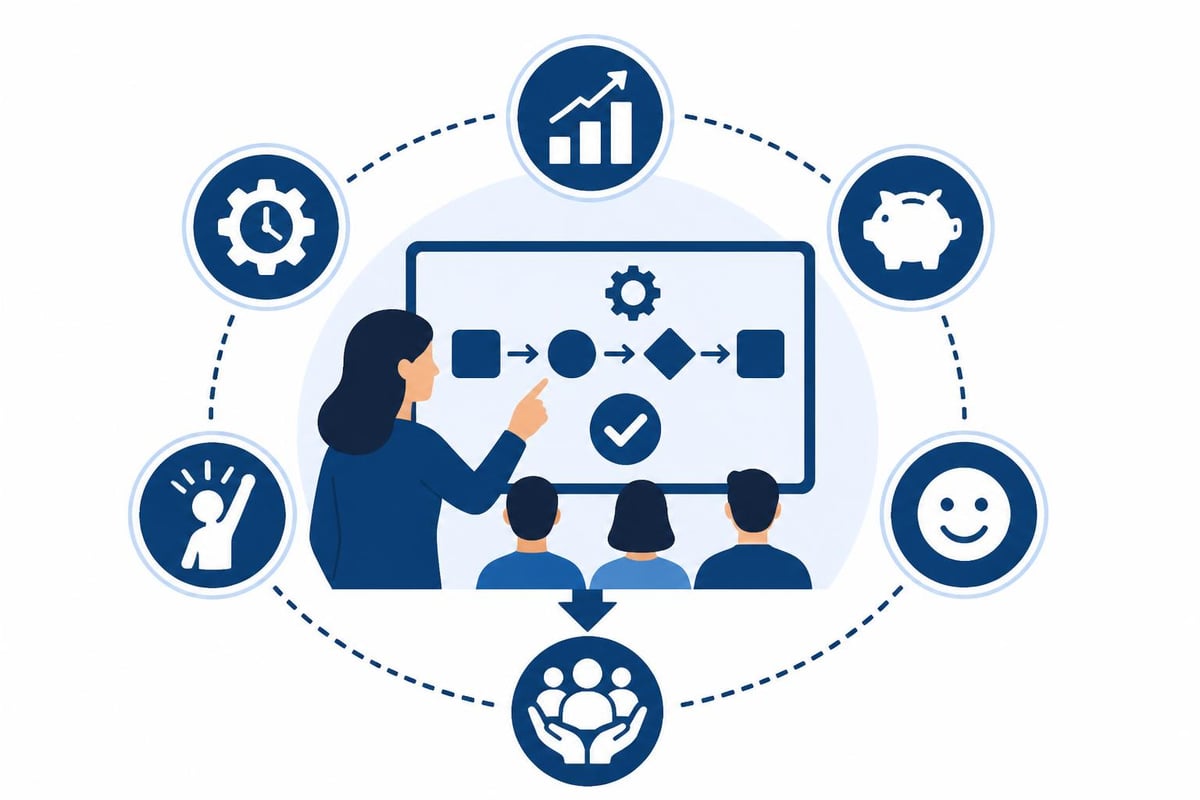
The benefits manifest across multiple dimensions:
- Operational efficiency: Teams learn to identify and eliminate bottlenecks that slow production or service delivery
- Cost reduction: Systematic waste elimination reduces operational expenses without sacrificing quality
- Quality enhancement: Statistical process control methods reduce defects and variations
- Employee empowerment: Staff gain confidence to suggest and implement improvements
- Customer satisfaction: Streamlined processes deliver faster, more consistent results
Research demonstrates that organizations implementing process improvement initiatives achieve operational excellence through sustained commitment to continuous enhancement. However, these results require more than purchasing software or hiring consultants. Lasting transformation demands building internal capability through comprehensive training programs.
Building Organizational Capability
Unlike one-time consulting engagements, process improvement training creates lasting organizational capability. Trained employees become internal change agents who continuously identify opportunities for enhancement. This approach generates compound returns as teams apply learned methodologies to increasingly complex challenges.
The capability-building approach proves particularly valuable for mid-sized organizations that cannot justify full-time process improvement specialists. By distributing knowledge across teams, companies create networks of practitioners who collaborate on cross-functional improvement initiatives.
Core Methodologies in Process Improvement Training
Effective process improvement training encompasses multiple complementary methodologies. While specific programs emphasize different frameworks, comprehensive training exposes participants to various approaches, enabling them to select appropriate tools for specific situations.
Lean Principles
Lean methodology focuses on maximizing customer value while minimizing waste. Training in Lean principles teaches participants to identify eight types of waste: defects, overproduction, waiting, non-utilized talent, transportation, inventory, motion, and extra-processing.
Participants learn to conduct value stream mapping exercises that visualize entire processes from customer request to delivery. This technique reveals hidden inefficiencies and opportunities for streamlining workflows. Organizations implementing Lean training often discover that 30-40% of activities add no customer value.
Six Sigma Methodology
Six Sigma employs statistical methods to reduce process variation and defects. Training programs teach the DMAIC framework: Define, Measure, Analyse, Improve, and Control. This structured approach ensures improvements are data-driven rather than based on assumptions or anecdotal evidence.
| DMAIC Phase | Key Activities | Typical Duration |
|---|---|---|
| Define | Charter project, identify stakeholders, map current state | 2-3 weeks |
| Measure | Collect baseline data, establish metrics | 3-4 weeks |
| Analyse | Identify root causes, test hypotheses | 4-6 weeks |
| Improve | Design solutions, pilot changes | 4-8 weeks |
| Control | Implement controls, monitor sustainability | Ongoing |
Companies like PepsiCo have innovated their Lean Six Sigma training approach through creative platforms to enhance engagement and knowledge retention.
Kaizen and Continuous Improvement
Kaizen emphasizes incremental, ongoing improvements involving all organizational levels. Training in Kaizen principles cultivates cultures where employees at every level feel empowered to suggest and implement enhancements. This democratized approach to improvement generates thousands of small optimizations that collectively transform operations.
The methodology complements formal Lean Six Sigma initiatives by addressing opportunities too small for dedicated projects. Manufacturing environments have seen particular success, as evidenced by continuous improvement training facilitating higher-volume production through systematic workflow adjustments.
Designing Effective Process Improvement Training Programs
Process improvement training effectiveness depends heavily on program design. Generic courses often fail to generate lasting impact because participants struggle to apply abstract concepts to their specific contexts.
Customization for Industry Context
Outstanding training programs incorporate industry-specific examples, case studies, and exercises. Manufacturing teams benefit from examples involving production lines, inventory management, and quality control. Service organizations need scenarios addressing customer interactions, service delivery, and administrative processes.
This contextual relevance accelerates learning and increases application rates. Participants immediately recognize how concepts apply to their daily challenges rather than struggling to translate generic examples.
Blending Theory and Practice
The most effective programs balance conceptual understanding with hands-on application. Participants need sufficient theoretical foundation to understand why methodologies work, but they learn best through active practice. Optimal programs dedicate 40-60% of time to exercises, simulations, and real-world application.
Workshop-based learning creates safe environments for experimentation. Participants can test approaches, make mistakes, and receive coaching without risking real operational disruptions. Many organizations find that combining instructor-led training with workplace projects generates superior results compared to classroom-only approaches.
Progressive Skill Development
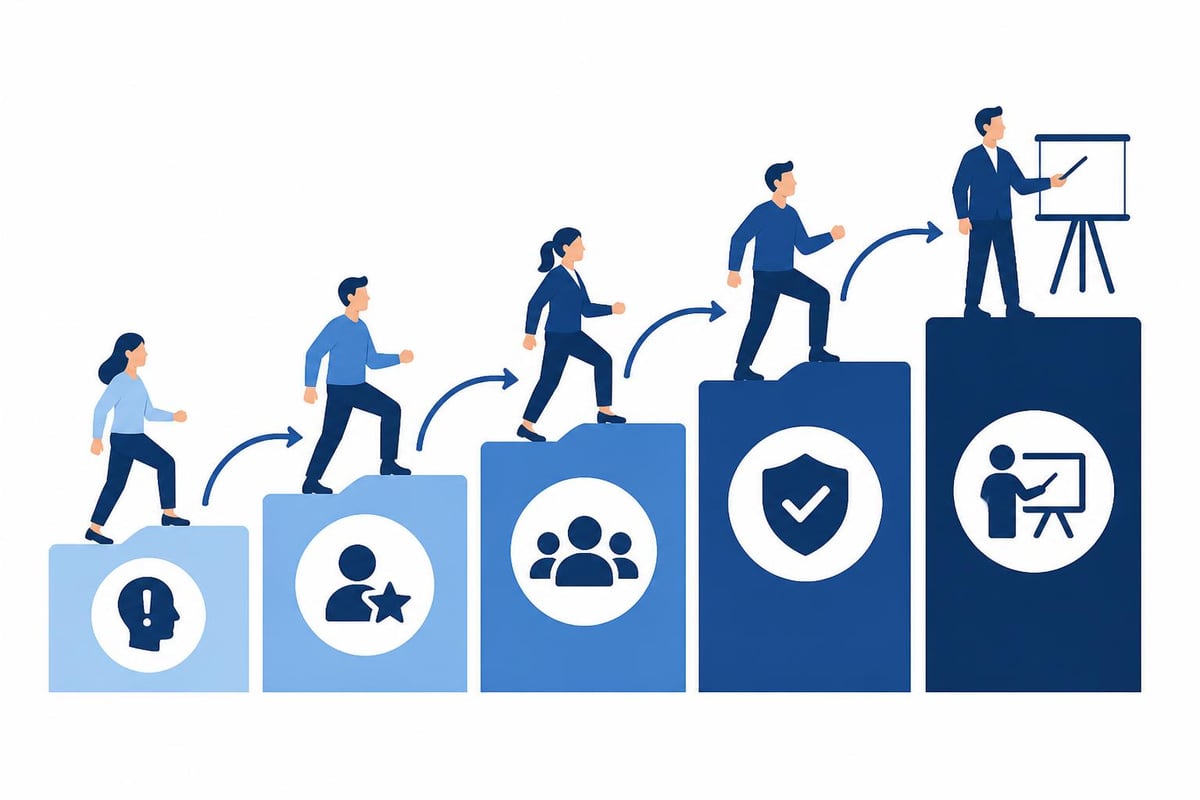
Process improvement competency develops through stages. Entry-level training introduces foundational concepts and basic tools. Intermediate programs develop proficiency in specific methodologies like Lean or Six Sigma. Advanced training builds expertise in leading complex, cross-functional improvement initiatives.
Organizations should design development pathways that guide employees through progressive skill acquisition:
- Awareness training: Introduction to process improvement concepts for all staff (4-8 hours)
- Practitioner training: Methodology-specific skills for team members (2-5 days)
- Project leader training: Skills for leading improvement initiatives (5-10 days)
- Master practitioner training: Advanced techniques for complex problems (10-20 days)
- Train-the-trainer programs: Developing internal training capability (5-10 days)
This staged approach allows organizations to build capability systematically while managing training investments strategically.
Integration with Project Management Disciplines
Process improvement training creates powerful synergies when integrated with project management capabilities. Many improvement initiatives require formal project structures to ensure successful implementation. Teams equipped with both process improvement and project planning skills navigate implementations more effectively.
Agile and Process Improvement
Agile methodologies share philosophical alignment with continuous improvement principles. Both emphasize iterative development, rapid feedback cycles, and adaptive approaches. Organizations combining Agile project management training with process improvement education create versatile teams capable of addressing diverse challenges.
The integration proves particularly valuable in digital transformation initiatives. Teams can apply Agile sprints to test process changes rapidly, gathering data to inform subsequent iterations. This approach reduces implementation risk while accelerating improvement cycles.
Process Mapping and Documentation
Effective process improvement begins with accurate current-state understanding. Training programs must develop participants' ability to document processes clearly and comprehensively. Process mapping techniques range from simple flowcharts to sophisticated value stream maps and SIPOC diagrams (Suppliers, Inputs, Process, Outputs, Customers).
The process improvement toolkit approach emphasizes neutral facilitation and structured mapping sessions that engage stakeholders across organizational boundaries. This collaborative approach ensures documented processes reflect actual practice rather than idealized procedures.
Overcoming Common Implementation Challenges
Organizations implementing process improvement training encounter predictable obstacles. Anticipating and addressing these challenges increases program success rates significantly.
Resistance to Change
Process changes threaten established routines and power structures. Employees may resist improvement initiatives, fearing job loss, increased workloads, or loss of autonomy. Effective training addresses these concerns proactively by emphasizing how improvements benefit employees through reduced frustration, clearer expectations, and enhanced job satisfaction.
Change management components should be integrated throughout training programs. Participants learn techniques for building stakeholder buy-in, communicating change benefits, and addressing concerns constructively. These soft skills often determine whether technically sound improvement plans succeed or fail.
Sustaining Momentum
Initial enthusiasm frequently wanes as teams encounter implementation difficulties or return to daily operational pressures. Training programs should prepare participants for this predictable pattern and equip them with strategies for maintaining progress.
Key sustainability strategies include:
- Establishing accountability mechanisms: Regular review meetings, progress dashboards, and executive sponsorship
- Celebrating incremental wins: Recognizing small successes maintains motivation during long projects
- Building improvement into routines: Dedicating standing meeting time to process discussions
- Developing internal coaches: Creating support networks for practitioners
Organizations often benefit from supplementing initial training with coaching skills development for managers who support improvement teams.
Measuring Training Effectiveness and ROI
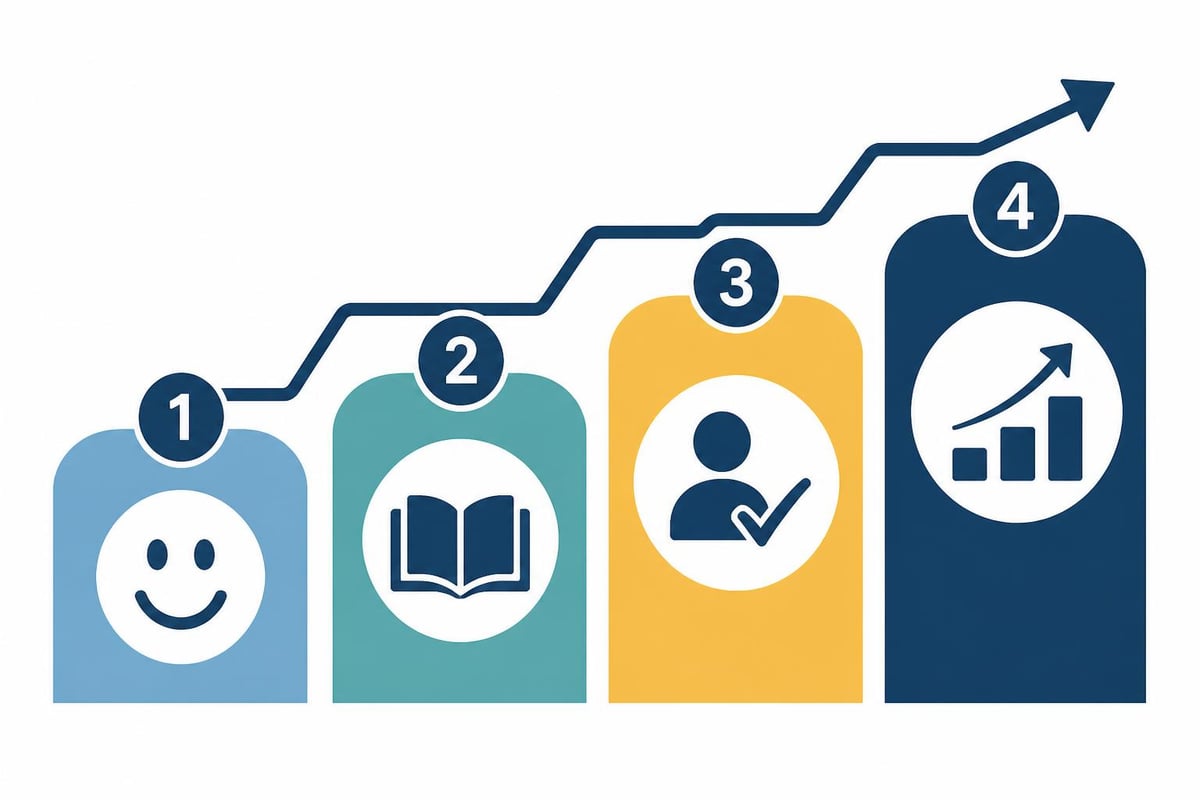
Demonstrating return on investment from process improvement training requires systematic measurement approaches. Organizations should establish metrics across multiple levels: participant reactions, learning acquisition, behaviour change, and business results.
Kirkpatrick's Four Levels Applied
| Level | Measurement Focus | Assessment Methods | Typical Timeline |
|---|---|---|---|
| Reaction | Participant satisfaction | Post-training surveys | Immediately |
| Learning | Knowledge acquisition | Tests, skill demonstrations | End of training |
| Behaviour | Workplace application | Observation, 360 feedback | 3-6 months |
| Results | Business impact | KPI analysis, financial metrics | 6-12 months |
While reaction and learning measures provide immediate feedback on training quality, behaviour change and business results demonstrate true effectiveness. Organizations should plan measurement strategies that capture all four levels over appropriate timeframes.
Tracking Process Improvement Outcomes
The ultimate measure of training effectiveness lies in actual process improvements achieved. Organizations should track:
- Number of improvement projects completed: Indicates application rate
- Cycle time reductions: Measures speed improvements
- Quality enhancements: Tracks defect rate reductions
- Cost savings realized: Quantifies financial impact
- Customer satisfaction improvements: Captures external value
Advanced organizations implement process mining techniques to analyze digital workflows systematically. Research on using process mining for service delivery improvement demonstrates how data-driven approaches enhance government digital services, principles applicable across sectors.
Building a Culture of Continuous Improvement
Process improvement training reaches maximum effectiveness when embedded within broader cultural transformation initiatives. Training provides tools and knowledge, but culture determines whether employees actually apply what they learn.
Leadership's Critical Role
Executives and managers set the tone for improvement cultures through their actions and priorities. When leaders actively participate in training, lead improvement projects, and celebrate optimization successes, they signal organizational commitment. Conversely, leaders who dismiss training as compliance exercises or fail to allocate time for improvement work undermine program effectiveness.
Organizations should consider leadership skills training programs that specifically address the competencies required to champion process excellence. Leaders need skills in recognizing improvement opportunities, supporting teams through change, and balancing operational demands with enhancement initiatives.
Empowering Frontline Innovation
Frontline employees possess intimate knowledge of process inefficiencies and workarounds. Training programs should emphasize that everyone, regardless of role or seniority, can contribute valuable improvements. Creating formal mechanisms for suggestion submission, evaluation, and implementation demonstrates organizational commitment to democratized innovation.
Successful approaches include:
- Kaizen events: Intensive multi-day improvement workshops focused on specific processes
- Suggestion programs: Structured systems for capturing and evaluating employee ideas
- Improvement team participation: Rotating improvement project assignments across departments
- Recognition systems: Celebrating both successful improvements and productive failures
Adapting Training for Virtual and Hybrid Environments
The shift toward remote and hybrid work models necessitates rethinking process improvement training delivery methods. While some organizations initially viewed virtual training as a compromise, many now recognize unique advantages of online formats.
Virtual Training Effectiveness
Well-designed virtual training programs achieve learning outcomes comparable to in-person delivery while offering distinct benefits:
- Geographic accessibility: Participants join from multiple locations without travel costs or time
- Flexible scheduling: Shorter sessions spread over multiple days reduce disruption
- Digital collaboration tools: Platforms enable real-time process mapping and data analysis
- Recording capabilities: Sessions can be reviewed for reinforcement or shared with absent team members
Organizations implementing software process improvement have documented success with virtual training approaches, as demonstrated in case studies on best practice implementation across distributed teams.
Hybrid Training Models
Hybrid approaches combine virtual instruction with in-person application workshops. Teams might complete foundational learning modules online, then gather for intensive hands-on problem-solving sessions. This blended format maximizes convenience while preserving valuable face-to-face collaboration opportunities.
The hybrid model proves particularly effective for multi-phase training programs. Initial awareness sessions work well virtually, while advanced skill development benefits from in-person facilitation. Organizations can customize combinations based on content requirements, participant preferences, and budget constraints.
Selecting Training Providers and Programs
Organizations seeking process improvement training face numerous provider options, from consultancies to online platforms to specialized training companies. Selecting the right partner significantly impacts program success and return on investment.
Evaluation Criteria
When assessing potential training providers, organizations should consider:
Instructor expertise: Do facilitators possess both theoretical knowledge and practical implementation experience? The most effective instructors have led real improvement projects and can share authentic insights beyond textbook concepts.
Customization capability: Can the provider adapt content, examples, and exercises to your industry and organizational context? Generic programs rarely generate the engagement and application rates of customized alternatives.
Methodology breadth: Does the provider teach multiple approaches (Lean, Six Sigma, Kaizen, Theory of Constraints) or focus narrowly on a single methodology? Comprehensive programs expose participants to diverse tools for different situations.
Post-training support: What coaching, resources, or follow-up does the provider offer to support workplace application? Training without implementation support often fails to generate lasting change.
Measurement approach: How does the provider assess learning and support outcome tracking? Quality providers help organizations measure training effectiveness and business impact.
Organizations benefit from providers offering diverse development courses that enable integrated skill building across process improvement, project management, and leadership domains.
Industry-Specific Applications
While process improvement training principles apply universally, effective implementation requires understanding industry-specific contexts and constraints.
Manufacturing Environments
Manufacturing operations represent the birthplace of many process improvement methodologies. Training in these settings emphasizes production line optimization, inventory management, quality control, and equipment effectiveness. Physical process visualization through factory floor walks complements classroom learning.
Small enterprises have successfully implemented agile process improvement through targeted assessments and practice integration, demonstrating that resource constraints need not prevent systematic enhancement.
Service Sector Applications
Service organizations face unique challenges including intangible outputs, customer interaction variability, and information-intensive workflows. Training must address service-specific improvement opportunities like customer journey mapping, service blueprint analysis, and employee experience optimization.
Professional services firms benefit particularly from process standardization that maintains quality while enabling scalability. Training helps teams identify which process elements require consistency versus where customization adds value.
Healthcare Process Improvement
Healthcare combines high stakes, complex regulations, and resource constraints. Process improvement training in medical settings emphasizes patient safety, care coordination, and clinical outcome enhancement. Programs must address healthcare-specific frameworks like the Model for Improvement and Lean Healthcare principles while respecting clinical autonomy.
Government and Non-Profit Contexts
Public sector and non-profit organizations pursue process improvement to maximize mission impact within budget constraints. Training must acknowledge unique constraints including legislative requirements, public accountability, and stakeholder complexity. Non-profit organization courses address these specialized needs while building improvement capability.
Future Trends in Process Improvement Training
Process improvement training continues evolving as technologies advance and organizational needs shift. Forward-thinking organizations should consider emerging trends when designing training strategies.
Digital Process Mining
Advanced analytics and process mining tools automatically analyze digital workflows, identifying bottlenecks and optimization opportunities. Training increasingly incorporates these technologies, teaching participants to leverage data-driven insights rather than relying solely on observation and interviews. This analytical approach reveals patterns invisible to traditional analysis methods.
AI and Automation Integration
As artificial intelligence and robotic process automation transform workflows, process improvement training must address how to optimize human-technology collaboration. Teams need skills in identifying automation candidates, designing human-in-the-loop processes, and managing transitions from manual to automated execution.
Sustainability and Social Responsibility
Organizations increasingly evaluate processes through environmental and social impact lenses. Training programs now incorporate sustainability metrics alongside traditional efficiency measures. Participants learn to identify opportunities that simultaneously reduce waste, lower costs, and minimize environmental footprints.
Cross-Functional Collaboration Skills
Modern organizations operate through networks rather than hierarchies. Process improvement training emphasizes collaborative skills including stakeholder engagement, consensus building, and cross-functional team leadership. These capabilities prove essential as improvement opportunities increasingly span departmental boundaries.
Programs integrating time management training with process improvement education help participants balance enhancement work with operational responsibilities, a common challenge in resource-constrained environments.
Organizations that invest in comprehensive process improvement training build sustainable competitive advantages through enhanced efficiency, quality, and innovation capabilities. The methodologies, tools, and cultural foundations established through effective training programs generate compound returns as teams continuously identify and implement optimizations. My Training Network delivers customized, instructor-led process improvement training across Canada and virtually worldwide, equipping your teams with the practical skills needed to transform operations and drive measurable results. Our expert trainers work with organizations to design programs that address your specific challenges while building lasting improvement capability.

