

Ontario's competitive business landscape demands professionals who can deliver projects on time, within budget, and to specification. Whether you're leading digital transformations, infrastructure initiatives, or organizational change programmes, project management training ontario provides the foundation for success. This comprehensive guide explores the training options, certification pathways, and skill development opportunities available across the province, helping you make informed decisions about your professional development journey.
Understanding the Ontario Project Management Training Landscape
Project management training ontario encompasses diverse learning formats and certification pathways designed to meet various professional needs. The province hosts numerous accredited institutions, training providers, and certification bodies that deliver programmes aligned with global standards.
Educational Pathways and Credentials
Ontario's project management training ecosystem offers multiple entry points for professionals at different career stages. Traditional academic routes include college graduate certificates that follow Ontario’s official program standard for project management, which establishes competency frameworks and learning outcomes.
University continuing education programmes provide flexible alternatives. McMaster University’s Project Management program delivers PMI-approved content covering fundamentals, leadership approaches, and implementation strategies. These programmes typically combine theoretical frameworks with practical application.
Professional certification preparation represents another significant training category:
- PMP (Project Management Professional) exam preparation
- CAPM (Certified Associate in Project Management) fundamentals
- Agile and Scrum methodology certifications
- Industry-specific project management credentials
- Leadership and advanced management qualifications
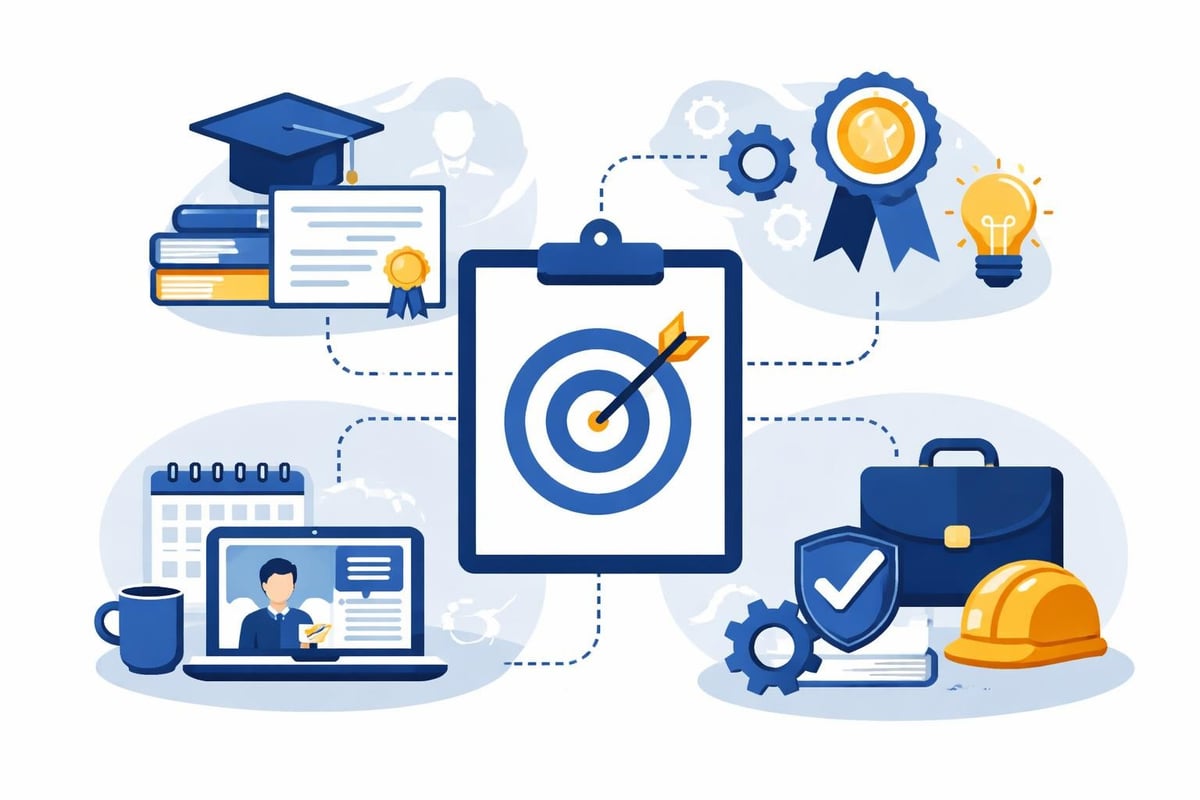
Short-format workshops and corporate training programmes deliver targeted skill development. Organizations seeking rapid upskilling often choose corporate training solutions that bring expert instructors directly to their teams.
The Role of Professional Standards
Project management training ontario aligns with internationally recognized frameworks, primarily the Project Management Institute's PMBOK® Guide. This alignment ensures professionals develop transferable skills applicable across industries and geographical boundaries.
Training programmes typically address these core knowledge areas:
| Knowledge Area | Key Components | Practical Application |
|---|---|---|
| Integration Management | Project charter, change control, closure | Coordinating all project elements |
| Scope Management | Requirements, WBS, verification | Defining and controlling deliverables |
| Schedule Management | Activity sequencing, critical path | Creating realistic timelines |
| Cost Management | Budgeting, forecasting, control | Managing financial resources |
| Quality Management | Standards, assurance, control | Ensuring deliverable excellence |
| Resource Management | Team development, conflict resolution | Leading project teams effectively |
Ontario Training Network’s practical approach emphasizes hands-on application of these principles through two-day intensive workshops.
Building Essential Project Management Competencies
Effective project management training ontario extends beyond theoretical knowledge to develop practical competencies that drive project success. Modern programmes recognize that technical skills must integrate with leadership capabilities, communication proficiency, and strategic thinking.
Technical Project Management Skills
Technical competencies form the foundation of project management excellence. Training programmes develop proficiency in planning tools, scheduling software, risk assessment frameworks, and budgeting methodologies.
Participants learn to create comprehensive project plans that address:
- Scope definition and work breakdown structures – Decomposing projects into manageable components
- Schedule development using critical path methodology – Identifying dependencies and optimizing timelines
- Resource allocation and leveling – Balancing team capacity with project demands
- Risk identification and mitigation planning – Proactively addressing potential obstacles
- Stakeholder communication strategies – Ensuring alignment across project participants
Modern project management training ontario incorporates digital tools and platforms. Participants gain hands-on experience with industry-standard software for scheduling, collaboration, and reporting. This practical exposure accelerates workplace application following training completion.
Leadership and Communication Development
Project managers operate at the intersection of strategy and execution, requiring sophisticated interpersonal skills. Training workshops increasingly emphasize the human dimensions of project leadership.
Effective project managers demonstrate these competencies:
- Stakeholder engagement and influence – Building support across organizational levels
- Team motivation and conflict resolution – Creating productive working environments
- Adaptive communication – Tailoring messages for diverse audiences
- Negotiation and problem-solving – Navigating competing priorities and constraints
- Emotional intelligence application – Understanding team dynamics and individual motivations
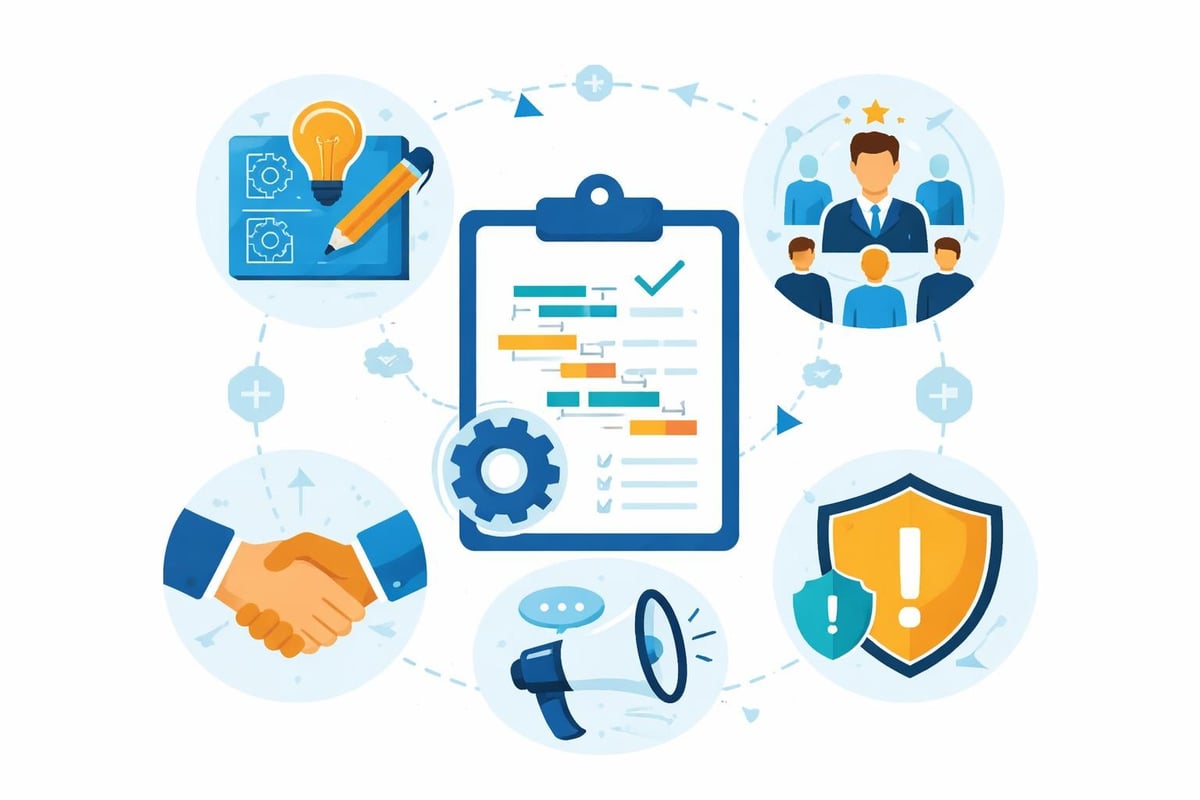
The connection between emotional intelligence and project success has become increasingly recognized. Programmes like adopting emotional intelligence in the workplace complement traditional project management training by developing these critical soft skills.
Strategic Thinking and Business Acumen
Senior project managers require strategic perspective beyond task execution. Advanced project management training ontario develops capabilities in portfolio management, organizational change leadership, and value delivery.
Participants explore how projects align with organizational strategy, contribute to competitive advantage, and deliver measurable business outcomes. This strategic orientation transforms project managers from tactical coordinators into strategic business partners.
Selecting the Right Training Format
Project management training ontario offers diverse delivery formats, each with distinct advantages. Understanding these options helps organizations and individuals select programmes that match learning preferences, schedule constraints, and development objectives.
Instructor-Led Classroom Training
Traditional classroom formats remain highly effective for project management education. Face-to-face instruction facilitates interactive learning, real-time question resolution, and peer networking.
Classroom programmes typically span multiple days, allowing deep exploration of project management principles. Laurentian University’s certificate program combines mandatory and elective courses with PMI exam preparation through structured classroom delivery.
Benefits of classroom-based project management training:
- Immediate instructor feedback and clarification
- Collaborative learning through group exercises
- Networking with fellow professionals
- Structured learning environment minimizing distractions
- Hands-on practice with tools and techniques
Organizations often bring instructors on-site for customized delivery. This approach allows training content to address specific organizational challenges, incorporate company examples, and build shared project management language across teams.
Online and Virtual Learning Options
Digital delivery has transformed access to project management training ontario. Virtual instructor-led sessions combine live interaction with geographical flexibility, enabling participation regardless of location.
Self-paced online courses offer maximum scheduling flexibility. Participants progress through modules at their own pace, reviewing complex concepts as needed. This format suits busy professionals balancing training with ongoing work responsibilities.
| Format | Duration | Interaction Level | Best For |
|---|---|---|---|
| Virtual Instructor-Led | 2-5 days | High | Geographically distributed teams |
| Self-Paced Online | 4-12 weeks | Low | Individual learners with variable schedules |
| Hybrid Blended | 3-8 weeks | Medium | Combining convenience with collaboration |
| Intensive Bootcamp | 3-5 days | Very High | Rapid certification preparation |
The comprehensive course catalogue at My Training Network demonstrates the breadth of virtual and on-site options available to Ontario organizations.
Specialized and Industry-Specific Programmes
Certain sectors require tailored project management approaches. Specialized training addresses unique challenges in construction, healthcare, information technology, arts and culture, and other domains.
ArtsBuild Ontario provides resources specifically designed for cultural organizations, recognizing that arts sector projects involve unique stakeholder considerations and funding structures.
Similarly, technology project management training emphasizes Agile methodologies, DevOps integration, and rapid iteration cycles. Construction-focused programmes address regulatory compliance, safety management, and multi-contractor coordination.
Certification Pathways and Professional Recognition
Professional certification validates project management competency and enhances career prospects. Project management training ontario often includes certification preparation as a core component, helping participants achieve recognized credentials.
Understanding PMI Certifications
The Project Management Institute offers the most globally recognized credentials. The PMP certification represents the gold standard, requiring documented project experience and examination success.
PMI certification tiers include:
- CAPM (Certified Associate) – Entry-level credential for emerging project managers
- PMP (Professional) – Experienced practitioner certification requiring 35 contact hours and experience
- PgMP (Program Management Professional) – Advanced credential for programme managers
- PfMP (Portfolio Management Professional) – Executive-level strategic portfolio management
- PMI-ACP (Agile Certified Practitioner) – Specialized Agile project management credential
Training programmes aligned with these certifications ensure content coverage matches examination requirements. The Institute of Project Management’s Ontario guide outlines various certification options and preparation pathways.
Provincial and Industry-Specific Credentials
Beyond PMI certifications, Ontario recognizes various professional designations. College graduate certificates meet provincial vocational standards and provide pathways to advanced credentials.
Industry associations offer specialized certifications relevant to specific sectors. Construction professionals might pursue Gold Seal Certification, while IT project managers may seek Scrum Master or SAFe credentials.
Training providers increasingly offer stackable credentials, allowing professionals to build comprehensive qualifications over time. This modular approach accommodates ongoing professional development while maintaining employment continuity.
Maximizing Training Investment and Application
Effective project management training ontario extends beyond classroom attendance. Organizations and individuals achieve optimal returns by approaching training strategically and supporting post-training application.
Pre-Training Preparation
Successful training begins before the first session. Participants should review current project challenges, identify specific learning objectives, and gather relevant organizational examples for discussion.
Preparation activities that enhance training outcomes:
- Documenting current project management pain points
- Identifying specific skills or knowledge gaps
- Gathering project documentation for case study analysis
- Setting measurable learning objectives
- Communicating training goals with supervisors
Organizations benefit from aligning training with strategic initiatives. If the company plans major projects in the coming year, training timing should support those initiatives with adequate lead time for skill application.
Post-Training Implementation Support
The true value of project management training ontario emerges through workplace application. Many training benefits dissipate without structured implementation support following programme completion.
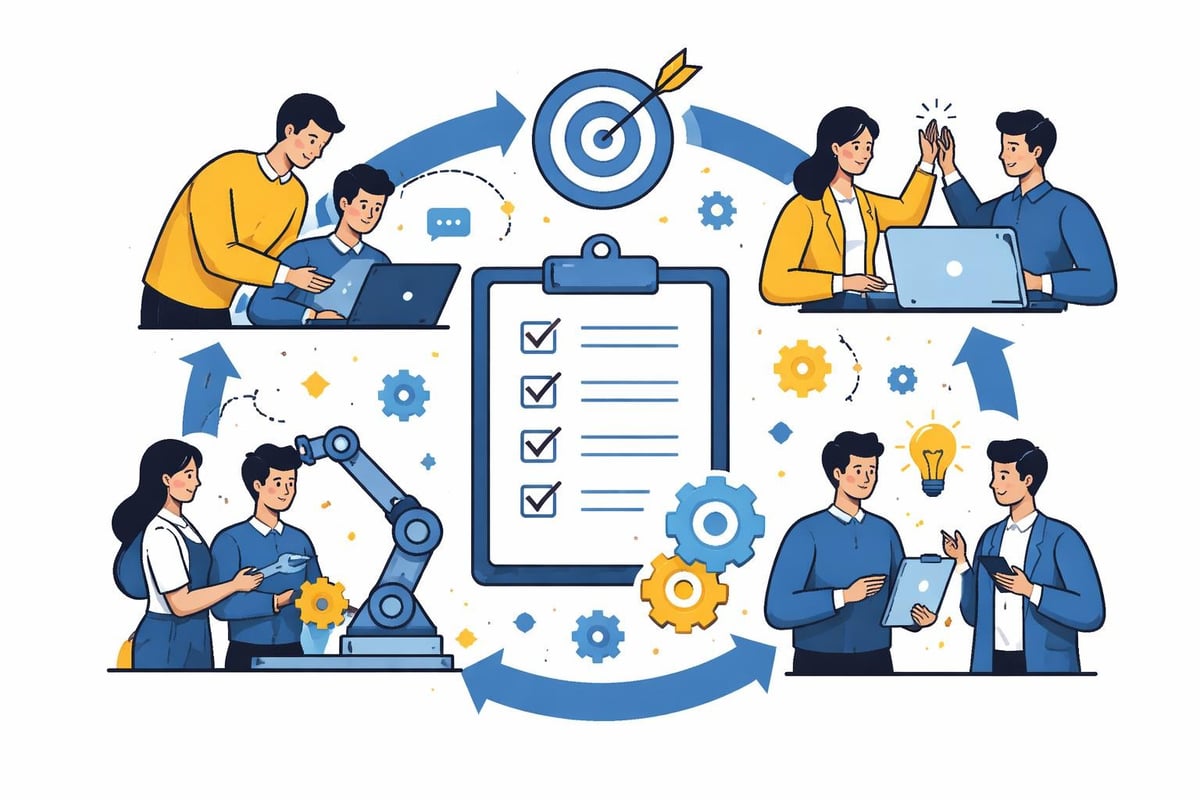
Organizations should establish implementation frameworks that include:
- Immediate application opportunities – Assigning participants to projects where new skills apply
- Mentorship and coaching – Pairing trained professionals with experienced project managers
- Communities of practice – Creating forums for ongoing learning and problem-solving
- Refresher sessions – Periodic review of key concepts and advanced topics
- Performance metrics – Measuring project outcomes before and after training
The connection between training and broader professional development becomes evident through programmes like building high-performance habits, which reinforce project management principles through sustainable work practices.
Measuring Training Effectiveness
Forward-thinking organizations evaluate training impact through multiple lenses. Traditional satisfaction surveys capture participant reactions but provide limited insight into behavioural change or business results.
| Evaluation Level | Measurement Focus | Example Metrics |
|---|---|---|
| Reaction | Participant satisfaction | Training ratings, relevance scores |
| Learning | Knowledge acquisition | Assessment scores, skill demonstrations |
| Behaviour | Workplace application | Tool usage, methodology adoption |
| Results | Business outcomes | On-time delivery, budget adherence, quality metrics |
Effective evaluation combines quantitative metrics with qualitative feedback. Project managers should document how training influenced specific project decisions, problem-solving approaches, or team dynamics.
Emerging Trends in Project Management Education
Project management training ontario continues evolving to address contemporary workplace realities. Several significant trends shape current programme design and delivery approaches.
Agile and Hybrid Methodologies
Traditional waterfall project management competes with Agile approaches across many industries. Modern training recognizes that project managers require fluency in multiple methodologies, selecting appropriate frameworks based on project characteristics.
Hybrid approaches combine predictable planning phases with iterative delivery cycles. Training programmes increasingly address methodology selection criteria, helping participants determine when traditional, Agile, or hybrid approaches serve project objectives most effectively.
Key Agile concepts integrated into project management training:
- Iterative development and continuous delivery
- Cross-functional team collaboration
- Adaptive planning and responding to change
- Customer involvement throughout project lifecycle
- Regular retrospectives and continuous improvement
Digital Transformation and Technology Integration
Project managers increasingly lead digital initiatives or incorporate technology into traditional projects. Training content addresses cloud collaboration platforms, automation tools, artificial intelligence applications, and data analytics.
The intersection of project management with responsible AI use in the workplace reflects growing recognition that project managers must understand emerging technologies shaping their projects.
Participants learn to leverage digital tools for enhanced communication, real-time progress tracking, predictive analytics, and remote team coordination. These capabilities proved essential during recent transitions to distributed work environments.
Sustainability and Social Responsibility
Contemporary project management training ontario incorporates sustainability principles and social impact considerations. Projects increasingly face scrutiny regarding environmental footprint, community impact, and ethical sourcing.
Training programmes address stakeholder mapping that includes community voices, environmental impact assessment, sustainable procurement practices, and measuring social value creation. These competencies distinguish modern project managers in organizations prioritizing corporate social responsibility.
Well-being and Sustainable Performance
Recognition of project manager burnout has increased focus on sustainable work practices. Training increasingly addresses workload management, boundary setting, stress reduction, and team well-being.
Programmes like workplace burnout prevention and healthy boundaries complement project management training by addressing the personal sustainability challenges inherent in demanding project environments.
Project managers learn to model healthy work practices, recognize team stress indicators, distribute workload appropriately, and create psychologically safe environments where team members communicate challenges without fear.
Corporate Training Solutions for Ontario Organizations
Organizations seeking to develop project management capabilities across teams benefit from customized corporate training programmes. These solutions address specific organizational contexts, incorporate company examples, and build shared project management language.
Benefits of Corporate Group Training
When multiple team members require project management training ontario, corporate programmes deliver significant advantages over individual course enrollment. Shared learning experiences create common frameworks that enhance collaboration.
Corporate training advantages include:
- Customized content addressing specific organizational challenges and project types
- Cost efficiency when training multiple participants simultaneously
- Scheduling flexibility with programmes delivered at convenient times and locations
- Confidentiality allowing discussion of sensitive organizational issues
- Team building through shared learning experiences and collaborative exercises
Organizations can bring training on-site, minimizing travel time and maximizing participation. Alternatively, dedicated cohorts participate in virtual programmes specifically designed for the organization.
Designing Custom Project Management Programmes
Effective corporate project management training begins with needs assessment. Training providers conduct discovery sessions to understand organizational challenges, current capability levels, strategic priorities, and desired outcomes.
Custom programmes might combine foundational project management principles with specialized modules addressing organizational needs. A technology company might emphasize Agile methodologies and DevOps integration, while a construction firm focuses on regulatory compliance and multi-contractor coordination.
My Training Network’s approach demonstrates how customization creates relevant, immediately applicable learning experiences that drive measurable performance improvement.
Ongoing Development and Advanced Topics
Project management excellence requires continuous development beyond initial training. Organizations benefit from establishing learning pathways that progress from foundational to advanced competencies.
Advanced programmes address portfolio management, organizational change leadership, strategic planning, executive stakeholder management, and complex programme coordination. These topics suit experienced project managers ready to expand their strategic influence.
Specialized workshops address specific challenges like leading teams with trust and safety or effective strategies for tough talks, complementing technical project management skills with essential leadership capabilities.
Choosing Your Training Provider
The quality and relevance of project management training ontario depends significantly on provider selection. Multiple factors warrant consideration when evaluating training options.
Instructor Qualifications and Experience
Instructor expertise directly impacts training effectiveness. Qualified project management instructors combine professional certification, substantial project leadership experience, and teaching proficiency.
Look for instructors holding PMP or equivalent credentials who actively practice project management alongside teaching. Real-world experience enables instructors to provide relevant examples, address practical challenges, and connect theory with application.
Teaching ability matters equally. Experienced instructors facilitate engaging discussions, adapt to participant needs, and create inclusive learning environments where diverse experience levels contribute to collective understanding.
Programme Accreditation and Recognition
Accredited programmes meet established standards for content coverage, instructor qualifications, and learning outcomes. PMI Registered Education Provider (REP) status indicates programmes qualify for PDU credits toward certification maintenance.
SETC Training in Ottawa exemplifies providers offering recognized credentials through structured curricula and qualified instruction.
Academic institutions must meet provincial standards. College programmes follow Ontario’s official competency frameworks, ensuring graduates possess expected capabilities.
Flexibility and Support Services
Training providers differ in scheduling flexibility, format options, and participant support. Consider whether providers offer multiple delivery formats, accommodate scheduling constraints, provide pre-training preparation resources, and offer post-training support.
Organizations should evaluate providers' willingness to customize content, accommodate specific organizational needs, and work within budget parameters. The best providers function as strategic partners rather than transactional course deliverers.
Project management training ontario offers diverse pathways for developing the capabilities that drive project success in 2026's competitive environment. From certification preparation to leadership development, these programmes equip professionals with frameworks, tools, and confidence to deliver complex initiatives effectively. Whether you're building foundational skills or advancing strategic capabilities, My Training Network delivers customized, instructor-led training solutions that transform how Ontario organizations execute their most important projects.

