

Organisations across Canada face increasingly complex project demands, tighter deadlines, and stakeholder expectations that continue to evolve. Without structured approaches and skilled professionals, projects frequently miss deadlines, exceed budgets, or fail to deliver expected outcomes. Investing in comprehensive project management training equips teams with the frameworks, tools, and confidence needed to navigate these challenges whilst delivering measurable results that align with strategic objectives.
Why Structured Project Management Training Matters
Modern business environments demand more than intuition and experience. Teams require systematic approaches to planning, executing, and closing projects successfully. Project management training provides the foundation for consistent delivery across diverse industries and project types.
Research consistently demonstrates that organisations with formally trained project managers achieve higher success rates than those relying on informal knowledge transfer. Trained professionals apply proven methodologies, anticipate risks earlier, and communicate more effectively with stakeholders at all levels.
The Cost of Inadequate Training
Untrained project managers often learn through trial and error, creating expensive mistakes that impact budgets, timelines, and team morale. Common issues include:
- Scope creep resulting from poorly defined requirements
- Resource conflicts stemming from inadequate planning
- Communication breakdowns between technical teams and business stakeholders
- Risk materialisation due to insufficient identification and mitigation strategies
Beyond immediate project failures, organisations without trained professionals struggle to build institutional knowledge. Each project becomes a fresh challenge rather than an opportunity to refine and improve established processes.
| Challenge | Impact Without Training | Benefit With Training |
|---|---|---|
| Scope Management | Frequent changes, delays | Clear boundaries, change control |
| Resource Allocation | Conflicts, burnout | Balanced workloads, efficiency |
| Risk Management | Surprises, firefighting | Proactive mitigation, contingencies |
| Stakeholder Communication | Misalignment, frustration | Clarity, engagement, trust |
Core Components of Effective Project Management Training
Quality project management training programmes address both theoretical foundations and practical application. The most effective courses combine established frameworks with real-world scenarios that participants can immediately apply in their organisations.
Foundational Methodologies and Frameworks
Understanding different approaches enables professionals to select appropriate methodologies for specific project contexts. Traditional waterfall approaches suit projects with well-defined requirements, whilst agile frameworks excel in environments requiring flexibility and iterative delivery.
The Project Management Institute has established globally recognised standards that form the basis for many training programmes. Familiarity with these standards ensures professionals speak a common language regardless of industry or geography.
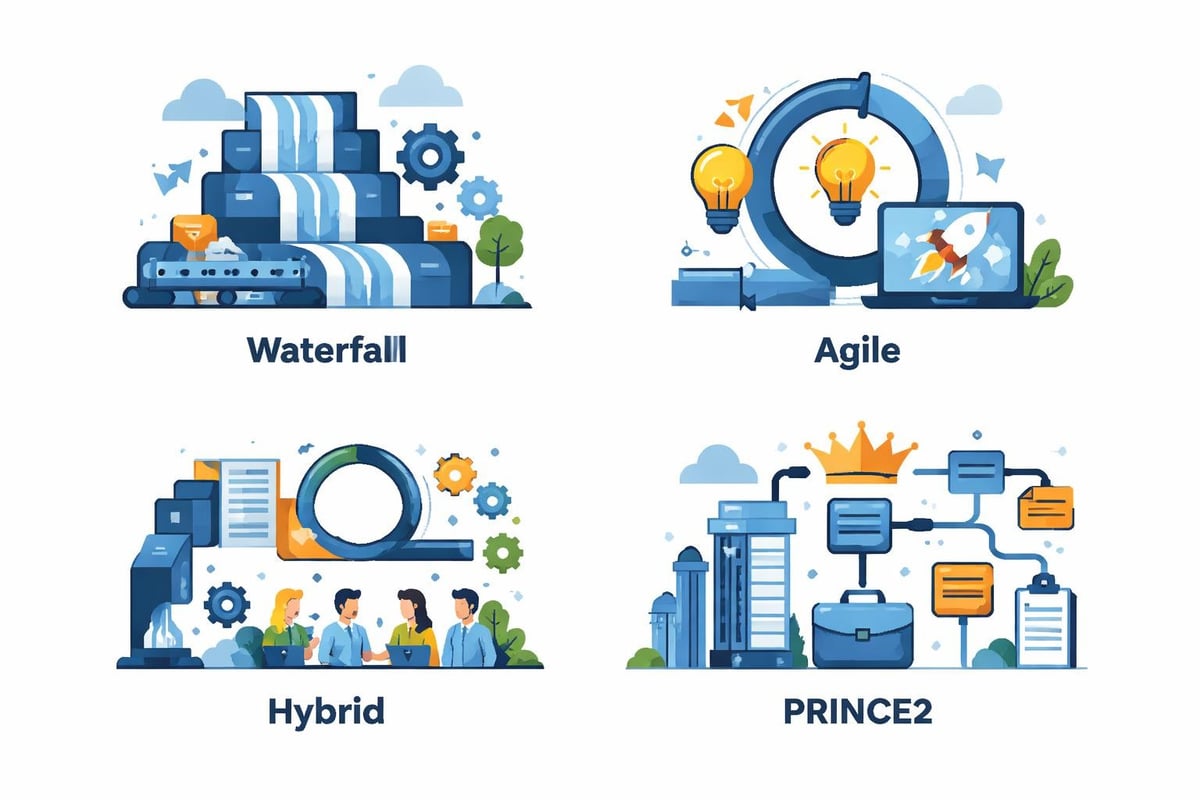
Comprehensive training covers:
- Initiation and planning phases including business case development, stakeholder analysis, and scope definition
- Execution and monitoring with emphasis on team coordination, progress tracking, and quality assurance
- Change management processes that balance flexibility with control
- Closure activities ensuring knowledge transfer and lessons learned documentation
Technical Skills and Tools Proficiency
Modern project managers leverage sophisticated software platforms for scheduling, resource management, and collaboration. Training should include hands-on experience with industry-standard tools rather than purely theoretical instruction.
Participants benefit from understanding scheduling techniques, critical path analysis, earned value management, and resource levelling. These technical competencies enable data-driven decision making throughout project lifecycles.
Tailoring Training to Organisational Needs
Generic training often fails to address specific challenges facing individual organisations. Customised project management training delivers superior outcomes by incorporating actual projects, organisational structures, and industry contexts into learning activities.
Industry-Specific Considerations
Construction project management differs significantly from software development or pharmaceutical research initiatives. Effective training acknowledges these distinctions whilst building transferable core competencies.
For example, construction professionals require deep understanding of procurement processes, safety regulations, and supply chain coordination. Technology sector project managers prioritise sprint planning, continuous integration, and product backlog management.
My Training Network's project management courses address these variations through customisable content that reflects participants' actual working environments.
Aligning Training With Career Development Paths
Organisations achieve maximum return on investment when project management training supports broader talent development strategies. Entry-level coordinators require different content than senior programme managers or portfolio directors.
Progressive learning pathways might include:
- Junior roles: fundamentals, scheduling basics, stakeholder communication
- Mid-level positions: risk management, resource optimisation, methodology selection
- Senior leadership: strategic alignment, portfolio governance, organisational change management
This tiered approach ensures professionals develop capabilities appropriate to their responsibilities whilst creating clear advancement criteria.
Certification Versus Practical Competency
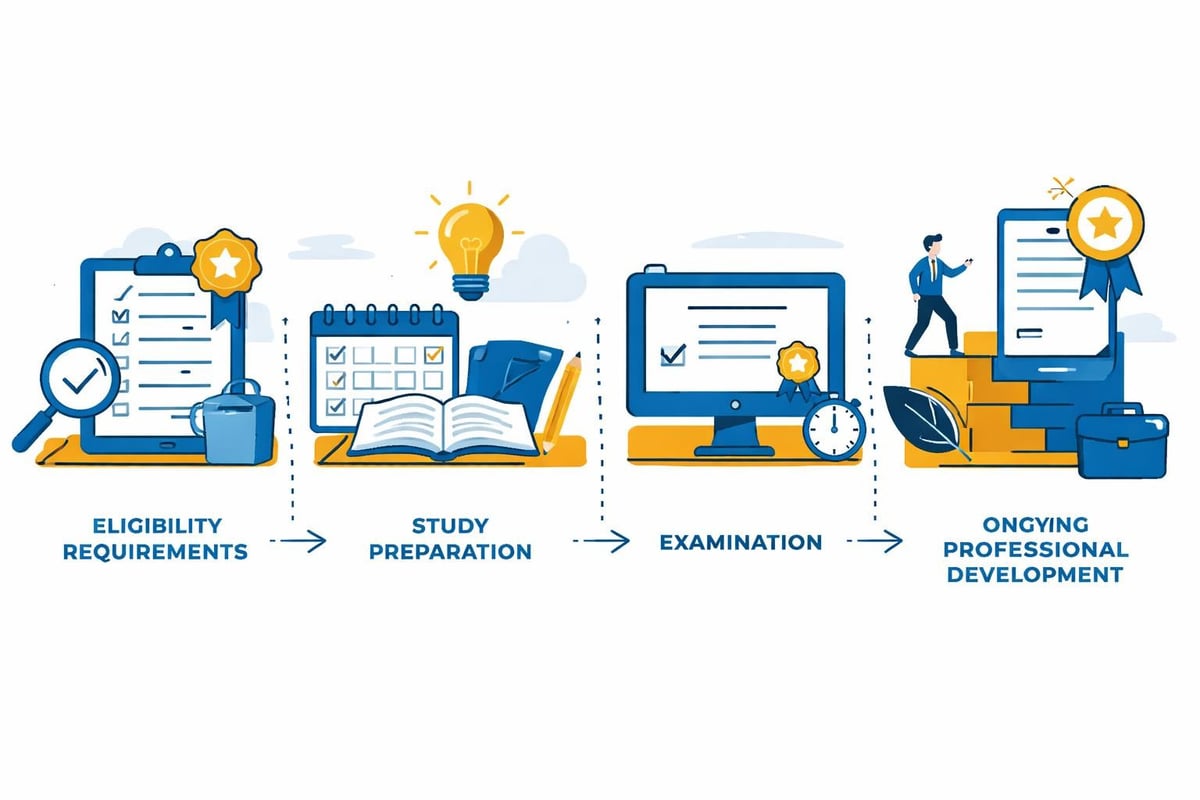
The Project Management Professional certification remains highly valued across industries, but certification alone doesn't guarantee project success. Organisations must balance credential acquisition with practical skill development.
Understanding Certification Benefits
Professional certifications demonstrate commitment to the discipline and mastery of established knowledge areas. They provide credibility when engaging with clients, partners, and stakeholders who value formal credentials.
Certification preparation also ensures comprehensive coverage of project management domains that practitioners might otherwise overlook. The structured study process fills knowledge gaps and exposes professionals to best practices from diverse industries.
Prioritising Application and Implementation
However, passing examinations doesn't automatically translate to effective project delivery. The most valuable training programmes emphasise application through case studies, simulations, and real project work.
Participants should complete training able to immediately apply concepts such as:
- Developing comprehensive project charters that secure stakeholder buy-in
- Creating realistic schedules that account for dependencies and resource constraints
- Facilitating productive meetings that drive decisions rather than consuming time
- Managing difficult conversations with underperforming team members or demanding clients
Building Essential Soft Skills
Technical project management knowledge represents only one dimension of successful delivery. Interpersonal capabilities often determine whether teams rally behind project objectives or merely comply with directives.
Leadership and Team Development
Project managers serve as leaders even without formal authority over team members. Effective training develops capabilities in motivation, conflict resolution, and performance coaching.
Strong project leaders create environments where team members feel empowered to raise concerns, propose improvements, and take ownership of deliverables. This psychological safety correlates directly with innovation and quality outcomes.
The integration of leadership training with project management fundamentals creates well-rounded professionals capable of navigating both technical and human challenges.
Communication Across Diverse Stakeholders
Projects involve stakeholders with varying levels of technical knowledge, competing priorities, and different communication preferences. Training should develop adaptability in communication style and medium selection.
Effective communicators tailor their approach by:
- Translating technical complexity for executive audiences focused on business outcomes
- Providing detailed specifications for implementation teams requiring precision
- Managing expectations with external clients who may lack project management literacy
- Facilitating collaboration between departments with historical tensions or misalignment
These communications skills prove invaluable throughout project lifecycles, from initial stakeholder engagement through final delivery and handover.
Measuring Training Effectiveness and ROI
Organisations investing in project management training deserve clear evidence of impact. Robust measurement frameworks track both immediate learning outcomes and longer-term performance improvements.
Immediate Knowledge Acquisition
Post-training assessments verify that participants have absorbed core concepts and can apply them in structured scenarios. These evaluations identify knowledge gaps requiring reinforcement or additional instruction.
| Measurement Approach | What It Evaluates | When to Use |
|---|---|---|
| Knowledge Tests | Concept retention, terminology | Immediately post-training |
| Skills Demonstrations | Practical application, tool usage | During and after training |
| Project Simulations | Decision making, problem solving | Final training sessions |
| Peer Review | Collaboration, communication | Throughout programme |
Long-Term Performance Impact
The true value emerges through improved project outcomes over subsequent months and years. Organisations should track metrics including project success rates, budget variance, schedule adherence, and stakeholder satisfaction scores.
Comparing performance between trained and untrained project managers provides compelling evidence of training effectiveness. Many organisations find that investment in quality training pays for itself through improved first-time delivery rates and reduced rework costs.
Selecting the Right Training Provider
The training provider significantly influences learning outcomes and practical application success. Organisations should evaluate potential partners based on instructor expertise, curriculum relevance, delivery flexibility, and post-training support.
Instructor Qualifications and Experience
Effective project management training requires instructors who have successfully delivered complex projects, not merely studied academic theory. Real-world experience enables instructors to share practical insights, contextualise concepts, and address nuanced participant questions.
Look for trainers with both formal credentials and demonstrated project success across relevant industries. Their war stories and lessons learned provide invaluable learning opportunities beyond textbook content.
Customisation and Flexibility
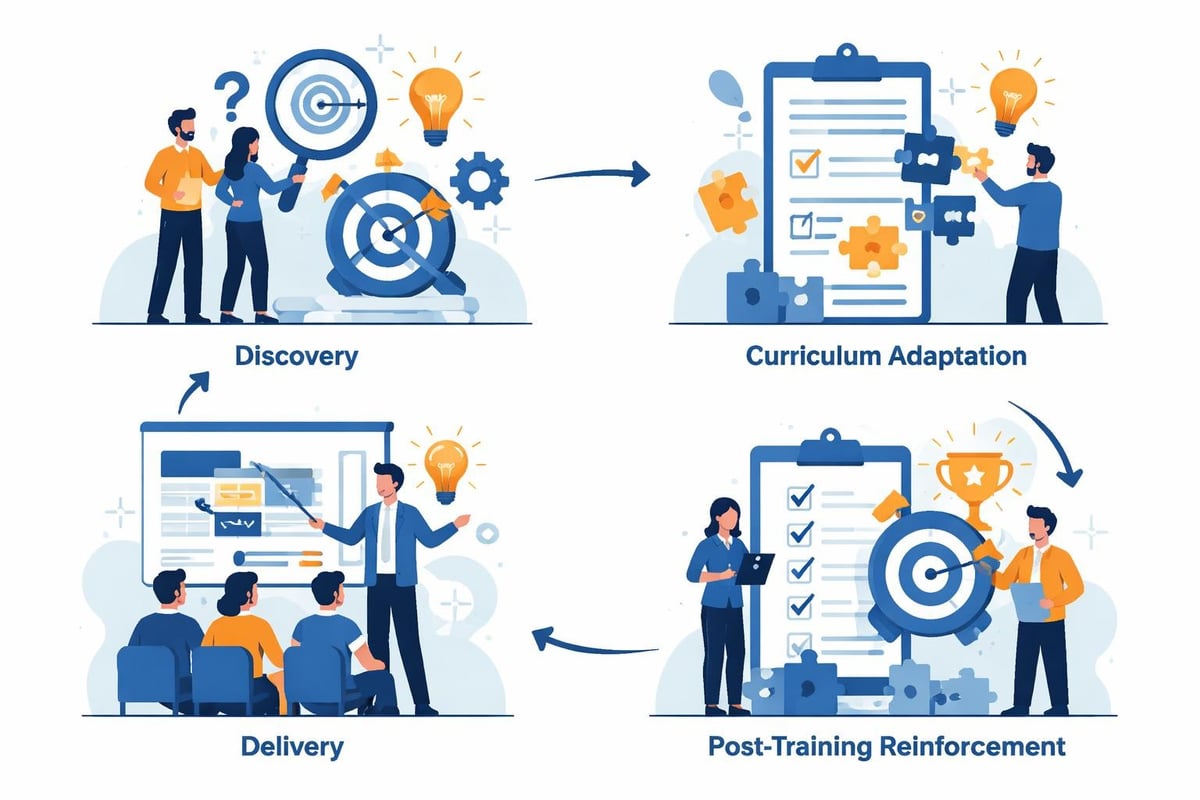
Standard course outlines rarely address specific organisational challenges optimally. Quality providers invest time understanding client contexts, current capabilities, and strategic objectives before finalising curriculum.
This customisation might involve incorporating actual project documentation as case studies, addressing specific tools or methodologies the organisation uses, or focusing on particular knowledge areas where teams struggle most.
The comprehensive course catalogue offered by established training networks ensures organisations can address multiple skill development needs through a single trusted partner.
Virtual Versus In-Person Training Delivery
The acceleration of remote work has transformed training delivery options. Both virtual and in-person formats offer distinct advantages depending on organisational circumstances, participant preferences, and learning objectives.
Advantages of Virtual Training
Virtual delivery eliminates travel costs and time whilst enabling participation from geographically dispersed team members. Technology platforms facilitate interactive exercises, breakout discussions, and real-time collaboration that rival in-person experiences.
Recorded sessions provide ongoing reference materials that participants can revisit when applying concepts to actual projects. This addresses the common challenge of knowledge retention beyond initial training events.
When In-Person Training Excels
Complex team-building activities, intensive workshops requiring deep focus, and sensitive topics benefit from in-person delivery. Physical presence facilitates relationship building and creates psychological separation from daily work distractions.
Organisations pursuing training and education best practices often find that hybrid approaches combining virtual content delivery with periodic in-person workshops deliver optimal results.
Ongoing Learning and Professional Development
Project management training shouldn't conclude with initial course completion. The discipline continues evolving with new methodologies, technologies, and best practices emerging regularly.
Creating Learning Cultures
Organisations that embed continuous learning into their cultures achieve sustained competitive advantages. This involves providing access to resources, encouraging knowledge sharing, and recognising skill development alongside project delivery achievements.
Establishing communities of practice where project managers regularly discuss challenges, share solutions, and learn from each other extends training benefits far beyond formal programmes. These forums become invaluable sources of institutional knowledge and innovation.
Effective ongoing development includes:
- Regular refresher sessions on core competencies
- Advanced modules addressing emerging methodologies and tools
- Cross-functional learning opportunities with product, operations, and technology teams
- External conference attendance and professional association engagement
Leveraging Professional Resources
The project management discipline benefits from extensive professional resources including associations, publications, and online communities. Encouraging team members to engage with these resources accelerates capability development.
Professional associations provide networking opportunities, regional events, and access to research that informs practice improvements. Many organisations support membership fees and conference attendance as investments in their project management capabilities.
Additional project management resources and web-based learning materials supplement formal training programmes and support self-directed learning initiatives.
Building Project Management Competency at Scale
Organisations with numerous projects require systematic approaches to developing project management capabilities across multiple teams and business units. Scaling training initiatives demands careful planning, resource allocation, and change management.
Establishing Internal Project Management Offices
Project Management Offices (PMOs) serve as centres of excellence that standardise approaches, provide governance oversight, and develop organisational capability. Effective PMOs combine methodology enforcement with coaching and support that helps teams succeed.
Training initiatives aligned with PMO establishment ensure teams understand not only general project management principles but also organisation-specific standards, templates, and processes.
Training Trainers and Building Internal Capacity
Rather than perpetually relying on external providers, some organisations develop internal training capabilities. This approach requires significant upfront investment but can deliver long-term cost savings and improved customisation.
Internal trainers bring intimate knowledge of organisational culture, politics, and specific challenges. They're available for ongoing coaching and support beyond formal training events.
However, maintaining current knowledge and instructional skills requires ongoing investment. Many organisations find that partnerships with external providers who train internal facilitators offers an effective middle path.
Effective project management training transforms how organisations plan, execute, and deliver initiatives across all business units. By investing in comprehensive skill development that balances technical knowledge, practical application, and interpersonal capabilities, you create teams capable of navigating complexity whilst consistently achieving strategic objectives. My Training Network delivers customisable, instructor-led project management training across Canada and virtually worldwide, with over 150 courses designed to build the exact capabilities your teams need to excel in today's demanding project environments.

