

Organizations today face a critical challenge: creating environments where employees feel comfortable speaking up, sharing ideas, and taking calculated risks without fear of embarrassment or retaliation. Psychological safety training has emerged as a transformative solution that empowers teams to innovate, collaborate more effectively, and navigate complex challenges with confidence. As Canadian businesses adapt to hybrid work models and increasingly diverse teams, investing in structured programs that build psychological safety has become essential for maintaining competitive advantage and employee retention.
Understanding Psychological Safety in Modern Workplaces
Psychological safety represents the shared belief among team members that they can express themselves authentically without facing negative consequences. This concept, pioneered by Harvard Business School professor Amy Edmondson, goes far beyond simple politeness or comfort.
When psychological safety exists within teams, employees feel empowered to ask questions, admit mistakes, propose unconventional ideas, and challenge existing processes. This creates fertile ground for innovation and continuous improvement. Without it, organizations experience hidden problems, stifled creativity, and disengaged employees who simply go through the motions.
The Business Impact of Psychological Safety
Research consistently demonstrates that psychologically safe teams outperform their counterparts across multiple dimensions:
- Innovation rates increase by 67% when employees feel safe proposing new ideas
- Employee turnover decreases by 27% in teams with high psychological safety
- Problem-solving efficiency improves by 41% when team members freely share concerns
- Customer satisfaction scores rise by 22% in organizations prioritizing psychological safety
Organizations implementing comprehensive leadership development programs recognize that psychological safety forms the foundation for effective collaboration. The connection between leadership behaviour and team safety cannot be overstated.
Core Components of Effective Psychological Safety Training
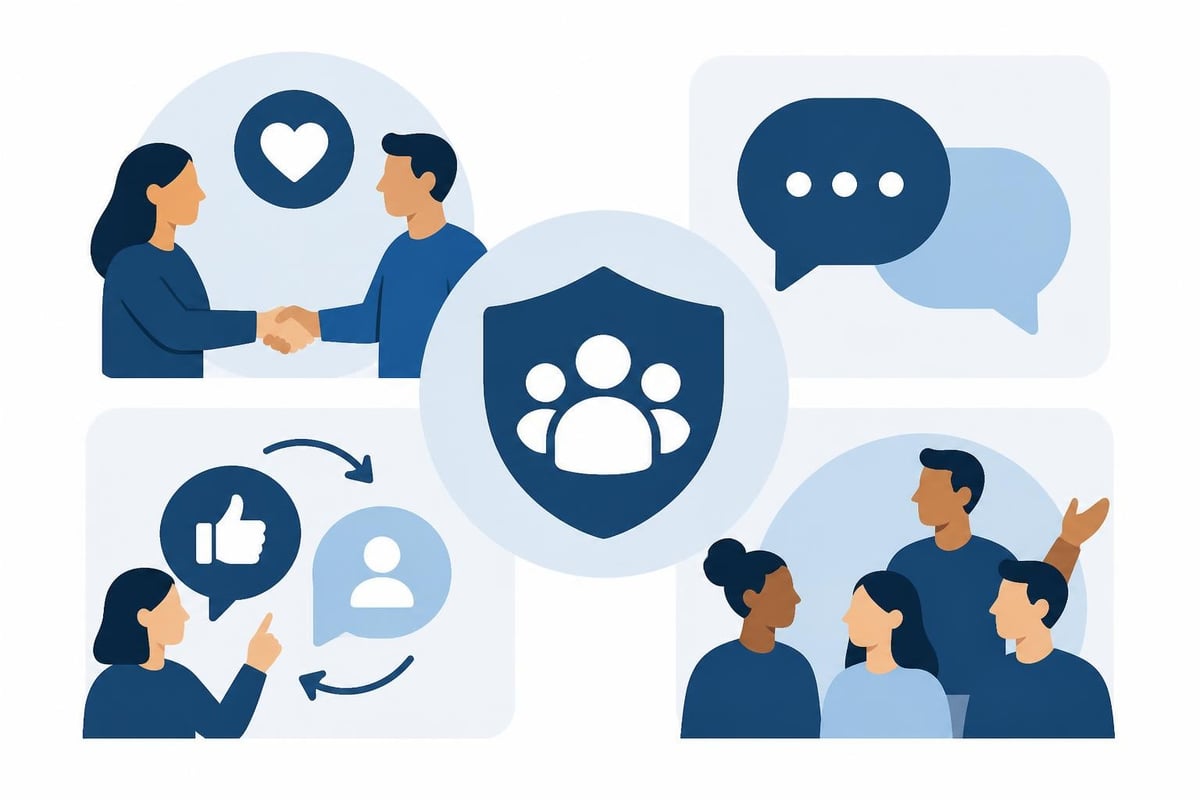
Successful psychological safety training programs incorporate several essential elements that work synergistically to transform workplace culture. These components address both individual behaviours and systemic organizational practices.
Trust-Building Foundations
Every effective program begins with establishing trust among participants. This involves structured activities that help team members understand each other's communication styles, work preferences, and personal boundaries.
Key trust-building elements include:
- Vulnerability exercises that encourage appropriate self-disclosure
- Active listening workshops that develop empathetic communication skills
- Perspective-taking activities that build cultural competence
- Boundary-setting discussions that establish mutual respect
Organizations offering diversity and inclusion training often integrate these trust-building components to create more cohesive, respectful teams.
Communication Skills Development
Psychological safety training emphasizes specific communication techniques that foster openness and reduce defensiveness. Participants learn how to frame feedback constructively, ask questions without judgment, and acknowledge their own uncertainties.
| Communication Skill | Before Training | After Training |
|---|---|---|
| Asking for help | 34% comfortable | 78% comfortable |
| Admitting mistakes | 41% comfortable | 82% comfortable |
| Challenging ideas | 29% comfortable | 71% comfortable |
| Sharing concerns | 38% comfortable | 76% comfortable |
Microsoft's research on building psychological safety in management contexts highlights the critical role that manager communication plays in creating safe team environments. Leaders who model vulnerability and openness set the tone for their entire organization.
Implementing Psychological Safety Training Across Organizations
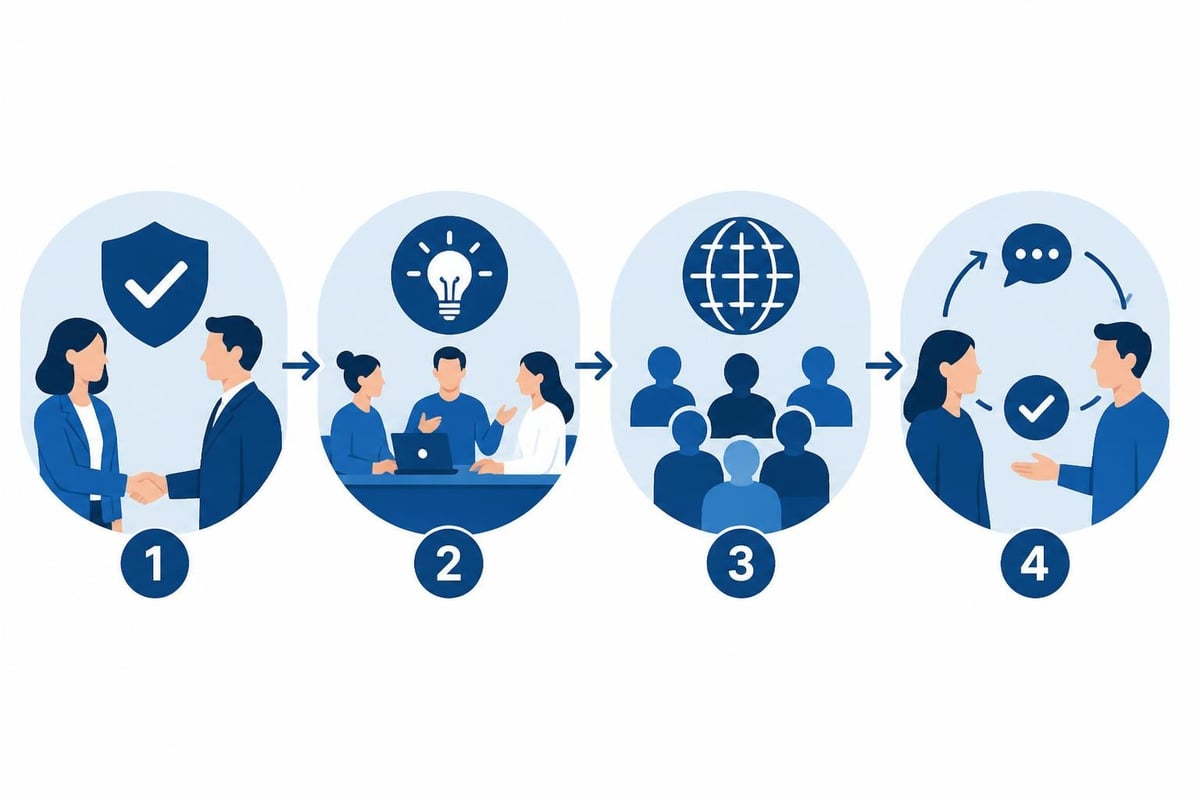
Rolling out psychological safety training requires thoughtful planning and sustained commitment from organizational leadership. The most successful implementations follow a phased approach that builds momentum over time.
Phase One: Leadership Alignment
Before training reaches frontline employees, senior leaders must understand and commit to psychological safety principles. This critical first phase typically spans 4-6 weeks and includes:
- Executive workshops exploring the business case for psychological safety
- Leadership assessments identifying current strengths and development areas
- Strategy sessions defining organizational goals and success metrics
- Communication planning to ensure consistent messaging throughout rollout
Organizations investing in teamwork skills training recognize that leadership buy-in significantly accelerates cultural transformation.
Phase Two: Pilot Programs
Testing psychological safety training with select teams provides valuable insights before company-wide deployment. Pilot participants become ambassadors who can share authentic experiences and encourage broader adoption.
Pilot program benefits:
- Identifies implementation challenges in real-world contexts
- Generates internal success stories and testimonials
- Allows trainers to refine content based on participant feedback
- Creates a community of practice that supports ongoing development
Research examining psychological safety in Agile environments demonstrates how pilot programs help organizations adapt psychological safety principles to their specific operational contexts.
Measuring Psychological Safety Training Effectiveness
Organizations investing in psychological safety training need reliable methods to assess program impact and identify areas requiring additional support. Measurement strategies should combine quantitative metrics with qualitative insights.
Quantitative Assessment Tools
Pre- and Post-Training Surveys
Standardized instruments like Edmondson's Team Psychological Safety Scale provide baseline measurements and track progress over time. These surveys typically assess seven key dimensions:
- Comfort asking for help from teammates
- Willingness to discuss problems and tough issues
- Acceptance of diversity in perspectives and backgrounds
- Safety in taking interpersonal risks
- Confidence that skills and talents are valued
- Belief that no one undermines deliberate efforts
- Trust that work challenges are embraced, not avoided
Qualitative Feedback Mechanisms
Numbers alone cannot capture the nuanced ways psychological safety manifests in daily interactions. Comprehensive evaluation includes:
- Focus groups exploring specific behaviour changes
- One-on-one interviews with participants and their managers
- Observation of team meetings noting participation patterns
- Review of anonymous suggestion box submissions
The Coursera psychological safety course provides excellent frameworks for combining quantitative and qualitative assessment approaches.
| Assessment Method | Frequency | Primary Insight |
|---|---|---|
| Team surveys | Quarterly | Overall safety trends |
| Focus groups | Bi-annually | Specific challenges |
| 360° feedback | Annually | Individual progress |
| Meeting observations | Monthly | Real-time behaviour |
Sustaining Psychological Safety Beyond Initial Training
The most common failure point in psychological safety initiatives occurs after initial training concludes. Without ongoing reinforcement and practice opportunities, learned behaviours quickly fade as teams revert to established patterns.
Creating Accountability Systems
Psychological safety training must be embedded into regular organizational rhythms rather than treated as a one-time event. Effective accountability mechanisms include:
Manager Coaching Programs
Leaders receive ongoing support through monthly coaching sessions that address specific challenges in maintaining team safety. These sessions help managers navigate difficult conversations, model vulnerability appropriately, and respond constructively when psychological safety breaches occur.
Organizations offering workplace respect training often integrate psychological safety coaching to create comprehensive support systems.
Peer Learning Communities
Cross-functional groups meet regularly to share experiences, troubleshoot challenges, and celebrate successes. These communities of practice reinforce psychological safety principles through authentic peer-to-peer learning.
Integration with Existing Systems
Psychological safety should not exist as a standalone initiative but rather integrate with established organizational processes:
- Performance reviews that assess psychological safety contributions
- Team charters that explicitly define safety expectations
- Meeting protocols that ensure equitable participation
- Recognition programs that celebrate speaking up and constructive challenge
Research on psychological safety and AI adoption reveals that organizations successfully integrating new technologies create explicit connections between psychological safety and change management processes.
Addressing Common Psychological Safety Training Challenges
Even well-designed psychological safety training programs encounter predictable obstacles. Understanding these challenges in advance allows organizations to develop proactive strategies.
Skepticism from Senior Leaders
Experienced executives sometimes view psychological safety as "soft" or unnecessary, particularly in traditionally hierarchical industries. Overcoming this skepticism requires presenting compelling business data demonstrating the connection between psychological safety and outcomes executives care about: innovation rates, employee retention, customer satisfaction, and profitability.
Evidence-based persuasion strategies:
- Share case studies from similar organizations showing measurable ROI
- Connect psychological safety to strategic priorities like digital transformation
- Demonstrate how safety accelerates problem identification and resolution
- Highlight competitive advantages in talent attraction and retention
Cultural and Regional Variations
Canadian organizations serve diverse populations with varying cultural backgrounds and communication norms. What feels psychologically safe to one person may feel uncomfortable or inappropriate to another.
Effective psychological safety training acknowledges these differences explicitly and helps teams develop shared norms that honour diversity while establishing baseline safety expectations. Programs offered through certified training providers often include modules specifically addressing cross-cultural psychological safety challenges.
Remote and Hybrid Work Complications
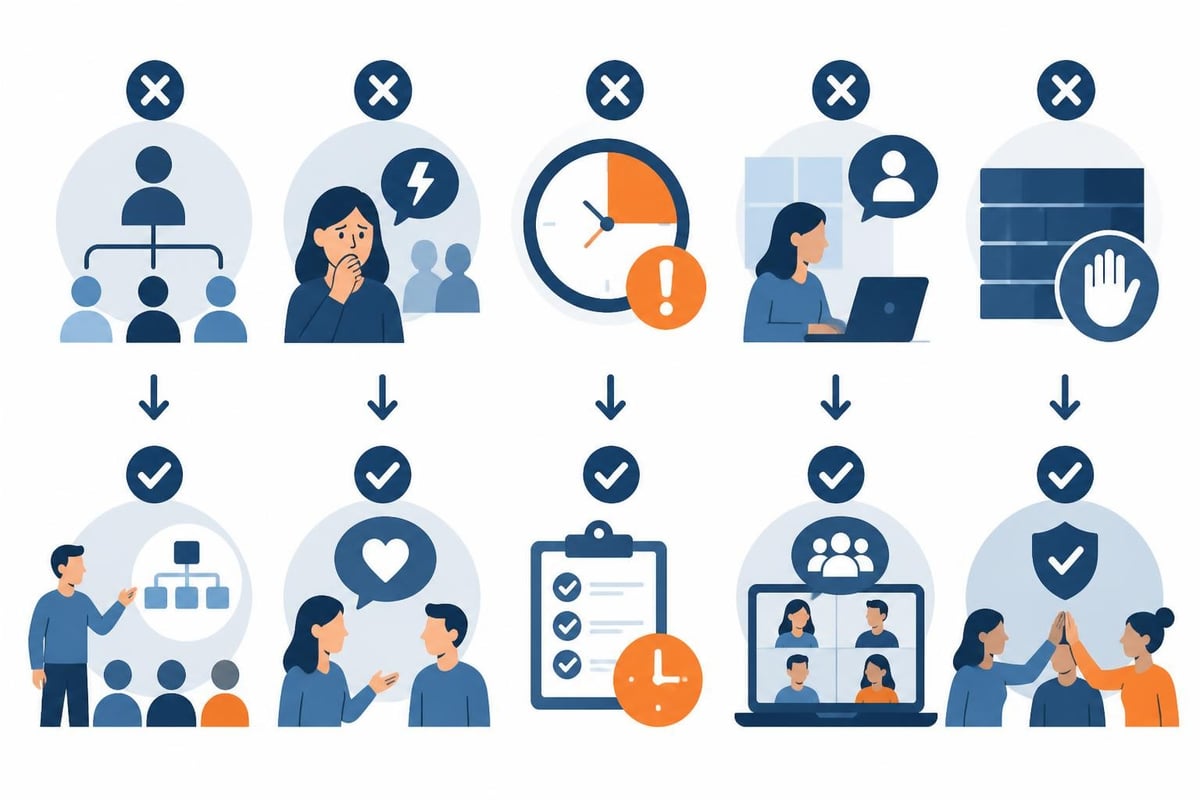
Virtual environments present unique challenges for building and maintaining psychological safety. Non-verbal cues disappear, spontaneous conversations become rare, and power dynamics may intensify when leaders control meeting technologies.
| Challenge | Impact | Solution |
|---|---|---|
| Limited visual cues | Misinterpretation increases | Camera-on norms, emoji reactions |
| Reduced informal interaction | Trust building slows | Virtual coffee chats, social channels |
| Technology barriers | Participation inequity | Technical training, alternative inputs |
| Meeting fatigue | Engagement decreases | Shorter sessions, async options |
Specialized Applications of Psychological Safety Training
Different organizational contexts require tailored approaches to psychological safety development. Generic programs often miss critical nuances that make training relevant and actionable.
Psychological Safety for Project Teams
Project environments create unique pressures as teams form quickly, work under tight deadlines, and dissolve after deliverables complete. Agile project management training increasingly incorporates psychological safety principles to enhance sprint retrospectives and daily stand-ups.
Project-specific psychological safety training addresses:
- Rapid trust-building techniques for newly formed teams
- Safe experimentation protocols when timelines are tight
- Constructive conflict navigation under deadline pressure
- Knowledge transfer practices that honour departing members
Healthcare and High-Stakes Environments
Industries where mistakes carry significant consequences require specialized psychological safety approaches. Healthcare teams, for example, must balance speaking up about safety concerns with respecting established hierarchies and protocols.
The Psychological Safety Institute’s Champions Program provides sector-specific training that addresses the unique dynamics of high-stakes decision-making environments.
Technology and Innovation Teams
Organizations pushing technological boundaries need teams comfortable with uncertainty, experimentation, and frequent failure. Psychological safety training for innovation contexts emphasizes:
- Normalizing productive failure as essential learning
- Distinguishing between blame and accountability
- Encouraging wild ideas before practical constraints
- Celebrating questions that challenge assumptions
Research exploring adaptive coaching approaches demonstrates how psychological safety principles can be embedded in technology-assisted development programs.
Building Internal Capability for Psychological Safety
Rather than relying exclusively on external consultants, forward-thinking organizations develop internal expertise to sustain psychological safety long-term. This capability-building approach creates lasting cultural transformation.
Training Internal Champions
Selected employees receive intensive preparation through programs like those offered by Powered By Diversity, enabling them to facilitate psychological safety conversations within their departments. These champions serve as resources, role models, and change agents.
Champion selection criteria:
- Demonstrated commitment to inclusive practices
- Strong facilitation and communication skills
- Credibility across organizational levels
- Willingness to model vulnerability appropriately
Developing Manager Competencies
Frontline managers exert disproportionate influence on team psychological safety through daily interactions and decisions. Comprehensive manager development programs integrate psychological safety competencies with other essential leadership skills.
Organizations exploring leadership skills training programs should ensure psychological safety receives prominent attention alongside traditional management topics like delegation, performance management, and strategic thinking.
Future Trends in Psychological Safety Training
As workplace dynamics continue evolving, psychological safety training adapts to address emerging challenges and opportunities. Several trends are shaping the future of these essential programs.
Technology-Enhanced Learning
Virtual reality simulations now allow participants to practice psychological safety conversations in realistic scenarios without real-world consequences. Artificial intelligence provides personalized feedback on communication patterns and suggests specific improvement strategies.
Neuroscience-Informed Approaches
Growing understanding of brain science informs training design, helping participants understand the neurological basis for threat responses and psychological safety. This knowledge reduces shame around defensive reactions and provides concrete techniques for managing amygdala activation.
Integration with Well-Being Initiatives
Organizations increasingly recognize connections between psychological safety and mental health. Training programs now explicitly address how safe team environments reduce stress, prevent burnout, and support overall employee well-being.
Measuring Team Dynamics in Real-Time
New assessment technologies capture psychological safety indicators during actual work activities rather than relying solely on retrospective surveys. These tools provide managers with actionable insights about team dynamics as they unfold.
Selecting the Right Psychological Safety Training Provider
Organizations investing in psychological safety training face numerous provider options, each offering different approaches, expertise levels, and delivery formats. Making informed selection decisions requires careful evaluation.
Key Selection Criteria
Evidence-Based Methodology
Effective programs ground their approach in peer-reviewed research and established psychological safety frameworks. Ask potential providers about their theoretical foundations and request references to supporting research.
Customization Capability
Generic programs rarely address organization-specific challenges effectively. The Lorman Education Services course on psychological safety and leadership demonstrates how tailored content increases relevance and application.
Trainer Expertise
Instructor qualifications significantly impact training effectiveness. Seek providers whose facilitators combine academic knowledge with practical organizational experience implementing psychological safety initiatives.
Follow-Up Support
One-time training sessions create awareness but rarely drive lasting behaviour change. Comprehensive programs include coaching, reinforcement activities, and ongoing consultation to support implementation.
| Provider Feature | Why It Matters | Questions to Ask |
|---|---|---|
| Research foundation | Ensures credibility | What research supports your approach? |
| Customization options | Increases relevance | How do you adapt to our context? |
| Trainer credentials | Impacts effectiveness | What experience do facilitators have? |
| Post-training support | Drives sustainability | What follow-up is included? |
Organizations seeking comprehensive training solutions benefit from exploring providers offering integrated programs that connect psychological safety with complementary competencies like communication, feedback, and conflict resolution.
Psychological safety training represents a strategic investment in organizational capability that pays dividends through increased innovation, enhanced collaboration, and improved employee retention. As Canadian workplaces continue navigating hybrid models and diverse team compositions, creating environments where everyone feels empowered to contribute their best thinking becomes increasingly critical. My Training Network delivers customizable psychological safety training programs across Canada and virtually worldwide, combining expert facilitators with proven methodologies to build high-performing, inclusive teams. Our instructor-led approach ensures participants gain practical skills they can immediately apply, supported by ongoing resources that drive lasting cultural transformation.

