

Effective time management has become one of the most critical skills in today's fast-paced business environment. Professionals across all sectors face mounting pressures, competing deadlines, and endless distractions that threaten productivity and well-being. Through comprehensive time management skills training, organizations can equip their teams with practical frameworks and techniques that transform how employees approach their daily responsibilities. This investment in professional development delivers measurable returns through increased output, reduced stress levels, and improved work-life balance.
Understanding the Foundation of Time Management Training
Time management skills training provides structured approaches to help individuals regain control over their schedules and responsibilities. Unlike superficial tips or quick fixes, quality training programmes delve into the psychological and practical aspects of how we allocate our most precious resource: time.
The Core Components of Effective Training
Professional time management development encompasses several interconnected elements. Participants learn to identify time-wasting activities, establish meaningful priorities, and create systems that support sustained productivity. The training typically addresses both individual work habits and collaborative team dynamics.
Key areas covered include:
- Self-assessment and awareness of current time use patterns
- Goal-setting frameworks aligned with organizational objectives
- Prioritization methodologies for competing demands
- Delegation techniques and collaborative work strategies
- Tools and technologies that enhance efficiency
- Strategies for managing interruptions and distractions
Modern training approaches recognize that time management isn't simply about doing more work faster. Instead, effective programmes help participants focus on high-value activities that drive meaningful results. According to research on time management skills, individuals who develop structured approaches to their workday experience significantly lower stress levels and higher job satisfaction.

Strategic Planning and Goal-Setting Techniques
Effective time management skills training begins with clarity of purpose. Without clear objectives, even the most sophisticated scheduling systems fail to deliver results. Training programmes teach participants to establish both short-term and long-term goals that provide direction and motivation.
SMART Goals and Beyond
The SMART framework (Specific, Measurable, Achievable, Relevant, Time-bound) remains a cornerstone of goal-setting instruction. However, advanced training goes further by helping participants understand how individual goals connect to team objectives and organizational strategy.
Participants learn to:
- Break down large projects into manageable milestones
- Establish realistic timelines based on resource availability
- Create accountability systems that maintain momentum
- Adjust goals based on changing circumstances
- Celebrate progress to maintain motivation
This strategic approach ensures that daily activities align with broader professional aspirations. Bruce Tulgan’s research on management training emphasizes the importance of connecting daily tasks to larger organizational missions, particularly when working across generational divides in the workplace.
Many organizations discover that time management skills training complements broader leadership development initiatives, as effective leaders must model excellent time management practices for their teams.
| Goal Type | Timeframe | Focus Area | Review Frequency |
|---|---|---|---|
| Strategic | 3-5 years | Career trajectory | Annually |
| Operational | 6-12 months | Major projects | Quarterly |
| Tactical | 1-3 months | Specific deliverables | Monthly |
| Daily | 1-5 days | Immediate tasks | Daily/Weekly |
Prioritization Frameworks That Drive Results
One of the most valuable outcomes from time management skills training involves mastering prioritization techniques. When everything seems urgent, nothing truly is. Professional training introduces proven frameworks that help participants distinguish between genuinely important work and mere distractions.
The Eisenhower Matrix and Modern Applications
The Eisenhower Matrix, popularized by Alan Lakein’s time management principles, divides tasks into four quadrants based on urgency and importance. Time management skills training teaches participants to spend more time on important but not urgent activities, which often include strategic planning, relationship building, and professional development.
Contemporary training programmes adapt classical frameworks to address modern workplace challenges. Digital distractions, constant connectivity, and remote work dynamics require updated approaches to traditional prioritization methods.
Participants practice applying these frameworks through realistic workplace scenarios. They learn to identify tasks that:
- Require immediate attention and deliver significant value
- Can be scheduled for later completion
- Should be delegated to team members
- Can be eliminated entirely without negative consequences
Organizations investing in management skills development often discover that prioritization training creates ripple effects throughout teams, as managers help their direct reports make better decisions about where to focus energy.
Practical Tools and Systems for Daily Implementation
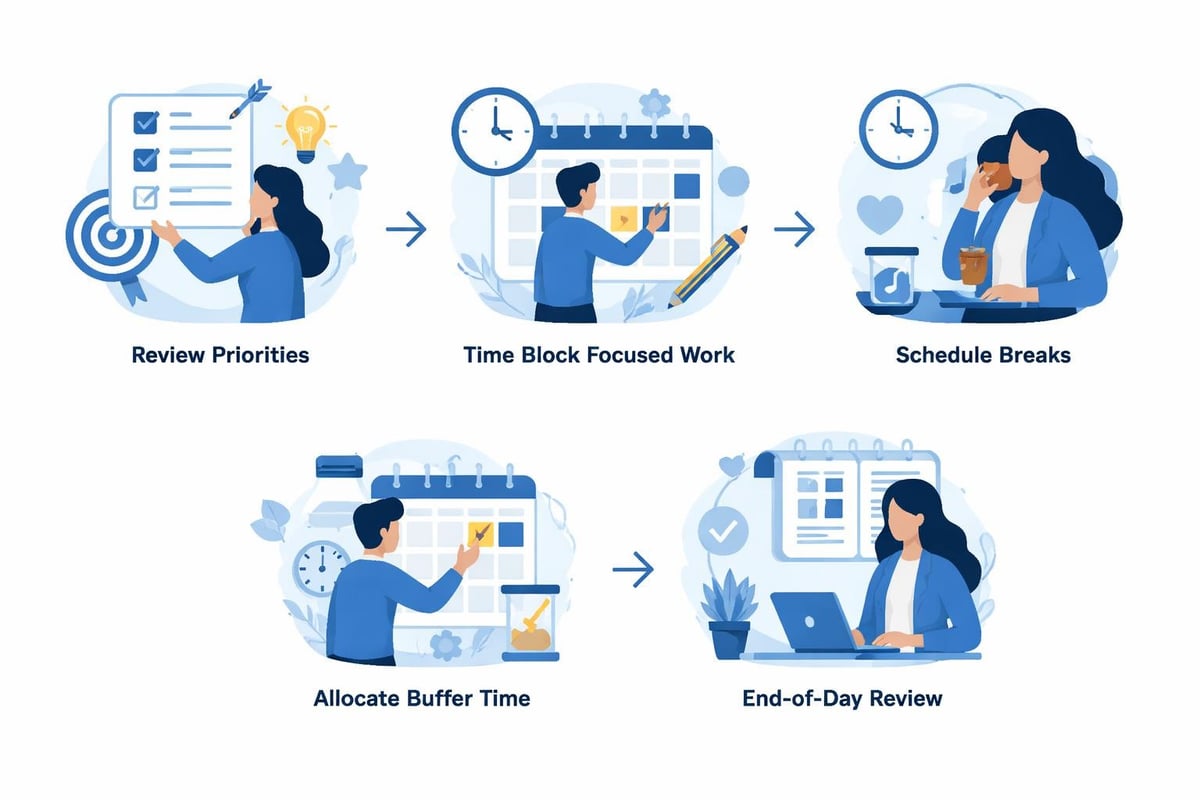
Theory without application remains ineffective. Quality time management skills training bridges this gap by introducing practical tools that participants can implement immediately. These systems transform abstract concepts into daily habits that drive measurable improvements.
Digital and Analogue Planning Systems
Training programmes expose participants to various planning methodologies, recognizing that different approaches suit different working styles and preferences.
Popular systems include:
- Time-blocking calendars that dedicate specific hours to focused work
- Task management applications with built-in prioritization features
- Project management platforms for collaborative work
- Traditional paper-based planners for tactile learners
- Hybrid approaches combining digital and physical tools
The structured time management training approach emphasizes experimentation and customization. What works brilliantly for one professional may prove frustrating for another. Effective training provides exposure to multiple systems whilst encouraging participants to adapt techniques to their unique circumstances.
The Role of Technology in Modern Time Management
Contemporary training addresses both the benefits and pitfalls of workplace technology. Digital tools can dramatically enhance productivity when used intentionally, but they also create new sources of distraction and inefficiency.
Participants learn to leverage technology strategically:
- Automation of repetitive administrative tasks
- Notification management to reduce interruptions
- Collaborative tools that streamline communication
- Analytics features that reveal time use patterns
- Integration systems that connect disparate applications
Organizations exploring online training options find that virtual delivery of time management skills training allows for ongoing support and reinforcement, as participants can access resources and coaching between formal sessions.
Overcoming Common Time Management Obstacles
Even with solid frameworks and tools, professionals encounter persistent challenges that derail their best intentions. Comprehensive time management skills training addresses these obstacles directly, providing strategies to overcome ingrained habits and systemic barriers.
Procrastination and Perfectionism
These twin challenges plague professionals across industries and experience levels. Training programmes help participants understand the psychological drivers behind procrastination whilst developing practical interventions.
Strategies include breaking overwhelming projects into smaller steps, using accountability partners, and implementing the two-minute rule for quick tasks. The time management course offerings from established institutions emphasize the importance of progress over perfection.
Managing Interruptions and Maintaining Focus
Modern workplaces generate constant interruptions through emails, instant messages, meetings, and colleague requests. Time management skills training teaches boundary-setting techniques that protect focused work time without damaging relationships.
| Interruption Type | Management Strategy | Expected Outcome |
|---|---|---|
| Batch processing 2-3 times daily | 40% time savings | |
| Meetings | Clear agendas, time limits | 30% reduction |
| Drop-in requests | Office hours system | 50% fewer disruptions |
| Digital notifications | Scheduled checking periods | Sustained focus blocks |
Participants learn to communicate their availability clearly whilst remaining responsive to genuinely urgent matters. This balance proves particularly important for those developing conflict resolution skills, as time boundary discussions can create tension if handled poorly.
Delegation and Collaborative Time Management
Individual productivity gains plateau without addressing team dynamics and delegation practices. Advanced time management skills training incorporates collaborative elements that multiply effectiveness across entire departments.
Effective Delegation Frameworks
Many professionals struggle with delegation, either from perfectionist tendencies or inadequate systems for tracking delegated work. Training addresses both the mindset shifts and practical mechanics required for successful delegation.
Effective delegation requires:
- Clear communication of expectations and deadlines
- Appropriate authority transfer to complete tasks
- Regular check-ins without micromanagement
- Recognition of completed delegated work
- Feedback loops that develop team capabilities
Organizations that combine time management training with project management education create powerful synergies, as project frameworks provide natural structures for delegation and progress tracking.
The principles taught through time management courses emphasize that delegation isn't simply offloading unwanted tasks. Instead, effective delegation develops team members whilst freeing leaders to focus on high-value strategic work.
Building Sustainable Habits Through Training
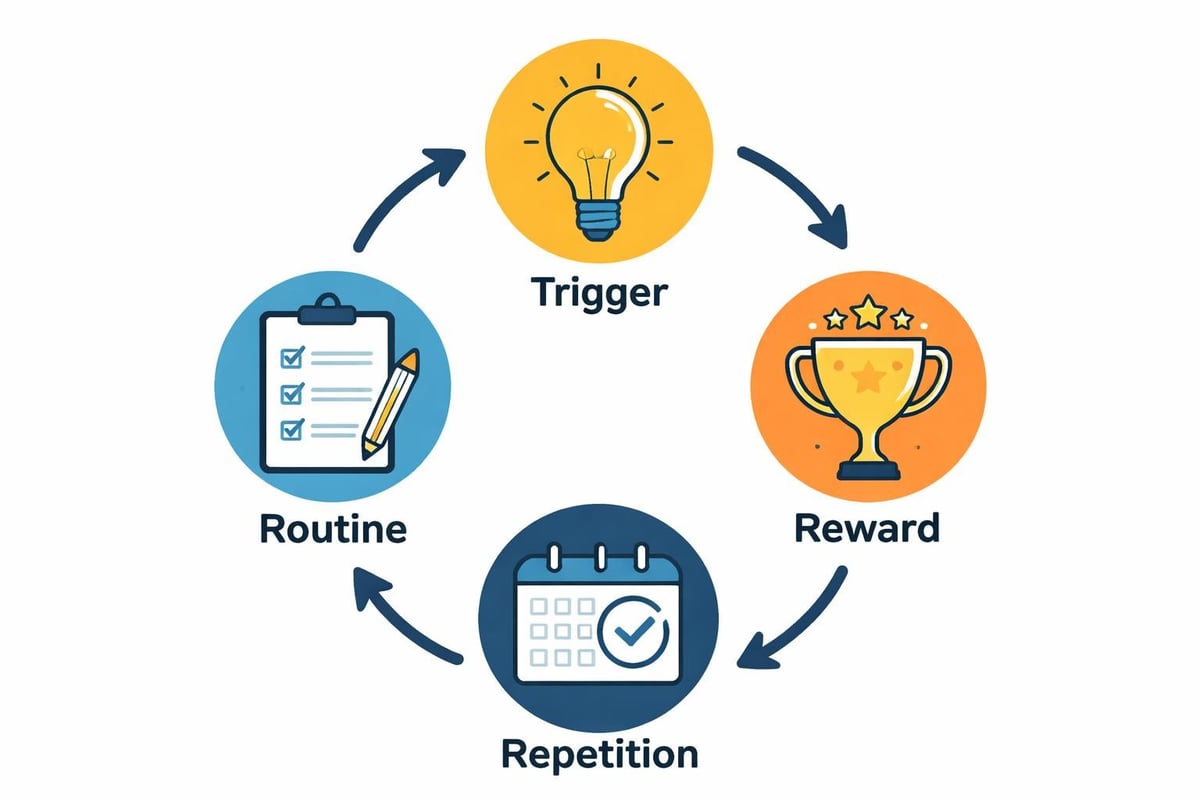
Short-term behaviour changes rarely produce lasting results. Quality time management skills training incorporates habit formation principles that help new practices become automatic over time.
The 21-Day Myth and Reality of Habit Formation
Research demonstrates that habit formation requires significantly longer than the popular 21-day timeframe suggests. Professional training sets realistic expectations whilst providing support systems that sustain momentum through the initial challenging period.
Participants develop implementation intentions: specific if-then plans that trigger desired behaviours automatically. For example, "If I arrive at my desk, then I will review my top three priorities before checking email."
Habit stacking techniques include:
- Attaching new behaviours to existing routines
- Creating environmental cues that prompt desired actions
- Tracking progress through simple logging systems
- Celebrating small wins to maintain motivation
- Adjusting approaches based on what works
The comprehensive training programmes from specialized providers recognize that sustained behaviour change requires ongoing reinforcement and community support, not simply one-off workshop attendance.
Measuring Success and Continuous Improvement
Effective time management skills training includes measurement frameworks that demonstrate return on investment and guide ongoing development. Without metrics, improvements remain anecdotal rather than demonstrable.
Quantitative and Qualitative Metrics
Organizations track various indicators to assess training effectiveness:
- Task completion rates and project delivery timelines
- Overtime hours and work-life balance indicators
- Employee satisfaction and stress level assessments
- Revenue per employee and productivity measurements
- Client satisfaction with response times and deliverables
Individual participants benefit from personal tracking systems that reveal patterns and progress. Time audits conducted before and after training provide concrete evidence of behavioural changes and their impacts.
The three key principles of time management (focus, prioritization, and organization) create natural evaluation frameworks. Participants can assess their growth in each dimension through structured reflection exercises and peer feedback.
Customizing Training for Different Roles and Industries
Generic time management advice often fails to address industry-specific challenges and role-based requirements. Sophisticated time management skills training recognizes these distinctions and adapts content accordingly.
Role-Based Customization Approaches
Executives require different time management strategies than individual contributors. Sales professionals face distinct challenges compared to project managers or creative professionals. Effective training acknowledges these differences through tailored content and relevant examples.
| Role Type | Primary Challenge | Training Focus |
|---|---|---|
| Executives | Strategic vs. operational balance | Delegation, strategic time blocks |
| Managers | Team coordination | Meeting efficiency, communication systems |
| Individual Contributors | Deep work protection | Focus techniques, interruption management |
| Sales Professionals | Relationship management | Pipeline organization, follow-up systems |
| Creative Workers | Inspiration vs. deadline pressure | Structured creativity time, project phases |
Organizations benefit from integrating time management principles across multiple development initiatives. Professionals working on communication skills discover that clear, concise communication saves significant time compared to vague or incomplete messages.
Integration With Broader Professional Development
Time management skills training delivers maximum value when integrated with complementary professional development areas rather than treated as an isolated topic.
Synergies With Related Competencies
Effective time management connects directly to stress management, emotional intelligence, and leadership capabilities. Professionals who develop resilience and stress management skills find they can maintain productivity during challenging periods without burning out.
Similarly, those who enhance their emotional intelligence become more adept at managing the interpersonal aspects of time management, including saying no gracefully, negotiating deadlines, and maintaining boundaries.
Organizations designing comprehensive development pathways discover that time management training serves as a foundation for more advanced competencies. The self-awareness and planning skills developed through time management programmes support success in virtually every other professional domain.
Forward-thinking companies exploring AI tools in the workplace recognize that even the most sophisticated technology cannot replace the strategic thinking and prioritization skills developed through quality training programmes.
Creating an Organizational Culture of Time Respect
Individual training initiatives produce limited results if organizational culture undermines effective time management practices. Systemic change requires leadership commitment and policy adjustments that support what training teaches.
Cultural Elements That Support Time Management
Organizations serious about productivity create environments where focused work receives protection and respect. This includes:
- Meeting-free time blocks designated across departments
- Response time expectations that don't require instant availability
- Recognition systems that reward outcomes rather than hours worked
- Leadership modelling of healthy time management practices
- Technology policies that limit after-hours communication
When companies invest in team building initiatives alongside time management training, they create shared understanding and mutual support for productivity practices. Teams develop collective norms about meeting conduct, communication channels, and collaboration approaches.
The most successful implementations involve executive sponsorship, manager training before team rollout, and ongoing reinforcement through coaching and peer learning communities. Time management skills training becomes part of organizational DNA rather than a one-time event.
Mastering time management through structured training transforms individual productivity and organizational effectiveness. By implementing proven frameworks, developing sustainable habits, and creating supportive environments, professionals reclaim control over their schedules whilst delivering superior results. My Training Network offers customizable time management training programmes delivered by expert instructors across Canada and virtually worldwide, helping your team develop the skills and systems that drive measurable productivity gains. Our comprehensive approach ensures lasting behaviour change that benefits both individual contributors and your organization's bottom line.

