

In a world where every minute counts, mastering your schedule has become essential for success. As hybrid work and digital demands accelerate in 2026, effective time management is more critical than ever.
This guide will break down what a time management training course offers and why it is a game changer for productivity and well-being. You will discover what these courses involve, their core components, and how to choose the best fit for your needs.
Ready to take control of your time, achieve more, and reduce stress? Let’s dive in and transform the way you work and live.
Why Time Management Skills Matter in 2026
In 2026, effective time management is no longer a luxury, but a necessity. The pace of work and life continues to accelerate. Hybrid and remote models are now standard, while digital communication tools multiply demands on our attention. With expectations for productivity and responsiveness at an all-time high, individuals must balance their personal well-being with increasing professional pressures. A recent survey highlights this trend: over 3 million learners seek efficiency training, and 80% of professionals cite time management as crucial for career success. For a deeper dive into the latest industry numbers, see these Time Management Statistics.

The Evolving Demands of Work and Life
Modern work is more complex than ever. Hybrid and remote models have blurred boundaries between work and home. Digital overload is now a daily challenge, with constant notifications and information streams. Employers expect higher productivity, faster response times, and seamless collaboration. Balancing these pressures while maintaining well-being is a growing concern. The demand for skills that can help manage these complexities continues to rise. According to research, millions are turning to a time management training course to gain the edge needed to thrive in this dynamic environment.
Impact on Productivity and Well-being
There is a direct link between strong time management and reduced stress levels. Professionals who invest in a time management training course often report higher job satisfaction and improved work-life balance. By learning how to prioritise, schedule, and delegate effectively, individuals can boost their output while minimising burnout. CPD-accredited courses have shown measurable performance improvements, with learners demonstrating greater efficiency and resilience. These benefits extend beyond the workplace, enhancing overall well-being and satisfaction in personal life.
Common Time Management Challenges
Even the most dedicated professionals face hurdles. Procrastination, multitasking, and digital distractions are among the most common obstacles. Many struggle to manage competing priorities or feel overwhelmed by an endless stream of tasks. Poor delegation and lack of assertiveness can compound these issues, particularly for team leaders and administrators under deadline pressures. Engaging with a time management training course equips individuals to identify these challenges and develop strategies to overcome them, resulting in greater control and clarity.
Benefits of Formal Time Management Training
Relying on ad hoc tips is rarely enough to keep up with modern demands. A formal time management training course provides structured learning and practical tools for lasting change. Personalised strategies such as checklists, self-reflection, and analysis help learners understand their habits and optimise their routines. Leading providers offer content on prioritisation, time management styles, and digital tools. With over 675 positive reviews and an average rating of 4.7, these courses consistently deliver measurable value and satisfaction to participants.
Who Needs Time Management Training?
The value of a time management training course is universal. From personal assistants to managers, and from accountants to supervisors, professionals in every sector can benefit. These courses require no prerequisites and are tailored for both individuals and teams. Training providers like Pitman offer programmes specifically designed for administrators, EAs, and those seeking to upskill in a competitive job market. As the demand for productivity and efficiency grows, more organisations are investing in time management training to empower their workforce.
Core Components of a Time Management Training Course
A well-designed time management training course is built on several foundational components. Each element is crafted to help you analyse your habits, develop new skills, and use practical tools for lasting results. By breaking down these core areas, you can identify where you need to focus, and choose the most effective strategies for your needs.

Understanding Your Natural Time Management Style
Every time management training course begins by helping you identify your personal approach to managing time. Are you a checklist enthusiast, a last-minute sprinter, or a meticulous planner? Through self-reflection exercises and analysis modules, such as those highlighted in the Time Management Course Topic, you can uncover your natural tendencies.
This self-awareness is crucial. It allows you to tailor your strategies for maximum effectiveness. Many courses feature diagnostic tools, quizzes, and guided reflection to personalise the experience. By understanding your style, you lay a strong foundation for lasting improvement.
Time and Task Analysis Techniques
A key component of any time management training course is learning how to analyse your workload and daily routines. Courses teach you to log your time, identify bottlenecks, and map out recurring tasks. Digital trackers and habit analysis tools are commonly introduced.
Professionals who complete time and task analysis often report up to 20 percent higher productivity. This process helps you pinpoint areas where time is lost and reveals opportunities for smarter working. By building a clear picture of your current habits, you can make informed changes that support your goals.
Prioritisation and Scheduling Skills
Effective prioritisation is at the heart of every time management training course. You will learn proven frameworks such as the Eisenhower Matrix, ABCD method, and how to set SMART objectives. Scheduling is covered in depth, including the use of digital calendars, planners, and to-do lists.
Delegation and assertiveness are also addressed, enabling you to manage competing priorities. Through practical exercises, you will develop the confidence to say no when needed, and ensure your time is spent on what matters most. These skills are essential for both individual and team success.
Overcoming Procrastination and Distractions
Procrastination and distractions are common obstacles addressed in every time management training course. You will learn to identify the root causes of delay, whether they stem from perfectionism, overwhelm, or external interruptions.
Techniques such as the Pomodoro method, batching similar tasks, and the Good is Good Enough principle are introduced. Real course feedback often highlights how these methods reduce procrastination and foster focus. By building awareness and applying these tools, learners report significant improvements in task completion.
Motivation and Productivity Boosters
Maintaining motivation is a critical part of any time management training course. Goal setting is emphasised, helping you align your daily tasks with long-term ambitions. Courses explore ways to manage expectations, avoid perfectionism, and build resilience under pressure.
Assertiveness training is often included, teaching you to communicate boundaries and manage workload effectively. Learners frequently note that these motivational techniques lead to higher course completion rates and improved job satisfaction. Sustaining momentum is key to ongoing productivity gains.
Essential Tools and Technology
A modern time management training course introduces you to a suite of digital tools designed to streamline your workflow. These include to-do list apps, digital calendars, project management platforms, and time tracking software. Habit trackers help reinforce positive routines.
| Tool Type | Example Uses |
|---|---|
| Digital Calendar | Schedule meetings |
| To-Do List App | Track daily tasks |
| Project Management Software | Manage team projects |
| Time Tracker | Monitor work patterns |
Data from recent courses shows that using these tools can boost task completion rates by up to 30 percent. Integrating technology ensures your new skills are practical, scalable, and aligned with the demands of a digital workplace.
Step-by-Step Guide: Mastering Your Time with Training
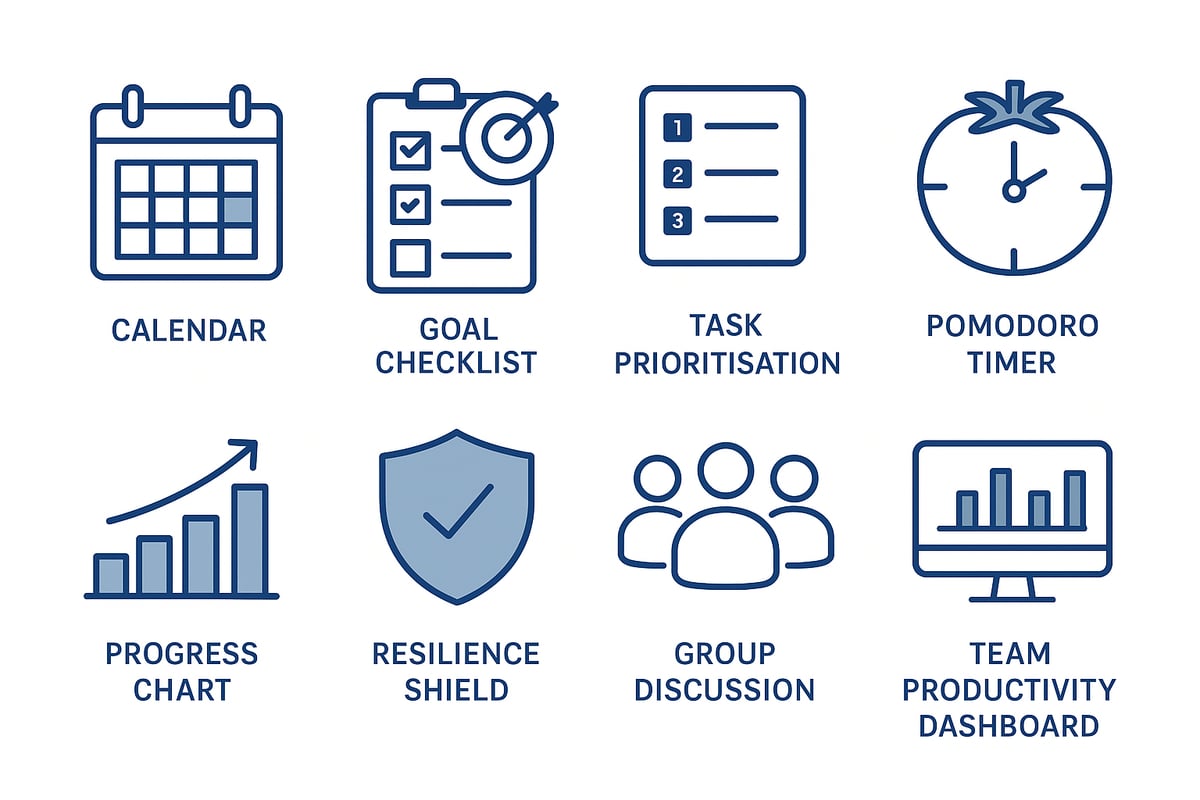
Mastering your schedule is not a matter of luck, but of skill. With a structured approach, anyone can transform how they manage their day. This step-by-step guide will help you unlock the full value of your time management training course, from initial self-reflection to scaling your new skills across teams. Let us break down each step for maximum impact.
Step 1: Assess Your Current Time Management Habits
The first step in any time management training course is honest self-assessment. Use digital time tracking tools or a simple paper log to map out how you spend your day.
Identify your strengths, such as effective morning routines, and note any weaknesses like frequent context switching. Learner feedback shows that those who invest time in self-reflection modules establish a clear baseline for improvement.
By understanding your current habits, you lay the foundation for lasting change and set realistic expectations for your journey.
Step 2: Define Clear, Achievable Goals
Setting clear goals is essential for success in a time management training course. Use the SMART framework to ensure your objectives are Specific, Measurable, Achievable, Relevant, and Time-bound.
Align your personal and professional aspirations to give your efforts direction. For example, many learners find that aligning their daily tasks with long-term career goals increases motivation and clarity.
Research shows that individuals who set defined goals are 42% more likely to achieve their desired outcomes, making this step a cornerstone of the process.
Step 3: Prioritise Tasks and Plan Effectively
Efficient planning is at the heart of every successful time management training course. Apply proven frameworks like the Eisenhower Matrix or ABCD method to organise your daily and weekly priorities.
Utilise digital planners and calendars to map out your schedule, and do not forget to delegate tasks when necessary. Scheduling regular breaks is also vital for maintaining focus and energy.
Office managers who embrace delegation modules within their training report greater control and reduced overwhelm, leading to better results for their teams.
Step 4: Implement Time Management Techniques
With your plan in place, it is time to put techniques into action. Experiment with methods such as the Pomodoro Technique, batching similar tasks, or time blocking to enhance your focus.
Integrate technology, including to-do lists and time trackers, to streamline your workflow. For added benefit, explore Attention Management Techniques as part of your time management training course, since mastering attention is critical for sustained productivity.
Learners consistently report that tailoring techniques to their unique style delivers the best outcomes.
Step 5: Monitor Progress and Adjust Strategies
Continuous improvement is built into every effective time management training course. Regularly review your time logs and completed task lists to track progress.
Solicit feedback from peers or mentors to gain fresh perspectives on your approach. Many teams use management suites for tracking goals and sharing updates, which fosters accountability.
If a particular strategy is not working, do not hesitate to adjust your methods. This adaptability is key to long-term success and ongoing productivity gains.
Step 6: Overcome Setbacks and Maintain Momentum
Setbacks are inevitable, but a robust time management training course prepares you for them. Identify common pitfalls such as perfectionism or digital distractions early.
Develop habits for resilience, including assertiveness and learning to say no when necessary. Modules focused on overcoming procrastination equip learners to bounce back quickly.
Course data reveals that 70% of learners maintain improved habits three months after completion, demonstrating the power of ongoing commitment and support.
Step 7: Leverage Support and Resources
Your time management training course does not end at the final module. Take advantage of ongoing course materials and community forums for continued learning.
Utilise CPD-accredited resources to keep your skills sharp and relevant. Many providers offer unlimited access to materials, so you can revisit key concepts whenever needed.
Joining peer networks or accountability groups further reinforces your progress, ensuring that your new habits stick over the long term.
Step 8: Scale Your Skills for Team and Organisational Success
The benefits of a time management training course multiply when shared with your team. Train colleagues to create a culture of collective productivity and efficiency.
Leverage management suites to track group progress, monitor project timelines, and celebrate achievements. Many providers offer bulk discounts and customisable training for organisations.
Research shows that companies investing in team-wide training see up to 40% faster project delivery, proving the value of scaling these essential skills.
How to Choose the Right Time Management Training Course
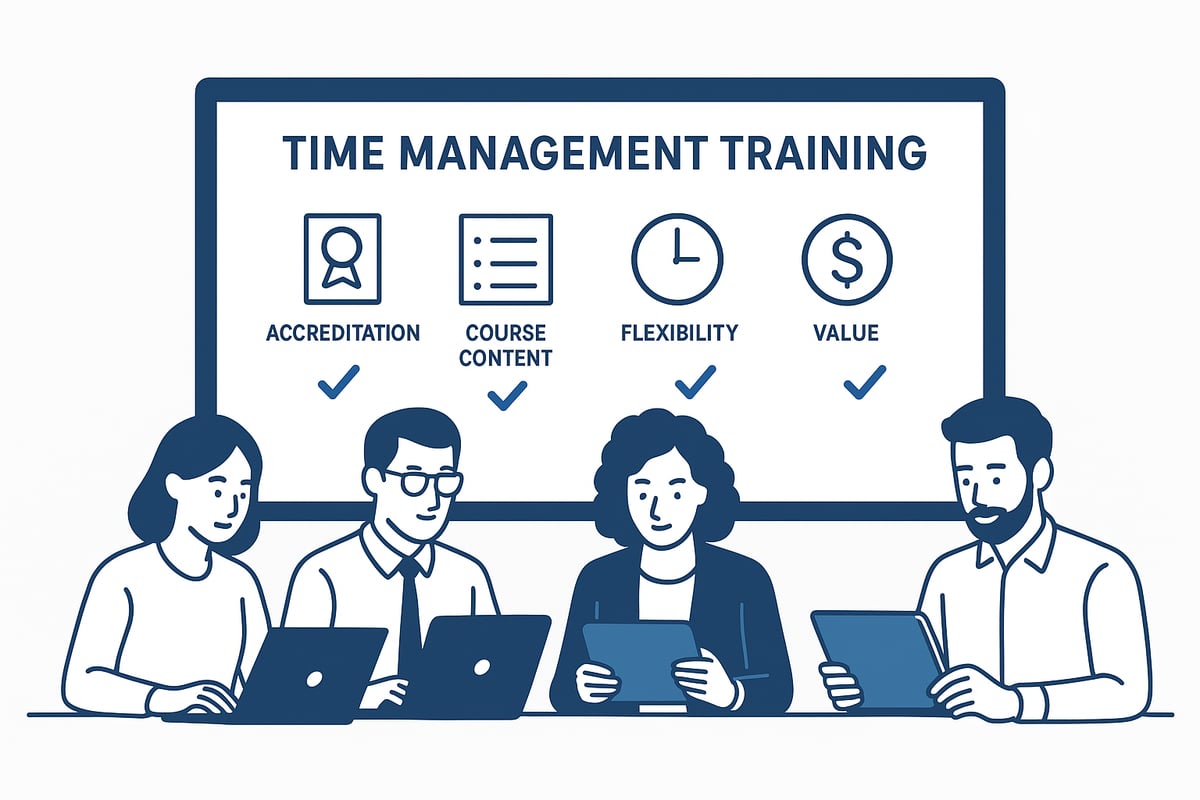
Selecting the best time management training course can transform how you approach work and life. The right course is more than a checklist: it is your foundation for long-term productivity and professional growth. Let us break down the essential factors you should consider before making your choice.
Accreditation and Credibility
When evaluating a time management training course, always check for recognised accreditation. Courses that are CPD-certified or endorsed by industry bodies signal quality and are widely accepted by employers. For example, both High Speed Training and Pitman Training hold CPD accreditation, which assures you that their content meets professional development standards.
Certification not only validates your learning but also enhances your CV. You want a course that delivers genuine skills and stands up to scrutiny in recruitment or performance reviews. Accreditation guarantees that your investment in a time management training course pays off with credible recognition.
Course Content and Learning Format
A comprehensive time management training course should offer a well-rounded curriculum. Look for modules covering key topics such as time management styles, prioritisation, scheduling, and digital tools. Effective courses use a mix of theory, practical exercises, and real-world scenarios to ensure deep learning.
Consider the delivery format as well. Online, in-centre, and hybrid options are available, so choose what fits your schedule and learning style. For example, the Time Management Strategies Workshop outlines core components that should be included in any quality course, such as practical frameworks and interactive activities. Flexible formats make it easier to fit a time management training course into your busy routine.
Personalisation and Practical Application
The most effective time management training course will allow you to tailor your learning path. Seek out courses with self-assessment modules, reflective exercises, and actionable assignments. Personalisation ensures that you can adapt techniques to your specific work environment and daily challenges.
Practical application is vital. Choose a course that encourages you to analyse your current habits, experiment with new strategies, and reflect on outcomes. Real-world tasks and assessments make the learning stick, helping you to embed new habits and truly benefit from your time management training course.
Support, Access, and Flexibility
Support is crucial during and after your time management training course. Reliable providers offer ongoing access to course materials, responsive tutor support, and tools for tracking your progress. For individuals or teams, look for management suites that enable easy monitoring and accountability.
Flexibility can make a significant difference. Unlimited access to course resources, no deadlines for completion, and options for bulk enrolment all add value. These features ensure your time management training course adapts to your pace and needs, maximising your chances of long-term success.
Cost, Value, and ROI
Comparing the cost of a time management training course is about more than just the price tag. Transparent pricing, such as £20 plus VAT per course, allows you to budget effectively. Look for bulk discounts if enrolling teams, as these can provide substantial savings.
Evaluate the value by considering CPD points, positive learner reviews, and post-course support. Courses with strong ratings and proven outcomes offer better return on investment. By choosing an accredited time management training course, you gain not only new skills but also a credential that supports your career progression.
Future Trends in Time Management Training
The landscape of the time management training course is rapidly evolving. As we approach 2026, professionals and organisations face new expectations and opportunities. Let us explore the trends shaping the future of effective time management learning.
Integration of AI and Digital Tools
AI-powered tools are transforming the time management training course landscape. Adaptive learning platforms now personalise course content, adjusting to individual progress and preferences. Smart scheduling apps automate meeting coordination and deadline reminders, freeing up mental space for higher-value tasks.
Digital planners and time tracking software, now common in most courses, offer real-time analytics and actionable insights. For example, some platforms use machine learning to suggest optimal work patterns based on your activity data. According to the 2025 Training Industry Report, investment in digital training solutions continues to grow, reflecting their proven impact on productivity.
As AI continues to advance, expect your next time management training course to deliver even more tailored, efficient learning experiences.
Focus on Well-being and Mental Health
Modern time management training course providers now recognise that productivity is closely linked with personal well-being. Courses increasingly include modules on managing stress, setting boundaries, and practising mindfulness at work. These additions help participants avoid burnout and maintain sustainable performance.
Practical strategies such as assertiveness training and guided self-reflection are now standard. Learners gain skills to manage workload expectations and find balance between professional ambitions and personal health. For those seeking a holistic approach, the Achieving Work-Life Balance course offers targeted techniques for integrating well-being into daily routines.
By addressing mental health alongside productivity, a time management training course becomes an essential tool for long-term success.
Microlearning and On-Demand Formats
Busy professionals require flexibility, and the time management training course has adapted. Microlearning delivers bite-sized modules that can be completed in just a few minutes, making it easier to fit learning into any schedule.
Courses are now accessible across devices, allowing learners to progress on their terms, whether at home, in the office, or on the move. Instant assessments and feedback help reinforce knowledge quickly and efficiently. This approach supports just-in-time learning, so essential skills can be learned and applied when needed most.
Microlearning ensures that a time management training course remains relevant, engaging, and practical for today's fast-paced work environment.
Team-Based and Organisational Approaches
The focus is shifting from individual productivity to team and organisational outcomes. Many time management training course providers now offer team-based modules and management suites for tracking collective progress. Leaders can monitor team engagement, identify skill gaps, and tailor support where it matters most.
Organisations adopting these strategies report measurable gains, such as faster project delivery and improved employee satisfaction. Group training also fosters a shared language and culture around effective time use, amplifying results across departments.
As workplace demands evolve, a time management training course designed for teams empowers organisations to thrive in an increasingly collaborative world.
Frequently Asked Questions About Time Management Courses
Choosing the right time management training course can feel overwhelming, especially with so many options available. To help you make an informed decision, here are answers to the most common questions professionals ask before enrolling.
What can I expect from a time management training course?
A time management training course typically covers essential modules such as identifying your time management style, prioritisation techniques, and using digital tools for task planning. Courses usually last between three and six hours, offered online or in training centres. Expect practical exercises, instant assessments, and actionable strategies designed to fit your daily routine.
Who should take a time management course?
Time management training courses are suitable for professionals at all career stages and across every industry. Whether you are an administrator, manager, team leader, or an individual contributor, these courses provide value. Many organisations encourage teams to participate together, promoting a culture of efficiency and shared productivity improvement.
How are these courses assessed and accredited?
Most time management training courses use multiple choice assessments to measure your learning. Results are provided instantly, allowing immediate feedback. Choosing a CPD-accredited course ensures your achievement is recognised by employers and industry bodies, which can support ongoing professional development.
What support is available during and after the course?
Support is a key feature of any reputable time management training course. Learners benefit from ongoing access to course materials, often with no time limits for completion. Many providers offer team management suites, unlimited retakes, and responsive help desks to assist both individuals and organisations throughout the learning journey.
How do I get the best value from my course investment?
To maximise your return, select a CPD-accredited time management training course from a trusted provider. Take advantage of bulk discounts for teams and apply the techniques consistently for sustained productivity gains. For those looking to broaden their skills, consider integrating Management Skills Training to further support career progression and team effectiveness.

