

In today’s rapidly evolving workplace, the need for skilled trainers has never been greater. Organisations across every sector rely on professionals who can inspire, educate, and empower teams to achieve more. The train the trainer training course is now a pivotal stepping stone for those looking to lead learning initiatives and drive real business impact.
This guide offers a clear, step-by-step approach to mastering the essentials of train the trainer training course success in 2026. You will discover what these courses are, understand their critical importance, learn how to choose the right programme, and explore the latest trends shaping the future of workplace learning.
Whether you are aiming to enhance your own skills or transform your organisation’s training capability, you will find practical strategies, industry insights, and proven methods to help you excel. Ready to take the next step? Let’s begin your journey to becoming an outstanding trainer.
Understanding Train the Trainer Training Courses
In the modern workplace, the train the trainer training course has become pivotal for organisations striving to build internal training capacity. These programmes empower individuals to deliver engaging, effective learning experiences within their teams. But what exactly defines a train the trainer training course, and why has it become essential across so many sectors?

Definition and Core Principles
A train the trainer training course is a specialised programme designed to equip participants with the skills and knowledge needed to deliver training effectively to adults. The core objectives include building confidence in presentation, understanding learning processes, and ensuring knowledge transfer.
Central to every train the trainer training course are principles such as engagement, experiential learning, and adult learning theory. Adult participants bring unique experiences and expectations, which trainers must acknowledge and harness. For a deeper understanding of these principles, especially in professional settings, see Adult Learning Theories in Context. Relevance spans industries like healthcare, corporate, and education, with CPD-accredited and sector-specific courses widely available. Ultimately, a train the trainer training course sets the foundation for anyone aiming to become an internal trainer or training manager.
Benefits of Train the Trainer Programmes
Enrolling in a train the trainer training course delivers a range of tangible organisational benefits. First, these programmes enhance staff competency and performance by providing trainers with up-to-date teaching techniques. Improved knowledge retention and application among employees often follow, as trainers learn how to make content memorable and actionable.
A well-implemented train the trainer training course is cost-effective, especially for organisations needing to upskill multiple trainers. It allows for scalability, ensuring consistent training across departments or sites. For example, CPDUK-accredited programmes are recognised for raising training standards. Data from Total Success Training highlights that organisations report higher training effectiveness post-course participation.
Who Should Take Train the Trainer Courses?
A train the trainer training course is suitable for a wide range of professionals. New trainers, team leaders, and managers often use these courses to gain confidence in delivering training sessions. Subject matter experts transitioning into teaching roles can also benefit, as can HR professionals and learning and development staff.
In practice, many organisations promote internal staff to training roles after completing a train the trainer training course. This approach supports career progression and ensures knowledge remains within the company. Upskilling internal staff through such courses helps build a culture of continuous improvement.
Accreditation and Industry Standards
Selecting an accredited train the trainer training course is vital for both individuals and organisations. Recognised accreditations like CPD and UKCSTF ensure the course meets industry standards and regulatory requirements. This is particularly important in highly regulated sectors such as healthcare and education.
Examples include CPDUK and CSTF-aligned courses, which are often highlighted by leading training providers. Accreditation not only supports regulatory compliance but also enhances the employability and credibility of trainers. Organisations benefit from knowing their trainers meet established benchmarks.
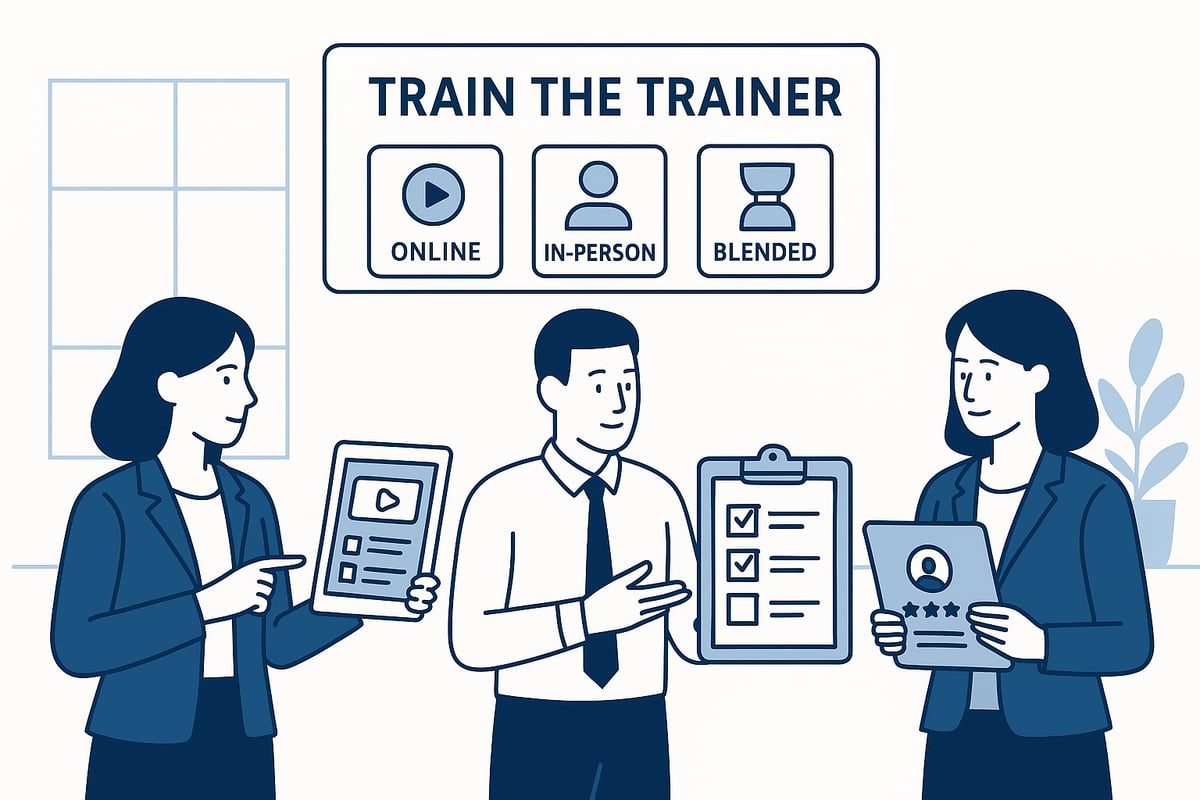
Course Formats: Online, In-Person, Blended
A train the trainer training course is available in multiple formats to suit diverse learning needs. Options include online courses for remote or flexible learning, in-person sessions for hands-on practice, and blended programmes that combine both.
This flexibility ensures accessibility for participants with different schedules or locations. Interactive blended learning platforms, such as those offered by the Mandatory Training Group, are increasingly popular, providing engaging and effective training experiences.
Key Skills and Competencies for Successful Trainers
Developing the right skills and competencies is fundamental for anyone looking to excel with a train the trainer training course. Successful trainers blend communication expertise, adult learning theory, structured planning, and group management. Each of these areas is vital for delivering training that truly makes an impact.

Essential Trainer Skills
Every outstanding train the trainer training course begins by building core skills. Communication and presentation abilities are at the heart of effective training. Trainers must articulate ideas clearly, use engaging language, and adapt messages for different audiences.
Active listening and questioning techniques are equally important. These skills encourage participation and help trainers understand delegate needs. Adaptability allows trainers to respond to various learning styles in the room.
Practical techniques, such as using confident body language and projecting your voice, help establish authority and keep attention focused. For those looking to refine these capabilities, the Essential Presentation Techniques for Trainers resource offers valuable insights.
Understanding Adult Learning Theories
A train the trainer training course is built on a foundation of adult learning theory. Kolb’s Learning Cycle is central, guiding trainers to create sessions that move learners from concrete experience through reflection and conceptualisation to active experimentation.
Understanding the four stages of learning, from unconscious incompetence to unconscious competence, helps trainers pitch content at the right level. Experiential learning, where delegates learn by doing, is especially effective for adults.
Applying these theories in practice ensures that training is both memorable and meaningful. Trainers who embed learning cycles into their sessions see greater engagement and knowledge retention.
Designing Effective Training Sessions
Designing impactful sessions is a key outcome of any train the trainer training course. Trainers start by defining clear aims, objectives, and desired outcomes. This clarity shapes the session’s flow and keeps content focused.
Engagement is driven by interactive content and real-world scenarios. Incorporating case studies, group activities, and practical exercises transforms passive learners into active participants.
Trainer’s notes and structured activities included in course packs provide essential support. These resources help trainers deliver sessions that are both informative and dynamic, ensuring learning objectives are met.
Managing Group Dynamics and Challenging Situations
Managing a group is a critical part of the train the trainer training course journey. Trainers need strategies to handle difficult trainees, foster participation, and guide group behaviour positively.
Techniques for encouraging quieter delegates, diffusing disruptive behaviour, and keeping discussions on track are vital. Providing constructive feedback enables learners to improve and stay motivated.
Drawing on real-life scenarios, trainers learn to anticipate and manage challenges. These skills ensure that every session remains productive and that all delegates benefit from a supportive learning environment.
How to Choose the Right Train the Trainer Course in 2026
Selecting the right train the trainer training course is crucial for maximising your impact as a trainer and supporting your organisation's growth. With so many options available, a structured approach helps you make an informed decision tailored to your needs.
Assessing Organisational and Personal Needs
The first step in choosing a train the trainer training course is to identify both organisational goals and individual skill gaps. Consider what your team needs to achieve and how the course will contribute. Are you aiming to improve compliance, boost knowledge retention, or develop a culture of continuous learning?
Conduct a training needs analysis to clarify objectives and priorities. Tools like skills gap assessments or staff surveys can provide valuable insights. Align your course selection with your organisation's strategy to ensure relevance and measurable impact.
For example, if your company is expanding, choose a course that supports scalable in-house training. This ensures the train the trainer training course you select delivers lasting value.
Evaluating Course Content and Structure
A comprehensive train the trainer training course should cover core modules such as adult learning principles, delivery skills, and effective feedback methods. Look for programmes that include practical exercises, interactive sessions, and real-world scenarios to build confidence and competence.
Review session outlines and ask for sample materials if available. This helps you verify that the content matches your learning style and organisational objectives. Staying updated with Top 10 Corporate Training Trends for 2026 can also guide you towards courses that integrate the latest industry best practices and technologies.
Evaluate how assessment and feedback are incorporated to ensure knowledge is retained and applied. The right train the trainer training course will empower you to deliver engaging, impactful training sessions.
Accreditation, Certification, and Compliance
When choosing a train the trainer training course, accreditation is a vital consideration. Recognised certifications such as CPDUK or UKCSTF signal quality and adherence to industry standards. In regulated sectors like healthcare or education, compliance is not optional.
Make sure the course provider is accredited by a reputable body. This safeguards your investment and enhances your employability. Accredited courses often include up-to-date content and ongoing support, which is essential for maintaining compliance.
Additionally, confirm that the train the trainer training course addresses any sector-specific requirements your organisation faces. This ensures you remain compliant and credible in your field.
Trainer Qualifications and Experience
The expertise of the trainers delivering your train the trainer training course can make a significant difference to your learning experience. Investigate the background of facilitators and look for those with extensive industry experience and relevant qualifications.
Request testimonials or case studies from previous participants. Experienced trainers bring practical insights, proven strategies, and real-world examples to the table. This enhances the relevance and effectiveness of your training.
A trainer with over 20 years’ experience, for example, will likely offer deeper guidance and support than someone new to the field. Prioritise quality to maximise the impact of your chosen train the trainer training course.
Delivery Modes and Flexibility
Modern train the trainer training courses are available in various formats to suit different needs. Consider the flexibility and accessibility required for your team, especially if you have remote or shift-based staff.
Below is a comparison of common delivery modes:
| Format | Features | Best For |
|---|---|---|
| Online | Self-paced, remote access | Flexible schedules, remote teams |
| In-person | Face-to-face, hands-on | Interactive learning, group dynamics |
| Blended | Mix of online and in-person | Customised experience, hybrid teams |
Choose a train the trainer training course that aligns with your preferred learning style and organisational logistics. Blended learning platforms, for example, offer the best of both worlds, ensuring accessibility without sacrificing interactivity.
Step-by-Step Guide to Train the Trainer Course Success
Embarking on a train the trainer training course is a pivotal move for anyone aiming to excel in professional training. By following a structured approach, you can maximise the value of your learning and become a highly effective trainer. Below is a step-by-step guide to ensure you achieve lasting success.

Step 1: Pre-Course Preparation
Preparation is the foundation for any train the trainer training course. Start by conducting a thorough training needs analysis. This helps identify the specific skills and knowledge gaps you need to address.
Set clear learning objectives for yourself and, if applicable, your organisation. Clarifying your goals ensures your focus remains sharp throughout the course.
Gather all relevant materials and resources before the course begins. Use pre-course checklists to stay organised. Review any background reading or preparatory exercises provided by the course provider.
Being well-prepared allows you to engage fully from the outset, making your train the trainer training course experience more productive and less overwhelming.
Step 2: Engaging in the Training Programme
Active participation is essential for any train the trainer training course. Commit to being present in every session. Engage with interactive elements such as group work, role-play, and practical activities.
Take advantage of feedback from both trainers and peers. Constructive criticism is a valuable tool for growth. Embrace opportunities to lead, contribute, and support others in the cohort.
Here are some ways to get the most from your experience:
- Volunteer for demonstrations.
- Participate in group discussions.
- Reflect on peer feedback.
By immersing yourself fully, you will build confidence and deepen your understanding of effective training delivery.
Step 3: Applying Learning Theories in Practice
A successful train the trainer training course integrates theoretical frameworks with hands-on application. Use Kolb’s learning cycle—concrete experience, reflective observation, abstract conceptualisation, and active experimentation—to shape your approach.
Apply theory by:
- Reflecting on past training experiences.
- Experimenting with new techniques in practice sessions.
- Observing how others teach and adapting methods accordingly.
Continuous improvement is rooted in reflection and experimentation. Use each session as an opportunity to test new ideas and refine your skills.
Step 4: Designing and Structuring Your Own Training Sessions
Designing effective sessions is a core outcome of any train the trainer training course. Start by writing clear aims, objectives, and measurable outcomes for each session.
Structure your content logically to maximise engagement and retention. Use mind maps or outlines to organise topics and activities.
Incorporate real-world scenarios and case studies where possible. This approach helps learners relate theory to practice and retain information more effectively.
Effective session planning ensures your training is relevant, interactive, and impactful.
Step 5: Delivering Training with Impact
Delivering with impact is a hallmark of a high-quality train the trainer training course. Use confident body language, clear voice projection, and positive energy to engage your audience.
Managing group dynamics is crucial for maintaining a productive learning environment. Techniques for addressing challenging behaviours and encouraging participation are essential. For further guidance, see Managing Group Dynamics as a Trainer.
Handle questions confidently and respond to difficult situations calmly. Practise your delivery using real-life scenarios to prepare for unexpected challenges.
Mastering these skills will transform your training sessions and enhance delegate outcomes.
Step 6: Measuring and Evaluating Training Effectiveness
Measuring effectiveness is vital in any train the trainer training course. Collect feedback from delegates using surveys or informal discussions. Assess learning outcomes against your original objectives.
Analyse the data to identify strengths and areas for improvement. Use evaluation forms and checklists to track progress.
Regular evaluation ensures that your training remains relevant and continuously improves. This process also demonstrates your commitment to quality and results-driven delivery.
Step 7: Continuous Professional Development
Ongoing development is the key to long-term success after a train the trainer training course. Pursue additional learning opportunities such as webinars, professional networks, and industry events.
Track your progress with CPD tools and maintain an up-to-date record of your achievements. Stay informed about emerging trends, regulations, and best practices.
Continuous learning not only keeps your skills sharp but also enhances your credibility as a professional trainer.
Emerging Trends and Innovations in Train the Trainer Courses for 2026
The landscape of the train the trainer training course is evolving rapidly as new technologies and methodologies reshape how trainers learn and teach. Staying ahead of these trends is essential for trainers and organisations aiming for impactful, future-proof development.
Digital Transformation and E-Learning
Digital transformation is at the heart of the modern train the trainer training course. Virtual classrooms, interactive webinars, and learning management systems (LMS) are now standard features. These technologies offer trainers greater reach and flexibility, making it possible to deliver courses to remote or international teams.
Blended learning platforms combine online and face-to-face elements, providing a tailored experience for different learning preferences. Trainers are expected to master digital delivery, using real-time polls, chat functions, and breakout rooms to keep delegates engaged.
The integration of e-learning tools means trainers can track progress, issue certificates, and deliver consistent content across multiple locations. This digital shift is not only increasing accessibility but also raising the bar for quality and interactivity in every train the trainer training course.
Microlearning and Bite-Sized Training
Microlearning is reshaping the train the trainer training course by breaking down complex topics into manageable, focused modules. These short bursts of learning, often delivered through mobile devices, help trainers and trainees absorb information more efficiently.
Benefits of microlearning include improved knowledge retention, increased engagement, and greater flexibility for busy professionals. Trainers can deliver just-in-time content, such as quick refresher videos or quizzes, to reinforce key concepts after a session.
Bitesize training courses are popular in sectors where time is limited and knowledge needs to be applied immediately. By adopting microlearning, trainers make continuous development part of daily routines, enhancing the overall impact of the train the trainer training course.
AI and Adaptive Learning Technologies
Artificial intelligence is transforming the train the trainer training course by enabling personalised learning experiences. Adaptive learning platforms use AI to assess individual progress and adjust content in real time, ensuring that every delegate receives the support they need to succeed.
Trainers are also benefiting from AI-driven analytics, which provide instant feedback on performance and highlight areas for improvement. This technology helps trainers refine their delivery, making sessions more effective and tailored to diverse groups.
For those seeking data-driven insights, the Train-the-Trainer Market Insights 2025-2034 report offers a comprehensive look at emerging trends, including the growing role of AI and adaptive learning. Embracing these innovations is vital for future-ready trainers.
Focus on Soft Skills and Leadership Development
A modern train the trainer training course is not just about technical delivery. There is a renewed emphasis on soft skills such as communication, emotional intelligence, and resilience. These attributes are crucial for trainers who must inspire, motivate, and manage diverse groups.
Leadership development is increasingly integrated into trainer programmes, equipping trainers with coaching and mentoring abilities. Courses now often include role-plays, real-world scenarios, and peer feedback to develop these competencies.
By focusing on soft skills, trainers can create a more supportive, engaging learning environment. This holistic approach ensures that the train the trainer training course prepares professionals for both immediate and long-term success.
Overcoming Common Challenges in Train the Trainer Programmes
Navigating the complexities of a train the trainer training course often means facing a range of challenges. From keeping participants engaged to ensuring knowledge sticks, trainers must be ready to adapt and respond. Addressing these obstacles head-on is crucial for delivering impactful sessions and achieving measurable results.
Addressing Motivation and Engagement Issues
One of the most common hurdles in any train the trainer training course is maintaining motivation among participants. Adult learners often juggle work commitments and personal responsibilities, which can affect their engagement.
To boost motivation, set clear expectations at the start of each session. Relate content to real-world situations that matter to your delegates. Use a mix of activities, such as group discussions and problem-solving tasks, to create variety and sustain interest.
Recognising achievements, even small ones, helps reinforce commitment. Incorporate regular check-ins and encourage delegates to share their experiences. This fosters a sense of belonging and purpose throughout the training.
Managing Diverse Learning Styles and Needs
Every participant in a train the trainer training course brings a unique approach to learning. Some may prefer visual aids, while others benefit from hands-on practice or verbal instruction.
Successful trainers adapt their delivery to accommodate these differences. Include a blend of teaching methods, such as presentations, demonstrations, and interactive exercises. This ensures that visual, auditory, and kinaesthetic learners all find value in the course.
Inclusive training means being responsive to feedback and ready to adjust your approach. Encourage delegates to voice their preferences and be prepared to modify materials to suit their needs. This flexibility is essential for maximising engagement and retention.
Handling Difficult Trainees and Group Dynamics
Difficult trainees and challenging group dynamics can disrupt the flow of a train the trainer training course. Handling resistance, off-topic discussions, or disruptive behaviour requires a calm, structured approach.
Begin by setting clear ground rules for participation and respect. If issues arise, address them privately and constructively. Active listening and empathy can help de-escalate tensions and build trust within the group.
Providing effective feedback is crucial when managing difficult situations. For strategies on delivering feedback that encourages growth and positive change, consider the Effective Feedback Training Methods resource. By fostering open communication and addressing problems promptly, trainers can maintain a positive and productive learning environment.
Ensuring Lasting Impact and Knowledge Transfer
The ultimate goal of any train the trainer training course is to ensure knowledge is retained and applied long-term. Reinforcement techniques are key to achieving this.
Schedule follow-up sessions or refresher workshops to revisit core concepts. Use practical assignments and real-world scenarios to help delegates apply what they have learned. Encourage ongoing peer support and provide resources for continuous development.
Evaluation is essential. Collect feedback, measure outcomes against objectives, and use this information to improve future sessions. This commitment to continuous improvement guarantees lasting impact and ongoing success for both trainers and their organisations.
Resources and Tools for Ongoing Trainer Success
Access to the right resources is crucial for ongoing development as a trainer. The following tools and materials help ensure you remain effective, organised, and prepared to meet the demands of a modern train the trainer training course.
Recommended Training Materials and Manuals
Comprehensive manuals remain the backbone of any successful train the trainer training course. Look for resources that include:
- Detailed session plans
- Worksheets and practical activities
- Customisable templates
A robust 90-page training manual can provide forms and checklists, making preparation and delivery more consistent.
Useful Online Platforms and Communities
Ongoing success relies on digital platforms and professional communities. E-learning systems like ComplyPlus™ LMS offer CPD tracking and resource sharing. Participate in forums to exchange ideas and stay updated. For those looking to refine their communication, the Active Listening in Training Environments course is an excellent addition to any train the trainer training course toolkit.
Further Reading and Professional Development Opportunities
Stay ahead in your field by regularly engaging with industry blogs, newsletters, and CPD-accredited webinars. Professional development is ongoing, so explore online courses and follow thought leaders such as Dr Richard Dune. This approach ensures your train the trainer training course knowledge remains current and competitive.
Checklist for Trainer Success in 2026
An action plan is essential for maintaining standards. Use sample checklists and evaluation forms from trusted course providers. Key milestones and self-assessment tools help you measure progress and ensure you meet the evolving expectations of a train the trainer training course.

