

Strategic training consulting is in high demand as organisations adapt to a rapidly changing business environment. Leaders recognise that robust training consulting supports both immediate growth and long-term resilience.
As we move towards 2026, effective training consulting will be key to driving success and fostering adaptability. Industry experts offer actionable insights that help future-proof your workforce and keep your organisation ahead of the curve.
In this guide, discover emerging trends, essential steps, consulting models, technology integration, and expert recommendations to navigate the evolving training consulting landscape with confidence.
The Evolving Landscape of Training Consulting
The landscape of training consulting is undergoing significant transformation as organisations adapt to new work realities. Shifts in workforce expectations, technology, and regulation are redefining how businesses approach training and development.
Shifting Business Needs and Workforce Expectations
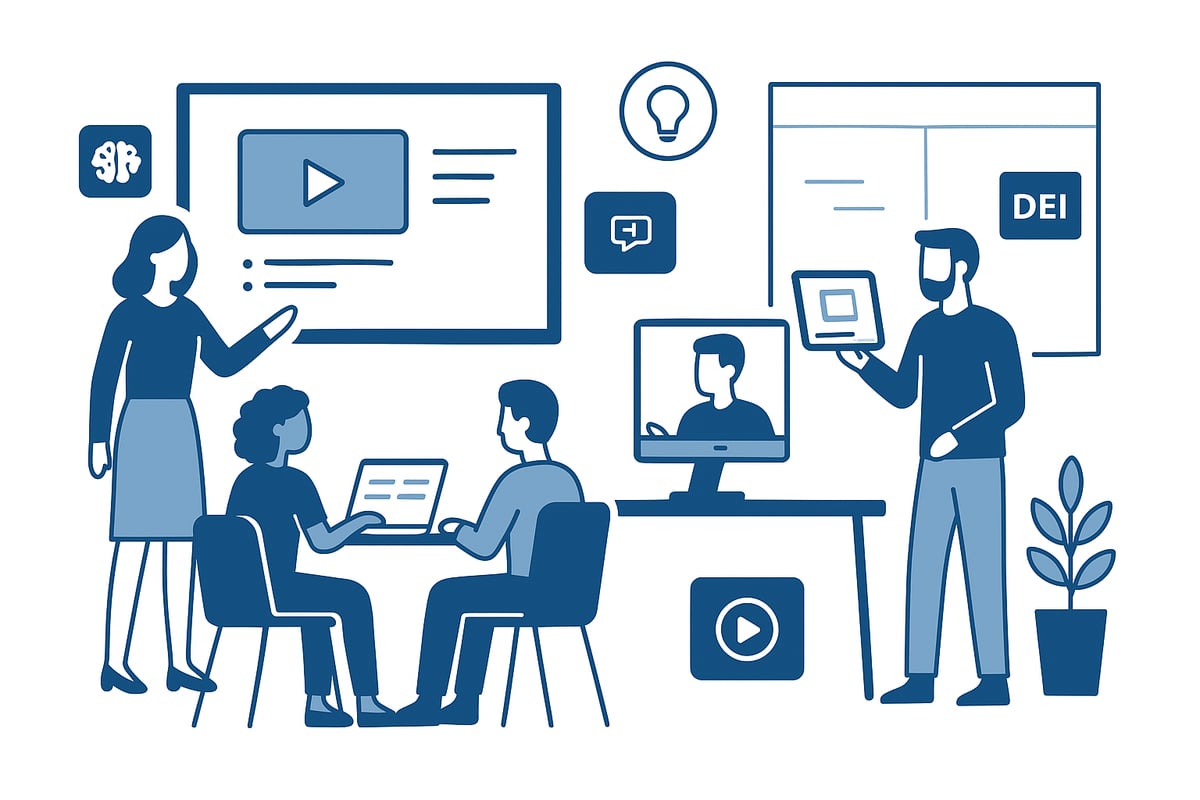
Hybrid and remote work have fundamentally changed how organisations deliver training consulting solutions. Employees now expect flexible, accessible learning that fits around their work and personal commitments.
This shift has led to a stronger focus on soft skills and leadership development. As teams work across locations, communication, adaptability, and emotional intelligence have become essential. Many firms are prioritising these areas to enhance collaboration and resilience.
According to the LinkedIn Workplace Learning Report 2024, 74% of L&D professionals identify upskilling and reskilling as top priorities. This data highlights the crucial role of training consulting in preparing staff for future challenges.
Key Trends Shaping Training Consulting for 2026
Several trends are shaping the future of training consulting. Microlearning is gaining momentum, offering bite-sized content that increases retention and fits busy schedules. Personalised learning paths, supported by data analytics, allow employees to focus on areas most relevant to their roles.
Artificial intelligence is becoming integral, enabling tailored learning experiences and real-time feedback. Companies are adopting AI-driven platforms to better meet individual needs.
Diversity, equity, and inclusion (DEI) are now central to training content. Organisations are embedding DEI principles across programmes, ensuring all staff feel represented and valued. These trends collectively drive more effective and inclusive training consulting.
| Trend | Impact on Training Consulting |
|---|---|
| Microlearning | Higher engagement, better recall |
| AI & Analytics | Personalised, adaptive learning |
| DEI | Inclusive, representative content |
Regulatory and Compliance Considerations
Workplace training consulting must now account for evolving regulations. New laws address topics like workplace safety, harassment prevention, and mandatory upskilling in regulated industries.
Data privacy is a growing concern. Training materials must comply with data protection standards and safeguard employee information. Digital accessibility is also essential, with guidelines such as WCAG ensuring content is usable by all staff, including those with disabilities.
Staying compliant requires regular reviews of training consulting materials and close attention to legal developments.
Market Growth and Competitive Dynamics
The global corporate training market is projected to expand significantly by 2026. This growth is driven by rapid technological change, shifting workforce demographics, and increased investment in learning initiatives.
Consulting firms now face intense competition, pushing them to specialise in niche areas such as digital transformation, DEI, or sector-specific compliance. Market leaders differentiate themselves through innovative delivery models and measurable outcomes.
As the market evolves, organisations will rely on training consulting to secure a competitive edge, address emerging skills gaps, and support long-term growth.
Essential Steps to Launching a Successful Training Consulting Initiative
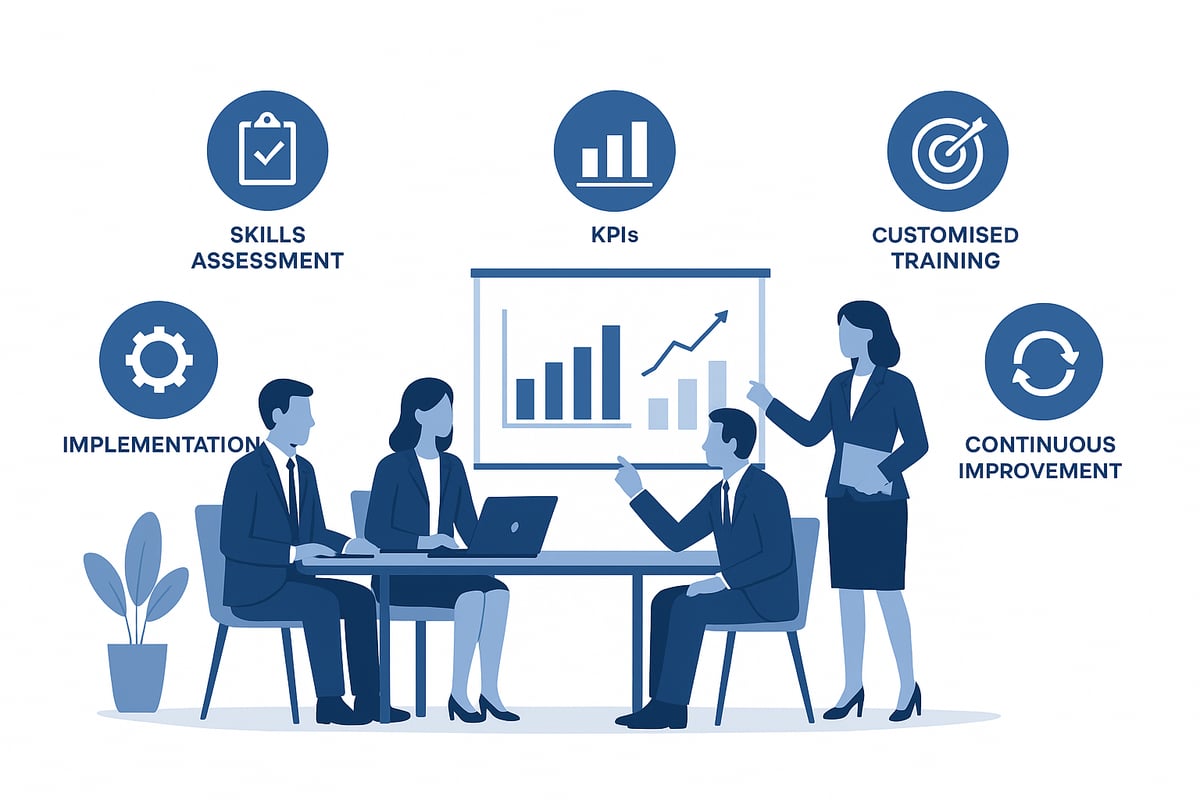
Launching an effective training consulting initiative requires a structured approach. Each step builds a foundation for sustainable learning outcomes and measurable business impact. Let us break down the essential phases to guide your organisation towards success.
Step 1: Assessing Organisational Training Needs
The first step in any training consulting project is a comprehensive needs assessment. Organisations must identify gaps between current capabilities and future business objectives. This process involves collecting data from HR, management, and employees to ensure a well-rounded perspective.
Effective tools include skills gap analyses, pulse surveys, and performance metrics. Stakeholder engagement is critical for accuracy. For a deeper understanding of how skills relate to business outcomes, the Multidimensional Skills and Human Capital Study provides valuable insights.
A robust assessment ensures that your training consulting initiative targets the right areas for development and aligns with overall strategic goals.
Step 2: Defining Clear Objectives and KPIs
Clear objectives and measurable KPIs are the backbone of successful training consulting. Align your training goals with the strategic vision of the business. What skills or behaviours do you want to change? How will you know when you have succeeded?
Set SMART goals: Specific, Measurable, Achievable, Relevant, and Time-bound. Use performance data to track progress. Research shows that organisations with defined KPIs achieve a 30 percent higher return on investment from training consulting.
By creating a roadmap with clear milestones, you ensure that every training consulting effort delivers tangible results.
Step 3: Selecting the Right Consulting Model
Choosing the right consulting model is vital for effective training consulting. Options include in-house expertise, external consultants, or hybrid approaches. Each model offers distinct benefits and challenges.
- In-house: Greater control, deeper organisational knowledge
- External: Fresh perspective, specialised skills
- Hybrid: Combines strengths of both, often ideal for leadership development
A mid-sized tech company, for example, might use a hybrid approach for leadership programmes, blending internal trainers with external experts. Evaluate your resources, culture, and project requirements to select the most suitable training consulting model.
Step 4: Designing Customised Training Solutions
Customisation is a hallmark of impactful training consulting. Tailor your learning content to address specific organisational challenges, industry requirements, and workforce demographics.
Blended learning approaches—combining online modules, live workshops, and on-the-job activities—support different learning styles and maximise engagement. Use data from your needs assessment to inform content design and delivery methods.
Effective training consulting ensures that every solution is relevant, practical, and aligned with business objectives, leading to higher engagement and better outcomes.
Step 5: Implementation and Change Management
Implementing a new training consulting initiative requires careful planning and stakeholder buy-in. Develop a clear rollout strategy, communicate the benefits, and provide ongoing support to all participants.
Change management is essential to overcome resistance. Use regular updates, feedback sessions, and visible leadership support to maintain momentum. Incorporate best practices from change management consulting strategies to strengthen your approach.
By focusing on communication and support, your training consulting project is more likely to achieve lasting adoption and cultural integration.
Step 6: Measuring Impact and Continuous Improvement
The final step in training consulting is to measure results and drive continuous improvement. Use analytics tools to track progress, gather feedback, and assess learning outcomes.
Regular review cycles allow you to refine training content and delivery methods. Collect both quantitative data (such as completion rates and assessment scores) and qualitative feedback from participants.
Commit to ongoing evaluation and iteration. This ensures your training consulting initiative remains aligned with business needs and continues to deliver measurable value over time.
Consulting Models and Frameworks: Choosing What Works
Selecting the right consulting models and frameworks is pivotal in training consulting. Organisations face a diverse array of options, each offering unique strengths for different needs. Understanding these models helps leaders make informed decisions that drive sustainable learning outcomes.
Overview of Popular Consulting Frameworks
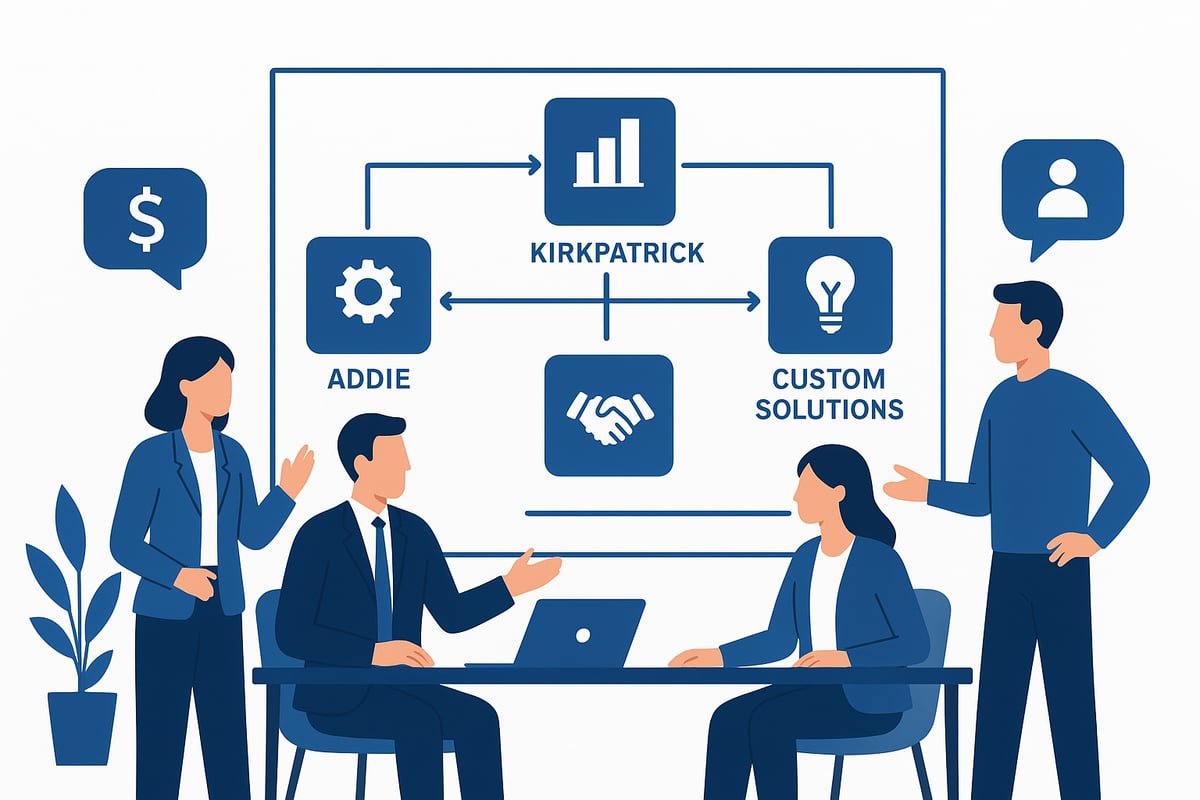
Several established frameworks shape the training consulting landscape. ADDIE (Analyse, Design, Develop, Implement, Evaluate) remains a foundational model, offering a structured, stepwise approach. It is ideal for organisations seeking a systematic methodology, especially for large-scale or compliance-driven projects.
The Kirkpatrick Model is another influential framework. It focuses on evaluating training effectiveness across four levels: reaction, learning, behaviour, and results. This model is particularly useful when organisations need to measure tangible business impact.
Other models, such as SAM (Successive Approximation Model) and AGILE, provide flexibility for environments where rapid iteration and feedback are crucial. Selecting the appropriate framework depends on project goals, timelines, and available resources.
For organisations prioritising leadership development, frameworks can be tailored to address specific competencies. Explore more about leadership development training topics to see how frameworks support targeted growth.
Bespoke vs. Off-the-Shelf Solutions
Choosing between bespoke and off-the-shelf solutions is a key decision in training consulting. Bespoke programmes are custom-designed to address unique organisational challenges. They offer a high degree of relevance and can be aligned closely with company culture and objectives.
Off-the-shelf solutions, in contrast, provide ready-made content and structure. These are often more cost effective and quicker to deploy, making them suitable for common skills or compliance training.
| Solution Type | Advantages | Limitations |
|---|---|---|
| Bespoke | Custom fit, highly relevant | Higher cost, longer development time |
| Off-the-shelf | Fast, cost effective | Less tailored, potential misalignment |
The choice depends on the complexity of needs, budget, and urgency. Training consulting professionals help organisations navigate this decision for maximum impact.
Pricing Structures and Engagement Models
Pricing in training consulting varies by engagement model. The three most common structures are retainer, project based, and outcome based.
- Retainer: Ongoing support for a fixed monthly fee, ideal for long term partnerships.
- Project based: One off fee for defined deliverables, suitable for specific initiatives.
- Outcome based: Payment tied to achieving agreed results, aligning consultant incentives with client success.
Average consulting fees for training services in 2026 are projected to rise, reflecting increased demand and market specialisation. Transparent pricing models help build trust and ensure alignment between consultants and clients.
Building Long-Term Partnerships
Sustained success in training consulting often relies on long term relationships. Ongoing partnerships allow consultants to respond to evolving business needs and provide continuous improvement.
Long term engagements foster deep understanding of organisational culture and challenges. Consultants can proactively identify new skill gaps and recommend timely interventions. This approach transforms training consulting from a transactional service into a strategic partnership.
In summary, choosing the right models, solutions, and engagement structures is essential for lasting training outcomes.
Integrating Technology and Innovation in Training Consulting
Innovation is reshaping the landscape of training consulting. Organisations are adopting new technologies to deliver effective, engaging, and measurable learning experiences. As we move towards 2026, integrating digital solutions is no longer optional, but essential for staying competitive.

Leveraging Digital Platforms and Tools
Digital transformation has revolutionised training consulting. Learning Management Systems (LMS) and virtual classroom technologies now enable seamless content delivery to distributed teams. Organisations are increasingly embracing tools that support hybrid and remote learning environments.
AI, VR, and AR are central to this evolution. AI-powered platforms personalise learning journeys, while VR and AR simulate real-world scenarios, such as safety training in manufacturing. For example, Integrating AI in workplace training offers tailored experiences, automating content recommendations and tracking learner progress.
Key digital tools include:
- Learning Management Systems (LMS)
- Virtual classrooms and webinars
- AI-driven content curation
- VR and AR for experiential learning
Selecting the right mix is vital for effective training consulting. These technologies enhance accessibility and interactivity, driving better outcomes.
Data Analytics and Personalisation
Data analytics is transforming how training consulting measures impact and adapts to learner needs. Advanced analytics platforms collect and interpret user data, empowering consultants to refine content and delivery methods.
Personalised learning paths are now achievable at scale. Using insights from platforms like the Udemy Q4 2024 Global Workplace Learning Index, consultants identify skill gaps and adjust training in real time. A leading retail chain, for example, improved onboarding by analysing participation metrics and tailoring modules accordingly.
Benefits of analytics in training consulting:
- Real-time feedback and progress tracking
- Adaptive learning modules
- Improved engagement and retention
Personalisation ensures each learner receives relevant, impactful content, maximising the value of training consulting.
Ensuring Accessibility and Inclusivity
Ensuring digital training content is accessible is critical in modern training consulting. Compliance with standards like WCAG promotes inclusivity, allowing all employees to benefit from learning materials regardless of ability.
Best practices include:
- Clear navigation and consistent layouts
- Subtitles and alternative text for media
- Keyboard and screen reader compatibility
Digital accessibility also supports diversity, equity, and inclusion goals. Accessible content reflects an organisation’s commitment to an inclusive culture, which is increasingly important in training consulting strategies.
Balancing Technology with Human Expertise
While technology is vital, human expertise remains at the heart of training consulting. Instructor-led sessions and experiential learning offer context, mentorship, and real-world application that digital tools alone cannot provide.
Blended learning models are particularly effective. According to CIPD 2024, 61% of employees prefer a mix of online and instructor-led formats. This approach combines the scalability of digital platforms with the personal touch of expert facilitators.
Table: Comparison of Learning Approaches
| Approach | Advantages | Limitations |
|---|---|---|
| Purely Digital | Scalable, flexible, data-driven | Less personal, engagement |
| Instructor-led | Personalised, interactive | Costly, less scalable |
| Blended | Balanced, adaptive, engaging | Requires coordination |
The most successful training consulting solutions blend innovation with human insight, ensuring learning is both effective and adaptable.
Expert Insights and Best Practices for 2026
Expert perspectives are shaping the future of training consulting. As we look ahead to 2026, industry leaders highlight evolving roles, essential skills, and proven strategies for sustainable success. This section explores the competencies consultants need, how to build a high-impact practice, ways to overcome challenges, and tips for future-proofing services in a dynamic landscape.
Emerging Roles and Skills for Training Consultants
The scope of training consulting is expanding rapidly. Consultants must now master digital fluency, AI literacy, and agile project management. Organisations increasingly seek expertise in change management and the ability to deliver value both on-site and remotely.
A top priority is developing deep knowledge in diversity, equity, and inclusion (DEI). Clients expect consultants to integrate DEI principles into every aspect of training consulting. For those seeking to upskill in this area, dedicated Diversity, equity, and inclusion training programmes are available.
Other in-demand skills include data-driven decision-making and the ability to customise solutions for unique business challenges. Consultants who adapt quickly to new technologies and regulatory requirements will remain competitive as the field evolves.
Building a High-Impact Consulting Practice
Establishing credibility is crucial for success in training consulting. Consultants should invest in recognised certifications and prioritise continuous professional development. Building a strong brand presence, both online and offline, helps attract new clients and retain existing ones.
Effective networking and thought leadership, such as publishing insights or speaking at industry events, enhance reputation and visibility. A high-impact practice relies on measurable results, so consultants must showcase case studies and client testimonials that demonstrate real-world impact.
Strategic partnerships with technology providers and other experts can also add value. By offering a holistic approach, consultants position themselves as trusted advisors rather than just service providers.
Navigating Common Pitfalls and Challenges
Training consulting projects often encounter obstacles, such as client resistance, shifting goals, or budget constraints. The most successful consultants address these proactively, starting with transparent communication and thorough needs assessments.
Common pitfalls include underestimating the time required for stakeholder engagement or failing to align training outcomes with business objectives. Consultants should use clear project plans and set realistic expectations from the outset.
When challenges arise, adaptability is key. Learning from setbacks and iterating solutions helps maintain momentum. Regular feedback loops ensure that both consultants and clients stay on track and achieve desired outcomes.
Future-Proofing Training Consulting Services
To stay relevant in 2026, training consulting professionals must embrace innovation and anticipate change. Integrating AI, automation, and data analytics into solutions is no longer optional. According to the Microsoft and LinkedIn 2024 Work Trend Index, organisations are prioritising skill development to keep pace with rapid technological advancements.
Continuous learning is essential. Consultants should regularly update their knowledge of industry trends, evolving regulations, and client needs. Building resilience and flexibility into consulting models positions firms to respond quickly to market shifts.
Ultimately, future-proofing training consulting means fostering a culture of lifelong learning, embracing diversity, and leveraging technology to deliver measurable business value. Consultants who lead with expertise, adaptability, and a client-centric mindset will thrive in the years ahead.

