

Organizations today face constant pressure to develop their workforce rapidly and effectively. Training workshops have emerged as one of the most powerful tools for achieving this goal, providing concentrated learning experiences that combine expert instruction with practical application. Whether delivered in person or virtually, well-designed workshops create transformative learning moments that classroom training or self-paced courses often cannot replicate. The difference between a forgettable session and one that drives lasting change lies in how these learning experiences are crafted, facilitated, and followed up.
Understanding the Core Purpose of Training Workshops
Training workshops serve a fundamentally different purpose than traditional training formats. They compress learning into focused time blocks, creating intensive environments where participants actively engage with content rather than passively receiving information. This concentrated format demands careful attention to every element, from the opening activity to the final takeaway.
Defining Clear Learning Objectives
Every successful workshop begins with crystal-clear objectives that specify exactly what participants should be able to do by the end of the session. These objectives drive every decision about content, activities, and assessment methods. According to best practices from experienced trainers, setting clear objectives ensures alignment between what you teach and what participants need to learn.
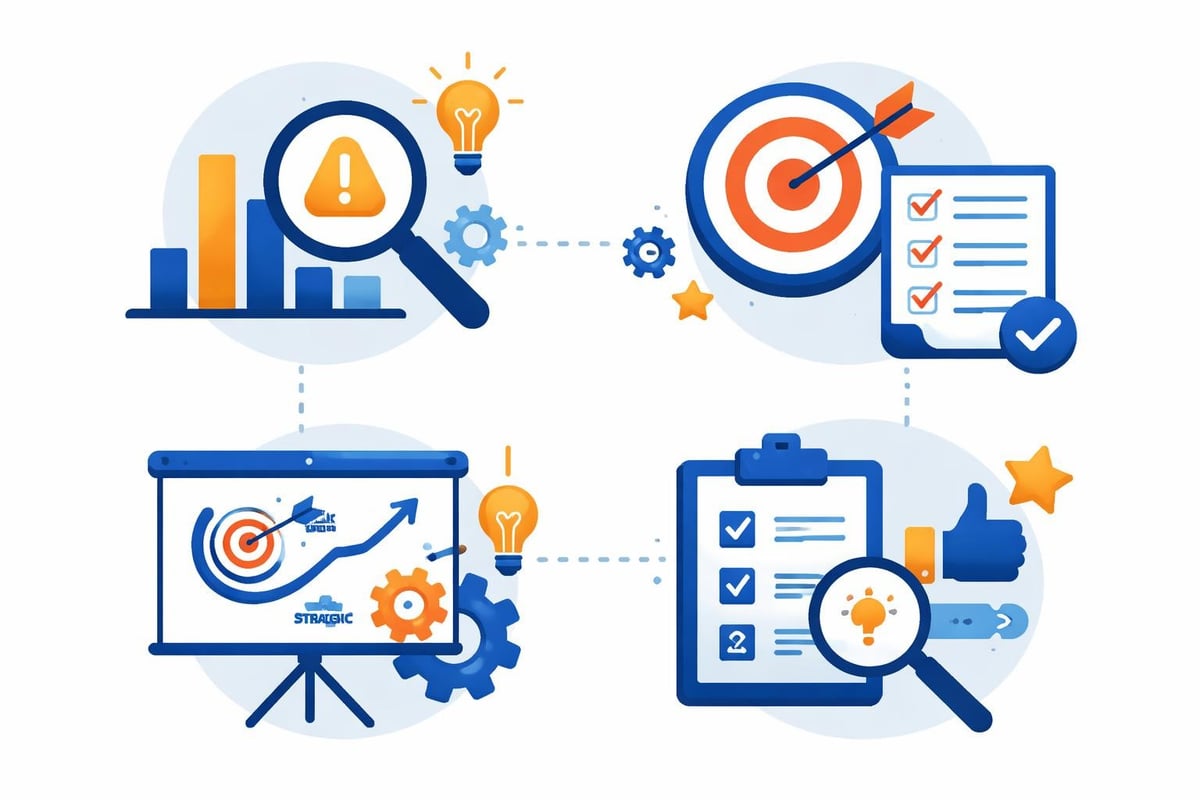
Effective objectives follow the SMART framework:
- Specific: Clearly state what participants will accomplish
- Measurable: Include criteria for assessing success
- Achievable: Set realistic expectations for the time available
- Relevant: Connect directly to participants' work contexts
- Time-bound: Specify when mastery should occur
The difference between stating "understand project management" and "create a project timeline using critical path analysis" illustrates the precision required. The latter provides a concrete, measurable outcome that both trainers and participants can evaluate.
Designing Workshop Content That Engages
Content design separates mediocre training workshops from exceptional ones. The most common mistake involves cramming too much information into limited time, leaving participants overwhelmed rather than empowered. Strategic content curation focuses on essential knowledge and skills whilst eliminating anything that doesn't directly support the learning objectives.
Structuring the Learning Journey
Workshop content should follow a logical progression that builds understanding incrementally. Begin with foundational concepts, layer in complexity gradually, and provide opportunities for practice at each stage. This scaffolded approach helps participants integrate new information with existing knowledge.
| Design Element | Purpose | Implementation |
|---|---|---|
| Opening Hook | Capture attention and establish relevance | Use a compelling story, surprising statistic, or provocative question |
| Knowledge Foundation | Build essential understanding | Present core concepts with clear explanations and visual aids |
| Guided Practice | Allow supervised application | Facilitate structured activities with immediate feedback |
| Independent Application | Test mastery | Assign challenges that simulate real-world scenarios |
| Reflection | Consolidate learning | Guide participants through what they've learned and how to apply it |
The art and craft of training workshop design emphasizes the importance of empowering participants throughout this journey. Each segment should provide clear value whilst building toward the overall learning outcome.
Balancing Theory and Practice
Adults learn best through doing. Research consistently shows that passive learning activities result in poor retention, whilst active application drives understanding and skill development. Effective training workshops allocate at least sixty percent of time to hands-on practice, case studies, role-plays, and problem-solving exercises.
For technical workshops, this might involve working with actual tools and systems. A workshop on spreadsheet automation, for instance, benefits enormously when participants can access resources like The Analytics Doctor for additional Excel training support that complements the hands-on practice during the session. For soft skills development, practice takes the form of simulations, group discussions, and experiential activities that mirror workplace challenges.
Facilitation Techniques That Drive Engagement
Content quality means nothing without skilled facilitation. The facilitator's ability to create psychological safety, manage group dynamics, and adapt to emerging needs determines whether participants feel comfortable enough to take risks, ask questions, and fully engage with the material.
Creating an Inclusive Learning Environment
Participants enter workshops with varying backgrounds, learning preferences, and comfort levels. Skilled facilitators acknowledge this diversity explicitly and create conditions where everyone can contribute meaningfully. This starts with establishing ground rules collaboratively rather than imposing them, giving participants ownership over the learning space.
Key facilitation practices include:
- Active listening: Demonstrating genuine interest in participant contributions
- Inclusive questioning: Using techniques that engage quieter participants
- Constructive feedback: Reinforcing positive behaviours whilst redirecting unproductive ones
- Energy management: Reading the room and adjusting pace or activity type accordingly
- Conflict navigation: Addressing disagreements productively to deepen understanding
Principles for designing effective workshops highlight how facilitator presence and responsiveness shape participant experience. When facilitators model curiosity, vulnerability, and continuous learning, participants feel permission to do the same.
Managing Time and Pacing
Time management represents one of the most challenging aspects of workshop facilitation. Sessions inevitably encounter delays: technology issues, extended discussions, or activities that require more time than anticipated. Skilled facilitators build flexibility into their designs whilst protecting time for the most critical learning activities.
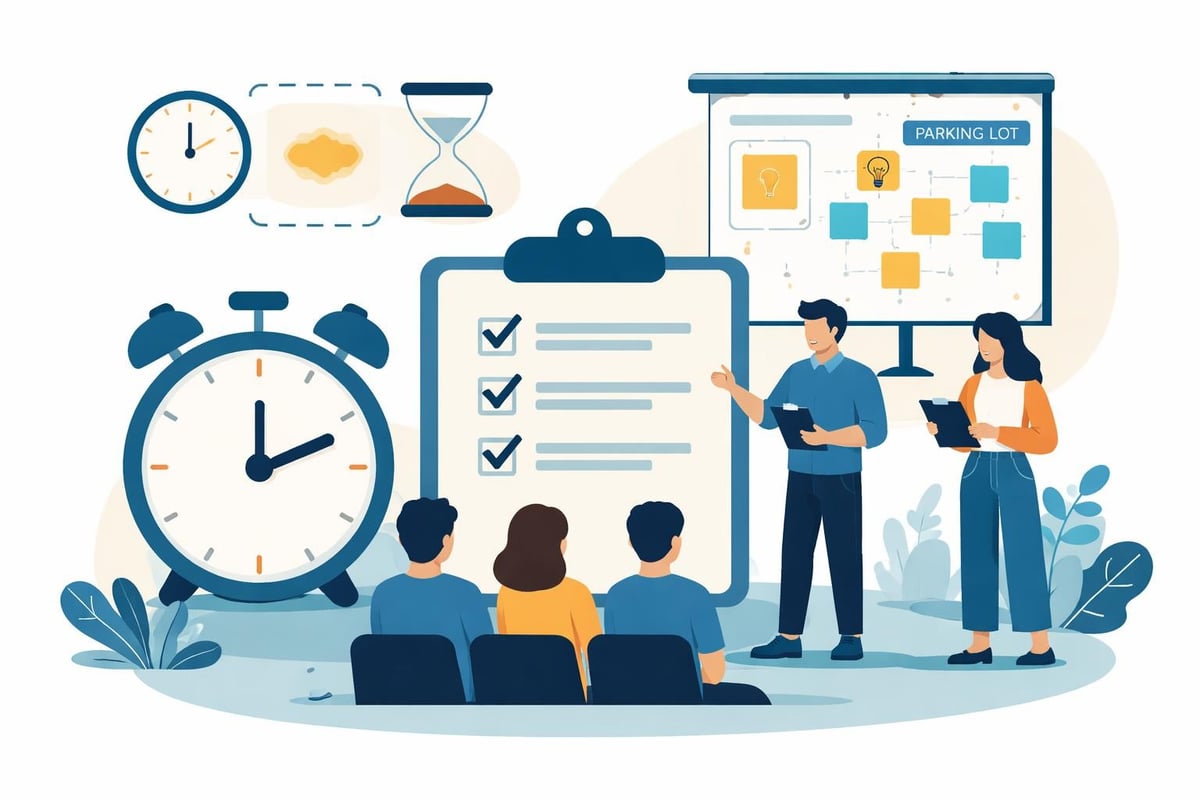
The ninety-minute attention span principle suggests breaking workshops into focused segments with regular breaks. Even in half-day sessions, incorporating brief stretches, pair discussions, or quick energizers maintains engagement and information processing capacity.
Adapting Workshops for Virtual Delivery
The shift toward remote work has transformed training workshops fundamentally. Virtual delivery introduces unique challenges around engagement, technology management, and creating connection amongst distributed participants. However, it also offers advantages in accessibility, cost-effectiveness, and flexibility.
Virtual Workshop Best Practices
Conducting effective virtual training workshops requires intentional design choices that compensate for the lack of physical presence. Successful virtual workshops leverage technology strategically rather than simply replicating in-person sessions on video calls.
Critical considerations include:
- Pre-workshop preparation: Send materials in advance and test technology with participants
- Interactive tools: Use polls, breakout rooms, shared documents, and virtual whiteboards
- Camera-on culture: Encourage video participation to maintain connection
- Frequent check-ins: Assess understanding more often than in-person sessions
- Shorter segments: Reduce session length or build in more frequent breaks
The platform selection matters significantly. Video conferencing tools with robust breakout room functionality, screen sharing, and chat features enable more interactive experiences. Supplementing with collaborative platforms for ongoing work between sessions extends the learning beyond scheduled meeting times.
Hybrid Workshop Considerations
Hybrid delivery, combining in-person and virtual participants simultaneously, presents the most challenging format. It requires exceptional facilitation skills and often benefits from a co-facilitator dedicated to the virtual audience. Technology setup becomes crucial, with quality audio, multiple cameras, and screen sharing capabilities essential for ensuring virtual participants don't become second-class learners.
Organizations exploring diverse training options can review the comprehensive course catalogue to identify workshops suitable for different delivery formats based on content type and learning objectives.
Measuring Workshop Effectiveness
Training workshops represent significant investments of time and resources. Organizations rightfully expect measurable returns, yet many workshops lack robust evaluation mechanisms. Effective measurement goes beyond participant satisfaction surveys to assess actual learning, behaviour change, and business impact.
Multi-Level Evaluation Framework
The Kirkpatrick Model provides a time-tested framework for evaluating training effectiveness across four levels:
| Level | What It Measures | Methods | Timing |
|---|---|---|---|
| Reaction | Participant satisfaction and engagement | Surveys, feedback forms, observation | Immediately after workshop |
| Learning | Knowledge and skill acquisition | Assessments, demonstrations, tests | During and immediately after workshop |
| Behaviour | On-the-job application | Manager observations, self-reports, peer feedback | 30-90 days post-workshop |
| Results | Business impact | Performance metrics, productivity data, quality measures | 3-6 months post-workshop |
Most organizations focus heavily on Level 1 evaluation whilst neglecting the more meaningful levels. Comprehensive evaluation requires planning assessment strategies during the design phase, not as an afterthought. Planning training workshops that deliver real results means building measurement into every stage of the learning journey.
Using Data to Improve Future Workshops
Evaluation data serves two purposes: demonstrating value to stakeholders and improving future delivery. Patterns in participant feedback, assessment results, and behaviour change data reveal what's working and what needs adjustment. This continuous improvement cycle ensures training workshops evolve to meet changing organizational needs.
Common refinements based on evaluation data include adjusting content depth, modifying activity types, changing session duration, or providing additional follow-up resources. Organizations delivering multiple workshops benefit from creating feedback loops that capture insights from each cohort and systematically incorporate improvements.
Building Sustainable Workshop Programs
One-off training workshops rarely generate lasting organizational change. Sustainable development requires integrated programs where individual workshops connect to broader learning pathways, reinforcement activities, and performance support systems. Innovative and engaging training programs segment learning over time to reinforce key concepts and prevent the forgetting curve from erasing workshop gains.
Pre-Workshop Preparation
Effective workshops begin before participants arrive. Pre-work activities prime learners, establish baseline knowledge, and enable workshops to focus on application rather than information transfer. This might include reading assignments, video modules, skill assessments, or reflective exercises that help participants identify personal learning goals.
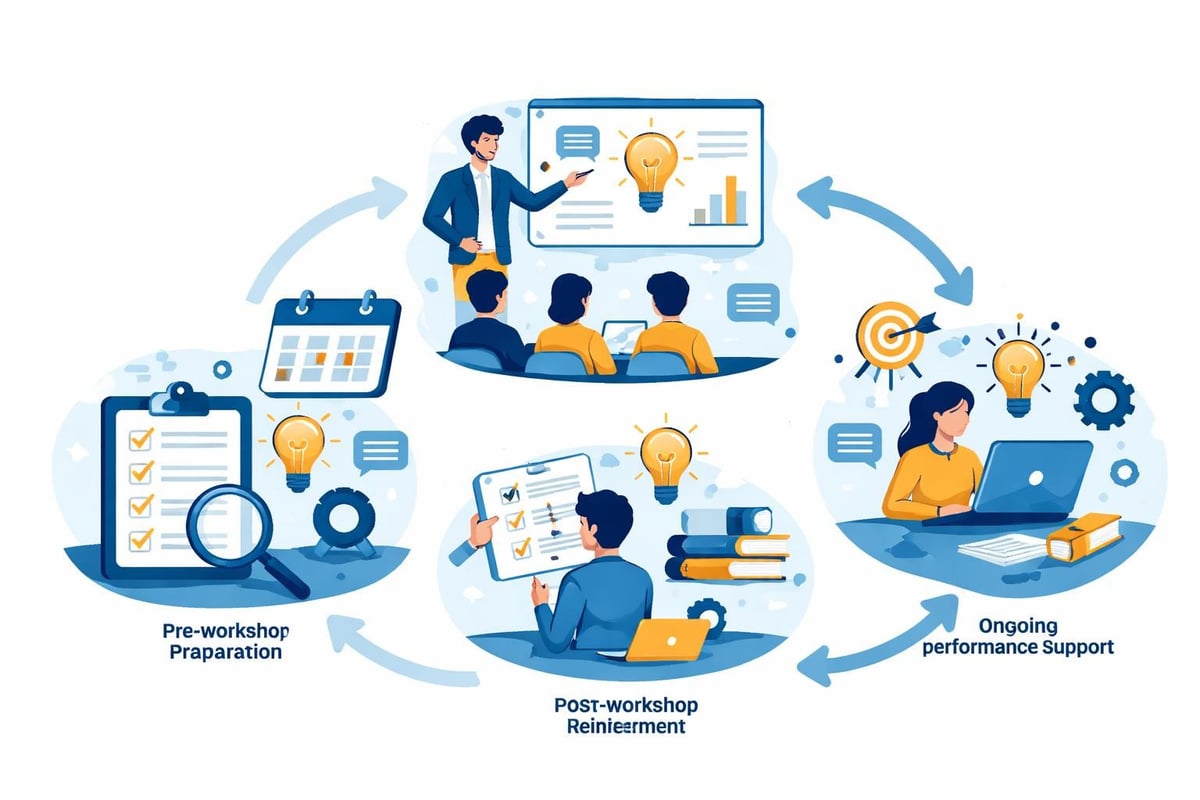
Communication with participants and their managers sets expectations, explains the workshop's relevance, and secures commitment to applying new skills. Managers play a critical role in workshop success by discussing objectives beforehand, providing opportunities for practice afterwards, and recognizing application efforts.
Post-Workshop Reinforcement
The most critical phase of any workshop occurs after the formal session ends. Without reinforcement, participants forget up to ninety percent of what they learned within a month. Effective reinforcement strategies include:
- Action planning: Participants commit to specific applications within defined timeframes
- Follow-up sessions: Brief reconvening sessions allow sharing successes and troubleshooting challenges
- Peer learning groups: Small cohorts meet regularly to support ongoing skill development
- Digital resources: Job aids, video refreshers, and quick-reference guides provide just-in-time support
- Manager check-ins: Structured conversations ensure leaders reinforce workshop concepts
Organizations can explore various training topics and specializations to build comprehensive development pathways where workshops complement other learning modalities.
Selecting the Right Workshop Format
Training workshops come in numerous formats, each suited to different learning objectives, participant needs, and organizational constraints. Understanding format options enables better matches between learning goals and delivery methods.
Workshop Duration and Intensity
Workshops range from focused ninety-minute sessions to multi-day intensive programmes. Duration decisions should reflect content complexity, skill practice requirements, and participant availability. Designing effective short courses requires careful planning to maximize limited contact time whilst ensuring adequate depth.
Common duration options include:
- Half-day workshops (3-4 hours): Ideal for focused skill development or introductory topics
- Full-day workshops (6-7 hours): Allow deeper exploration and substantial practice time
- Multi-day workshops (2-5 days): Enable complex skill development and significant behaviour change
- Series formats: Multiple shorter sessions spread over weeks combine concentrated learning with practice intervals
The spacing effect in learning science suggests that distributed practice over time produces better long-term retention than massed practice. Therefore, a series of half-day workshops often outperforms a single intensive week for sustainable skill development.
Choosing Between Open-Enrolment and Custom Programs
Organizations face decisions about sending individuals to scheduled open-enrolment workshops versus designing custom programmes for intact teams. Each approach offers distinct advantages. Open-enrolment workshops provide networking opportunities, expose participants to perspectives from other organizations, and typically cost less per participant. Custom workshops enable tailored content, use organization-specific examples, build team cohesion, and schedule around operational needs.
The decision often hinges on several factors:
- Group size: Larger groups make custom delivery more cost-effective
- Content specificity: Unique organizational processes require customization
- Confidentiality concerns: Sensitive topics benefit from private sessions
- Scheduling flexibility: Open-enrolment works when release time is available
- Team development goals: Custom sessions strengthen team dynamics
Organizations seeking customized solutions can work with training providers offering extensive course libraries and experienced facilitators who adapt content to specific organizational contexts. Exploring available training categories helps identify relevant workshop topics suitable for customization.
Overcoming Common Workshop Challenges
Even well-designed training workshops encounter obstacles that threaten effectiveness. Anticipating common challenges and preparing mitigation strategies separates reactive from proactive facilitators.
Managing Difficult Participants
Every facilitator eventually encounters challenging participant behaviours: dominating discussions, resisting activities, displaying negativity, or disengaging entirely. These behaviours often stem from legitimate concerns or unmet needs rather than malicious intent. Effective responses acknowledge the underlying issue whilst redirecting energy productively.
Workshop facilitation skills include specific techniques for managing various difficult situations. For dominant participants, structured turn-taking and small group activities ensure balanced participation. For resistant participants, exploring their concerns privately often reveals valid objections that, when addressed, transform resistance into engagement.
Addressing Mixed Skill Levels
Workshops frequently include participants with varying baseline knowledge and skill levels. Designing for the middle risks boring advanced participants whilst losing beginners. Multi-level design techniques accommodate diversity without compromising learning quality.
Strategies include:
- Tiered activities: Offer basic, intermediate, and advanced versions of practice exercises
- Peer teaching: Pair more experienced participants with novices for mutual benefit
- Optional pre-work: Provide resources for self-paced preparation before the workshop
- Differentiated objectives: Establish minimum standards whilst encouraging stretch goals
- Flexible pacing: Build in self-directed practice time where individuals work at their own speed
The most sophisticated approach involves pre-workshop assessment that identifies skill levels and enables targeted content adjustment before the session begins.
Handling Technology Failures
Technology enhances modern workshops but also introduces failure points. Presentation software crashes, video connections drop, and interactive tools malfunction at the worst possible moments. Skilled facilitators maintain backup plans and demonstrate calm adaptability when technology disappoints.
Essential contingencies include offline copies of all materials, alternative activities that don't require technology, and practiced transitions when switching to backup plans. Most importantly, treating technology issues as minor inconveniences rather than catastrophes maintains participant confidence and workshop momentum.
Creating Lasting Impact Beyond the Workshop
The ultimate measure of workshop success isn't what happens during the session but what changes afterwards in daily work performance. Creating lasting impact requires intentional design choices that bridge the gap between learning and application.
Building Application Opportunities
Transfer of training depends heavily on whether participants have opportunities to practice new skills in their actual work contexts. Workshop design should explicitly consider the work environment participants will return to and build connections between workshop content and daily responsibilities.
This might involve designing practice activities using real projects, having participants develop implementation plans for specific workplace situations, or creating tools they'll actually use on the job. The more workshop outputs resemble actual work products, the more likely participants will continue using new skills after training ends.
Engaging Leadership Support
Leadership support dramatically influences whether workshop learning translates into behaviour change. Leaders who understand workshop objectives, reinforce key concepts, provide practice opportunities, and recognize application efforts create conditions where new skills flourish. Conversely, leaders who ignore or contradict workshop teachings undermine even the most expertly facilitated sessions.
Effective training programs include leader briefings before workshops and provide discussion guides for post-workshop conversations. Some organizations require managers to attend abbreviated versions of their team's workshops, creating shared language and understanding that facilitates ongoing development.
Measuring Long-Term Impact
Short-term enthusiasm after training workshops often fades without systematic follow-through. Organizations committed to maximizing training investment track application metrics over months, not just days. This might include observation protocols, self-assessment tools, performance indicators related to workshop skills, or customer feedback reflecting new capabilities.
Regular measurement signals organizational commitment to skill development whilst providing data for continuous program improvement. When participants know their application will be monitored and supported, they invest more effort in translating learning into practice.
Successful training workshops combine thoughtful design, skilled facilitation, and systematic follow-through to create meaningful learning experiences that drive measurable performance improvement. By focusing on clear objectives, engaging content, inclusive facilitation, and robust evaluation, organizations transform workshops from forgettable events into catalysts for sustainable change. My Training Network brings this comprehensive approach to every workshop we deliver, combining expert instructors, customizable content, and proven methodologies to help organizations across Canada develop their teams effectively. Whether you need a single focused workshop or a complete learning pathway, our network of trainers stands ready to design and deliver the high-impact training your organization deserves.

