

The corporate training landscape has undergone a fundamental transformation over the past few years, with organisations worldwide embracing digital delivery methods that maintain the human connection essential to effective learning. Virtual instructor led training has emerged as a powerful solution that combines the engagement and expertise of traditional classroom instruction with the flexibility and accessibility of online platforms. This approach allows businesses to deliver high-quality professional development without geographical constraints whilst preserving the interactive elements that make instructor-led sessions so valuable.
Understanding Virtual Instructor Led Training
Virtual instructor led training represents a synchronous learning approach where participants connect remotely through digital platforms whilst receiving real-time instruction from qualified trainers. Unlike pre-recorded e-learning modules, this format maintains the dynamic interaction between instructors and learners, enabling immediate clarification of concepts, spontaneous discussions, and adaptive teaching methods based on participant needs.
The methodology bridges the gap between traditional classroom training and self-paced online courses. Participants log into virtual sessions at scheduled times, engaging with instructors and fellow learners through video conferencing, screen sharing, chat functions, and collaborative tools. This structure ensures accountability whilst eliminating travel time and associated costs.
Key Components of Effective Sessions
Successful virtual instructor led programmes incorporate several essential elements that distinguish them from basic video calls. Interactive polling enables instructors to gauge understanding and adjust pacing accordingly. Breakout rooms facilitate small group discussions and activities, replicating the collaborative aspects of in-person workshops. Screen sharing allows trainers to demonstrate software applications, present visual materials, and guide participants through complex processes.

Digital whiteboards provide spaces for brainstorming, mapping concepts, and co-creating content. These tools transform passive viewing into active participation, maintaining engagement throughout sessions. The instructor-led training approach leverages these technologies to create immersive learning experiences that rival traditional classroom environments.
Benefits That Drive Adoption
Organisations implementing virtual instructor led training discover numerous advantages that extend beyond simple cost savings. The format offers unparalleled scalability, enabling companies to train employees across multiple locations simultaneously without coordinating travel logistics or securing physical venues.
Flexibility stands as a primary benefit, allowing participants to join sessions from home offices, regional offices, or anywhere with reliable internet connectivity. This accessibility particularly benefits organisations with distributed workforces or those operating across different time zones. Teams can access expert instruction regardless of geographical boundaries.
Cost Efficiency and Resource Optimisation
The financial implications prove compelling for most organisations. Virtual delivery eliminates venue rental fees, catering expenses, travel costs, and accommodation charges. These savings accumulate rapidly, especially for companies requiring regular training across dispersed teams. According to research on virtual training effectiveness, organisations typically reduce training costs by 40-60% whilst maintaining or improving learning outcomes.
| Cost Category | Traditional Training | Virtual Instructor Led |
|---|---|---|
| Venue Rental | £500-£2,000/day | £0 |
| Travel Expenses | £200-£800/participant | £0 |
| Accommodation | £150-£300/night | £0 |
| Trainer Travel | £400-£1,500 | £0 |
| Materials Printing | £15-£50/participant | £5-£10 (digital) |
Environmental sustainability also factors into the equation. Reduced travel translates to lower carbon emissions, supporting corporate responsibility initiatives whilst delivering practical benefits. Companies committed to environmental, social, and governance goals find virtual instructor led formats align perfectly with these values.
Design Principles for Engagement
Creating effective virtual instructor led sessions requires intentional design choices that account for the unique challenges of digital environments. Attention spans operate differently in virtual settings, necessitating adjustments to traditional training structures.
Session length deserves careful consideration. Whilst traditional workshops might run six or eight hours with breaks, virtual formats typically perform better in shorter segments. Two to three-hour blocks with scheduled breaks prevent screen fatigue and maintain focus. Some organisations split full-day programmes across multiple sessions, allowing participants to absorb content and apply concepts between meetings.
Interactive Elements That Sustain Attention
Passive listening proves particularly challenging in virtual environments where distractions abound. Successful programmes incorporate interactive elements every 7-10 minutes, ensuring continuous engagement. These might include:
- Quick polls assessing understanding or gathering opinions
- Chat-based activities encouraging all participants to contribute
- Screen annotation exercises where learners mark up shared content
- Brief partner discussions in breakout rooms
- Live demonstrations with participant volunteers
- Q&A segments addressing specific concerns
The best practices outlined by industry experts emphasise varying activities to accommodate different learning preferences and maintain energy throughout sessions. Visual learners benefit from slides and demonstrations, auditory learners engage through discussions, and kinaesthetic learners appreciate hands-on exercises and simulations.
Technical Infrastructure Requirements
Reliable technology forms the foundation of successful virtual instructor led training. Platform selection significantly impacts participant experience and learning outcomes. Organisations must evaluate various options based on specific needs, participant technical literacy, and desired features.
Popular platforms include Zoom, Microsoft Teams, WebEx, and Adobe Connect, each offering distinct advantages. Key criteria include participant capacity, breakout room functionality, recording capabilities, security features, and integration with existing systems. Selecting appropriate virtual tools ensures smooth delivery and minimises technical disruptions.
Preparing for Technical Challenges
Even with robust platforms, technical difficulties occasionally arise. Proactive planning mitigates these issues and maintains session momentum. Trainers should conduct technology checks before sessions, testing audio, video, screen sharing, and interactive features. Participants benefit from pre-session guidance covering platform access, audio/video settings, and basic troubleshooting.
Backup plans prove invaluable when primary systems fail. Alternative communication channels, such as phone conferencing or secondary platforms, provide safety nets. Recording sessions offers additional security, allowing participants who experience technical difficulties to review content later. The common pitfalls identified by experts frequently relate to inadequate technical preparation and insufficient contingency planning.
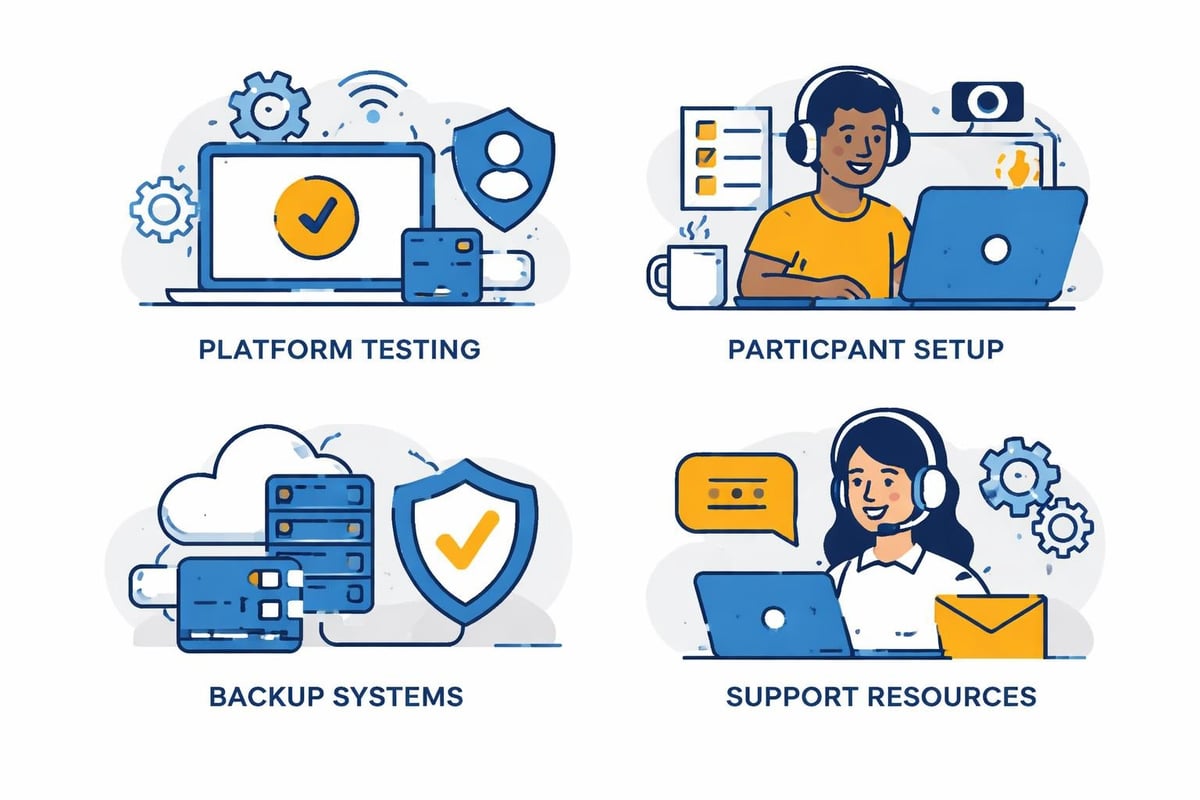
Support resources should remain accessible throughout sessions. Designating a technical support person who can assist participants experiencing issues prevents instructors from interrupting content delivery to troubleshoot. This person monitors chat for technical questions, helps participants join breakout rooms, and resolves connectivity problems.
Instructor Skills and Preparation
Delivering effective virtual instructor led training demands skills beyond traditional classroom facilitation. Trainers must manage technology whilst maintaining engagement, monitoring participant reactions through screens, and creating connection despite physical distance.
Energy and presence require conscious amplification in virtual environments. Successful trainers project enthusiasm through vocal variety, animated facial expressions, and purposeful gestures. They maintain eye contact by looking at cameras rather than screens, creating the impression of direct engagement with participants.
Preparation extends beyond content mastery. Trainers familiarise themselves thoroughly with platform features, practising screen transitions, breakout room management, and poll deployment. They prepare engaging visual materials optimised for screen viewing, avoiding text-heavy slides that prove difficult to read on smaller devices.
Building Virtual Rapport
Establishing connection with participants separated by screens presents unique challenges. Effective trainers arrive early, greeting participants individually as they join and engaging in informal conversation. They encourage camera usage, creating visual connection that fosters accountability and community.
Personal stories, relevant examples, and appropriate humour humanise instructors and make content relatable. Calling participants by name, acknowledging contributions, and creating opportunities for personal sharing builds relationships that enhance learning. The expert trainers at My Training Network specialise in creating these connections, leveraging years of experience to engage virtual audiences effectively.
Content Adaptation Strategies
Converting existing classroom materials for virtual delivery requires thoughtful adaptation rather than simple digital transfer. Content that worked effectively in person may need restructuring for virtual formats.
Chunking information into smaller segments accommodates shorter attention spans and allows frequent interaction. Activities requiring physical movement or hands-on materials need reimagining for virtual contexts. Role-playing exercises might utilise breakout rooms, whilst simulations could incorporate screen sharing or specialised software.
Multimedia Integration
Visual variety maintains interest and reinforces concepts through multiple channels. Successful virtual instructor led programmes incorporate:
- High-quality slides with clear visuals and minimal text
- Short video clips demonstrating concepts or providing case studies
- Infographics summarising complex information
- Interactive diagrams participants can annotate
- Live demonstrations of software or processes
- Guest speakers adding diverse perspectives
These elements break monotony whilst catering to different learning preferences. However, seamless integration requires testing to ensure smooth transitions and compatibility with chosen platforms. Our comprehensive course offerings demonstrate effective multimedia integration across diverse topics and skill levels.
Participant Experience Optimisation
Creating positive participant experiences extends beyond engaging content and skilled facilitation. Environmental factors, technical setup, and support resources significantly influence satisfaction and learning outcomes.
Pre-session communication sets expectations and prepares participants for success. Clear instructions covering platform access, technology requirements, pre-work assignments, and session schedules reduce confusion and anxiety. Providing agenda overviews helps participants understand content flow and allocate mental energy appropriately.
| Preparation Element | Purpose | Timing |
|---|---|---|
| Platform access credentials | Enable login | 1 week before |
| Technology testing session | Verify setup | 2-3 days before |
| Pre-work materials | Prime learning | 3-5 days before |
| Detailed agenda | Set expectations | 1 week before |
| Ground rules | Establish norms | Session opening |
Creating Conducive Learning Environments
Whilst instructors cannot control participant environments, they can offer guidance promoting focus and engagement. Suggestions include finding quiet spaces, using headphones to improve audio quality, minimising distractions, and ensuring adequate lighting for video participation.
Encouraging break utilisation proves essential for maintaining mental stamina. Structured breaks allow participants to step away from screens, address urgent matters, and return refreshed. Some organisations incorporate movement breaks with simple stretches or breathing exercises, acknowledging the physical toll of extended screen time.

Measuring Effectiveness and ROI
Evaluating virtual instructor led training effectiveness requires comprehensive assessment strategies that capture both immediate reactions and long-term impact. Traditional Kirkpatrick model levels remain relevant, adapted for virtual contexts.
Reaction measurement occurs immediately post-session through digital surveys assessing satisfaction, relevance, and delivery quality. Platforms often include built-in polling features enabling quick feedback collection before participants disconnect.
Learning assessment examines knowledge acquisition and skill development through pre- and post-tests, scenario-based exercises, or practical demonstrations. Virtual formats facilitate digital testing and automated scoring, providing immediate feedback to participants and comprehensive data to organisers.
Tracking Behaviour Change and Results
Measuring application and results presents greater challenges but delivers crucial insights into training impact. Follow-up surveys administered weeks or months post-training assess whether participants apply learned concepts in their roles. Manager feedback provides additional perspective on observable behaviour changes.
Business metrics tied to training objectives offer the strongest evidence of return on investment. Sales training effectiveness might be measured through conversion rates, customer service training through satisfaction scores, and leadership development through retention or engagement metrics. The services offered by My Training Network include comprehensive evaluation frameworks ensuring training investments deliver measurable business outcomes.
Emerging Trends and Future Developments
Virtual instructor led training continues evolving as technologies advance and organisations refine approaches based on accumulated experience. Several trends shape the future of this delivery method.
Hybrid models combining in-person and virtual participation accommodate diverse circumstances and preferences. Some participants join from central locations whilst others connect remotely, with instructors managing both audiences simultaneously. This flexibility maximises accessibility whilst maintaining options for face-to-face interaction.
Artificial intelligence increasingly supports virtual training through automated transcription, real-time translation, chatbot assistance, and predictive analytics identifying at-risk participants. These tools enhance accessibility and enable more personalised learning experiences.
Immersive Technologies on the Horizon
Virtual reality and augmented reality promise to revolutionise remote training by creating immersive environments that simulate physical presence. Early adopters use VR for scenarios difficult or dangerous to replicate in reality, such as emergency response training, complex equipment operation, or customer interaction practice.
These technologies remain relatively expensive and require specialised hardware, limiting widespread adoption. However, costs continue declining whilst capabilities expand, suggesting broader implementation within the coming years. Forward-thinking organisations experiment with these tools, positioning themselves at the forefront of training innovation.
Implementation Roadmap for Organisations
Successfully launching or optimising virtual instructor led training programmes requires systematic planning addressing technology, content, people, and processes. Organisations benefit from phased approaches that build capabilities progressively.
Initial steps include assessing current state, defining objectives, and securing stakeholder buy-in. Understanding existing training programmes, technology infrastructure, and participant readiness informs realistic planning and resource allocation. Clear objectives linked to business outcomes justify investment and guide decision-making throughout implementation.
Building Capabilities and Momentum
Pilot programmes allow organisations to test approaches on smaller scales, gathering feedback and refining processes before wider rollout. Selecting enthusiastic early adopters as participants and experienced trainers as facilitators increases success likelihood and generates positive word-of-mouth.
- Conduct needs assessment and define success metrics
- Select and configure technology platform
- Identify and train instructors on virtual delivery skills
- Adapt or develop content for virtual format
- Pilot with supportive audience and gather feedback
- Refine approach based on learnings
- Scale to broader audiences with ongoing support
- Continuously evaluate and optimise
Investing in trainer development proves crucial, as facilitation skills significantly impact outcomes. Workshops focusing specifically on virtual delivery techniques, platform mastery, and engagement strategies prepare instructors for success. Ongoing coaching and peer learning opportunities support continuous improvement.
Quality Standards and Continuous Improvement
Maintaining high standards requires commitment to quality assurance and responsiveness to feedback. Establishing clear criteria for content, delivery, and participant experience creates benchmarks against which performance is measured.
Regular content reviews ensure materials remain current, accurate, and aligned with organisational needs. Subject matter expert input, participant feedback, and performance data inform updates and revisions. Technology evolves rapidly, necessitating periodic platform evaluations and feature adoption.
Instructor performance evaluation through participant feedback, peer observation, and self-reflection supports development and consistency. Creating communities of practice where trainers share experiences, challenges, and innovations fosters collective learning and problem-solving. According to comprehensive guides on virtual training, organisations that prioritise continuous improvement see sustained engagement and impact over time.
Balancing Standardisation and Flexibility
Quality standards need not eliminate creativity or responsiveness. Frameworks providing guidance whilst allowing instructor autonomy accommodate different teaching styles and participant needs. Clear expectations regarding core elements, such as interaction frequency, assessment methods, and accessibility features, ensure baseline quality whilst permitting customisation.
Documentation of best practices, lesson templates, and resource libraries support consistency and efficiency. New trainers access proven approaches rather than starting from scratch, whilst experienced facilitators contribute innovations that benefit the broader community. This knowledge-sharing culture accelerates capability development and elevates overall programme quality.
Virtual instructor led training offers organisations a powerful approach to developing talent whilst maintaining flexibility and controlling costs. By combining expert instruction with digital accessibility, this format delivers engaging learning experiences that drive measurable business results. Whether you're building new capabilities, updating skills, or developing leaders, My Training Network provides the expertise, infrastructure, and customisable solutions to transform your training initiatives. Our network of qualified trainers delivers impactful programmes across Canada and internationally, ensuring your teams receive the development they need to excel in today's dynamic business environment.

