

The transformation of corporate training has accelerated dramatically over the past few years, with organisations worldwide recognising the power of virtual delivery methods. A virtual instructor brings the personalised engagement of traditional classroom settings to remote participants, combining human expertise with digital accessibility. This approach has become essential for businesses seeking to upskill their workforce efficiently whilst maintaining the quality and interactivity that drive real learning outcomes. As we navigate 2026, understanding how to maximise the effectiveness of virtual instruction has never been more critical for training providers and corporate learning departments.
The Evolution of Virtual Instruction in Corporate Training
The role of a virtual instructor has matured significantly beyond simply replicating in-person sessions through video conferencing. Today's virtual training specialists must master a unique blend of technological proficiency, pedagogical expertise, and digital engagement strategies. The shift towards remote and hybrid work environments has created unprecedented demand for skilled virtual instructors who can deliver measurable learning outcomes regardless of physical location.
Organisations are discovering that effective virtual instruction requires deliberate design choices. Unlike traditional classroom settings where physical presence creates natural accountability, virtual environments demand intentional strategies to maintain focus and participation. The most successful programmes integrate interactive elements, collaborative activities, and real-time feedback mechanisms that keep learners actively engaged throughout each session.
Technology Infrastructure and Platform Selection
Choosing the appropriate technology platform forms the foundation of successful virtual instruction. A virtual instructor must work with tools that support multiple learning modalities whilst remaining accessible to participants with varying technical capabilities. Video conferencing platforms should offer breakout rooms for small-group discussions, screen-sharing capabilities for demonstrations, and polling features for real-time assessment.

The platform selection process should consider these essential features:
- Reliability and uptime: Consistent performance across different internet speeds and geographic locations
- Accessibility features: Closed captioning, screen reader compatibility, and adjustable visual settings
- Integration capabilities: Seamless connection with learning management systems and content repositories
- Security protocols: End-to-end encryption and compliance with data protection regulations
- Scalability options: Support for varying group sizes and concurrent sessions
Beyond the primary platform, virtual instructors benefit from supplementary tools that enhance specific aspects of delivery. Digital whiteboards facilitate collaborative brainstorming, whilst audience response systems enable instant knowledge checks. Best practices for virtual classrooms emphasise the importance of selecting technology that supports your instructional goals rather than dictating them.
Designing Engaging Virtual Learning Experiences
The design phase determines whether a virtual instructor can truly connect with participants and facilitate meaningful learning. Unlike self-paced online courses, instructor-led virtual training offers dynamic interaction and personalised guidance. This human element becomes the differentiating factor that transforms passive content consumption into active skill development.
Effective session design balances content delivery with interactive application. A typical two-hour virtual workshop might allocate 30% to direct instruction, 40% to guided practice, and 30% to discussion and reflection. This ratio prevents the cognitive overload that occurs when participants passively receive information for extended periods.
Structuring Content for Virtual Delivery
Breaking content into focused segments maintains engagement and supports retention. A virtual instructor should plan learning modules of 15-20 minutes, punctuated by interactive activities that reinforce concepts. This chunking approach aligns with research on attention spans in digital environments whilst creating natural transition points for questions and discussion.
Consider this structure for a half-day virtual session:
| Time Block | Activity Type | Duration | Purpose |
|---|---|---|---|
| Opening | Welcome and objectives | 10 minutes | Orient participants |
| Module 1 | Content delivery | 20 minutes | Introduce core concepts |
| Activity 1 | Breakout discussion | 15 minutes | Apply learning |
| Module 2 | Demonstration | 25 minutes | Model skills |
| Activity 2 | Individual practice | 20 minutes | Build competence |
| Module 3 | Case study analysis | 30 minutes | Contextualise knowledge |
| Closing | Summary and action planning | 15 minutes | Reinforce takeaways |
This framework provides rhythm and variety whilst ensuring comprehensive coverage of learning objectives. Virtual instructor-led training best practices emphasise learner-centred design that prioritises engagement over information density.
Mastering Virtual Facilitation Techniques
The facilitation skills required for virtual instruction differ meaningfully from traditional classroom delivery. A virtual instructor must project energy and enthusiasm through a camera lens, read subtle participant cues through small video thumbnails, and maintain group cohesion across distributed locations. These challenges demand specific techniques and deliberate practice.
Vocal variety becomes particularly important in virtual settings where physical movement and gesture have reduced impact. Skilled virtual instructors modulate their pace, pitch, and volume to emphasise key points and maintain listener interest. Strategic pauses create space for reflection and signal transitions between topics.
Building Connection and Community
Establishing rapport in virtual environments requires intentional relationship-building from the session's opening moments. A virtual instructor might begin with a structured check-in that invites each participant to share a relevant experience or current challenge. These introductions serve dual purposes: they warm up participants' microphones and cameras whilst creating psychological safety for future contributions.
Maintaining visual engagement proves critical for virtual instruction success. Effective facilitators:
- Make eye contact by looking directly at the camera rather than the screen
- Use purposeful gestures that remain visible within the camera frame
- Position lighting to ensure facial expressions remain clear and welcoming
- Minimise distractions in the visible background that might compete for attention
- Vary camera angles occasionally to maintain visual interest during longer sessions
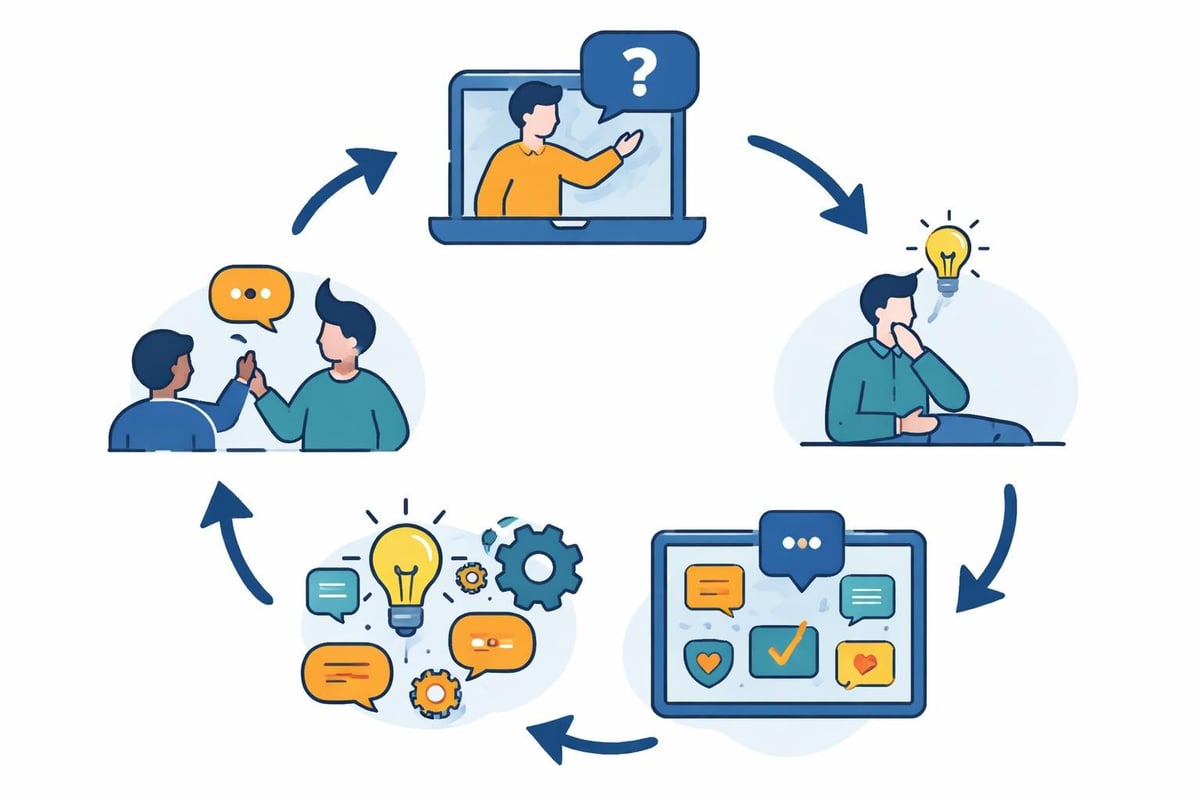
The chat function becomes a powerful tool for inclusive participation. Whilst some learners readily volunteer verbal responses, others prefer contributing through text. A virtual instructor should regularly monitor and acknowledge chat contributions, integrating written comments into the broader discussion. This dual-channel approach accommodates different communication preferences whilst creating multiple entry points for engagement.
Interactive Strategies That Drive Participation
Passive observation represents the greatest risk in virtual training environments. Without deliberate interaction design, participants easily slip into multitasking or mental disengagement. A virtual instructor must create frequent opportunities for active involvement that require cognitive processing and visible participation.
Polls and quick surveys provide immediate engagement whilst generating real-time data about participant understanding. Strategic polling can assess prior knowledge, check comprehension of new concepts, or gather opinions on application scenarios. The immediacy of results creates momentum and validates that every voice contributes to the collective learning experience.
Breakout Room Strategies
Small-group discussions in breakout rooms replicate the intimacy and psychological safety of table conversations in physical classrooms. A virtual instructor should design breakout activities with clear objectives, specific deliverables, and appropriate time limits. Providing written instructions ensures groups can reference their task without relying on memory.
Effective breakout room practices include:
- Pre-assign groups strategically to balance experience levels and perspectives
- Appoint facilitators within each breakout to guide discussion and timekeeping
- Visit rooms periodically to answer questions and observe dynamics
- Create accountability by having groups report findings to the full session
- Debrief thoroughly to connect small-group insights with broader learning objectives
Collaborative documents offer another avenue for simultaneous engagement. A virtual instructor might create a shared whiteboard where participants collectively brainstorm solutions, categorise concepts, or map processes. This visible collaboration demonstrates that learning emerges from the group's collective wisdom rather than solely from the instructor's expertise. Best practices for virtual facilitation recommend incorporating hands-on activities that promote practical application.
Addressing Technical Challenges and Accessibility
Even the most skilled virtual instructor encounters technical difficulties that threaten session flow and participant confidence. Proactive planning and graceful problem-solving separate experienced facilitators from novices. Establishing clear protocols for common issues minimises disruption whilst maintaining professional credibility.
Audio problems represent the most frequent technical challenge in virtual instruction. Clear guidelines about microphone usage prevent the chaos of multiple open microphones creating feedback and background noise. A virtual instructor should establish norms early: participants mute when not speaking, use the raise hand feature before unmuting, and test audio quality before contributing.
Creating Inclusive Virtual Learning Environments
Accessibility considerations ensure that virtual instruction serves all participants effectively regardless of physical abilities or learning preferences. A virtual instructor should provide materials in multiple formats, use platform accessibility features consistently, and invite participants to request accommodations privately.
| Accessibility Feature | Implementation | Benefit |
|---|---|---|
| Live captions | Automated transcription enabled | Supports hearing impairments and non-native speakers |
| Screen reader compatibility | Descriptive link text and alt text | Enables participation for visually impaired learners |
| Keyboard navigation | Full functionality without mouse | Accommodates motor skill limitations |
| Adjustable playback speed | Recording options | Allows personalised pace for review |
| Multiple communication channels | Chat, audio, and visual options | Accommodates diverse communication preferences |
Bandwidth limitations affect participants in rural areas or regions with developing infrastructure. A virtual instructor can accommodate varying connection speeds by sharing presentation files in advance, minimising video requirements during bandwidth-intensive activities, and offering dial-in audio options as alternatives to computer audio.
Measuring Effectiveness and Continuous Improvement
Evaluating virtual instruction quality requires examining both immediate engagement metrics and longer-term learning outcomes. A virtual instructor should track participation rates, activity completion, and assessment performance whilst also gathering qualitative feedback about the learning experience. This comprehensive data informs continuous refinement of content, delivery methods, and facilitation techniques.
Real-time analytics from virtual platforms provide immediate insights into engagement patterns. Attention to metrics such as active participation time, chat contributions, and poll responses reveals which segments maintain interest and which lose momentum. Understanding Virtual Instructor-Led Training offers additional perspectives on measuring programme effectiveness.

Post-Session Follow-Up and Reinforcement
The learning journey extends beyond the synchronous session. Effective virtual instructors design follow-up activities that reinforce concepts and support application in real-world contexts. This might include reflection assignments, peer coaching partnerships, or access to supplementary resources that deepen understanding.
Structured follow-up communication serves multiple purposes:
- Reinforces key takeaways through summary emails highlighting core concepts
- Provides additional resources such as articles, videos, or job aids
- Encourages application through action planning templates and accountability structures
- Gathers delayed feedback about what participants found most valuable after initial application
- Maintains momentum by previewing future sessions or related learning opportunities
For organisations offering diverse training solutions like leadership development or communication skills, the virtual instructor role becomes pivotal in creating consistent, high-quality learning experiences across multiple course offerings.
Developing Virtual Instruction Competencies
Becoming an effective virtual instructor requires deliberate skill development beyond traditional training expertise. The competency profile includes technical proficiency, digital communication skills, and adaptive facilitation abilities. Many experienced classroom trainers find that virtual environments demand new approaches to pacing, interaction, and energy management.
Professional development for virtual instructors should address platform mastery, engagement technique expansion, and troubleshooting capabilities. Organisations investing in instructor capability building see improved participant satisfaction, stronger learning outcomes, and greater scalability of their training programmes. Resources on designing virtual instructor-led training provide valuable frameworks for skill development.
Building a Sustainable Virtual Delivery Practice
Virtual instruction can be cognitively and emotionally demanding. The concentration required to simultaneously monitor participant engagement, manage technology, deliver content, and facilitate interaction creates unique fatigue. A virtual instructor must develop sustainable practices that preserve energy and effectiveness across multiple sessions.
Strategic scheduling prevents burnout whilst maintaining delivery quality:
- Limit consecutive sessions to avoid cumulative fatigue from sustained screen time
- Build in buffer time between sessions for preparation, decompression, and technical setup
- Vary delivery formats to prevent monotony and maintain instructor engagement
- Co-facilitate strategically to share cognitive load during complex or lengthy programmes
- Invest in equipment that reduces physical strain from extended computer use
The most successful virtual instructors cultivate communities of practice where they exchange techniques, troubleshoot challenges, and celebrate innovations. This peer learning accelerates individual development whilst building organisational knowledge about effective virtual delivery. Whether delivering project management training or emotional intelligence workshops, continuous learning ensures instructors remain effective as technology and learner expectations evolve.
Adapting Content Across Learning Modalities
A virtual instructor must thoughtfully adapt content originally designed for in-person delivery or translate self-paced online materials into interactive live formats. This translation work involves more than simply presenting slides through a screen share. It requires reimagining how concepts can be explored, practised, and applied within the affordances and constraints of virtual environments.
Experiential activities often need creative adaptation for virtual contexts. Role-plays might shift from full-group observation to breakout room practice with structured debrief protocols. Physical card-sorting exercises translate into collaborative digital boards where participants manipulate virtual elements. The core learning objective remains constant whilst the execution method changes to suit the medium.
Hybrid delivery models, combining synchronous virtual instruction with asynchronous independent work, offer compelling advantages. A virtual instructor might deliver core concepts and facilitate guided practice during live sessions, whilst participants complete readings, watch demonstrations, or draft applications between meetings. This blended approach maximises the value of synchronous time whilst accommodating busy schedules and diverse learning preferences.
For comprehensive training programmes covering topics from conflict resolution to time management, virtual delivery enables organisations to provide consistent learning experiences regardless of employee location or schedule constraints.
Preparing Participants for Virtual Learning Success
Even the most skilled virtual instructor achieves limited success when participants lack preparation or clear expectations. Pre-session communication sets the foundation for productive virtual learning by clarifying technical requirements, establishing behavioural norms, and building anticipation for the learning experience.
Effective preparation resources include:
- Technical setup guides with screenshots showing how to access the platform and test audio/video
- Participation guidelines outlining expectations for camera use, engagement, and professional conduct
- Pre-work assignments that activate prior knowledge and create context for new learning
- Logistics information covering session timing, break schedules, and materials needed
- Contact information for technical support and instructor questions before the session
Creating a welcoming virtual environment begins before the session starts. A virtual instructor might open the virtual room 10 minutes early, playing music and greeting early arrivals informally. This soft start reduces anxiety about technology whilst building rapport. Early arrivals can troubleshoot technical issues without delaying the official start time or disrupting other participants' learning.
The opening moments of a virtual session establish psychological safety and engagement expectations. Best practices for virtual instructor-led training emphasise the importance of clear communication and participant preparation in creating successful learning experiences.
Mastering virtual instruction requires continuous learning, deliberate practice, and genuine commitment to participant success. The techniques and strategies outlined here provide a foundation for delivering engaging, effective training that achieves measurable outcomes regardless of physical location. Whether your organisation needs to upskill teams in customer service excellence, develop leaders through management training, or build technical capabilities, My Training Network offers expert virtual instructors and over 150 customisable courses designed to meet your specific organisational needs across Canada and globally.

